REVIEW · OSAKA
Osaka Walking Tour
Book on Viator →Operated by ALL STAR OSAKA WALK · Bookable on Viator
Neon Osaka in just three hours. This small-group walking tour gives you a fast orientation, from the giant Osaka Station area down toward Kushikatsu-filled neighborhoods, with a local guiding the pace and the stories. I also like that it mixes food tasting with practical city know-how, so you leave with a better sense of where things are and how to move around.
The main thing to consider is that parts of the walk involve transit you pay for yourself. The subway fare is not included, and the start area is inside and around Osaka Station City, which can feel like a lot of walking in a big complex before you hit the street life.
In This Review
- Key things to know before you go
- Osaka Station City: Your fast start in a maze that actually helps
- Shinsekai and Kushikatsu: The snack that tastes like Osaka
- Between shopping streets and restaurant alleys: where the city feels lived-in
- Riding the subway like a local: budget it and you’ll enjoy it more
- Hozenji temple and the Osaka stories you’ll actually remember
- The finish at Ebisu Bridge: instant Dotonbori payoff
- Pace, group size, and what to bring for comfort
- Price and value: $53.06 is fair if you treat it as orientation
- Should you book this Osaka Walking Tour?
- FAQ
- How long is the Osaka Walking Tour?
- What’s included in the tour price?
- What’s the meeting point and start time?
- Where does the tour end?
- Do I need to pay subway fare?
- Does the tour run rain or shine?
Key things to know before you go
- Kushikatsu tasting plus a non-alcoholic drink to kick off your Osaka day
- Max 10 people, so you get more Q&A time and less waiting around
- Osaka Station City first, which helps you understand the city’s layout fast
- Shinsekai focus, including the deep-fried snack culture that defines the area
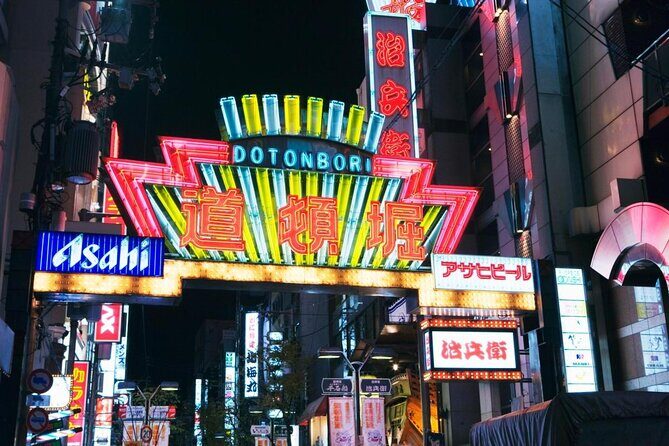
- Ebisu Bridge finish in Dotonbori, a great landing point for the neon zone
Osaka Station City: Your fast start in a maze that actually helps
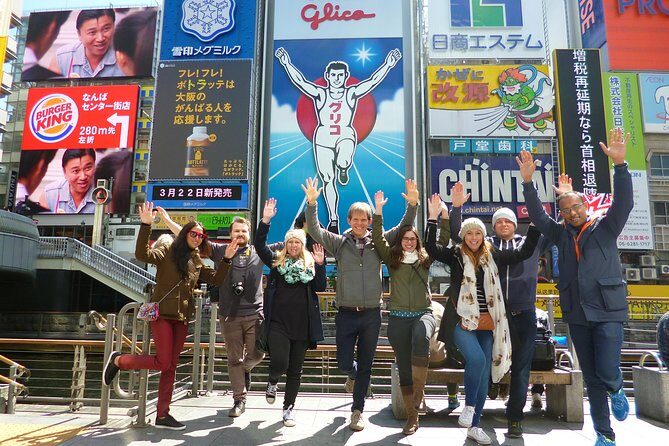
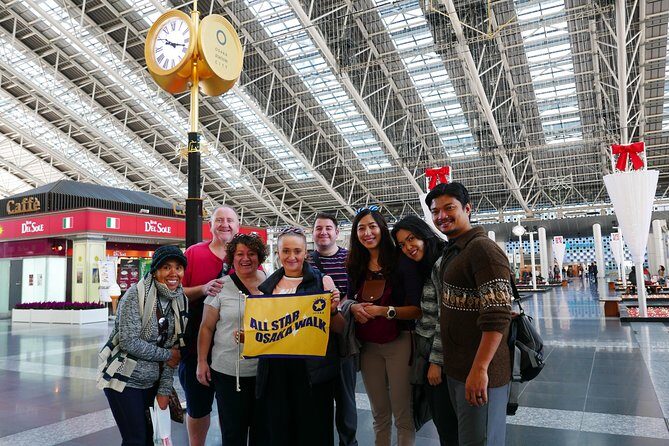
The tour begins at the Osaka Tourist Information Center on the ground level, in front of the central gate of JR Osaka Station. You meet at 9:50 am, and the group starts exactly at 10:00 am, with a guide holding an All Star Osaka yellow flag. If Osaka Station already looks intimidating on your first day, this is a smart choice, because the tour intentionally starts where you’ll likely be using trains and subways later.
Osaka Station City is modern and massive, and the walk through it is more than sightseeing. It’s an orientation exercise. You’re learning how spaces connect: underground passages, escalators, and all the little decision points where first-timers usually lose time. You also get a chance to settle your bearings before you head south toward entertainment areas.
One practical detail I’d plan around: the route uses escalators and some steps, so wear shoes that feel secure. If you’re traveling with a stroller, plan extra time and watch footing near stair sections.
You can also read our reviews of more walking tours in Osaka

Shinsekai and Kushikatsu: The snack that tastes like Osaka
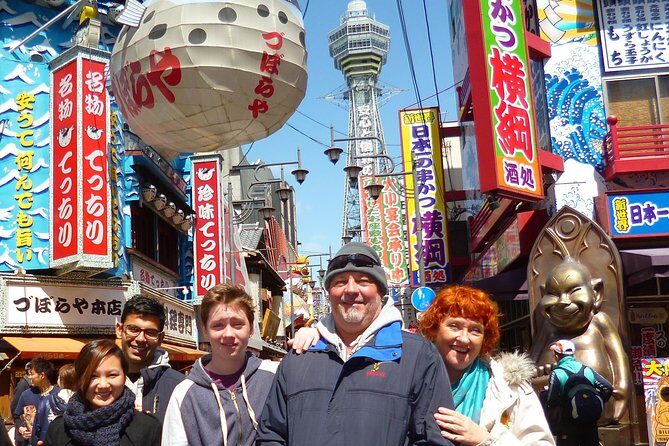
Then the energy shifts. You head into Shinsekai, one of Osaka’s most distinctive downtown pockets, known for restaurants that serve the city’s soul-food vibe: Kushikatsu, deep-fried skewered snacks. The key here is not just eating something good. It’s learning the small cultural patterns around a local specialty.
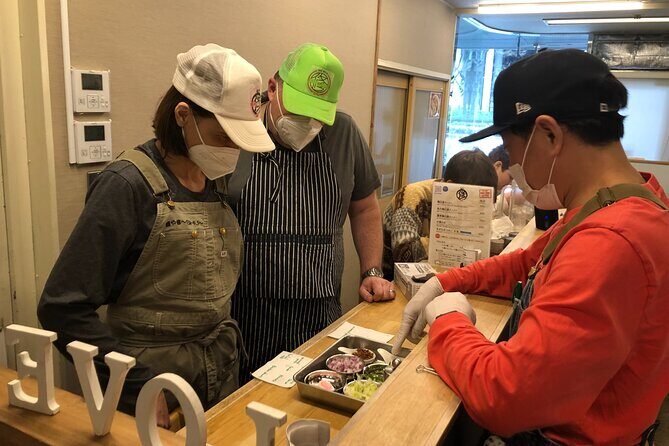
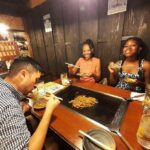
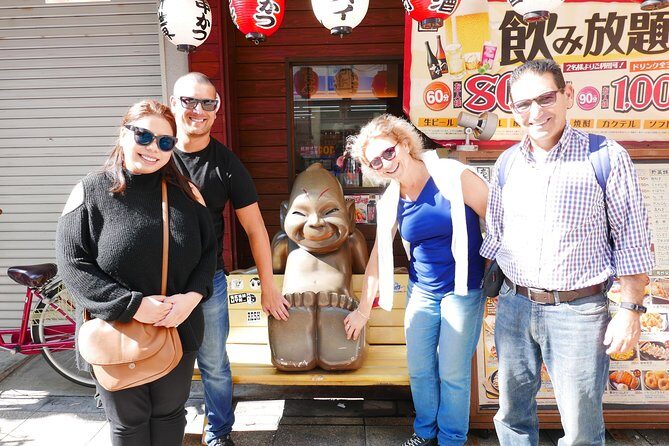
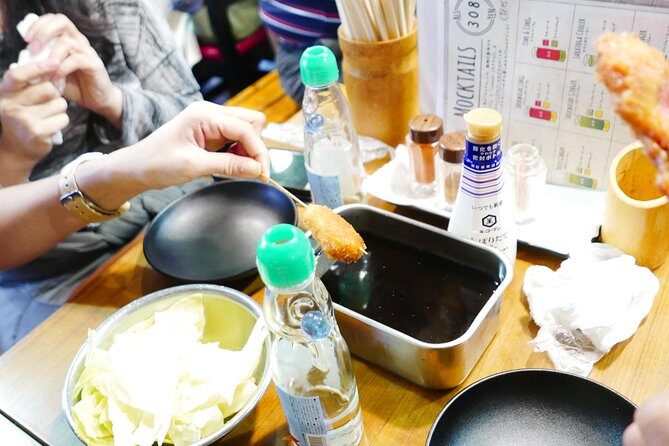
The tour stops at a restaurant for your taste of Kushikatsu, plus a non-alcoholic drink is included. This matters because it turns the neighborhood into something you can actually participate in, instead of just walking past signs. You’ll see the rhythm of the area through a real meal moment: pick a place, order locally, and understand how the snack fits into casual Osaka dining.
A common theme from highly rated experiences with this tour type is the way the guide connects the food to the neighborhood. Names like Hideoki, Kaori, and Ichi show up repeatedly for explanations and helpful answers. So if you ask about what you’re seeing, you should get clear, practical direction on how Osaka works, not a vague history lecture.
If you’re worried about the food itself, keep expectations simple: this is a tasting, not a full dinner. You’ll likely want to continue exploring for a real meal after the tour ends.
Between shopping streets and restaurant alleys: where the city feels lived-in
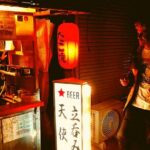
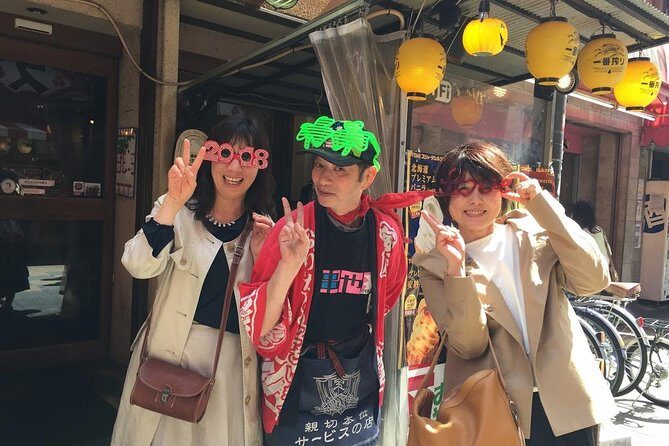
After Shinsekai, the walk includes a couple of the kinds of streets that don’t make it into most quick photo itineraries: smaller attractive alleys lined with places to eat, plus sections of commercial streets with shops, theaters, and flashy billboards. This is where Osaka’s personality gets specific. It’s not only neon spectacle; it’s also practical, daily-life commerce.
Here’s what’s worth paying attention to as you walk:
- Street-level density: You’ll notice how many entrances and storefronts exist just a few steps apart.
- Wayfinding cues: Billboards and bright signage are doing the work of landmarks.
- Stop-and-go browsing: Osaka shopping streets often mean you slow down naturally, then move again.
The value of having a guide during this part is speed. Without help, you might wander and end up circling the same blocks. With help, you’re more likely to hit the corridors that give you the strongest “this is Osaka” impression.
Riding the subway like a local: budget it and you’ll enjoy it more
The tour overview describes riding the subway like a local, and that’s the kind of detail that makes the walk feel like real orientation. But the subway fare is not included. The tour data lists these fares: 430 yen for adults and youth, and 220 yen for children.
This is one of those moments where paying attention ahead of time boosts your whole day. If you’re using an IC card, make sure you have funds loaded. If you’re using cash, carry the right amount. Either way, plan for the fact that the tour price covers guide time and the included tasting, but not the transit.
If you come from a country where transit is automatic and bundled into tour prices, this can catch you off guard. The upside: once you’re paying that fare anyway on your day, it’s easy to treat this as part of your transport strategy, not an extra annoyance.
Hozenji temple and the Osaka stories you’ll actually remember
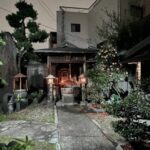
The tour overview also includes a visit to Hozenji temple. Even if you’re not a temple-constant type, this is a good contrast moment. You move from snack culture and neon streets into a calmer pocket of cultural space, and that shift helps your brain sort Osaka into “daylife city” sections instead of only “tourist neon.”
What makes a stop like this valuable on a short walking tour is the guide’s framing. You’re not just looking at a building; you’re hearing how Osaka’s layers developed over time. Based on the way guides are praised for explanations and answering questions, you can expect the temple moment to come with context you can carry forward when you explore on your own afterward.
If you’re short on time, this is also why mixing temple + neighborhoods + food tasting works. It turns a few hours into a mental map, which is what first-timers usually need most.




The finish at Ebisu Bridge: instant Dotonbori payoff
The walk ends at Ebisu Bridge in the Dotonbori area. This is a strong closing point because it’s dramatic without requiring any extra tickets. You get a visual payoff: the place where the city’s entertainment vibe is easiest to recognize.
Stopping at Ebisu Bridge also helps with practical next steps. From there, you’re in the right area to:
- grab a longer sit-down meal,
- hop into another short neighborhood walk,
- or simply enjoy the atmosphere before your next train.
One small consideration: because you’re ending in a busy entertainment zone, you may want to check your next plan before you get pulled into the neon. If you wait until after the tour, you might spend your first free hour doing what everyone does in Dotonbori: staring at menus and signs.
Pace, group size, and what to bring for comfort
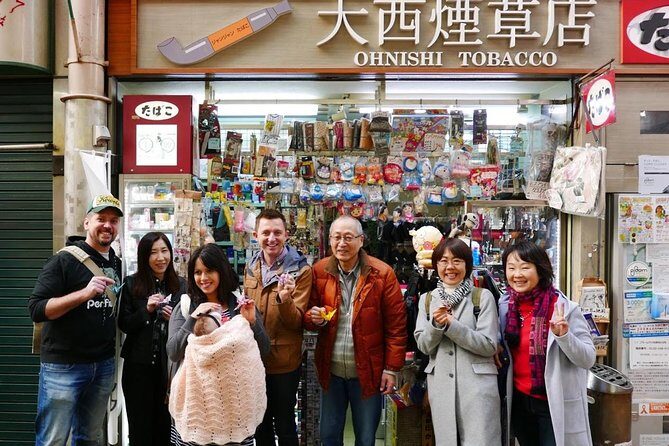
This is a moderate walking tour, rain or shine. The tour also limits the group to 10 travelers max, which keeps it from feeling like a parade. In practice, that small size is what lets you ask questions and adjust your path if you’re moving slower or stopping longer to look at something.
Comfort is the big prep item:
- Wear comfortable walking shoes, especially for station areas.
- Dress for humidity and be ready for quick weather changes.
- Bring a water bottle even though you’ll get one included non-alcoholic drink on the tour.
If you’re traveling with kids, the tour notes that children must be accompanied by an adult. And if you’re using a stroller, expect some steps and use of escalators, so plan for slow, careful movement.
Also, the tour uses a mobile ticket, so keep your phone charged and your confirmation handy.
Price and value: $53.06 is fair if you treat it as orientation
At $53.06 per person, this sits in a reasonable zone for a short, guided, small-group experience that includes food. The price includes:
- a local guide,
- Kushikatsu tasting,
- and one non-alcoholic drink.
What’s not included matters for value math: the subway fare is extra, and any additional food beyond the tasting is obviously on you. Still, for first-time visitors, this tour can be a good deal because it bundles three things people often end up paying for separately: guided orientation, a food moment, and a guided route through key districts.
I also like the “start with Osaka Station” design. The first time you go to Osaka, that station complexity can easily eat half a day if you’re guessing. Paying for a guide to help you understand where things connect can be more valuable than an extra stop you won’t remember a week later.
Should you book this Osaka Walking Tour?
Book it if you want a first-day Osaka framework: food tasting, a guide with practical answers, and a route that moves from the station area into Shinsekai and then to Dotonbori. It’s especially good if you’re only in Osaka briefly and you want to leave with a mental map, not just photos.
Skip or adjust expectations if you hate being in large transit areas at the beginning or you want a strictly food-heavy itinerary. This is a balanced walk with one main tasting moment, not a full restaurant crawl.
If you go, come with simple goals: wear comfy shoes, budget the subway fare, and ask your guide questions as you go. You’ll get more out of those three hours than if you treat it like a moving sightseeing bus.
FAQ
How long is the Osaka Walking Tour?
It lasts about 3 hours.
What’s included in the tour price?
You get a local guide, 1 non-alcoholic drink, and a Kushikatsu food tasting.
What’s the meeting point and start time?
Meet at the Osaka Tourist Information Center, ground level in front of the central gate of JR Osaka Station, at 9:50 am. The tour starts exactly at 10:00 am.
Where does the tour end?
The tour ends at Ebisu Bridge in the Dotonbori area.
Do I need to pay subway fare?
Yes. Subway fees are not included. The listed fares are 430 yen for adults and youth, and 220 yen for children.
Does the tour run rain or shine?
Yes, the tour operates rain or shine.