REVIEW · OSAKA
Cherry Blossom Buddha and Mt.Yoshino with Strawberry Picking Tour
Book on Viator →Operated by H.I.S.Co., Ltd. · Bookable on Viator
Cherry blossoms plus strawberries equals a perfect spring day. This tour is a focused spring combo: Mount Yoshino for the world-famous thousand cherry blossoms, plus temple stops and time to enjoy seasonal food along the way. I like the way it’s built around multiple viewpoints, so you’re not stuck seeing everything from one place.
I also really like the strawberry picking payoff—30 minutes to eat your fill at the farm, then a boxed lunch that keeps you fueled for more sightseeing. One thing to consider: the tour guide is English-speaking, but some guests note English can be limited, so you may want to keep expectations realistic for long explanations.
In This Review
- Key things to know before you go
- A spring day trip from Osaka: how the timing really works
- Getting to the bus: Umeda departure and the no-wait rule
- Asuka-mura strawberry farm: 30 minutes to eat your fill
- Tsubosaka-dera Temple: the Great Cherry Blossom Buddha and giant stone Buddhas
- Mount Yoshino: why Senbonzakura viewing is the main event
- Roadside Station Katsuragi: snacks and souvenir time
- Lunch and the boxed bento: what you’ll actually eat
- Price and value: is $114.02 a fair deal?
- Group size, guide communication, and what to expect
- Weather reality check: blossoms might not show up
- Who this tour suits best (and who should skip it)
- Should you book this Cherry Blossom Buddha and Mount Yoshino with Strawberry Picking Tour?
- FAQ
- How long is the tour?
- What is the meeting point and start time?
- Where does the tour end?
- What’s included in the price?
- Is lunch included or not?
- What are the main stops during the day?
- How long do you spend at Mount Yoshino?
- Can I bring large luggage?
- What if the cherry blossoms aren’t visible?
Key things to know before you go
- Spring-only timing: this is a cherry blossom season tour, so blooms depend on the year and weather
- Comfortable Osaka-to-Yoshino transport: air-conditioned bus with a morning start from Umeda
- Strawberries first: a dedicated farm stop in Asuka-mura with an all-you-can-eat option
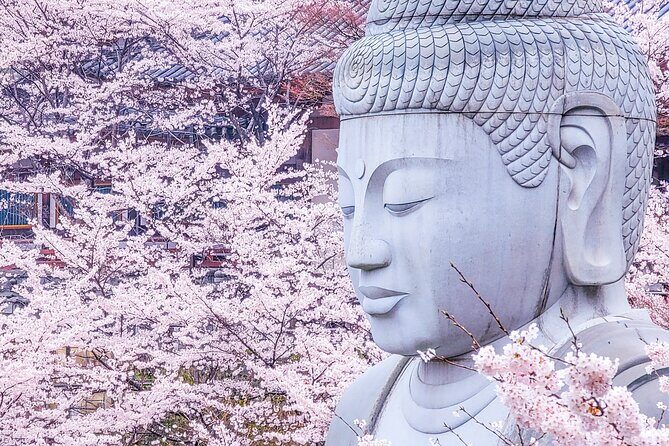
- The Cherry Blossom Buddha stop is special: Tsubosaka-dera Temple includes admission and features a Great Cherry Blossom Buddha plus giant stone Buddhas from India
- A short shopping break: Roadside Station Katsuragi gives you 20 minutes for local sweets and souvenirs
A spring day trip from Osaka: how the timing really works
This is one of those day trips that tries to squeeze in big highlights without making you feel like you’re sprinting nonstop. The day runs about 9.5 hours, starting at 8:30 am back at the Mainichi Newspaper building in Osaka’s Umeda area. The pace is mostly organized around travel legs plus three meaningful stops, which is ideal if you want cherry blossoms and you don’t want to plan trains and transfers.
That said, “9.5 hours” still feels long when you’re traveling on a bus and spending parts of the day standing in viewing areas. You’ll get walking, you’ll get crowds (depending on the season), and you’ll want to dress for whatever spring gives you—sun, wind, and the kind of mist that can turn a temple stop into something cinematic.
The tour is also capped at 40 travelers, so it’s not a tiny group. It stays manageable, but you’re still sharing the day with other people.
You can also read our reviews of more tours and experiences in Osaka.

Getting to the bus: Umeda departure and the no-wait rule
The meeting point is clearly set: Mainichi Newspaper building, 3-chōme-4-5 Umeda, Kita Ward, Osaka. You should arrive 15 minutes early. This isn’t a small “grab the bus whenever” setup. The operator explicitly says the bus will depart on schedule and won’t wait for late arrivals.
Practical tip: travel light. Large luggage isn’t allowed on the tour, so pack like you’re doing a city day out—small backpack only. The tour uses a mobile ticket, which usually means less hassle at check-in.
Once you’re onboard, the comfort matters. The bus is air-conditioned, which is a big deal in spring when the weather can shift and you don’t know if you’ll get a warm day or a cool one that makes you want a jacket the whole time.
Asuka-mura strawberry farm: 30 minutes to eat your fill
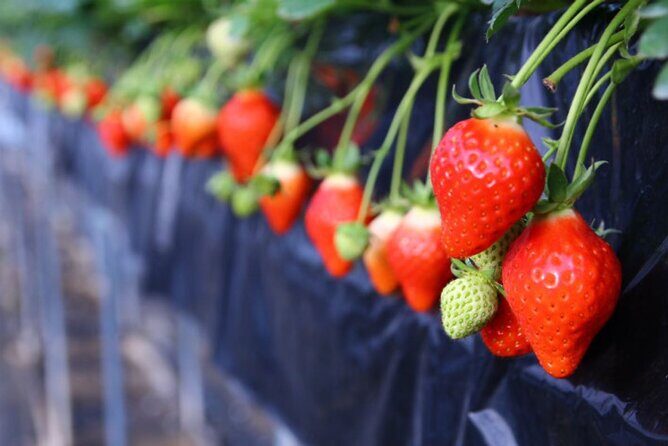
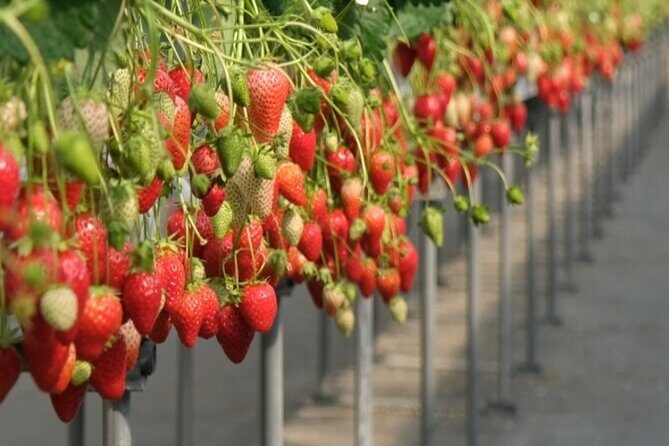
The day starts with something deliciously simple: strawberry picking at a farm stop in Asuka Village (Asuka-mura). You get an all-you-can-eat-style option for 30 minutes, plus time to taste local specialty sweet strawberries.
This stop is short on purpose. It’s not a half-day agritourism experience. Instead, it’s timed to give you a burst of seasonal fun early, before the cherry blossom viewing and temple route gets more involved. If you like food experiences that feel hands-on, this is the kind of moment you remember long after the blossoms fade.
A useful mindset: go in hungry. You don’t want to spend the strawberry window negotiating with a full stomach from breakfast. Also, if you’re picky about how fruit is prepared or washed, you might want to eat most of what you pick rather than trying to store it for later, since the rest of the day is on a bus.
Tsubosaka-dera Temple: the Great Cherry Blossom Buddha and giant stone Buddhas
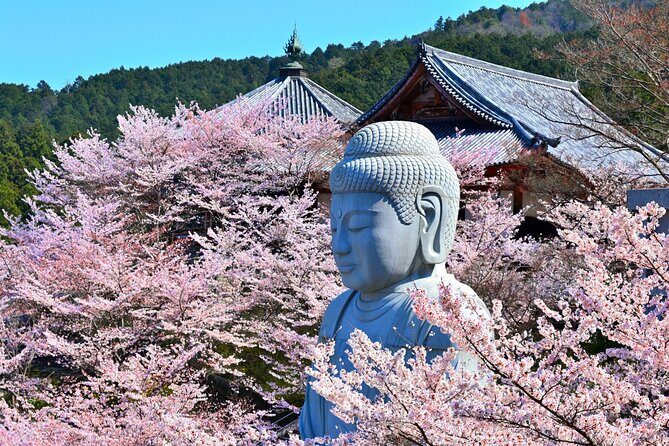
Next comes Tsubosaka-dera Temple, known for the Great Cherry Blossom Buddha. You’ll have about 45 minutes at the site, and admission is included.
Here’s why this stop feels more than just a photo break. Alongside the Buddha, you’ll find various giant stone Buddhas said to have been invited from India, which creates a striking contrast in scale and atmosphere. It’s the kind of place where you look up, then look around—because the details aren’t only in one direction.
In one of the standout experiences from past guests, drizzle and mist added mood to the Buddha and surrounding blossoms. Even if the weather isn’t dramatic, spring light and temple shadows can make the stone look more dimensional than in bright sunshine.
Drawback to keep in mind: this stop may not be long enough if you’re the type who likes slow wandering. If you’re the “I must read every plaque” person, use the time to pick your priorities—Buddha first, then the stone Buddha features.
Mount Yoshino: why Senbonzakura viewing is the main event
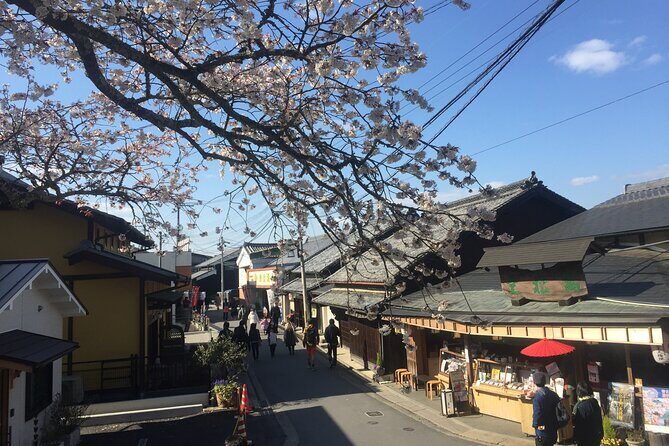
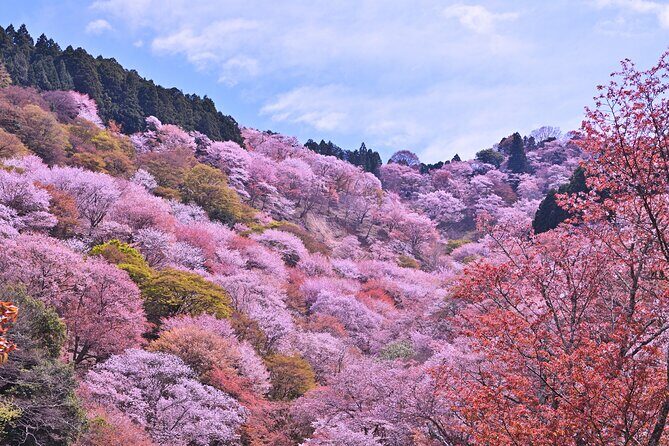
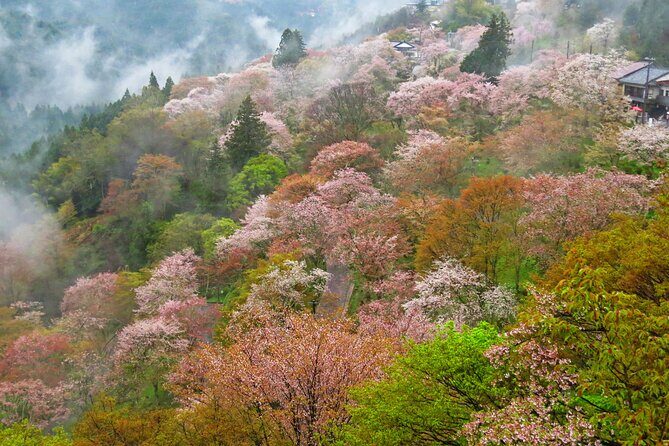
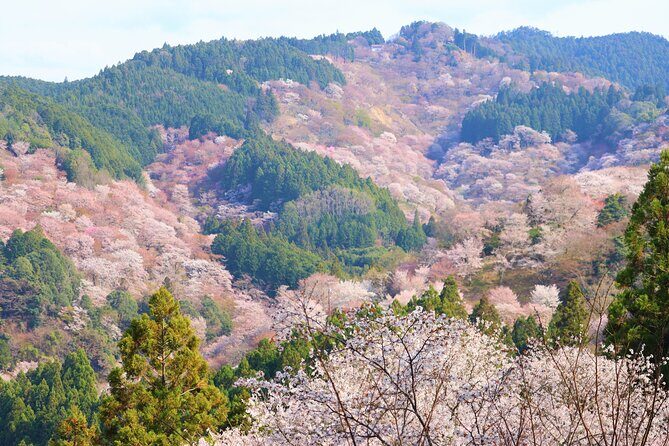
Mount Yoshino is the star of the route, with about 2 hours for cherry blossom viewing. This is where you’re chasing Senbonzakura, the idea of thousand cherry blossoms rolling across the hillside.
The tour is designed around viewing, not just arrival. You visit multiple viewpoints around the mountain, so you’re not limited to one angle. That matters because Yoshino’s whole appeal comes from how the blossoms spread over the terrain. One lookout can look beautiful; several lookouts start to tell the story.
One practical reality: cherry blossoms may not be seen depending on weather conditions or the year’s timing. Spring bloom timing shifts. Even when blossoms are late, you may still get an experience that helps you imagine what it looks like in peak season, but it won’t be the same if the flowers are minimal.
So I recommend going with two goals:
- Enjoy the views that are there in your season
- Don’t treat the blossoms as guaranteed
You’ll feel the difference in satisfaction if you keep that in mind.

Roadside Station Katsuragi: snacks and souvenir time
After Yoshino, there’s a short reset stop at Roadside Station Katsuragi. You’ll have about 20 minutes here. The idea is simple: shop local products and pick up souvenirs, plus try local sweets if you want a last bite before heading back.
This is the “don’t overthink it” stop. It’s not for deep browsing. If something looks good, buy it. If you love shopping, you’ll probably wish for more time, but the tour has to keep the return schedule workable.
The good news: this is a flexible moment for your own preferences. Food people can focus on snacks. Souvenir people can do quick buys and be back on the bus without losing the day.
Lunch and the boxed bento: what you’ll actually eat
You should plan on having lunch as part of the experience plan, and the operator also notes an option if you need to avoid the meal. The boxed lunch is described as a Japanese-style picnic bento with items that include four pieces of Kakinohazushi (Nara local sushi wrapped in persimmon leaves), fried food, Japanese-style rolled omelet, seasonal side dish, and one pack of green tea.
The operator also says ingredients can change by season and availability, and you can’t swap ingredients. If you have allergies or dietary restrictions, the data recommends choosing the No Lunch plan and preparing your own food.
This matters because it changes how you should pack. If you choose the lunch plan and you’re sensitive, you might not get the option to adjust. If you choose No Lunch, you’ll want to bring something easy to eat during the bus ride or before your next stop.
Bottom line: if your dietary needs are complicated, treat this as a meal you might not be able to customize.
Price and value: is $114.02 a fair deal?
At $114.02 per person, the value depends on what you’re comparing it to. For a day trip in Japan during spring cherry blossom season, you’re paying for a tight bundle:
- Round-trip air-conditioned bus from Osaka
- An English-speaking guide
- Strawberry picking experience
- Admission to Tsubosaka-dera Temple
- A boxed lunch plan option
If you tried to replicate this on your own, you’d spend time coordinating transport, buying admission separately, and timing multiple stops. The bus route handles the heavy lifting, which is usually worth something when your goal is to enjoy the scenery instead of wrestling schedules.
What keeps the value honest is that the stops are time-limited. You’re not getting an all-day deep dive at each location. You’re buying momentum: strawberry fun, temple visuals, and Yoshino viewpoints in one organized day.
The one price-related caution: blooms aren’t guaranteed. You’re paying for the experience, but the centerpiece scenery depends on conditions.
Group size, guide communication, and what to expect
This tour isn’t private. You’ll be with other guests, and the maximum group size is 40 travelers. That’s generally workable for a bus day trip, but it affects how “personal” the experience feels—especially around photo stops and boarding times.
The guide is described as English-speaking, but one review notes the guide had limited English. That’s not unusual in Japan—many guides can speak, but the depth and pace of explanations may vary. So if you want heavy storytelling, bring curiosity and keep conversations short. If you mainly want directions, timing, and key facts at each stop, you’ll likely be fine.
The guide can still make a difference through practical tips—like where to go first once you arrive at the temple area, or how to manage your time before the bus departs.
Weather reality check: blossoms might not show up
This tour explicitly notes that cherry blossoms may not be seen due to weather conditions. That doesn’t mean the day is ruined—it means your mental plan needs flexibility.
If rain or mist is in the forecast, you may still get a moody temple and softer light on the stone. If wind or colder conditions delay blossoms, you might see fewer flowers than peak season. Either way, the tour’s structure keeps you busy enough to enjoy the day even when the blossoms aren’t perfect.
Also watch the risk that schedules can change. The tour says time at each destination may be shortened due to traffic or other reasons, and arrival times may be delayed. The overall plan is a guide, not a promise.
Who this tour suits best (and who should skip it)
This fits you if:
- You want one organized spring day that hits Yoshino and a cherry blossom temple
- You like food experiences like strawberry picking with an all-you-can-eat style window
- You prefer the comfort of a bus route instead of stitching together transit on your own
It may not fit you if:
- You need guaranteed peak blossoms (they’re seasonal and weather-dependent)
- You require a highly fluent English guide for long explanations
- You travel with large luggage and don’t want to re-pack to meet the size rule
Should you book this Cherry Blossom Buddha and Mount Yoshino with Strawberry Picking Tour?
I’d book it if your priority is a spring highlight day from Osaka with minimal planning. The combination is smart: strawberries early when energy is high, a memorable temple stop built around a Great Cherry Blossom Buddha, then Yoshino as the main viewing act. The price also stacks up well because you’re getting transport, admission, and the structured experience in one package.
Skip it—or consider another date—if you’re traveling in a week where blossoms are uncertain and you’d be disappointed by fewer flowers. Since the tour depends on conditions, your enjoyment will be tied to how flexible you are about the scenery.
If you can handle that, you’ll likely leave with two very different images: a misty, stone Buddha scene and a hillside of cherry blossoms, plus the bonus of strawberries you picked and ate while spring was in full swing.
FAQ
How long is the tour?
The tour runs about 9 hours 30 minutes (approximately).
What is the meeting point and start time?
You start at the Mainichi Newspaper building, 3-chōme-4-5 Umeda, Kita Ward, Osaka, and the start time is 8:30 am. You should arrive 15 minutes early.
Where does the tour end?
The tour ends back at the meeting point.
What’s included in the price?
English-speaking guide, lunch (listed in the plan), admission to Tsubosaka Temple (Cherry Blossom Buddha), strawberry picking experience, and an air-conditioned bus.
Is lunch included or not?
Lunch is described as included in the plan, and the boxed bento contents are provided. If you have allergies or dietary restrictions, the tour notes you may need to choose the No Lunch plan and prepare your own since the bento ingredients can’t be changed.
What are the main stops during the day?
You visit a strawberry picking farm in Asuka Village, Tsubosaka-dera Temple (Great Cherry Blossom Buddha), Mount Yoshino for cherry blossom viewing, and Roadside Station Katsuragi for shopping and sweets.
How long do you spend at Mount Yoshino?
You have about 2 hours for cherry blossom viewing at Mount Yoshino.
Can I bring large luggage?
No. Bringing large luggage is not allowed.
What if the cherry blossoms aren’t visible?
The tour notes that cherry blossoms may not be seen due to weather conditions. In that case, you’ll still have the planned stops, but the main scenery may be affected.