REVIEW · OSAKA
Honor – Experience Samurai & traditional Culture to the fullest
Book on Viator →Operated by SAMURAI HONOR · Bookable on Viator
Samurai armor in Osaka feels unreal. What makes SamuraiHonor interesting is the mix of hands-on tradition—calligraphy, tea, and sword culture—then you walk through Osaka Castle grounds looking the part. You’ll follow a set lesson rhythm that stays practical and surprisingly respectful of the meaning behind each step.
I particularly like the way this experience gives you real craft time, not just posing. Calligraphy led by Sakuma San, plus the big brush approach, lets you create something you can take home and remember. I also liked the staged authenticity: an Iaido lesson with a sword expert, plus photo moments that match the Osaka Castle setting.
One possible drawback is physical and time pressure. It’s not recommended for people with back problems or heart conditions, and if you’re more than 30 minutes late, entry can be refused.
In This Review
- Key highlights that make this one worth your time
- Osaka Castle in armor: why this is more than a photoshoot
- Dressing like a warrior: armor fit, sweat, and instructor help
- Calligraphy with Sakuma San: big brush practice and meaningful writing
- Tea ceremony: etiquette lessons you can actually use later
- Iaido sword culture: the safety-first training that still feels exciting
- Samurai armor battle scenes: April 1615, Osaka Castle energy, pro photos
- Photography results: what you get, and how pro files work
- Price and value: is $181.19 fair for 3 hours?
- Who this suits best (and who should skip it)
- Practical tips before you go: timing, what to wear, and smart expectations
- Should you book SamuraiHonor near Osaka Castle?
- FAQ
- What is the duration of the SamuraiHonor Osaka experience?
- Where does the tour take place?
- What is included in the price?
- What photos and video options are available?
- Is the tour private?
- What activities are part of the program?
- Do they offer languages besides English?
- What are the main safety or health limitations?
- What happens if I’m late?
- Can I take my own photos with a smartphone?
Key highlights that make this one worth your time
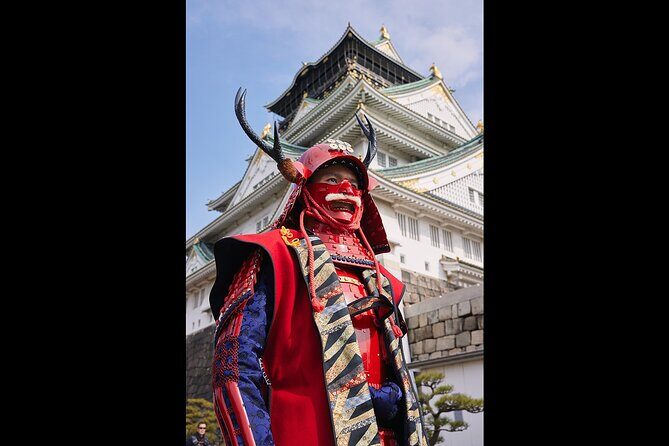
- Replica samurai armor you actually wear, with help dressing in hakama and armor
- Osaka Castle grounds included for pro photos while you’re in full character
- Iaido lesson and sword trial cutting, with instruction from a sword expert
- Calligraphy practice with Sakuma San, including a large work you can keep
- Matcha tea ceremony etiquette plus traditional sweets (wagashi)
- Photo package by a dedicated photographer, sent to your email address
Osaka Castle in armor: why this is more than a photoshoot
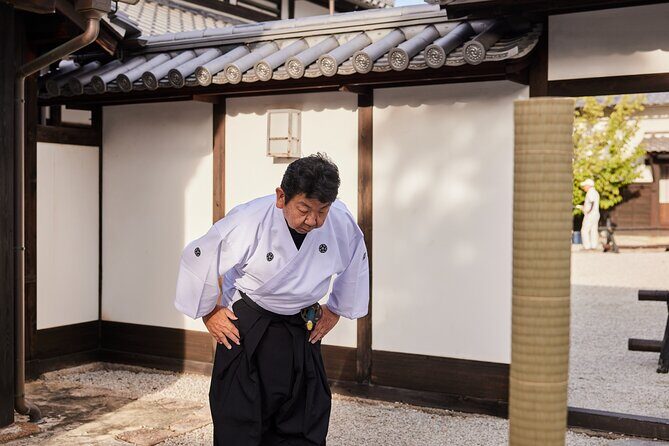
The biggest hook here is simple: you’re not stuck in a studio. You’ll wear a well-made replica set of samurai armor and hakama, then you get to spend time around the castle grounds as part of the experience. That changes the vibe fast. Instead of playing dress-up in one spot, you move through the day like a structured role-playing lesson with a real cultural backbone.
Expect a guided flow rather than free wandering. There’s a set order—calligraphy and tea before sword training, and then armor and battle-themed photo scenes—so the tour feels like a short “samurai training arc,” not random activities bolted together.
Also, the group is private. That matters because you can ask questions, and the instructors can slow down when you need it.
You can also read our reviews of more tours and experiences in Osaka.


Dressing like a warrior: armor fit, sweat, and instructor help
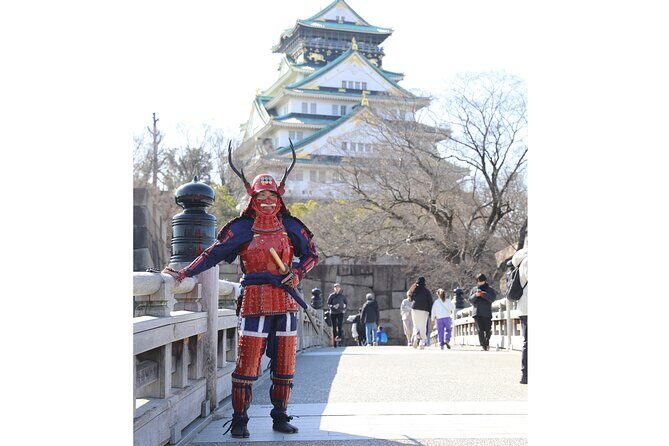
You don’t put on the armor yourself. Assistants help you dress in hakama and armor, so you’re not wrestling straps and buckles while trying to figure out where everything goes. That support is a plus, especially because you’ll be changing into a costume that’s meant to look authentic on camera.
There’s also a real-world fit note: armor sizes vary by your height and weight. The general guideline is suitable for heights up to 185 cm and weights up to 100 kg, but you may not be able to wear your preferred size or type. On the day, you’ll select authentic armor after discussing your details at the front desk.
One more thing: you should plan for sweat. You’ll sweat easily while wearing hakama or armor and practicing swordsmanship, so I’d treat this like a physical experience even though it’s short.
Practical tip: use the restroom before dressing. Once you’re in costume, it’s not the moment to realize you forgot.
Calligraphy with Sakuma San: big brush practice and meaningful writing
Calligraphy is a centerpiece here. It starts with preparation: how to hold the brush, how to use the tools, and how to get your writing surface ready. Then you practice, and it’s not just a quick stroke or two for a souvenir photo.
The instruction includes learning about a specific kind of character theme—resignation. You’ll practice a kanji/character tied to the idea of resignation from this world, often described as writing to say goodbye while preparing to die. Even if the theme sounds intense, the lesson framing keeps it grounded: you’re learning technique and mindset, not doing a drama performance.
From the reviews, I also see that you can learn a kanji you choose and do lots of repetition, then make a large poster-style piece. Either way, the part that usually lands best is the scale of the brush and the fact that you take home something you made with your own hand.
If you’re the kind of person who wants a cultural experience you can slow down with, calligraphy is where you get that breathing space.
Tea ceremony: etiquette lessons you can actually use later
Then comes the tea. You’ll participate in a traditional tea ceremony where powdered green tea (matcha) is prepared and served. The teaching focuses on etiquette, manners, the rhythm of gestures, and the spirit of hospitality.
What I like about this part is that it’s not presented as a performance for tourists. The tea lesson is described as relaxed, with time to understand what’s happening as you go. That’s the difference between watching tea being made and actually learning the structure behind it.
You’ll also have matcha and traditional Japanese sweets (wagashi). The snack component sounds small, but it matters because it keeps the day from turning into back-to-back activities on an empty stomach.
If you’ve never done a tea ceremony, this is a friendly entry point. It gives you the basic etiquette logic without requiring you to already know the full history.
Iaido sword culture: the safety-first training that still feels exciting
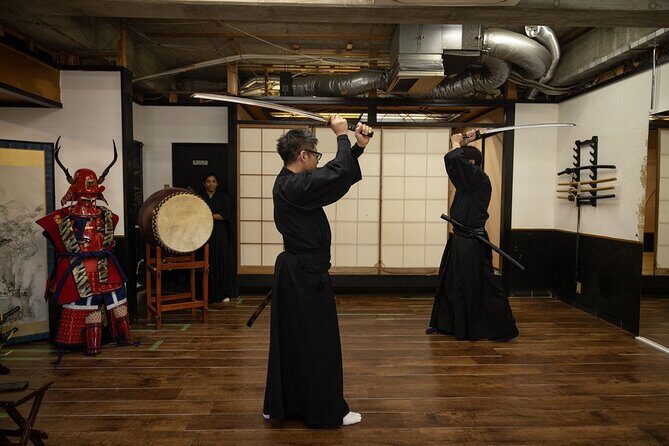
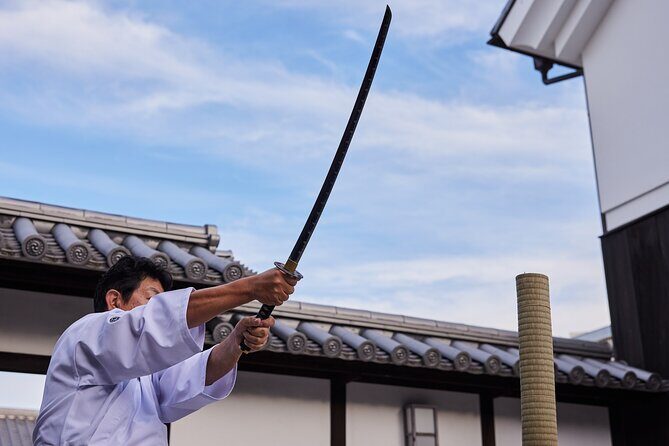
This is the part most people talk about after: the Iaido lesson and sword trial cutting.
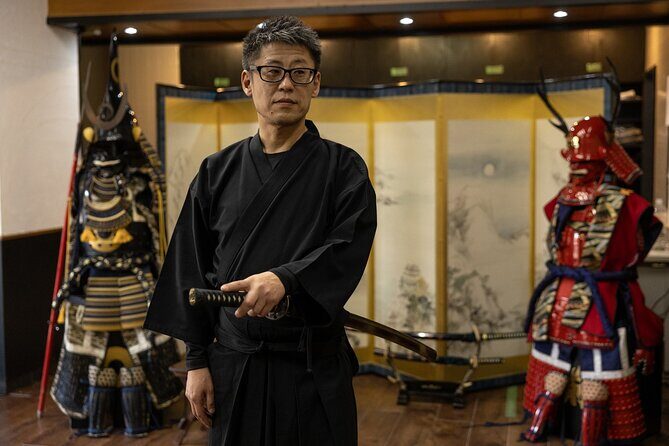
You’ll have an instructor handling the Japanese sword and providing instruction before the experience. The data also notes the instructor has 10 years of swordsmanship experience, which is reassuring because sword culture here is treated like skill and safety, not like a gimmick.
Your time includes a sword trial cutting session—about 30 minutes. In practice, that’s enough to get instruction, try the cutting action, and get a sense of how controlled the movements are supposed to be.
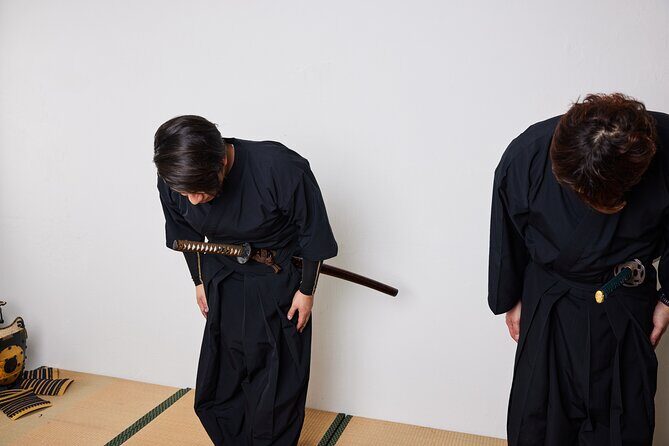
Safety rules are clearly stated. Drawing swords is dangerous, and you should not do so without permission. You’ll also be reminded about timing: if you’re late, you may not enter, which matters because changing into costume and moving into the training sequence takes time.
A good way to think about this section: you’re learning what the movements mean, then applying it briefly in a safe, guided setting. It feels action-heavy, but it’s structured like a lesson.




Samurai armor battle scenes: April 1615, Osaka Castle energy, pro photos
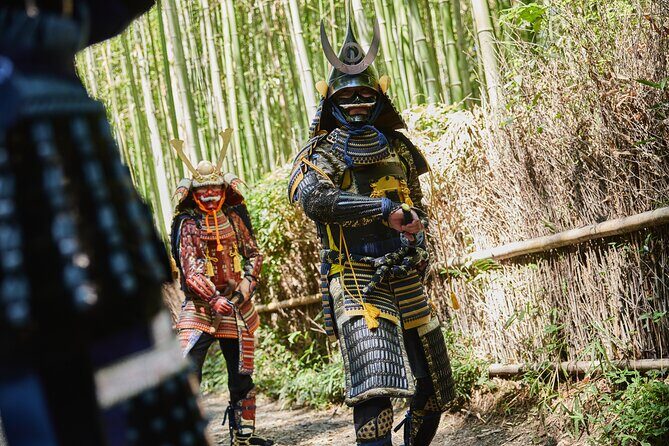
After tea and calligraphy, the day shifts into the visual spectacle side of the culture lesson. You’ll put on the armor and participate in battle-themed moments, pretending to be a soldier as part of the Battle of Osaka theme (April 1615 is referenced in the program).
There are two linked armor/battle photo experiences, each with a set time allocation, and both connect to the Osaka Castle setting. Even if the “battle” part is dramatized, it’s designed to teach and frame what samurai armor represented—status, readiness, and identity—then translate it into memorable photos.
Expect you’ll be photographed on the grounds while you’re in armor. This is where the castle location becomes more than a backdrop. You get a sense of scale: walls, grounds, and space that make the costume look like it belongs there.
Photography results: what you get, and how pro files work
Photography is a major value driver for this tour.
You’ll receive professional photo prints and files sent to a designated email address. There’s also a video upgrade option if you want more than still images.
On top of that, you’re allowed to take smartphone photos, as long as you don’t take selfies or photograph other guests. Fixed tripods and recording videos are discouraged because they can disturb other people.
Based on the reviews, the photo coverage is a highlight. People like that the photographer takes lots of images during each activity step, not just at the end.
If you care about having polished results (and not only your own phone shots), this is one of the strongest reasons to pick this specific kind of samurai experience.
Price and value: is $181.19 fair for 3 hours?
At $181.19 per person for about 3 hours, you’re paying for a few things that normally cost extra in Japan if booked separately:
- the armor dressing process and outfit (armor and hakama)
- instructor-led calligraphy and tea ceremony
- a sword lesson and trial cutting session
- pro photography with prints and files
- snacks (matcha and wagashi)
If you were to do calligraphy + tea + a separate photo session + a sword experience on your own, it would likely become a patchwork of bookings. Here, you get a unified schedule where the same staff and equipment support the whole arc.
Is it the cheapest “samurai costume” option? No. But for the mix—especially the pro photo deliverables and the fact that you’re in armor at Osaka Castle—the value tends to make sense for couples, solo travelers who want standout photos, and families where one adult wants the full cultural package.
Who this suits best (and who should skip it)
This tour is best if you want:
- a structured cultural experience, not just a quick cosplay stop
- hands-on arts (calligraphy) plus etiquette (tea)
- a safe introduction to sword culture (Iaido trial cutting)
- professional photos in an authentic-looking setting
It’s not recommended for people with back problems or heart conditions. The tour also is not stroller accessible, and it’s not suitable for pets. You’ll also need to cooperate with a liability waiver.
If you’re traveling with kids, the program can work well because it has clear, guided steps and a real “learn while doing” structure. Still, it’s a costume-and-training day, so consider your child’s comfort with dressing and movement.
Practical tips before you go: timing, what to wear, and smart expectations
Timing is everything here. If you’re more than 30 minutes late, entry can be refused. So build in buffer time from wherever you start. The meeting point is near public transportation, which helps, but don’t cut it close.
What to wear depends on how sensitive you are to heat and clothing changes. You’ll likely be in armor and hakama, so plan for sweat. Also remember that assistants help you dress; you should focus on being comfortable in the clothes you start in, and expect to follow instructions closely once you arrive.
You should also note:
- The experience uses a liability waiver before starting.
- The default language is English, with other languages available only if staff availability allows.
- You’ll get matcha and wagashi during the tour.
For your schedule: you end back at the meeting point, so if you’re arranging dinner after, consider choosing something with easy transport back nearby.
Should you book SamuraiHonor near Osaka Castle?
Book it if you want a short, high-impact samurai day that blends culture + action + pro photos in one set program. The combo of calligraphy with Sakuma San, sword instruction with a sword expert like Taguchi San, and translation support (Camila San appears in the experience stories) is the kind of layered staffing that makes the day feel smooth rather than chaotic.
Skip it if you need a low-physical-load experience, have medical limits around exertion or stress, or you dislike being on a tight schedule. The costume and sword sections are part of the core design, so if those elements sound like a hassle, you’ll probably feel that in your day.
If you’re planning a first trip to Osaka and you want one “wow” cultural experience that doesn’t require advanced Japanese skills, this one is a strong candidate.
FAQ
What is the duration of the SamuraiHonor Osaka experience?
It runs for about 3 hours.
Where does the tour take place?
It focuses around Osaka Castle Park and the Osaka Castle area, starting and ending at the meeting point in Joto Ward, Shiginonishi.
What is included in the price?
Samurai outfit (armor and hakama), snacks (traditional matcha and wagashi), photography with data sent to your email, and gratuities and taxes are included.
What photos and video options are available?
You’ll receive professional photo prints and files sent to your email address. A video upgrade is available as a paid option.
Is the tour private?
Yes, it’s private, and only your group participates.
What activities are part of the program?
You can expect calligraphy practice, a tea ceremony, a sword trial cutting session, and samurai armor battle-themed photo experiences around the castle.
Do they offer languages besides English?
English is the default. Other languages may be available if you inquire, but limited staff availability means they may not be able to accommodate every request.
What are the main safety or health limitations?
It’s not recommended for people with back problems or heart conditions. You also must sign a liability waiver, and you should follow all safety rules about handling swords.
What happens if I’m late?
If you’re more than 30 minutes late for your reservation, the provider may refuse entry even if you contact them.
Can I take my own photos with a smartphone?
Yes, personal smartphone photography is permitted as long as you don’t take selfies or photograph other guests. Fixed tripods and recording videos aren’t allowed because they can disturb others.