REVIEW · OSAKA
Osaka: Noh Performance with English Subtitles and Workshop
Book on GetYourGuide →Operated by Yamamoto Noh Theater · Bookable on GetYourGuide
Noh moves slow, but your attention won’t. At Yamamoto Noh Theater in Osaka, you get a beginner-friendly Noh performance with English subtitles and a plain-language pre-show explanation, so the forms and story don’t float past you.
The pacing is traditional and quiet, so if you need constant action you might feel a little antsy. And since photography is not allowed inside, you’ll rely on what you see and remember, not your camera roll.
The upside is strong: after the show, you can try on Noh masks and costumes and get hands-on time with instruments. It’s also a short walk from Osaka Castle, making it easy to place in a real sightseeing day.
In This Review
- Key highlights worth knowing
- Yamamoto Noh Theater: Osaka Castle’s Neighbor Since 1927
- Two Hours to Understand Noh: What the Pre-Show Briefing Covers
- Watching Noh With English Subtitles Without Losing the Mood
- The Hands-On Post-Show Workshop: Masks, Costumes, Instruments
- Q&A Energy and Getting Real Answers in English
- Who This Osaka Noh Experience Is Best For
- Price and Value: Why $32 Works for Beginners
- Should You Book This Noh Performance With English Subtitles?
- FAQ
- FAQ
- Where does the Noh performance take place?
- How long is the experience?
- Is the performance available in English?
- Can I take photos or record video inside?
- What happens after the performance?
- When was Yamamoto Noh Theater established?
- Is the theater wheelchair accessible?
- Is this suitable for young children?
- What languages are used by the host or greeter?
- Can I cancel for a refund?
Key highlights worth knowing
- English subtitles + an up-front explanation make Noh readable for first-timers
- Yamamoto Noh Theater (est. 1927) is the oldest Noh theater in Osaka
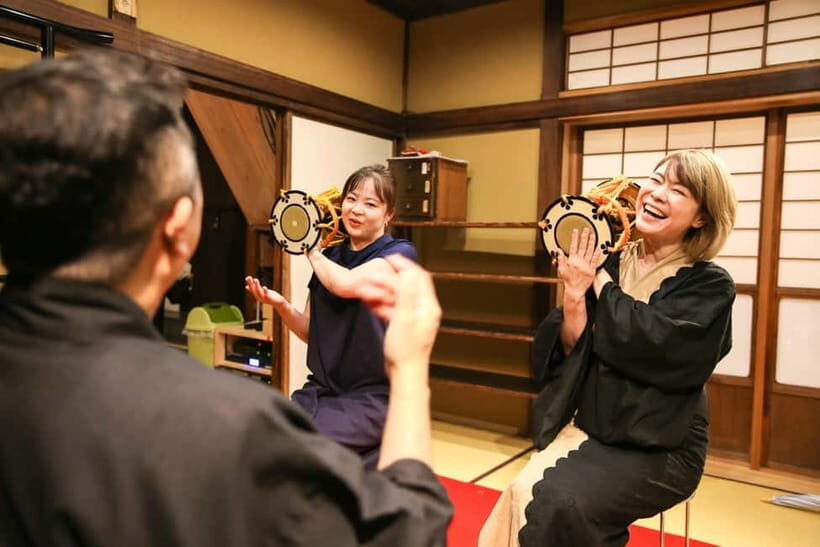
- Hands-on workshop: try Noh masks, costumes, and instruments after the performance
- Former samurai residence area setting, about a 10-minute walk from Osaka Castle
- Q&A with English support when audience questions come up
Yamamoto Noh Theater: Osaka Castle’s Neighbor Since 1927
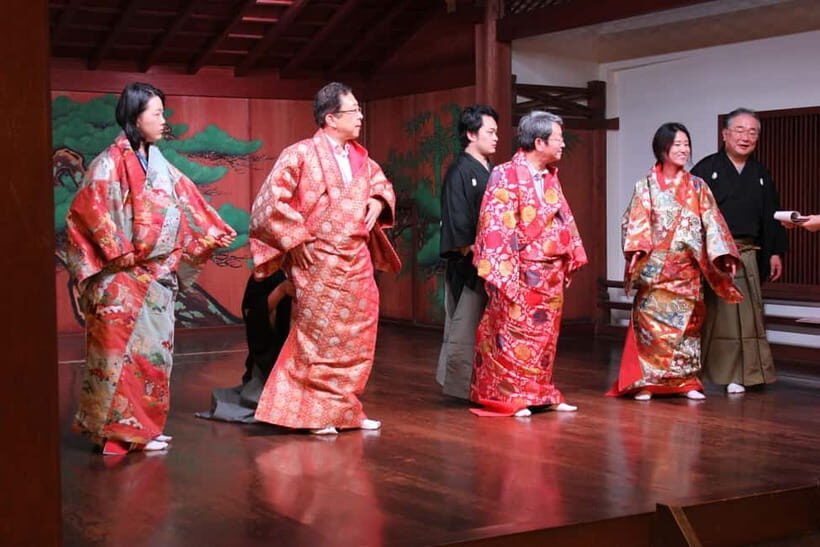
This experience happens at Yamamoto Noh Theater, in the former samurai residence area near Osaka Castle. It’s roughly a 10-minute walk from the castle area, which helps if you want culture without turning your day into a commute marathon.
A big reason to choose this show is the venue itself. The theater opened in 1927 and is the oldest Noh theater in Osaka, with Japanese Tangible Heritage status since 2006. That means you’re not just watching Noh somewhere convenient. You’re watching it in a place that has been tied to the art form for a long time.
One practical tip: plan to arrive with a little buffer. Older theaters and heritage neighborhoods can feel easy on a map but slightly slower in real life—especially if you’re walking off a main road and taking it in.
You can also read our reviews of more tours and experiences in Osaka



Two Hours to Understand Noh: What the Pre-Show Briefing Covers
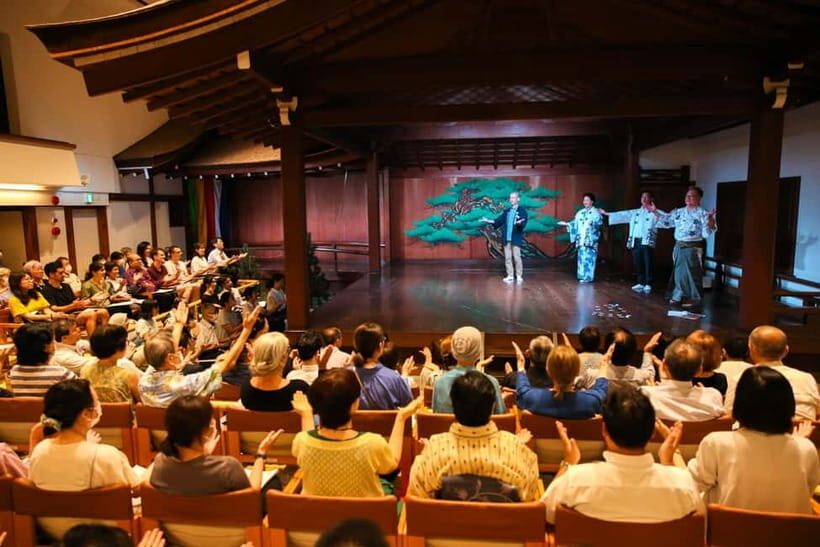
Noh can look like a puzzle at first. The movements are stylized, the rhythm is steady, and the emotion often lands in small, controlled choices rather than big gestures. That’s exactly why this format is built for beginners.
Before the performance, there’s an explanation session. You get context on the history of Noh and on the Yamamoto Noh Theater itself. Then the theater helps you connect what you’ll see with what it means, using English subtitles for the performance portion and English support for the explanation.
For you, that matters because it changes how you watch. Instead of trying to decode everything on your own, you’ll have a framework. You’ll know what you’re looking for: the performance style, the atmosphere, and the logic of the staging.
If you’re the kind of traveler who likes structure, this pre-show briefing will feel like the warm-up before the real work begins. If you hate lectures, don’t worry: it’s meant to set you up for the show, not bury you in academic detail.
Watching Noh With English Subtitles Without Losing the Mood
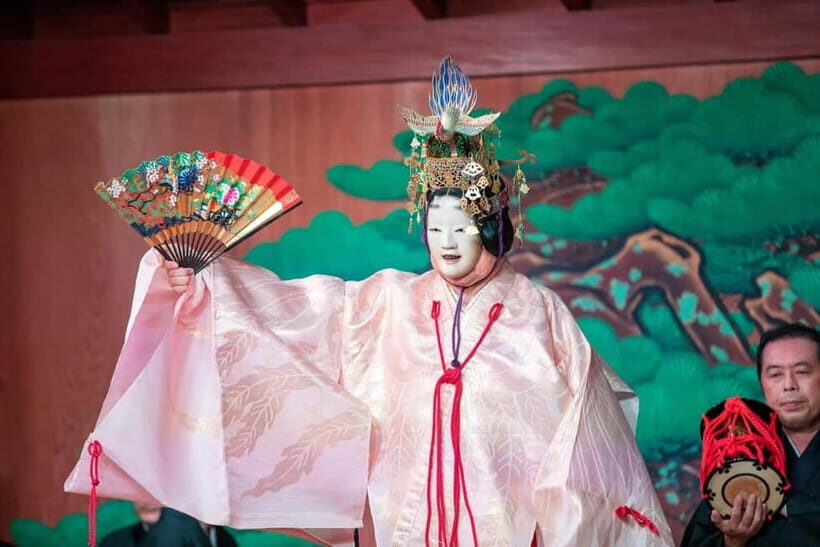
The core of the experience is the Noh performance itself. It’s designed for first-timers, and it includes English subtitles, so you can follow even if Japanese isn’t your thing.
Here’s what to expect in terms of vibe. Noh is not built for loud reactions or constant pacing changes. The power comes through restraint: measured movement, haunting musical texture, and a story told with repetition and precision. If you go in expecting a fast, modern show, you’ll miss the point.
Subtitles help you catch the meaning while still letting the performance breathe. You’re not stuck reading every line, and you don’t need to understand every word perfectly to feel the atmosphere. The goal is simple: you should finish thinking, I get what I just watched.
Two rules to remember: video recording is not allowed, and photography inside is also prohibited. Bring your attention instead of a phone camera, and plan to take notes in the moment if that helps you process later.
The Hands-On Post-Show Workshop: Masks, Costumes, Instruments
After the performance, the experience shifts from watching to doing. This is where the tour becomes more than a ticket.
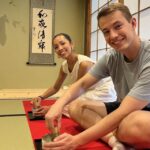
You’ll get to try on Noh masks and costumes, and you’ll also explore the musical instruments used in the performance. One highlight for instrument lovers: you should expect at least the ensemble’s drum element to be part of the hands-on time. In practice, that means you can get a feel for how sound and rhythm work in Noh, not just hear it from your seat.
Trying on masks is a big deal in Noh culture. A mask isn’t a costume accessory; it’s part of how the actor communicates. The shape controls expression and forces a particular style of movement. If you try one yourself, you quickly understand why Noh actors are so deliberate.
Costumes do something similar. They affect posture, motion, and how a person carries presence. Even if you don’t know the technical terms, you’ll feel the difference right away.
A practical expectation check: this is a two-hour experience total, so the workshop time is hands-on but not an all-day museum tour. It’s ideal for getting a close-up understanding, then moving on with your day.
Q&A Energy and Getting Real Answers in English
One of the best parts of this kind of small theater experience is that questions don’t always end with the curtain call. In at least one session, the theater’s owner answered more than 10 audience questions, supported by an English translator.
That’s valuable because Noh questions are rarely simple. You might wonder why a certain movement repeats, what a costume detail signals, or how the music relates to the story. When the answers come directly from the theater side, you get clearer, more practical context than generic facts.
If you want to get the most out of this, come ready with one or two specific questions. Even something basic like what to watch for in the actor’s movement, or how masks affect performance, can turn the final stretch into a mini lesson.
And if you don’t ask anything, that’s fine too. The experience is still built to make Noh feel accessible without requiring you to be “the curious one.”



Who This Osaka Noh Experience Is Best For
This is a strong choice if you’re new to Noh and you want an English-friendly entry point. The combination of an up-front explanation and English subtitles makes it far less intimidating than most traditional performances.
It also fits well if you love hands-on travel. The mask and costume try-on, plus the chance to handle instruments, is the kind of experience that makes the art feel physical. You don’t just watch culture. You touch the tools and signals.
A note on suitability: this experience is not listed as appropriate for children under 7. That usually means it’s best for adults and older teens who can sit through a traditional performance pace without needing constant distraction.
If you’re the traveler who likes to pair sightseeing with a calm cultural stop, you’ll like the location. Being near Osaka Castle means you can connect the day’s story: samurai-era setting, then a performance art that grew into a refined classic.
Price and Value: Why $32 Works for Beginners
At $32 per person for about 2 hours, this offer holds up because it includes more than the show.
You’re getting:
- the Noh performance
- a pre-show explanation
- English subtitles
- a post-show try-on and instrument exploration
For many cultural performances, you pay for the seat and then figure out the rest on your own. Here, the experience is intentionally structured so you don’t have to do that decoding yourself. The explanation plus subtitles do the heavy lifting, and the workshop turns understanding into memory.
Is it “cheap”? That depends on your travel budget. But for Osaka, $32 feels like a fair price for a beginner-friendly cultural ticket plus hands-on access. And the two-hour duration helps value too. You’re not sacrificing half a day to get a meaningful experience.
If you like to keep plans flexible, you may also want to take advantage of the reserve-then-pay-later approach and free cancellation up to 24 hours in advance.
Should You Book This Noh Performance With English Subtitles?
I’d book this if your goal is to actually understand Noh, not just sit in the room and hope it clicks. The English subtitles plus the pre-show primer are the deciding factors. Then the mask-and-costume workshop makes the whole thing stick.
I’d think twice if you dislike traditional pacing. This is a performance art that rewards patience, attention, and a quieter kind of curiosity. Also, since photography and video recording are not allowed inside, it’s not the best fit if you want to document everything with your phone.
If you’re in Osaka and you want a meaningful cultural stop that’s close to Osaka Castle, this is the kind of experience that gives you a story to tell later: not just what you saw, but why it mattered.
FAQ
FAQ
Where does the Noh performance take place?
It takes place at Yamamoto Noh Theater in Osaka, in the former samurai residence area near Osaka Castle, about a 10-minute walk away.
How long is the experience?
The total duration is 2 hours.
Is the performance available in English?
Yes. There is an explanation before the performance and the performance includes English subtitles.
Can I take photos or record video inside?
No. Video recording is not allowed, and photography inside is also not allowed.
What happens after the performance?
After the show, you can try on Noh masks and costumes and explore musical instruments used in the performance.
When was Yamamoto Noh Theater established?
It was established in 1927 and is the oldest Noh theater in Osaka.
Is the theater wheelchair accessible?
Yes. The experience is listed as wheelchair accessible.
Is this suitable for young children?
It is not suitable for children under 7.
What languages are used by the host or greeter?
The host or greeter is available in English and Japanese.
Can I cancel for a refund?
Yes. You can cancel up to 24 hours in advance for a full refund.