REVIEW · OSAKA
Osaka Food Quest: Self-Guided Culinary & History Adventure
Book on Viator →Bookable on Viator
Osaka pulls you in fast, and this quest plays along. You use your smartphone to solve 10 puzzles as you walk, snack, and learn how the city shaped (and was shaped by) food culture.
Two things I like a lot: it’s genuinely self-guided at your pace, and it links tasty stops with real place-based stories you can actually see on the street.
The one catch is also the main one: you’re relying on your phone. If your screen brightness, battery, or network is shaky, you’ll feel it. Bring a charged device and plan for a slower pace if you want to eat at each pause.
In This Review
- Quick take: what makes Osaka Food Quest work
- Self-Guided on Your Phone: how the quest actually plays
- Starting at Ebisu Bridge: Osaka’s curse, plus a practical shortcut
- Konamon Museum for takoyaki: when learning includes eating
- Horumon at Showa Taishu Horumon Dotonbori: beef offal, Osaka-style
- Hozenji Temple (built 1637): Fudo Myoo and Dotonbori’s entertainment roots
- National Bunraku Theater: the clue that points to seats and stagecraft
- Kuromon Market at the black gate: fish-market origins
- Namba Yasaka Shrine and the Osaka Castle move
- Timing, pace, and the sweet spot for eating
- Price and value: $7.85 for a route with story fuel
- Who should book this Osaka food-history walk
- Book it or skip it: my decision checklist
- FAQ
- How much does Osaka Food Quest cost?
- How long does the quest take?
- What do the 10 puzzles involve?
- Do I need a physical tour guide?
- Can I pause and resume the quest?
- Where does the quest start and end?
- What areas and stops will I walk by?
- Are there any admission fees at the stops?
- What are the available hours to do it?
- Is free cancellation available?
Quick take: what makes Osaka Food Quest work
- A phone-led walking game: 10 clue challenges that keep you looking around instead of just scrolling
- Food + history in real locations: from Ebisu Bridge stories to temple and theater stops
- Built-in flexibility: you can pause and resume anytime (handy for snacks and photos)
- Moves through the Osaka basics: Dotonbori food lanes, Kuromon Market, and nearby cultural landmarks
- Cheap for a full street experience: at $7.85, you’re paying for time, route, and storytelling, not a guide in a van
Self-Guided on Your Phone: how the quest actually plays
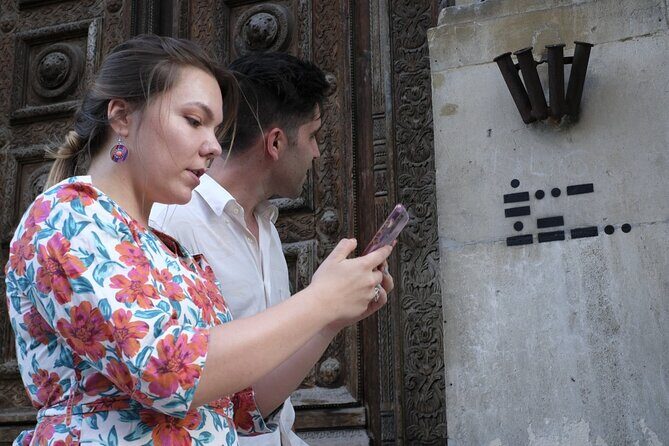
This is a private, self-guided activity. No physical tour guide follows you around, so the experience is built around your smartphone code and the puzzle flow. Once you start, the game pushes you forward by asking you to look closely, answer a clue, then move to the next spot.
You get mobile access code access plus 10 puzzle-based challenges with a storyline focused on Osaka’s food and history. The route is designed so you’re walking between recognizable areas—especially around Dotonbori—while the questions connect you to what you’re seeing.
You can pause and resume anytime. That matters because Osaka is not the kind of city where you want to speed-run every stop. If you spot something you want to eat, you can take the detour and come back without feeling like you’re falling behind.
You can also read our reviews of more food & drink experiences in Osaka

Starting at Ebisu Bridge: Osaka’s curse, plus a practical shortcut
The quest begins near Dotonbori at 1 Chome-6 Dotonbori, Chuo Ward. Stop one is Ebisu Bridge, a small landmark with two lives: local lore and local navigation.
The story you’ll work with ties Ebisu Bridge to a legendary curse involving Osaka’s Hanshin Tigers baseball team. Even if you’re not a big sports fan, this kind of local myth is a good way to wake up your attention span. You’re primed to notice small details instead of blasting through the street.
The bridge also has a practical side: it connects Shinsaibashi-suji and Ebisubashi-suji shopping districts. In other words, it’s a real “link” point. That’s helpful for you because the quest isn’t just about fun; it’s about getting you moving cleanly between food corridors.
The stop is listed as free (admission ticket free). So you can spend your time on the clue, not on ticket lines.
Konamon Museum for takoyaki: when learning includes eating
Next up is Konamon Museum, positioned as a place where you can eat, learn, and make takoyaki—often described as Osaka’s soul food. That’s the kind of pairing I like: a specific dish name plus a setting that makes it feel like more than just a menu item.
The quest asks you to look around to find the answer and move on. That’s important. If your goal is purely eating, you might miss the point. Here, your best strategy is to treat the museum area as both a snack stop and a clue stop.
Even if you don’t sign up for hands-on making (the details aren’t spelled out here), the puzzle-driven approach still helps you read the space. You’ll pay attention to context—how Osaka talks about takoyaki, not just how it tastes.
Horumon at Showa Taishu Horumon Dotonbori: beef offal, Osaka-style
Then the route turns you toward a horumon restaurant specializing in beef offal. Horumon is one of those foods people either love hard or approach cautiously. Either way, seeing it framed through a puzzle makes it less intimidating.
The quest again uses the look-around method: find the answer, then advance. So your job isn’t to learn every food fact from a textbook. Your job is to use the setting as your guide.
Practical advice: if you’re food-averse, you don’t have to force a bite just because the quest hints at the specialty. But if you’re curious, this is exactly the kind of moment where trying a small portion can turn into one of your Osaka memories.
Hozenji Temple (built 1637): Fudo Myoo and Dotonbori’s entertainment roots
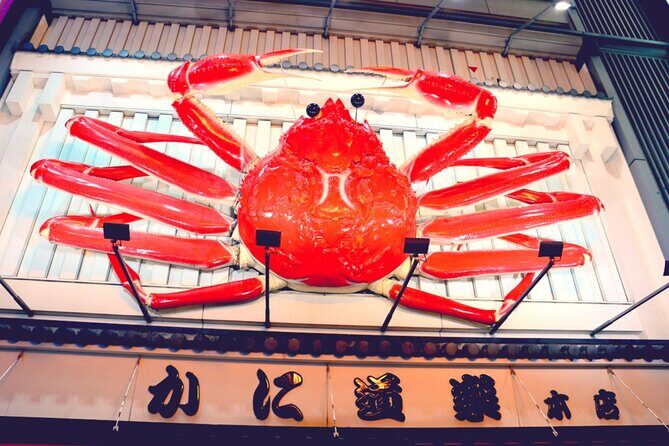
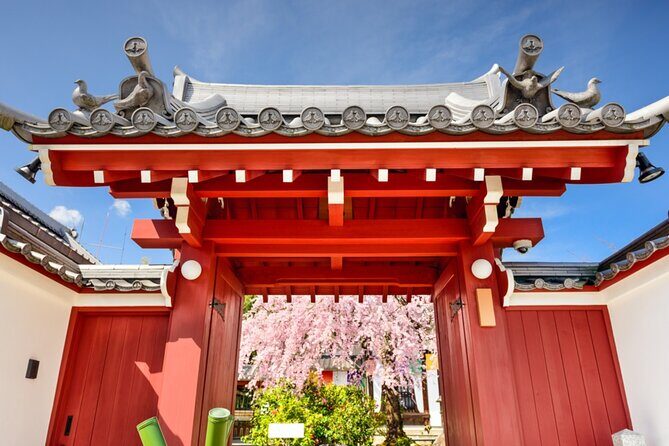
Hozenji Temple is a big mood shift from street food to sacred space, and that contrast is part of the value. The temple was built in 1637 and pays homage to Fudo Myoo, one of the five guardians of Buddhism.
You’ll also get a historical angle that makes the Dotonbori area feel less like a theme park. In the 1600s, Namba and the wider Dotonbori neighborhood became a center for entertainment, with dramatic performances of kabuki and bunraku showing up across the district.
That’s a smart pairing for this quest. Osaka is famous for food, but it’s also a city that loves performance, rhythm, and public life. When you connect the dots here, the temple doesn’t feel like an awkward detour. It feels like a missing chapter.
The stop is structured like the others: you’ll look around to solve the challenge and continue.
You can also read our reviews of more tours and experiences in Osaka

National Bunraku Theater: the clue that points to seats and stagecraft
The quest heads to the National Bunraku Theater, established in 1984 as the home of Bunraku in the Kansai region. This is a standout stop because it gives you a concrete sense of scale.
The main hall has 753 seats, and there’s also a small hall with 159 seats. The main hall is used mainly for Bunraku performances, but it can also host traditional Japanese dance and other drama.
The puzzle asks you to look around to find the answer. That pushes you to notice theater architecture and cues, not just pass a landmark for a photo.
Even if you don’t plan to watch a performance, this stop gives you the cultural context behind Dotonbori’s old entertainment energy. It’s a reminder that Osaka’s nightlife and food culture grew next to stage culture—not apart from it.
Kuromon Market at the black gate: fish-market origins
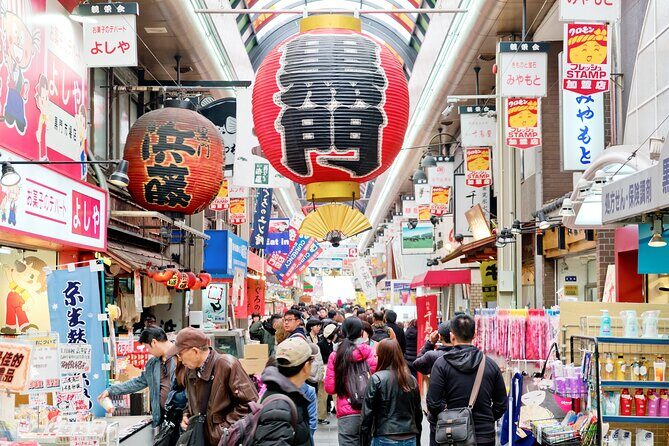
Next comes Kuromon Market, a place you’ll probably recognize the moment you arrive. The name means black gate, and the area originally functioned as a fish market around 1822. It was approved as an official market in 1902.
Here’s the kind of detail that makes puzzles worth doing: the name is said to come from the black gate of Enmyo Temple, which stood nearby until 1912, the final year of the Meiji Period.
That temple-to-market connection is the point. You’re not just eating in a market. You’re standing on layers of Osaka’s changing priorities—religion, commerce, daily life—stacked in one corridor.
Kuromon is listed as admission ticket free at this stop, so you can spend more time tasting and less time paying entry fees.
Namba Yasaka Shrine and the Osaka Castle move
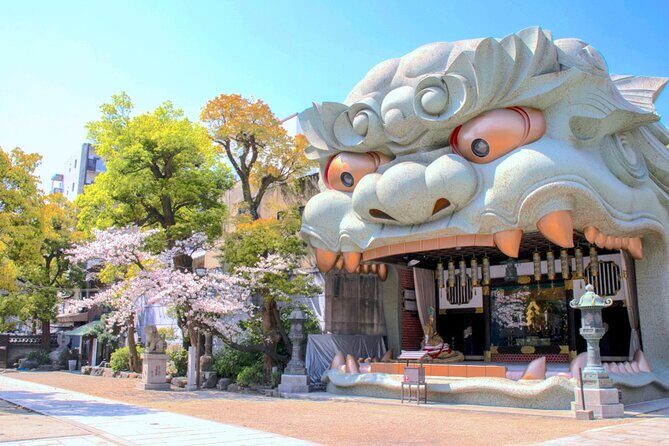
The quest finishes with Namba Yasaka Shrine. The story here goes straight to the heart of Osaka’s power shifts.
The shrine is said to have been commissioned by Emperor Hanzei in honor of his father, Emperor Nintoku. Then the location gets relocated: Hideyoshi Toyotomi’s construction of Osaka Castle is part of why the shrine was moved to its current position. The present-day Kawachi Matsubara City was originally the shrine’s site.
That’s a useful “history in motion” lesson. Osaka’s map has changed because leaders built, moved, and reorganized. By the time you reach this point, the quest has already shown you food and culture in the context of changing times.
Again, you’ll solve a clue by looking around, then wrap up the route. The end point is 2-chōme-9-19 Motomachi, Naniwa Ward.
Timing, pace, and the sweet spot for eating
The experience is listed at about 1 hour, but Osaka walking quests rarely finish on the dot. The smart move is to treat 1 hour as a minimum for puzzle-only progress.
If you’re the type who stops for snacks, reads signage, and actually looks at the architecture, plan on 2 hours as a realistic pace. If you want to taste a few things and linger at Kuromon, give yourself more time—around 3 hours is a safer bet.
Because you can pause and resume, you don’t need to rush. My practical advice is to pick one “must-eat” item (for most people that’s takoyaki or something from Kuromon) and keep the rest as optional.
Also: carry water. Dotonbori heat and humidity can make puzzle-solving feel like an athletic event.
Price and value: $7.85 for a route with story fuel
At $7.85 per person, this is priced like a budget-friendly day activity, not a guided tour. You’re not paying for a person’s time. You’re paying for route design, puzzle prompts, and the phone-based storyline.
That’s a good bargain if you like self-direction and want a structured reason to explore Dotonbori and nearby landmarks. It’s also a solid option for a solo traveler because the activity doesn’t depend on matching schedules with a group.
It’s less ideal if you hate using your phone in public or you want a live human to answer questions on the spot. Since there’s no physical guide included, you’re the guide here.
Still, for the areas covered—Ebisu Bridge, takoyaki-focused Konamon Museum, a horumon stop, Hozenji Temple, National Bunraku Theater, Kuromon Market, and Namba Yasaka Shrine—$7.85 can feel like good value when you use the puzzle time well.
Who should book this Osaka food-history walk
This works best for:
- Food lovers who also like learning through place-based clues
- Couples and small groups who want a shared plan but not a rigid walking pace
- Families who can handle phone-based tasks at their own rhythm
- Solo travelers who want a safe, clear route without needing to book a guided group
It might be a mismatch for:
- People who want spoken narration from a guide
- Anyone who has trouble reading on a small screen while walking
- Travelers who prefer fully free-form wandering with no prompts
One more practical note: service animals are allowed, and the activity is described as most travelers can participate. So it’s fairly flexible, at least in general terms.
Book it or skip it: my decision checklist
Book this if you want:
- A fun way to explore Dotonbori and nearby cultural landmarks without paying for a full guide
- A phone-led route with built-in breaks so you can snack as you go
- A story framework that connects food with Osaka’s older entertainment and market roots
Skip it if you:
- Know you’ll be phone-fatigued (low battery, weak connection, or you dislike app-based tasks)
- Want deep, live answers and extra context that only a person can provide
If your phone is charged and you enjoy solving small tasks while walking, this is a clever way to turn an ordinary afternoon stroll into a food-and-history route you can actually remember.
FAQ
How much does Osaka Food Quest cost?
It’s listed at $7.85 per person.
How long does the quest take?
It’s shown as about 1 hour (approx.). In practice, your pace can be longer if you stop to eat and take your time with the puzzles.
What do the 10 puzzles involve?
You solve 10 puzzle-based challenges using your smartphone. At each stop, you look around and answer the clue to move to the next location.
Do I need a physical tour guide?
No. A physical tour guide is not included. The experience is mobile-based, with a mobile access code for the quest.
Can I pause and resume the quest?
Yes. You can pause and resume anytime.
Where does the quest start and end?
It starts at 1 Chome-6 Dotonbori, Chuo Ward, Osaka, and ends at 2-chōme-9-19 Motomachi, Naniwa Ward, Osaka.
What areas and stops will I walk by?
You’ll cover Ebisu Bridge, Konamon Museum (takoyaki), Showa Taishu Horumon Dotonbori (beef offal), Hozenji Temple, the National Bunraku Theater, Kuromon Market, and Namba Yasaka Shrine.
Are there any admission fees at the stops?
The itinerary marks admission ticket free for Ebisu Bridge and for Kuromon Market. Admission details for other stops aren’t specified in the information provided.
What are the available hours to do it?
It lists hours as 12:00 AM to 11:59 PM, Monday through Sunday.
Is free cancellation available?
Yes. You can cancel for free up to 24 hours in advance for a full refund.