REVIEW · OSAKA
Half day Osaka Bay Area Cycling with E-Assist Bicycle Tour
Book on Viator →Operated by Banri · Bookable on Viator
Bridges, shrines, and local ferries in one ride. This half-day Osaka Bay cycling tour uses e-assist bikes to whisk you past Sumiyoshi Taisha Shrine, Namihaya Bridge, and the Kizu River area, with a guide handling the route so you’re not glued to a map.
I love two things most: the group stays very small at max 3 travelers, and you’ll ride into working neighborhoods that most visitors skip. I also like that it’s not just “pretty views” time; it’s a practical route that stacks in culture, bridges, and a couple of short ferry crossings that make the bay feel like a real place.
The main drawback to keep in mind is that this is road cycling near heavy truck traffic, and some bridge access can be steep or tricky. If you’re tall, the bike may also feel small (over 180 cm), so it’s worth thinking about comfort before you book.
In This Review
- Key highlights before you go
- Tiny group, big bay energy: what your half-day ride is like
- Price and logistics: what $78.38 buys you (and what it doesn’t)
- Getting set up at Lawson: bikes, traffic, and comfort checks
- Stop-by-stop: Sumiyoshi Taisha, bridges, ferries, and the bay’s working edges
- Stop 1: Sumiyoshi Taisha Shrine (about 30 minutes)
- Stop 2: Shinkizugawa Bridge (about 20 minutes)
- Passing the Black Rain factory district (quick stop)
- Stop 3: Funamachi Ferry Facilities (about 10 minutes)
- Stop 4: IKEA Tsuruhama lunch break (about 15 minutes)
- Stop 5: Namihaya Bridge (about 20 minutes)
- Stop 6: Mt. Tempozan area break (about 40 minutes)
- Photogenic expressway junctions and pier architecture (short moments)
- Old-style arcade shopping area (short stop)
- Stop 7: 甚兵衛渡船場 (大正区泉尾側) ferry (about 10 minutes)
- Stop 8: Sensai Bridge (about 15 minutes)
- Stop 9: Sembonmatsu Bridge (about 15 minutes)
- The guide factor: Banri and why you shouldn’t ride this one alone
- Lunch timing: IKEA Tsuruhama vs. a Japanese diner at Tempozan
- Who this tour suits best (and who should think twice)
- Is it worth booking? The value case for this Osaka Bay e-bike ride
- Should you book this Osaka Bay cycling tour?
- FAQ
- How long is the Osaka Bay area cycling tour?
- How much does it cost, and what’s included in the price?
- Where do I meet, and what time does the tour start?
- What is the group size?
- Which stops are included during the ride?
- Do I need to bring lunch?
- Do I need to be an experienced cyclist?
- Is there anything I should know about bike size and comfort?
- What happens if it rains or I want to cancel?
Key highlights before you go
- Max 3 travelers means a calmer pace and real guidance on the go
- E-assist support makes bridges and long stretches manageable without draining your day
- Sumiyoshi Taisha Shrine and bay bridges mix culture with serious Osaka views
- Local-only bicycle/pedestrian ferries cut across water in about a minute
- Pass spots connected to the Ridley Scott film Black Rain in the factory district
- A break at Mt. Tempozan includes sights like Kaiyukan and Tadao Ando’s architecture (plus food time)
Tiny group, big bay energy: what your half-day ride is like
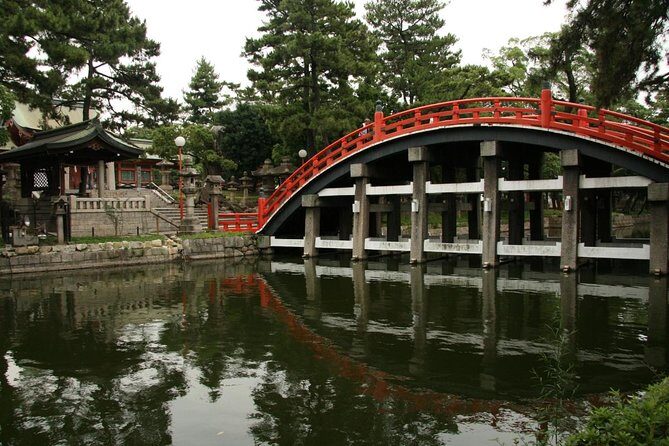
This tour is built for people who want Osaka Bay’s highlights without wrestling with transit schedules or learning a maze of streets. You meet in the morning, get an e-bike and helmet, and then follow your guide through a route that feels local from start to finish. Instead of spending your time “getting there,” you spend it looking out at water, bridges, and the city’s edge.
The small size matters more than you’d think. With up to three travelers, the guide can adjust speed, point out turns clearly, and help when roads get crowded. You’re also more likely to ask questions about what you’re seeing—shrines, bridges, and even the architecture around Tempozan—without the usual tour bottleneck.
And yes, the e-assist is the real deal here. You’re still pedaling, but the motor support helps you keep momentum on bridge ramps and longer stretches. That turns what could be a tiring “bike workout” into something more like a smooth moving sightseeing day.
You can also read our reviews of more cycling tours in Osaka
Price and logistics: what $78.38 buys you (and what it doesn’t)
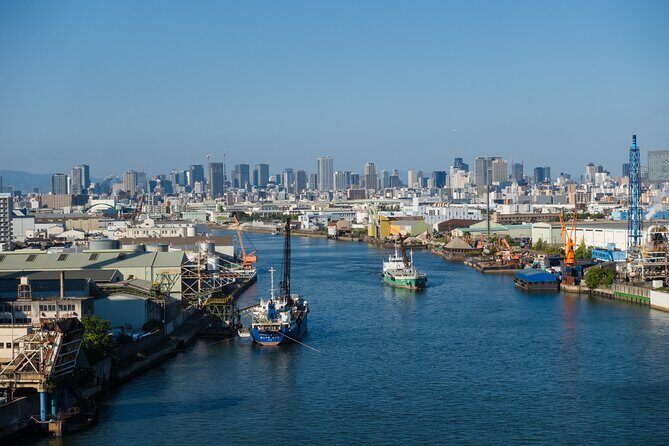
At $78.38 per person, you’re paying for a guided ride plus gear: bike rental, helmet, and bottled water are included. That’s good value in Osaka, where guided activities often charge extra for basic equipment.
Two things are not included. Lunch is on your own, and you’ll choose between a Japanese diner stop around Mt. Tempozan or a vegetarian option at IKEA Tsuruhama. If you go into the tour planning to cover your meal, you won’t feel any surprise sticker shock halfway through.
You’ll also want to plan for time. The duration is listed as about 4 to 6 hours, and the route is packed with multiple stops—some are short photo moments, and a couple are longer breaks.
Getting set up at Lawson: bikes, traffic, and comfort checks
You start at Lawson Tamadenaka 2-chōme2-chōme-6-12 in Nishinari Ward, and the tour ends back at the same meeting point. The meeting spot is near public transportation, which makes it easier to arrive without complicated transfers.
Start time is 10:00 am, so it’s a solid morning activity. You’ll get your e-bike, a helmet, and bottled water right away, which helps keep the first hour stress-free.
Now the practical reality: the route is heavily trafficked by large trucks. That doesn’t mean you’re constantly sitting in fumes, but you should assume you’ll be riding near busy roads at times. If you’re sensitive, the tour notes recommend bringing a mask and eye drops. I’d treat that as “smart insurance,” not an overreaction.
Bike fit is another real-world factor. The tour notes say a bicycle may be too small for people over 180 cm. If you’re close to that range, consider whether the saddle position and reach would work for you. Also note the limits: minimum height is 140 cm, and maximum weight is 90 kg. And of course, you need to be able to ride a bicycle comfortably.
Stop-by-stop: Sumiyoshi Taisha, bridges, ferries, and the bay’s working edges
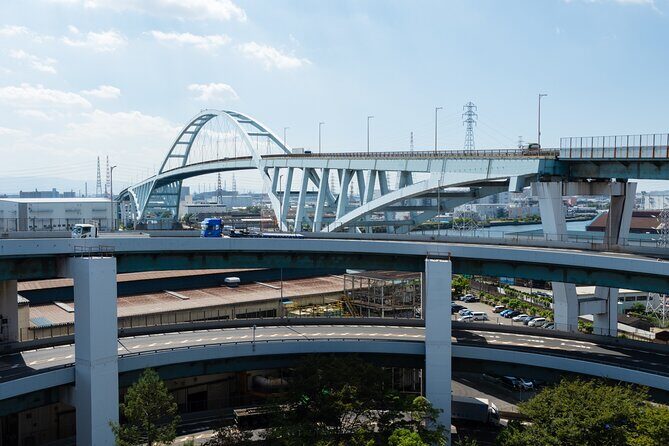
This route is designed like a highlights reel you can feel in motion—shrines, bridges, ferries, and neighborhood change as you ride from shrine grounds toward the waterfront.
Stop 1: Sumiyoshi Taisha Shrine (about 30 minutes)
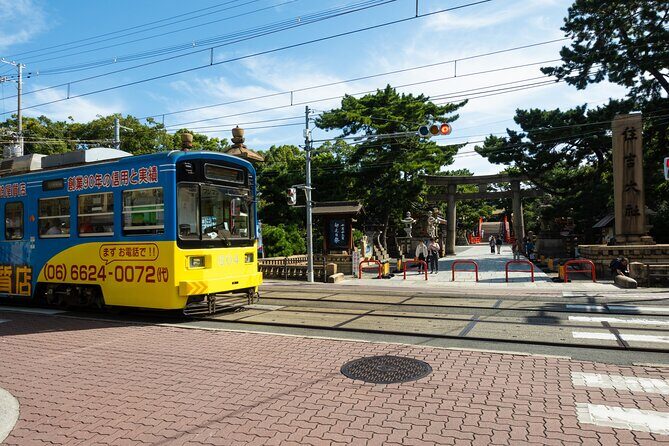
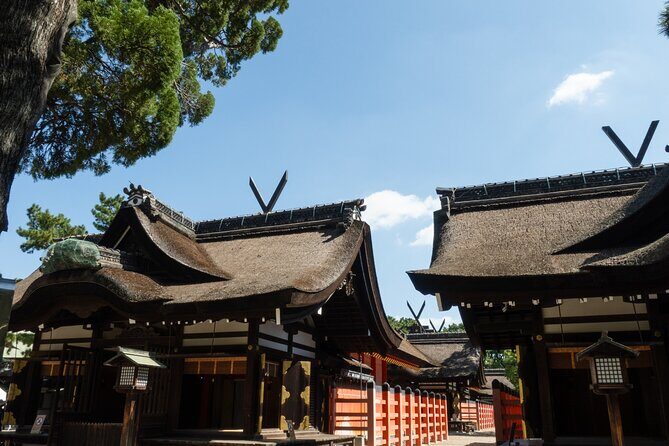
You begin at Sumiyoshi Taisha Shrine, one of Japan’s oldest shrines, with nearly 2,000 years of history. It enshrines the three gods of the sea, which makes this start feel more meaningful than “random sightseeing.” The shrine building is designated as a Japanese national treasure, and admission is free here.
Why it’s worth your time: the morning light and calm mood make the shrine feel grounded before the ride turns busy. It’s also a reminder that Osaka Bay isn’t just scenery—it has long ties to sea life and local worship.

Stop 2: Shinkizugawa Bridge (about 20 minutes)
Next comes Shinkizugawa Bridge, where the view aims toward Tennoji and the Ikoma Mountains in the background. The ride includes the descent of a three-stage loop bridge—excellent for photos, and also a good “feel the structure” moment while you’re still fresh.
Passing the Black Rain factory district (quick stop)
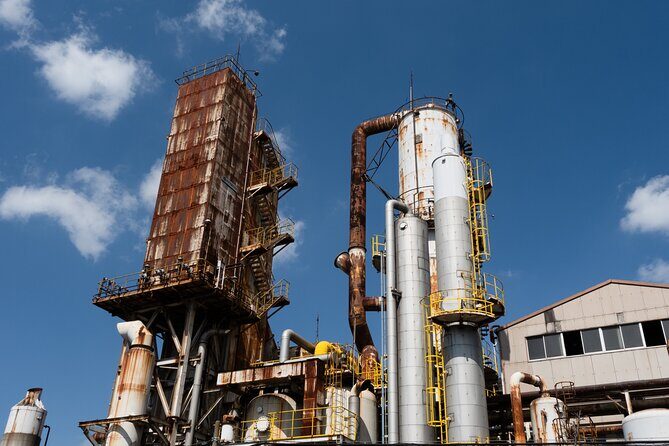
Between major sights, you pass through a factory district that was used in Ridley Scott’s Black Rain, filmed in Osaka and New York City. Even if you didn’t come for film locations, it’s a neat contrast: Osaka’s industrial side sits right alongside iconic landmarks.
Stop 3: Funamachi Ferry Facilities (about 10 minutes)
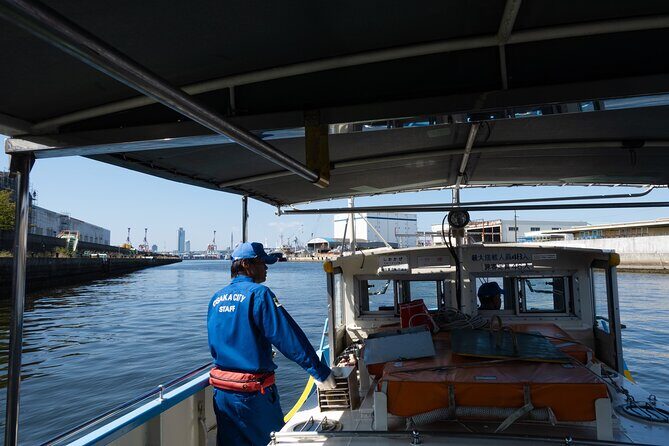
Then you do something that makes the whole day more fun: a short local ferry crossing. The Funamachi ferry facilities are for bicycles and pedestrians, operated by Osaka City, and used by locals. The boat trip is only about a minute.
What you get from this: it breaks up the cycling rhythm, and it also lets you experience the bay’s “transport style,” not just the bike-road side.
Stop 4: IKEA Tsuruhama lunch break (about 15 minutes)
You’ll stop at IKEA Tsuruhama for a break. Lunch isn’t included, but the tour notes specify a vegetarian option for this meal stop: the Sweden food market at IKEA.
This is one of those practical choices that makes the tour work for more people. If you’re vegetarian, it’s a relief to have a known option without hunting around.
Stop 5: Namihaya Bridge (about 20 minutes)
Namihaya Bridge is positioned almost in the middle of the bay area, and it offers a 360-degree view of Osaka city. There are also ships passing through a channel beneath it, with a height of 47 meters above the water.
This is one of the stops I’d save your best photos for. The bay view gives context for everything you’ve already seen: city blocks, bridges, and the way water shapes movement.
Stop 6: Mt. Tempozan area break (about 40 minutes)
You reach Mt. Tempozan for a longer break. The route passes sights including the aquarium Kaiyukan, a Ferris wheel, and Tadao Ando architecture. Lunch happens here at a Japanese diner, and Tempozan is known for cherry blossoms in spring.
Also keep an eye out for the three expressways intersecting and subway tracks crossing in the area. It’s very “Osaka future-meets-daily-life” in the way the infrastructure stacks on itself.
You’ll also want to use this time to reset if your legs feel a little tired. Even with e-assist, bridge rides and road surfaces can add up.
Photogenic expressway junctions and pier architecture (short moments)
You’ll get a couple of quick “wow” photo settings here—three expressways crossing with subway tracks, and intricate pier architecture. The exact time spent at each is short, but the visual payoff is big for such a compact stop.
Old-style arcade shopping area (short stop)
There’s also an old-style arcade shopping center stop. It’s a good change of pace from open bay views and fast-moving bridges, and it gives you a taste of everyday storefront rhythm.
Stop 7: 甚兵衛渡船場 (大正区泉尾側) ferry (about 10 minutes)
Another quick but memorable ferry crossing comes at 甚兵衛渡船場. Like the earlier one, it’s operated by Osaka City and used by locals, limited to bicycles and pedestrians. It’s again about a minute.
This repeated element is part of the charm. Two short ferry rides in one half-day tour make the bay feel like a network instead of a backdrop.
Stop 8: Sensai Bridge (about 15 minutes)
Sensai Bridge comes with a practical note: the bicycle road is steep. The tour says you can take a ferry to cross the river instead, which solves the “steep bike segment” problem without forcing you to struggle.
That’s exactly the kind of route planning that makes a guided bike tour feel easy.
Stop 9: Sembonmatsu Bridge (about 15 minutes)
You end at Sembonmatsu Bridge, which crosses the Kizu River and connects to the Dotonbori side. Locals nickname it Megane-bashi (glasses bridge) because its shape resembles a pair of glasses.
Why this ending lands: you finish with a recognizable Osaka flavor. The bridge shape makes for great photos, and the connection toward Dotonbori gives you a sense of how the bay area ties back into the city’s core.
The guide factor: Banri and why you shouldn’t ride this one alone
The route is packed. You could technically piece together shrine access, bridges, and ferries on your own, but you’d lose the main benefit: a smooth line through neighborhoods you might not naturally choose.
Your guide, Banri, is central to the experience. The tour includes history and context along the way, and Banri also uses maps to explain how areas have changed over time. That turns a bridge or shopping street from “I saw it” into “I understand why it’s here.”
Even with e-assist and a small group, some bridge access points can be tricky. A good guide reduces stress by showing the safest line and reminding you where to pay attention. The overall vibe with Banri is patient and supportive, which matters when you’re sharing roads that include trucks and busy junctions.
Lunch timing: IKEA Tsuruhama vs. a Japanese diner at Tempozan
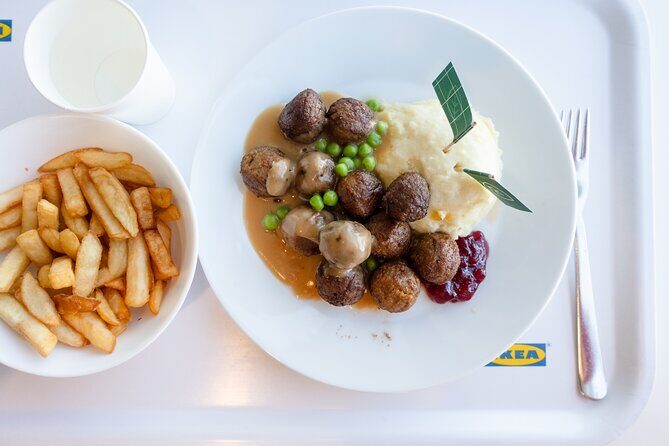
Lunch is not included, but the tour gives you two clear options based on where you pause.
- At IKEA Tsuruhama, vegetarians can eat at the Sweden food market inside IKEA.
- Around Mt. Tempozan, lunch is at a Japanese diner.
Why this helps you as a planner: you don’t have to guess where food is close to your route. You just decide what kind of meal you want, then use the break to refuel and keep riding comfortably.
Who this tour suits best (and who should think twice)
This is for you if you like biking, want a structured half-day, and prefer local routes over the “top 10 must-sees” approach. The mix of shrines, bridges, ferries, and neighborhood streets fits people who enjoy seeing how a city functions day to day.
You’ll also appreciate it if you don’t want to coordinate rail lines and buses while trying to cover distance. The whole point is to explore without map reading stress.
Think twice if:
- You’re uncomfortable riding near busy truck traffic. Bring the recommended mask and eye drops if that’s a concern.
- You’re taller than about 180 cm and worried the bike won’t fit well.
- You want long, slow sightseeing breaks. This route moves with short-to-medium stop times, so it’s not a “linger everywhere” tour.
Is it worth booking? The value case for this Osaka Bay e-bike ride
I look at value in two parts: what’s included, and what you get for your time.
What you get:
- E-bike assistance plus helmet rental
- Bottled water
- A guided route that strings together landmarks, ferries, and bay views in about half a day
- A small group that makes it easier to get help on tricky segments
What you pay:
- $78.38 per person, with lunch extra
For a half-day activity in Osaka that includes gear and professional routing, this pricing feels fair. The real value isn’t just the bike—it’s the ability to reach spots like local ferry points and bay bridges without spending your morning in planning mode.
Should you book this Osaka Bay cycling tour?
Book it if you want an efficient half-day that feels like you’re riding through real Osaka Bay life, not just hitting a few photo backdrops. The small group size, the e-assist support, and the inclusion of local ferries make it a standout way to see the city edge.
Skip it (or at least rethink) if traffic stress is a big issue for you, you’re very sensitive to road fumes, or you’re worried about bike fit due to height. If those are manageable concerns, you’ll probably love how the day flows—from Sumiyoshi Taisha’s sea-god start to the glasses-like shape of Sembonmatsu Bridge.
FAQ
How long is the Osaka Bay area cycling tour?
The tour lasts about 4 to 6 hours.
How much does it cost, and what’s included in the price?
It costs $78.38 per person. Included are bicycle use, a helmet, and bottled water. Lunch is not included.
Where do I meet, and what time does the tour start?
You meet at Lawson Tamadenaka 2-chome2-chōme-6-12 Tamadenaka, Nishinari Ward, Osaka 557-0044, Japan. The start time is 10:00 am, and the tour ends back at the meeting point.
What is the group size?
The maximum group size is 3 travelers.
Which stops are included during the ride?
The route includes Sumiyoshi Taisha Shrine, Shinkizugawa Bridge, local ferry facilities (Funamachi and 甚兵衛渡船場), IKEA Tsuruhama break, Namihaya Bridge, the Mt. Tempozan area, Sensai Bridge, and Sembonmatsu Bridge.
Do I need to bring lunch?
Lunch is not included. At Tempozan you’ll eat at a Japanese diner, and for vegetarians there is lunch at the Sweden food market at IKEA.
Do I need to be an experienced cyclist?
You should have a moderate physical fitness level and must be able to ride a bicycle. The tour also notes that the road has heavy truck traffic at times.
Is there anything I should know about bike size and comfort?
The bicycle may be too small for people over 180 cm tall. The tour also suggests wearing comfortable clothes that let you ride comfortably.
What happens if it rains or I want to cancel?
The tour requires good weather and may be canceled if there is a 40% or more rain probability. If canceled due to poor weather, you’ll be offered a different date or a full refund. You can cancel for a full refund up to 24 hours before the experience’s start time.