REVIEW · OSAKA
Japanese Traditional Sweets “Nerikiri” making
Book on GetYourGuide →Operated by B.B.Advisors Inc. AN OSAKA · Bookable on GetYourGuide
Watching soft bean paste turn into a neat little sweet feels oddly satisfying, because you’re doing real pastry steps, not just sightseeing. In this Nerikiri workshop, you’ll learn how seasonal designs come together while using white/red bean paste made by long-established Kyoto shops.
I especially like that you make two sweets, both tied to the season, so you get more variety for the time and money. I also like that the class is designed for people who just want to try, with enough guidance (including English support) to help you finish with something you can actually eat.
One consideration: there’s no elevator in the building, so you’ll need stairs to reach the venue.
In This Review
- Key takeaways before you go
- What Nerikiri is, and why the seasonal focus matters
- Kyoto bean paste is the real starting point
- The 65-minute flow: from explanation to two finished sweets
- Flower-shaped Nerikiri and the Kinton-style sweet
- Eating your work on the spot
- Price and value: what $11 gets you in Osaka
- Getting there near Higobashi, Watanabebashi, and Yodoyabashi
- English support and the instructor vibe
- Who should book this Nerikiri class (and who might prefer something else)
- Should you book AN OSAKA Nerikiri making?
- FAQ
- How long is the Nerikiri making experience?
- What can I make during the class?
- Do I eat the sweets after I make them?
- What ingredients are used?
- Is English available during the workshop?
- Where is the meeting point?
- Is there an elevator in the building?
- What is the price, and are there optional extra costs?
- What are the operating hours?
Key takeaways before you go
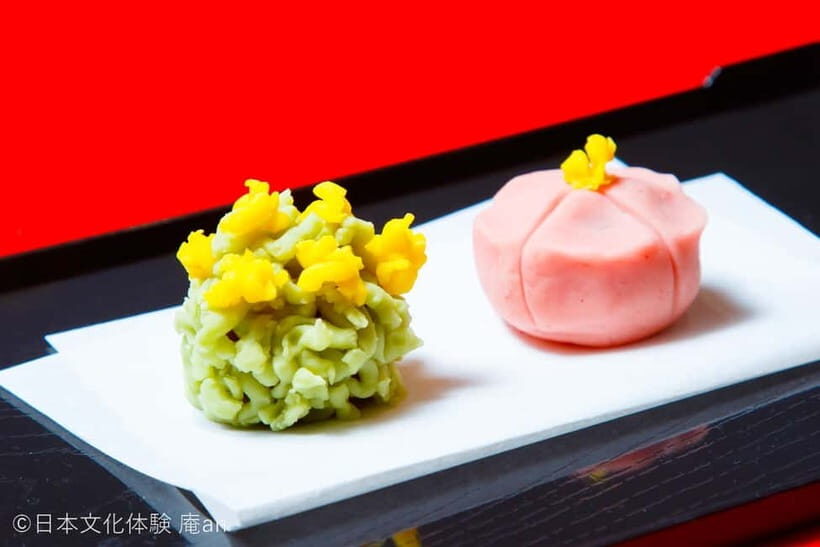
- Two seasonal sweets in 65 minutes: You’re not stuck making one tiny item; you’ll finish a small set.
- Kyoto-made bean paste: The class emphasizes quality ingredients, which matters for taste and texture.
- You can eat on the spot: Your hands-on work ends with a sit-down tasting moment.
- Photo time included: You get a natural reason to slow down and document your results.
- Short, focused structure: Explanation, shaping, finishing, eating—no long detours.
- Optional extras cost extra: Take-out boxes and a completion certificate are available, but not included.
What Nerikiri is, and why the seasonal focus matters
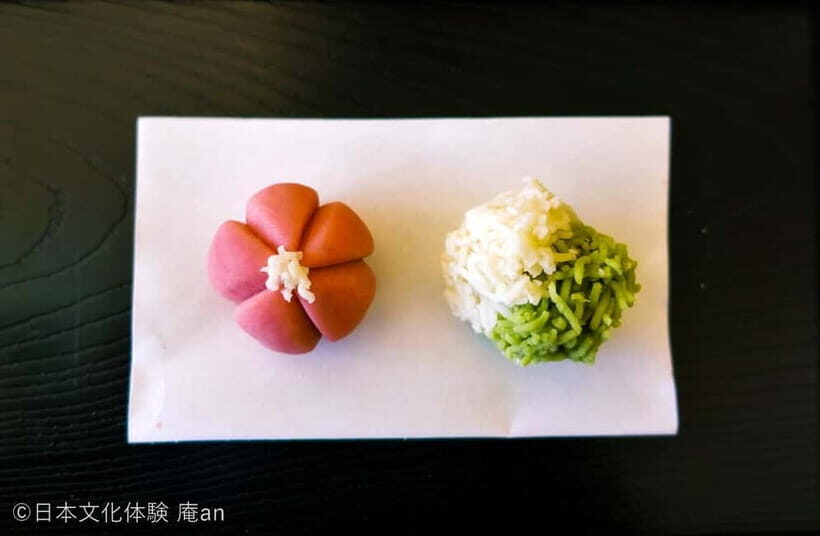
Nerikiri are traditional Japanese sweets built around a smooth, shapeable sweet paste, often flavored and colored so they can resemble seasonal flowers and motifs. The big idea here is that the design isn’t random. You’re making sweets that match the time of year, so the class feels like a small, edible lesson in Japanese seasonal thinking.
In practice, this seasonal focus helps you understand the craft faster. Instead of asking, How do I make something pretty?, you follow a clear target shape. That makes the steps less intimidating, especially if you’re traveling with limited time.
You can also read our reviews of more tours and experiences in Osaka

Kyoto bean paste is the real starting point
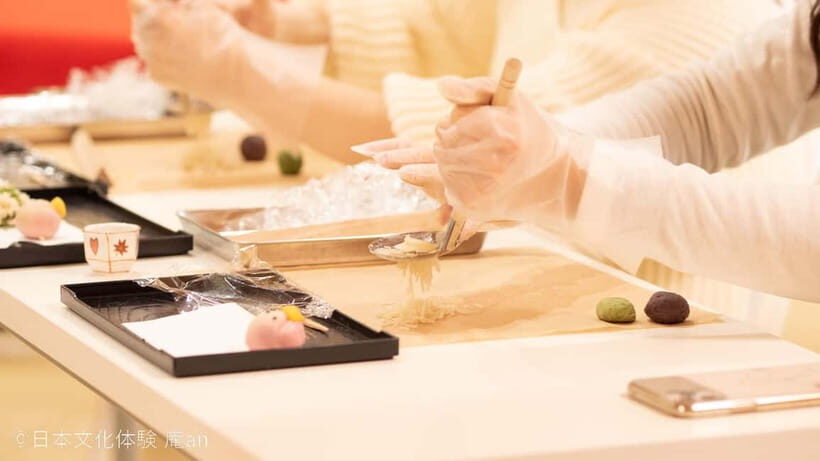
The class highlights that you use white/red bean paste produced by Kyoto’s long-established shops. That’s not just a trivia detail. Bean paste quality shows up in how the paste handles—how easily it can be shaped, how it holds fine edges, and how it tastes after you finish.
If you’ve ever eaten sweets and thought the filling tasted flat, you’ll appreciate the opposite here. A good paste gives you a cleaner sweetness and a better mouthfeel, which makes your homemade sweets feel like they belong in Japan, not like a craft project that happens to be edible.
The 65-minute flow: from explanation to two finished sweets
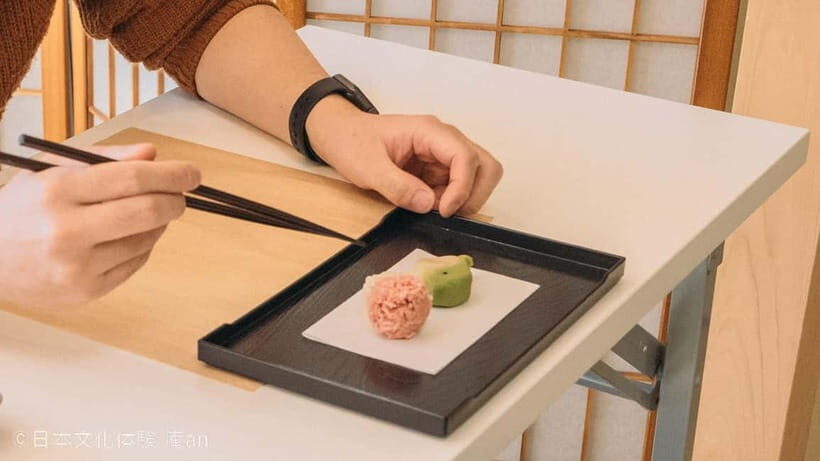
The class runs about 65 minutes, and it keeps a simple rhythm: understand the sweets, shape them, then enjoy them. You start with a brief explanation of traditional Japanese sweets, so you’re not just copying motions—you know what you’re aiming for.
After that, the session shifts into hands-on making. You’ll create one sweet with a flower-shaped style of Nerikiri, and then you’ll move into a second sweet. The workshop structure is designed so you can finish without rushing, even if it’s your first time.
At around the end, you’ll have picture time, then an eating time moment before you leave. This is a small but important detail: you’re guided to admire your work, then taste it while it’s fresh and at its best.
Flower-shaped Nerikiri and the Kinton-style sweet
This experience centers on two specific Nerikiri designs.
First up is the flower-shaped Nerikiri making. Flower shapes are a smart choice for beginners because the design cues are clear: you’re building petals and a central form, and the paste can be manipulated to create layered look. Even if your petals aren’t perfectly symmetrical, the style is meant to be shaped by hand, so slight differences look natural.
Then you’ll make a Kinton Nerikiri. Kinton style is all about the seasonal feel and the “finished” look—the step that turns your paste into something that looks like a real Japanese sweet on a plate. Together, these two methods give you a fuller sense of Nerikiri as a craft, not just a single technique.
Eating your work on the spot
The experience isn’t complete until you taste what you made. You’re encouraged to eat the Nerikiri you create on the spot, so you get immediate feedback: texture, sweetness, and how the shapes feel in your mouth.
There’s also an optional take-out option. If you want to bring some home, there’s a sweets take-out box available for 100 JPY. That’s worth considering if you’re traveling with friends who couldn’t join, or if you want a souvenir that’s actually edible.
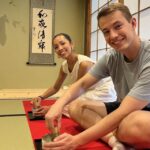
If you’re the type who cares about presentation, the included photo time helps. You’ll get a chance to put your handmade sweets on a plate and treat them like artwork before you eat them.




Price and value: what $11 gets you in Osaka
The price is listed as $11 per person, and for what you get, it’s a solid deal—especially if you compare it to typical Japanese food craft classes where you might only finish one small item.
Here’s the value equation I’d use: you get two homemade sweets, instructor guidance, and time to take photos and eat your creations. You also get access to the quality ingredient angle—Kyoto bean paste—which improves the odds that your final sweets taste good, not just look good.
Two small extras may come up. A sweets take-out box costs 100 JPY, and a completion certificate costs 300 JPY. Those are optional, so they don’t change the core value of the experience.
Also, there’s a practical reason this class feels worth it: the whole session is tight and organized. You’re not spending half your day commuting and waiting around; it’s a focused 65 minutes.
Getting there near Higobashi, Watanabebashi, and Yodoyabashi
This class is easy to reach from several stations, which is great in Osaka where routes can feel like a puzzle. By train, you can walk:
- 1 minute from Exit 10 of Osaka Metro Yotsubashi Line Higobashi Station
- 5 minutes from Exit 7 of Keihan Nakanoshima Line Watanabebashi Station
- 7 minutes from Exit 10 of Osaka Metro/Keihan Line Yodoyabashi Station
- 10 minutes from Exit 11-5 of JR Tozai Line Kitashinchi Station
- About 15 minutes from Osaka Station (South Central Gate)
If you drive, there’s coin parking nearby.
One detail to plan for: no elevator. You’ll need stairs to reach the venues, so if you have mobility concerns, take that seriously.
English support and the instructor vibe
The instructor is Japanese, and English translation is provided as much as possible. If you want extra help with language, you can contact them to request it.
From the experience feedback, the instruction style works well for non-Japanese speakers, and the vibe can be friendly and relaxed. One standout detail is that conversation can go beyond the craft—there’s mention of casual talk, including football chat. That kind of relaxed pacing helps a beginner feel less pressured.
Who should book this Nerikiri class (and who might prefer something else)
This is a great fit if you want a cultural food experience that’s hands-on, short, and satisfying. You’ll likely enjoy it most if you:
- like food crafts and want to learn by doing
- enjoy seasonal Japanese culture through actual ingredients
- want a memorable activity that ends with tasting your work
- don’t have a full day to spare
You might consider a different activity if:
- you don’t want to use stairs to reach the venue
- you’re expecting a long, deep lecture style experience (this is about shaping and tasting within a tight time frame)
Should you book AN OSAKA Nerikiri making?
If you like the idea of turning paste into two shaped sweets and then eating them in the same session, you should book. The combination of two finished Nerikiri, Kyoto-made bean paste, and an experience that ends with tasting makes it feel like real value, not a short demo.
Book it especially if you’re in Osaka with limited time. A focused 65 minutes, strong ingredient quality, and a clear process give you a craft souvenir you can actually enjoy right away.
FAQ
How long is the Nerikiri making experience?
The experience lasts about 65 minutes.
What can I make during the class?
You make two Japanese traditional sweets called Nerikiri, matching the season.
Do I eat the sweets after I make them?
Yes. You’re encouraged to eat the sweets on the spot.
What ingredients are used?
You use white/red bean paste produced by Kyoto’s long-established shops.
Is English available during the workshop?
English translation is provided as much as possible. If you’d like additional support, you can contact them.
Where is the meeting point?
It’s a short walk from several stations in Osaka, including Higobashi Station (Exit 10) and Watanabebashi Station (Exit 7). You can also use the provided Google map link and coordinates.
Is there an elevator in the building?
No. There is no elevator, and you’ll need stairs to reach the venue.
What is the price, and are there optional extra costs?
The listed price is $11 per person. Optional extras include a take-out box for 100 JPY and a completion certificate for 300 JPY.
What are the operating hours?
Operations run from 10:00 to 17:00. Reservations received after 17:00 are processed the next day.