REVIEW · OSAKA
Learning Zen of Japanese Calligraphy in kimono near Osaka Castle
Book on Viator →Operated by SAMURAI HONOR · Bookable on Viator
A kimono makes kanji feel personal. In this small-group shodo class near Osaka Castle, you learn Japanese calligraphy from a professional teacher, then pick kanji for your name and practice core brush movements like tome and harai. I love how patient the instruction feels for first-timers, and I also like that you get digital photos of your finished work. One drawback to plan for: the session is short, so if you want deep background on every Japanese writing system, you may wish there were more time for it.
The flow is calm and practical, with an English-Japanese or Chinese-Japanese translator helping you follow along. Once you write your final piece, you get a photo moment to capture everything in your traditional outfit.
In This Review
- Key things you’ll notice right away
- Zen of Japanese Calligraphy: Why This Osaka Castle Area Class Feels Special
- What Happens During the 1-Hour Class, Step by Step
- The Kanji Choice Moment: Turning Your Name Into Characters
- Brush Technique Basics: tome, hane, harai and Stroke Order
- Final Drafts, Wooden Tags, and What You Take Home
- Photo Shoot Details: Getting Good Shots Without Becoming a Photo Nuisance
- Language Help and Class Comfort for Non-Japanese Speakers
- Price and Value: Is $43.59 a Good Deal for an Osaka Calligraphy Class?
- Location Near Osaka Castle: Getting There Without Wasting Time
- Who Should Book This, and Who Might Want to Skip It
- Should You Book? My Take for Osaka in One Sentence
- FAQ
- FAQ
- Is this Japanese calligraphy class beginner-friendly?
- How long is the class?
- What languages are available?
- Do I get photos from the class?
- Can I choose my own kanji?
- What’s the optional extra for hair?
- Is this near Osaka Castle?
- Is it stroller accessible or good for back/heart conditions?
Key things you’ll notice right away
- Kimono time is built in: You change on site and photograph your outfit and artwork.
- Pick your own kanji: Choose the character(s) you want to challenge for your name.
- Brush basics in an hour: You practice fundamentals such as tome, hane, and harai.
- Your name, written in kanji: The teacher turns your foreign name into chosen kanji characters.
- Photo delivery by email: Photos get sent to your designated address.
- Near Osaka Castle, easy to combine: A good stop after castle sightseeing and walking.
Zen of Japanese Calligraphy: Why This Osaka Castle Area Class Feels Special
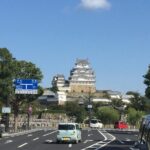
Osaka Castle is big, loud, and visual. This class flips that energy. Instead of more photos of stone and towers, you get shodo—a slower, controlled art where each stroke matters.
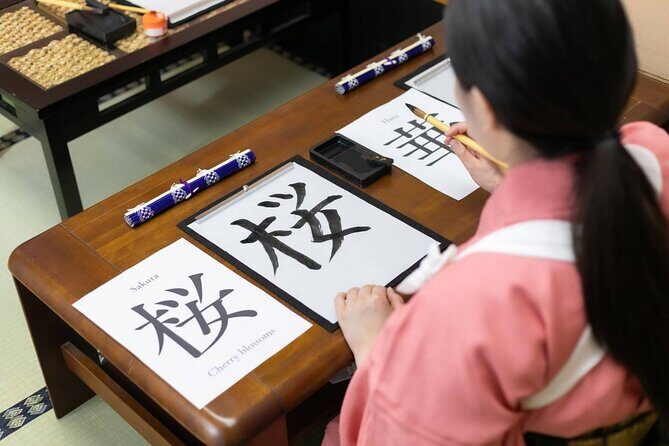
The big value here is the mix of three things that don’t always land together in one experience: instruction, a chance to personalize your piece (your name in kanji), and traditional clothing with photos. You’re not just copying characters from a worksheet; you’re learning how Japanese calligraphy thinks about movement, tools, and stroke order.
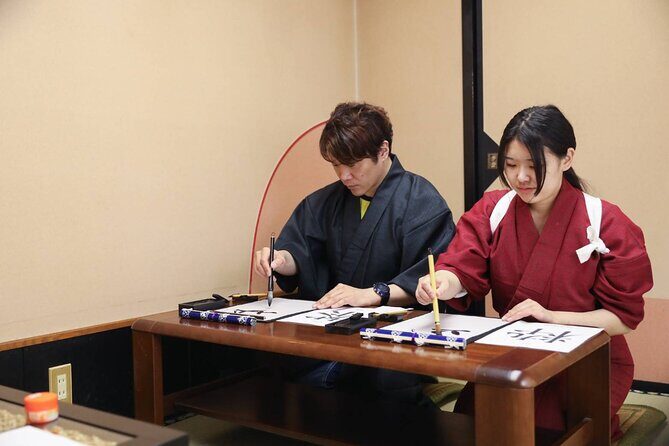
If you’re the kind of traveler who likes doing one hands-on thing well (instead of collecting five quick photo stops), you’ll probably click with this. The class is also small—max 10—so the teacher can actually watch what you’re doing and help correct posture and brush control.
You can also read our reviews of more tours and experiences in Osaka.



What Happens During the 1-Hour Class, Step by Step
This is roughly an hour, and it’s designed to move through a full mini-process: prepare, learn, practice, produce, then photograph.
First comes the dressing part. You change into traditional Japanese clothing such as a kimono (and sometimes hakama or other attire depending on your class setup). They also ask you to use the restroom before you get dressed, which is simple advice that saves you stress later.
Next is the mindset and tools section. You’ll get a quick explanation of how calligraphy is treated as decorative writing in some places, compared to Japanese shodo, where the emphasis is on technique and the feel of the stroke.
Then you move into the hands-on work:
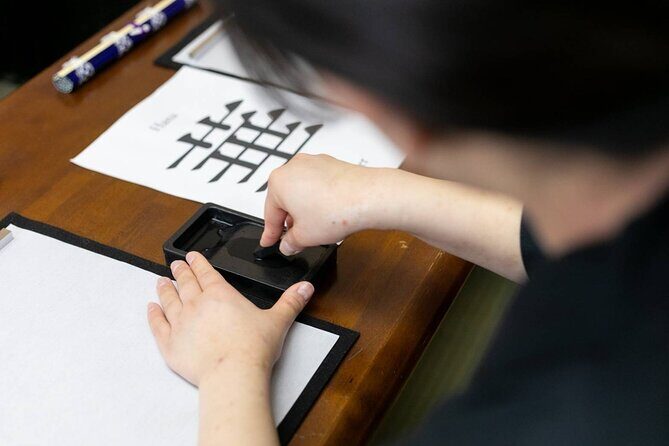
- learn how to hold the brush and use the tools
- choose the kanji you want to practice (often linked to your name)
- drill basic brush movements like tome / hane / harai
- learn stroke order for the kanji you picked
- write your final draft
Finally, you do the photo shoot so your kimono outfit and completed piece actually make it into your Osaka travel memories. Many people find the pacing relaxing because you’re practicing in one continuous arc, not hopping between unrelated activities.
The Kanji Choice Moment: Turning Your Name Into Characters
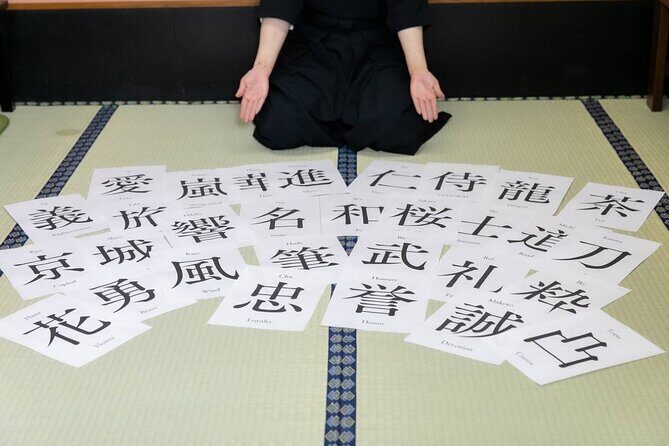
One of the most memorable parts is choosing kanji for a name challenge. You pick your favorite Japanese kanji to work on, and the teacher guides you through how each character’s meaning ties to why the strokes matter.
You also get your name translated into kanji characters. That’s not a “magic trick” translation—kanji selection is part of the craft here. The teacher will write the foreign names of participants on wooden tags using the kanji characters you’ve chosen.
This matters for value because it turns a generic souvenir into something personal. Your completed piece isn’t just pretty. It’s connected to the identity you brought from home.
Practical tip: think about the level of challenge you want. If you choose a very complex character, you’ll likely spend more time on stroke order and control. That can be fun, but it also affects how “smooth” your final draft feels.
Brush Technique Basics: tome, hane, harai and Stroke Order
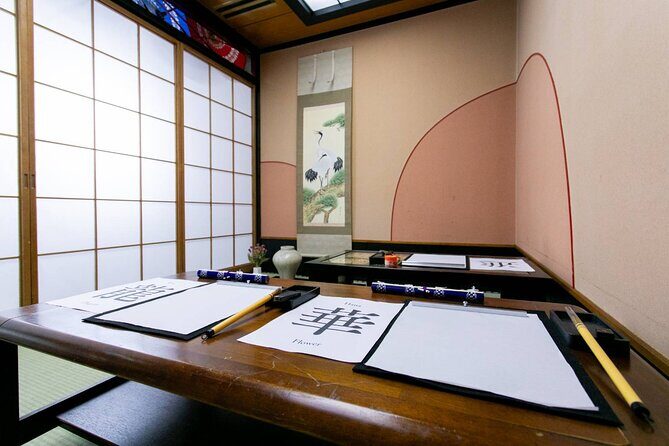
This class is built around core shodo technique, especially the brush movement vocabulary. You practice how to control the brush rather than just “making marks.”
You’ll learn the basic movements:
- tome
- hane
- harai
Then comes the part that helps your calligraphy look intentional: stroke order. You learn the correct order for the kanji you chose earlier, and then you write a final draft while keeping those mechanics in mind.
The stroke-order lesson is especially useful if you’ve tried writing kanji on your own before. Without order and pressure control, characters tend to collapse into a blob. With a guided sequence, your brain learns the structure faster.
If you’re doing this with kids, this technique focus is great because it gives them a simple “do it this way” framework. One caution: the class is beginner-friendly, but you still need to sit still and concentrate for a full hour in traditional attire.
Final Drafts, Wooden Tags, and What You Take Home
By the end, you produce a final draft based on what you practiced. That final writing is the centerpiece: it’s your own calligraphy, guided by the teacher’s correction during practice.
You also get the surprise wooden tags. The teacher writes your foreign name in the kanji characters you selected. That’s the kind of take-home item that feels more meaningful than a mass-produced postcard.
Some experiences in this setup also include finished works on items like fans or scrolls, and you may see a gift bag or take-away pieces from your practice sessions. Since the class focuses on producing a final work plus photos, you can think of your take-home value as coming from two places: the artwork itself and the digital photo set.
If you’re deciding what to do in Osaka Castle Park area, this is a strong “one-and-done” souvenir. It has both craft and a story.




Photo Shoot Details: Getting Good Shots Without Becoming a Photo Nuisance
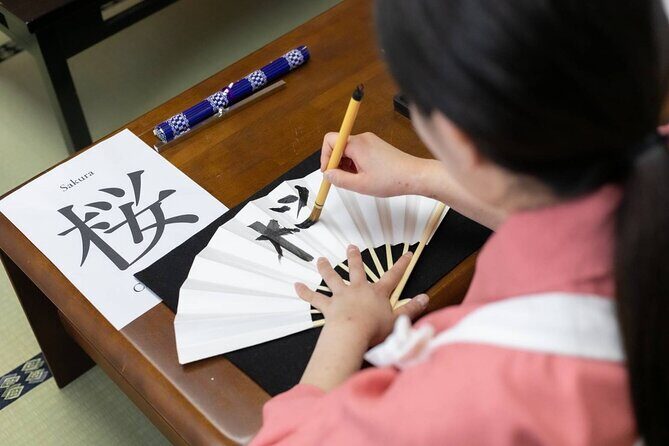
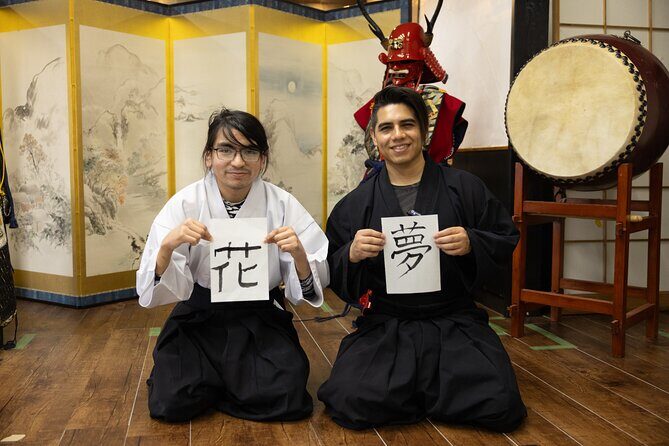
Photo time is part of the schedule. You’ll capture your kimono outfit and your artwork, and the photography is handled so you’re not stuck figuring it out yourself.
Here’s what to plan:
- Smartphones are allowed for personal photos
- avoid selfies
- don’t photograph other guests
- no fixed tripods
- no recording videos
Also, photos get sent to your email address. That’s a big deal for value because it means you don’t have to worry about bagging the perfect shot during the class. You can just focus on writing.
One practical note: allow a little mental space for adjusting your pose. Traditional clothing can change how you sit and stand, and the best calligraphy photos usually happen right after you finish, when you still look composed.
Language Help and Class Comfort for Non-Japanese Speakers
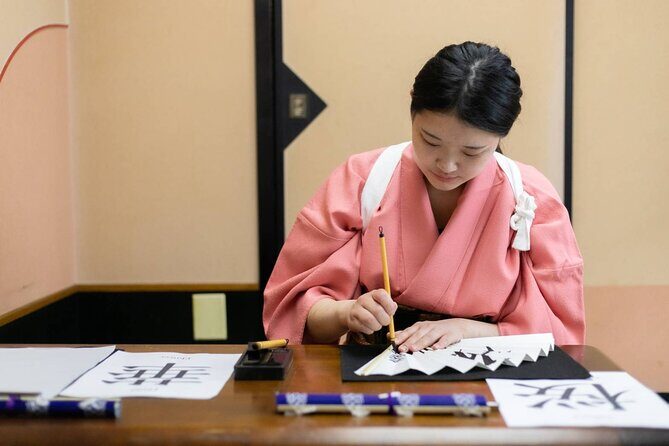
This class is designed for all skill levels, including kids. If you’re not fluent in Japanese, you’re not expected to be.
The setup includes an English-Japanese or Chinese-Japanese translator who helps you navigate language barriers during the class. The default language is English, and other languages may be possible if you inquire in advance.
The small group size matters here. Even with translation support, you’ll benefit more if you can ask simple questions during practice. In a group of up to 10, the teacher can typically check your stroke direction and posture without you feeling lost.
If you’re the type who wants more explanation of alphabets or writing systems, keep expectations grounded. The class does teach shodo-focused technique, not an academic tour of all Japanese scripts.
Price and Value: Is $43.59 a Good Deal for an Osaka Calligraphy Class?
At $43.59 per person for about an hour, the value lands in a sweet spot—especially because several costs are bundled into that price.
You’re paying for:
- a professional shodo teacher (instruction isn’t a free add-on)
- traditional Japanese attire (kimono, hakama, etc.)
- practice time with guided technique and stroke order
- photos captured and emailed to you
- personalization through chosen kanji and your name in kanji
Tips aren’t included, but that’s fairly standard for hands-on classes. Also note there’s an optional hair accessory called wagami (collected hair + kanzashi) for an additional ¥3,300 per person, so the final total might be a bit higher if you want the fuller look.
If you want one memorable cultural activity that produces both an artwork souvenir and photos, I’d say this price is reasonable. If you only want a quick photo-op and have zero interest in learning brush basics, a different activity might fit better.
Location Near Osaka Castle: Getting There Without Wasting Time
The meeting point is in Joto Ward, Osaka, with a specific address listed near Shiginonishi. The key practical takeaway: it can be easy to miss, since it may feel like a small storefront.
Google map directions are said to be accurate, but people have walked past it at first because the place is not obvious from the street. So I’d give yourself extra minutes when you arrive—especially because you’ll need time to find the spot, sign a liability waiver, and use the restroom before dressing.
They also note that if you’re more than 30 minutes late for your reservation, entry may be refused. Translation: don’t treat this like a flexible stroll.
And one more “be smart” note: there was a temporary closure period reported for June 9–29, 2025 due to an operator issue, along with refunds. If your travel dates are close to a flagged period in the future, double-check before you go and keep your confirmation details handy.
Who Should Book This, and Who Might Want to Skip It
This is a great match if you want:
- a hands-on Osaka cultural activity
- a calm, focused class instead of fast museum hopping
- a personalized souvenir (your name in kanji)
- traditional attire + photos without needing Japanese fluency
It may not be the best fit if:
- you have back problems or heart conditions (they explicitly say it’s not recommended)
- you need stroller access (it’s not stroller accessible)
- you travel with pets (not suitable for pets)
They do allow service animals. If you’re planning what to wear underneath the kimono/hakama, follow their guidance and dress appropriately because they warn you may sweat easily during practice when wearing certain outfits.
If you’re traveling with kids, this can be a nice first contact with shodo because it’s beginner-friendly and structured around simple technique drills.
Should You Book? My Take for Osaka in One Sentence
If you want an Osaka Castle-area experience that gives you a real skill (brush technique and stroke order) plus a personalized kanji keepsake and photos, this is a smart booking.
If you’re mainly chasing a deep lecture on Japanese writing systems, or you hate being in one spot for an hour while you practice, you might want to choose something else.
FAQ
FAQ
Is this Japanese calligraphy class beginner-friendly?
Yes. The class is open to all skill levels, and kids can participate too.
How long is the class?
It’s about 1 hour.
What languages are available?
The default language is English. They offer English-Japanese or Chinese-Japanese translation support, and other languages may be available if you inquire (Italian, Spanish, French, Chinese, Thai, Indonesia).
Do I get photos from the class?
Yes. Photography is included, and the data is sent to your designated email address. You also do a photo shoot during the experience.
Can I choose my own kanji?
Yes. You choose your favorite Japanese kanji to challenge yourself and then practice it, including stroke order.
What’s the optional extra for hair?
There’s an optional wagami set (collected hair + kanzashi) available for an additional ¥3,300 per person.
Is this near Osaka Castle?
Yes. It’s in Osaka Castle area and the class ends back at the meeting point.
Is it stroller accessible or good for back/heart conditions?
It’s not stroller accessible, and it’s not recommended for people with back problems or heart conditions.