REVIEW · OSAKA
Osaka: Castle, Tea Ceremony, Calligraphy, and Samurai Armor!
Book on GetYourGuide →Operated by Osaka JOINER · Bookable on GetYourGuide
Samurai, tea, and Osaka Castle in one day. You’ll pair iconic sights with hands-on Japanese culture, then end in Dōtonbori for street-food energy and photos.
I like this tour because the tea ceremony and calligraphy parts are real instruction, not just watching. You get to slow down, learn the rhythm, and then put pen to paper.
One consideration: the paid add-ons for samurai armor or kimono (¥4,820) aren’t included in the $135 price, and the tour may not be a good match if you have back trouble or you’re over 70.
In This Review
- Key highlights at a glance
- Meeting at Namba Walk: Start Smart, Not Stressed
- Osaka Castle Entry: Photos, Scale, and Why It Matters
- Tea Ceremony: Learning the Ritual You Can Actually Use
- Calligraphy Session: Turning Hand Skills Into Meaning
- Samurai Show + Traditional Instruments: Performance With Context
- Optional Samurai Armor or Kimono Add-Ons (¥4,820)
- Dōtonbori Finale: Street Food, Shopping, and Easy Photo Wins
- Playing, Learning, and Moving: What the Day Feels Like
- Price and Value: Is $135 Worth It?
- Who Should Book This Osaka JOINER Tour (and Who Shouldn’t)
- Should You Book It?
- FAQ
- Where is the meeting point for the tour?
- What is included in the price of $135?
- Is the samurai armor experience included?
- Is kimono wearing included?
- How do I add the optional samurai armor or kimono?
- What language is the tour offered in?
- Do I need to bring cash?
- Is smoking allowed during the tour?
- Who is the tour not suitable for?
- What is the activity ending location?
- Can I cancel for a refund?
Key highlights at a glance
- Osaka Castle entry with photo time at one of Japan’s best-known landmarks
- Tea ceremony etiquette + calligraphy practice as the core cultural lessons
- Samurai show plus traditional instruments you can follow along with
- Optional armor or kimono add-ons for ¥4,820 (not included)
- Dōtonbori finale for street food, shopping, and nighttime vibes
Meeting at Namba Walk: Start Smart, Not Stressed
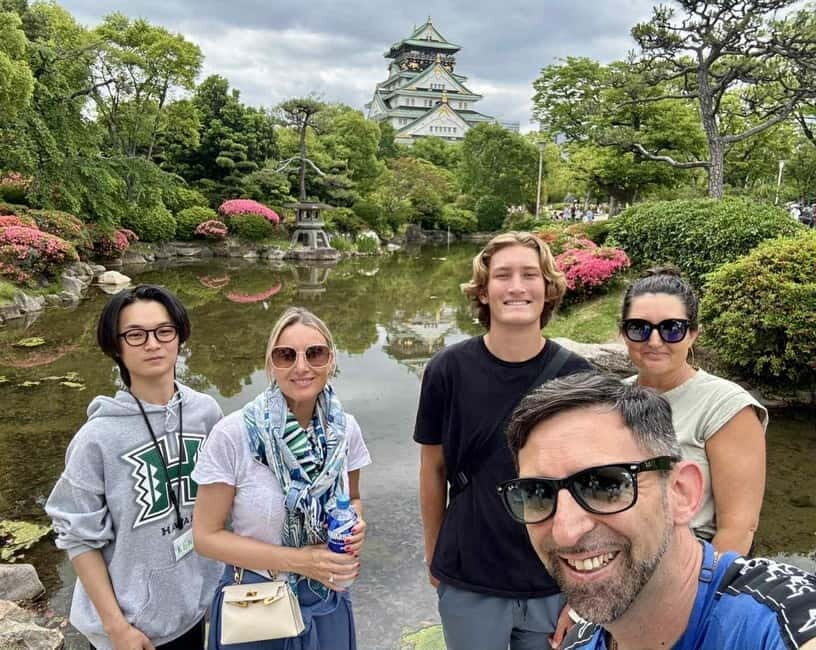
Your day begins at the Osaka JOINER base inside B1 Floor Namba Walk—an underground shopping street—near Exit B23. The shop sits between the Mizuno shop and the Docomo shop.
If you’re coming from Starbucks, just cross to the other side and find that Mizuno–Docomo gap. This matters because Namba Walk can feel like a maze when you first step in, and arriving a little early helps you get oriented fast.
Also, bring cash. The tour includes major activities, but the optional add-ons are separate, and you’ll want to handle them without scrambling.
You can also read our reviews of more tours and experiences in Osaka.


Osaka Castle Entry: Photos, Scale, and Why It Matters
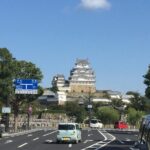
The first major stop is Osaka Castle, one of the city’s biggest “walk-up and look up” sights. What makes this part worth your time is the way the guide frames the castle as more than scenery. You’re not just taking photos—you’re learning enough context to make the place feel like part of Japan’s larger story.
Expect you’ll be going inside and spending time there with photo opportunities. Even if you’ve seen castles before, Osaka’s castle complex has a special feel because it’s tied to power, strategy, and the kind of theater that later shows echo—like the samurai performance later on your tour.
Practical note: Osaka Castle involves walking and moving between areas. If you’re sensitive to stairs or long stretches, plan to take it slow.
Tea Ceremony: Learning the Ritual You Can Actually Use
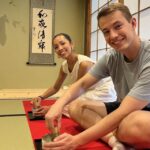
After the castle, you shift from grand stone to something quiet and precise: a traditional Japanese tea ceremony. This is the kind of cultural activity that’s easy to misunderstand if you just watch. Here, you get instruction that helps you understand what you’re seeing and why the steps matter.
You’ll also get the rhythm of the ceremony—timing, movements, and the basic etiquette that makes it feel respectful, not performative. The value isn’t just the novelty. It’s that you leave knowing what questions to ask and what behaviors match the moment.
If you like hands-on learning, this is one of the best segments. If you’re the type who gets bored by lectures, don’t worry: tea ceremony works because your body participates, not just your ears.
Calligraphy Session: Turning Hand Skills Into Meaning
Next comes Japanese calligraphy, where the focus shifts to brush work and character shapes. This part is great for two reasons. First, it forces you to slow down and concentrate. Second, it gives you a tangible result—something you can take away from the day.
Calligraphy is also a shortcut into thinking like Japanese art: form, balance, and the feeling that a character isn’t only written, it’s expressed. Even if you’ve never held a brush before, you’ll likely find it easier than you expect because the guide’s teaching keeps things structured.
If you want a souvenir that feels personal (not just store-bought), this is the kind of activity that actually delivers.
Samurai Show + Traditional Instruments: Performance With Context
This tour doesn’t stop at “culture words.” You’ll also experience a samurai show plus the chance to play traditional instruments like the Shamisen, Koto, and Shinobue. Even when you’re just trying for the first time, it’s easier to appreciate the music because you’re experiencing it alongside the samurai theme.
One detail I appreciated in the feedback I’ve seen: the guide can make this feel coherent. For example, a guide named Canned was highlighted as warm, friendly, and professional—someone who helps you connect the dots instead of letting the day become random hopping.
Practical reality: instruments have their own learning curve. Don’t expect a concert-level performance. Expect a fun introduction that helps you understand what you’re listening to and how the instruments feel in your hands.




Optional Samurai Armor or Kimono Add-Ons (¥4,820)
Here’s where you get to customize your photos. The core tour includes the samurai show and the samurai-themed experience pieces, but the paid add-ons are separate.
You can choose:
- Samurai armor experience (additional fee): ¥4,820
- Kimono wearing (Woman Only) (additional fee): ¥4,820
The important part: these are not included in the base $135 price. The info also notes the ¥4,820 pricing is valid until the end of August, so if you’re booking in that window, it’s a good time to add it.
How to get it added: tell the guide on the day or inform the team via WhatsApp so they can include it. If you forget, you might still be able to add it depending on availability, but you shouldn’t count on it.
If you love photo-heavy travel days, armor or kimono is your “big visual payoff.” If you care more about the cultural lessons than costume time, you can happily skip the add-on and still get a complete day.
Kids also have a path here: armor designed for them is available, which makes the samurai part more than an adult-only gimmick.
Dōtonbori Finale: Street Food, Shopping, and Easy Photo Wins
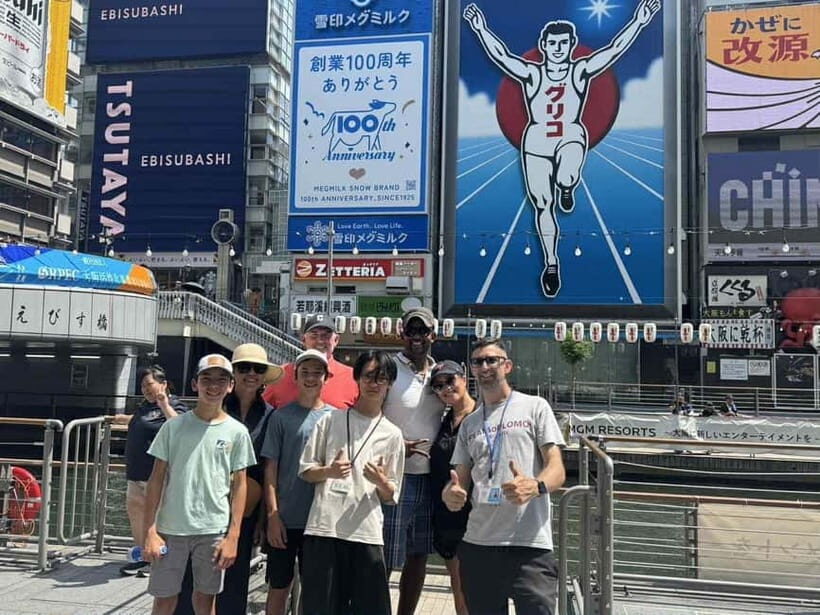
Your tour ends back at the meeting point, after a final stop in Dōtonbori, Osaka’s famous entertainment and street-food district. This is where the day turns from guided cultural learning into free roaming energy.
Think bright signs, lively streets, and plenty of chances to grab snacks and keep walking. Dōtonbori is one of those places where you can plan nothing and still come away happy, because the whole area is built for wandering—shopping, people-watching, and tasting.
This is a great finish because it gives you control: if you want one last snack, you can. If you want photos, you can. If you’d rather shop, you can do that too.
Playing, Learning, and Moving: What the Day Feels Like
What makes this tour work well is the pacing. You get:
1) a major landmark start with structure,
2) two hands-on culture segments where your effort matters (tea and calligraphy),
3) performance + instrument participation,
4) a lively neighborhood finale.
That mix is smart. It keeps your brain from getting stuck in one mode—history only, or photos only, or show only. By the time you reach Dōtonbori, you’re ready for motion and quick choices.
One more practical note: smoking indoors is not allowed. If you smoke, plan accordingly so you don’t get stuck waiting or uncomfortable.
Price and Value: Is $135 Worth It?
At $135 per person, this tour feels like a solid value if you want both structure and hands-on culture. You’re paying for more than entry tickets—you’re paying for guided cultural activities: tea ceremony, calligraphy, samurai show, and the chance to play traditional instruments.
Then there are optional extras—samurai armor or kimono—at ¥4,820. If you add one, you’re increasing your spend, but you’re also turning the day into a stronger photo and role-play experience.
Here’s the value equation I’d use for your decision:
- If you want a guided day with real instruction and activities, $135 looks fair.
- If you specifically want costume-style photos, budget the extra ¥4,820 from the start so you’re not doing math later.
- If you prefer staying purely in learning mode, you can keep your costs down by skipping the add-ons.
Also, the tour runs in English, which reduces the common problem of “I saw stuff but didn’t understand it.”
Who Should Book This Osaka JOINER Tour (and Who Shouldn’t)
This tour is a good match if you want a well-rounded Osaka day that includes Osaka Castle, cultural lessons, and a fun finish in Dōtonbori.
It’s especially suitable if you:
- like hands-on activities (tea and calligraphy)
- want photo opportunities tied to actual Japanese cultural themes
- enjoy performance elements (samurai show, instruments)
It may not be a good fit if you:
- have back problems (there’s walking and moving between stops)
- are over 70 (listed as not suitable)
- prefer fully self-directed travel with no guidance
It’s also a nice option for families since kids can enjoy the samurai armor experience with specially designed armor.
Should You Book It?
If you want a single-day Osaka plan that mixes landmark sightseeing with real cultural practice, I think this tour earns its place. The best parts are the combination of tea ceremony + calligraphy and the way the samurai show ties into the instrument experience, so your day has coherence.
Book it if you’re okay with optional upgrades and you’re willing to bring cash for the ¥4,820 extras. Skip the add-ons if you mainly want instruction and the Dōtonbori ending.
FAQ
Where is the meeting point for the tour?
You meet at the Osaka JOINER base on B1 Floor Namba Walk (underground shopping street) near Exit B23, between the Mizuno shop and Docomo shop.
What is included in the price of $135?
The included parts are Osaka Castle, Japanese tea ceremony, Japanese calligraphy, a samurai show, playing traditional instruments, and photo-taking in samurai armor as an optional element.
Is the samurai armor experience included?
No. The samurai armor experience costs an additional fee of ¥4,820.
Is kimono wearing included?
No. Kimono wearing is a Woman Only add-on for an additional fee of ¥4,820.
How do I add the optional samurai armor or kimono?
Tell the guide on the day or message via WhatsApp to include it. The ¥4,820 pricing is noted as valid until the end of August.
What language is the tour offered in?
The tour is offered in English.
Do I need to bring cash?
Yes, cash is listed as something to bring.
Is smoking allowed during the tour?
Smoking indoors is not allowed.
Who is the tour not suitable for?
It is listed as not suitable for people with back problems and for people over 70 years.
What is the activity ending location?
The activity ends back at the meeting point (Osaka JOINER base at Namba Walk).
Can I cancel for a refund?
Cancellation is listed as possible up to 24 hours in advance for a full refund.