REVIEW · OSAKA
Full Day Guided Tour to Nara from Osaka by Van
Book on Viator →Operated by Explorer Tours · Bookable on Viator
Deer, temples, and sake in one smooth day. I like the small-group van (up to 12) because it feels personal without the stress of big-bus crowds, and I like that all entry tickets are included so you’re not hunting for change or lines. One consideration: the day includes walking with stairs and hills, so it’s not ideal if long distances are tough for you.
This is a 7–8 hour guided route built around the main Nara sights, plus free time in Naramachi for lunch and browsing. I also appreciate the included sake tasting at Harushika, which turns the cultural day into something you can taste. Schedules can shift a bit with weather and traffic, so keep your morning flexible.
In This Review
- Key highlights worth planning around
- Osaka to Nara by van: comfort first, time saved
- First encounter with Todai-ji: Nandaimon gate at human scale
- The Great Buddha Hall: why the timing works
- Kasuga Grand Shrine in Nara Park: deer moments without the chaos
- Naramachi free time: the lunch-and-souvenir reset
- Nanen-do and Kofuku-ji: a strong follow-up without rushing
- The five-storied pagoda: a wooden tower you can actually read
- Harushika brewery sake tasting: the day gets personal
- Return to Osaka: wrap-up without the scramble
- Value check: is $113.85 really fair?
- Who this tour suits best (and who should skip it)
- Should you book? My practical take
- FAQ
- How long is the Nara day trip from Osaka?
- What time does the tour start?
- Where do I meet the guide in Osaka?
- Is lunch included?
- Are entrance fees included?
- How big is the group?
- Is there WiFi and bottled water on the van?
- Do I need to walk a lot?
- Is the tour customizable?
- What if weather or traffic affects the schedule?
- Is Japanese sake tasting included?
Key highlights worth planning around
- Small group, private van feel: max 12 passengers keeps the pace friendly and the logistics calmer.
- Tickets included (most costs handled): Todai-ji, Kasuga Grand Shrine, Kofuku-ji, and key sights are covered.
- Nara Park deer time is built in: you’ll be in the right area to see them up close.
- Sake tasting at Harushika: a 5-sake set (kikizake) with staff explanation is included.
- Free time in Naramachi: you can choose lunch and souvenirs at a slower pace.
- English-speaking conductor with you all day: someone’s there to guide, translate, and keep things moving.
Osaka to Nara by van: comfort first, time saved
The day starts at 9:45 am, with a meet-up in either Shinsaibashi or at Umeda DT Tower. From there, you ride about an hour from Osaka to Nara Park in an air-conditioned vehicle with WiFi and bottled water. For me, that’s the smart setup: it cuts down the “figuring out transit” time so you actually spend your day seeing things instead of planning them.
This is also where the small-group size matters. With a max of 12 passengers, the guide can actually manage the group’s movement—especially when you hit crowded temple approaches. Even if you’re not used to Japan’s transit systems, you don’t need to be.
A quick heads-up: there’s no extra pickup or drop-off service, so you’ll need to get yourself to the stated meeting point. The tour ends back at your starting meeting point, not somewhere else.
You can also read our reviews of more guided tours in Osaka

First encounter with Todai-ji: Nandaimon gate at human scale
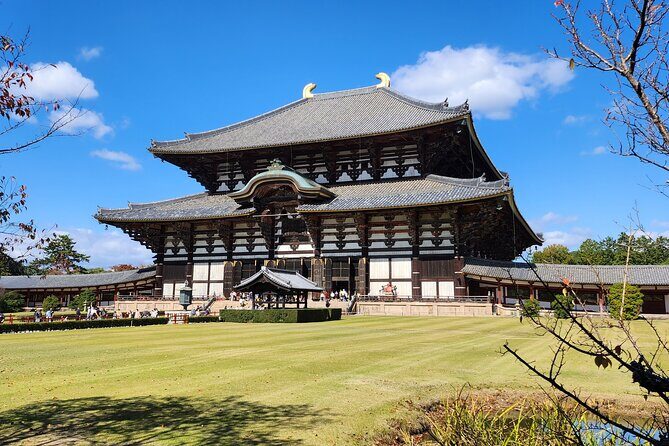
Todai-ji is the kind of place you understand the moment you see it. You’ll walk toward Nandaimon (Grand South Gate), where the scale is the main event. The gate sits at the entrance to the approach, and it’s designed to make you feel small in the best way—about 25.5 meters tall, with the Ni-o guardian statues that are meant to impress and protect.
You’re given about 30 minutes here. That’s enough time to take in the gate, go through it, and get your bearings before you head deeper into the temple complex. If you’re the type who likes photos, the approach area gives you multiple angles without needing to sprint.
A small practical note: you’ll be walking, so wear shoes you trust. Even at a “guided pace,” you’re still moving through temple paths and steps.
The Great Buddha Hall: why the timing works

Once you step into Todai-ji proper, the focus becomes the Great Buddha Hall. The hall is enormous—about 57 meters wide and roughly 48 meters high—and the current structure dates to a rebuild in 1709. It’s also recognized as a UNESCO World Heritage site.
You’ll have about 1 hour and 10 minutes at Todai-ji. That’s a good chunk because the hall is the centerpiece and the complex around it can take time to absorb. I like that your schedule doesn’t rush past it. You get enough time to see the main hall, look around nearby areas, and still keep energy for the rest of Nara.
If you’re wondering what makes this stop worth a full guided slot: the temple is so big that without a plan you can spend time wandering. With a guide, you spend time looking at what matters.
Kasuga Grand Shrine in Nara Park: deer moments without the chaos

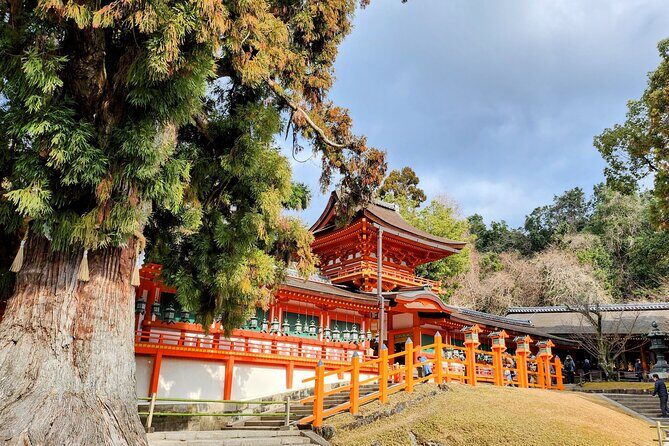
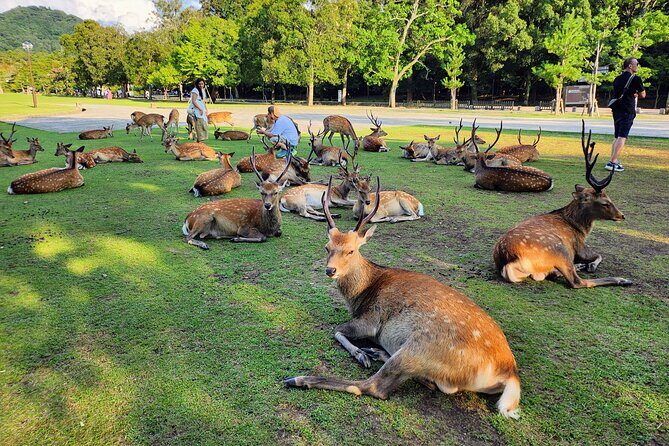
After Todai-ji, you’ll head to Kasuga Grand Shrine, walking with your conductor. This is where Nara Park really delivers the famous deer experience—free-roaming deer are part of the atmosphere here, and the timing gives you a chance to see them while you’re not constantly in a full stampede.
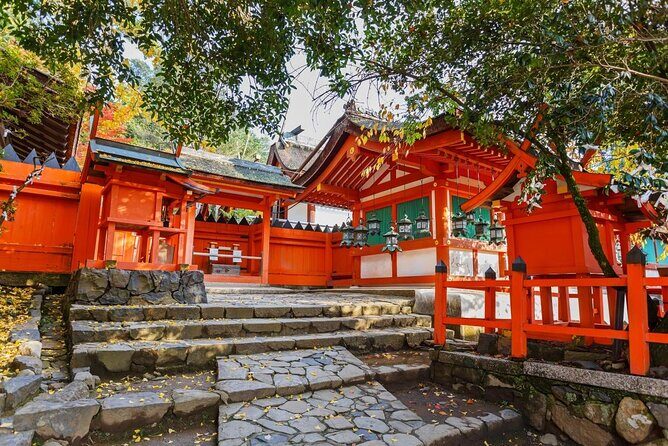
Kasuga-Taisha was established in 768 and is another UNESCO-listed site. A big part of why people remember it: the shrine grounds are covered with lanterns, and the shrine has a lot of preserved treasures (the tour highlights that there are 352 national treasures stored).
You get about 1 hour for this stop, which I think is right. Long enough to enjoy the walking paths and the deer sightings, but not so long that you feel stuck when the day starts getting hot or crowded.
One consideration: Nara deer can be bold. Your guide will help you navigate the park areas, but still use common sense with food and phones. You’re there to enjoy the moment, not negotiate with wildlife.
Naramachi free time: the lunch-and-souvenir reset
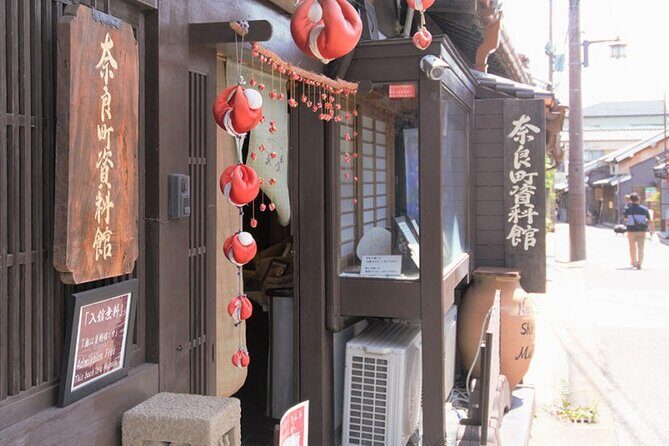
After the temples, you’ll get free time in Naramachi, the preserved traditional town area. This is your lunch break and browsing window, about 1 hour. You’ll walk around on your own and find a local lunch spot for you and your group.
This is an underrated part of the tour. The big sights are impressive, but Naramachi is where you get a more everyday sense of Nara—especially because the area was spared from air raid damage during WWII, so many structures and facades survived. You’ll see machiya-style townhouses and a mix of refurbished buildings that keep older fronts while updating the interiors.
Since lunch isn’t included, you’ll want to be ready to choose quickly. If you prefer sitting down somewhere with an easy menu, arrive at the first cluster of restaurants rather than saving all your decision-making for the far end of the street.
I also like that this time gives your legs a breather. Walking temples all morning can get cumulative, and this segment lets you reset without losing the cultural vibe.
You can also read our reviews of more tours and experiences in Osaka

Nanen-do and Kofuku-ji: a strong follow-up without rushing
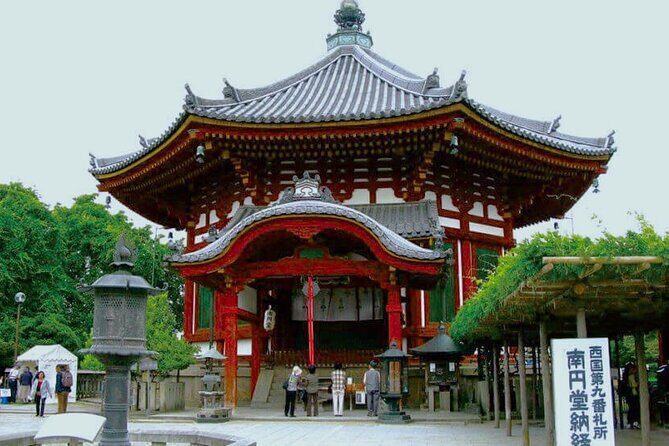
The day continues to Nanen-do, a smaller but elegant stop. It’s an octagonal structure connected to Fujiwara no Fuyutsugu, and it’s dedicated to prayers for peace after his father’s passing. You’ll have about 20 minutes here, enough time to appreciate the form and see what’s there without feeling dragged along.
Then comes Kofuku-ji, where you’ll visit the Central Golden Hall. It was originally founded in 669 in Kyoto and moved to its current location in 710. The hall you see now is after war damage, with the current building built afterward. Like the other major sites, it’s also UNESCO-listed.
You’re allocated about 45 minutes at Kofuku-ji. If you like “big temple energy” you’ll feel it here. If you prefer moments that are more about atmosphere than spectacle, this is a great middle point between Todai-ji’s huge presence and Harushika’s modern, human-scale tasting room.
The five-storied pagoda: a wooden tower you can actually read
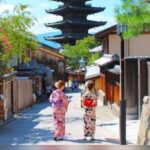
After the Central Golden Hall, you’ll walk to the five-storied pagoda at Kofuku-ji. The tour notes it was originally built in 730 and rebuilt multiple times due to disasters; the current pagoda was reconstructed in 1426 and stands about 50.1 meters tall.
You’ll have about 20 minutes for this. That time is just enough to notice the repeated roof structure and the five roofs symbolizing land, water, fire, air, and sky—if you’re paying attention, it turns a “photo stop” into something you understand.
I like this pacing: you’re not asked to stare at details for hours, but you’re also not rushed past them. It’s a good balance when you’ve already walked through a full morning of temple scale.
Harushika brewery sake tasting: the day gets personal
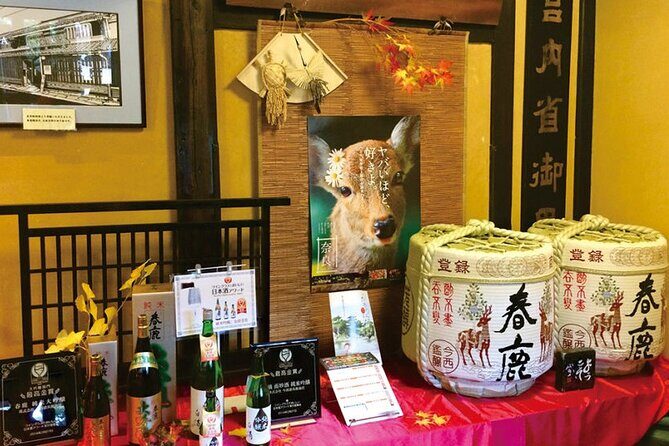
The final big highlight is Harushika Brewery, where you get a sake tasting set called kikizake—five different types, explained by the brewery staff. The tasting takes about 45 minutes and is included in the tour price.
Harushika is described as established in 1884, later exporting sake starting in 1984. The name Harushika connects to a legend involving the gods of Kasugataisha riding a deer from Nara. I find that kind of story makes the tasting stick—you’re not just tasting flavors; you’re tasting place.
This is also where the guide quality shows. An English explanation helps you make sense of what you’re drinking, and it makes the tasting feel like part of the cultural experience rather than a quick sale stop.
Practical tip: if you don’t usually drink, you still get a chance to taste lightly, and you’ll probably find one style you like more than the others. Pace yourself so you can enjoy the ride back to Osaka comfortably.
Return to Osaka: wrap-up without the scramble
After Harushika, you board the private vehicle and head back to Osaka. The drive is about 1 hour, and you’ll be dropped back at your original meeting point.
Because the tour is guided end-to-end and you’re not navigating between sites, the return often feels calmer than independent day trips. Still, remember that the schedule can shift due to weather and traffic conditions. If you’re tight on evening plans, I’d leave a cushion.
Value check: is $113.85 really fair?
At $113.85 per person for a 7–8 hour small-group day, the value comes from what’s included, not just the “van ride” part.
Here’s what you’re getting for the price:
- air-conditioned private vehicle, WiFi, and bottled water
- English-speaking guide with you through the day
- All fees and taxes
- key admission costs included (Todai-ji, Kasuga Grand Shrine, Kofuku-ji, and more)
- Harushika sake tasting included
- free-time window in Naramachi for lunch (not included, but you get time)
Your biggest “extra cost” is lunch and gratuity. If you were planning this on your own, you’d likely spend time piecing together transit, then paying separate admission fees at each temple and figuring out the best order. This tour keeps it simple and reduces decision fatigue.
Where it may not be as good value: if you already know exactly how to get around Nara comfortably and you prefer full independence. In that case, a self-guided day could work out cheaper. But if you want less friction and a smoother flow, the price usually feels justified.
Who this tour suits best (and who should skip it)
This tour is a great fit if you want:
- a guided day that hits the major Nara landmarks in one route
- a small group experience with up to 12 people
- English support at multiple stops
- a built-in sake tasting you can’t easily recreate as easily on your own
It’s less ideal if:
- walking long distances (including stairs and hills) is hard for you
- you need full customization (this tour is not customizable)
- you rely on last-minute meeting-point changes without messaging the operator (if you choose I’ll decide later, you’ll need to message to confirm the meeting point)
Should you book? My practical take
I’d book this tour if you want Nara without the stress. The combination of temple highlights, a proper free time pocket in Naramachi, and the included Harushika sake tasting is the kind of mix that makes a one-day trip feel complete.
I’d skip it if mobility is an issue. Even though the route is guided, it’s still a walking day with stairs and hills. If that’s a concern, you’ll likely enjoy Nara more with a slower plan designed around your pace.
Finally, I pay attention to guide quality on tours like this, and the names that show up in feedback—Taka, Mark, Take, and Marc—suggest the conductors can handle both history and the practical “move the group safely” side of the day.
If you’re going to Nara from Osaka and you want a day that runs like a well-timed train schedule, this one does.
FAQ
How long is the Nara day trip from Osaka?
It runs about 7 to 8 hours.
What time does the tour start?
The start time is 9:45 am.
Where do I meet the guide in Osaka?
You meet your tour conductor either in Shinsaibashi or at Umeda DT Tower.
Is lunch included?
No. Lunch isn’t included, but you get free time in Naramachi to pick a lunch spot.
Are entrance fees included?
Yes. The tour includes admission tickets for the listed sights.
How big is the group?
The tour has a maximum of 12 travelers per vehicle.
Is there WiFi and bottled water on the van?
Yes. The vehicle includes WiFi on board and bottled water.
Do I need to walk a lot?
Yes. The tour includes walking, and it notes that you’ll encounter stairs and hills at each place, so it isn’t recommended if you can’t walk long distances.
Is the tour customizable?
No. The tour is not customizable.
What if weather or traffic affects the schedule?
The time schedule might change due to weather and traffic conditions. The experience also requires good weather, and if it’s canceled due to poor weather, you’ll be offered a different date or a full refund.
Is Japanese sake tasting included?
Yes. Harushika Brewery includes a kikizake tasting set of 5 kinds of sake with explanation by the brewery staff.