Kyoto in one day can actually work. I like how this trip covers Arashiyama bamboo and the Golden Pavilion without wasting hours on train transfers, and I love that guides like Taka and Tom keep the story straight and the day fun. The big catch is simple: you’ll walk a lot, including stairs and hills, and the route isn’t customizable.
Meeting in Osaka keeps things easy. You start at 9:45am at either Shinsaibashi or Umeda DT Tower, then you ride in an air-conditioned private vehicle with WiFi and bottled water while an English-speaking conductor (and a Mandarin-speaking conductor) handle the flow. The schedule can shift with weather or traffic, but the pacing aims to keep you moving without constant sprinting.
This is also a small-group day. With a maximum of 11 travelers, you usually get quicker help when questions pop up or when Kyoto crowds get… lively. If you want a slow, sit-down sightseeing day or you struggle with long walks, this may not be your best match.
In This Review
- Key things that make this Kyoto day trip worth your time
- Osaka to Arashiyama: where the day’s pace starts
- Togetsukyo Bridge and Arashiyama town: the river views before the bamboo
- The Bamboo Forest Trail: what to expect from 50 minutes of walking
- Arashiyama lunch break: use that hour wisely
- Kinkakuji (Golden Pavilion): ticket-included temple time that feels iconic
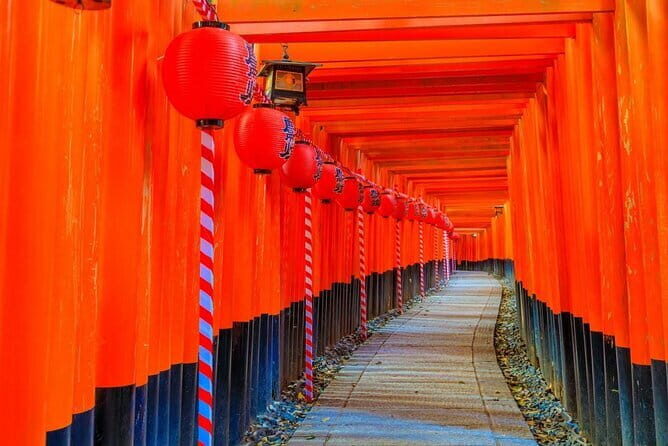
- Fushimi Inari Taisha: torii gates, stairs, and why 2 hours can feel tight
- Comfort and pacing: what 8 to 9 hours feels like
- Price and value: is $105.71 a good deal?
- Who should book this Kyoto highlights tour (and who should skip it)
- Should you book? My straight answer
- FAQ
- What’s the meeting time and where do I meet?
- How long is the Kyoto tour from Osaka?
- How much does the tour cost?
- Is lunch included?
- Are entry tickets included?
- What language support do the guides provide?
- Will I have to do a lot of walking?
- What’s included in the tour besides guiding?
- Does the tour offer pick-up or drop-off beyond the meeting points?
- How does cancellation work?
Key things that make this Kyoto day trip worth your time
- Small group, max 11 people: easier navigation and fewer bottlenecks than big-bus tours
- Expert guide energy: guides like Taka and Woody are praised for clear history and helpful crowd timing
- Arashiyama first: you hit bamboo and bridge views while you’re still fresh
- Kinkakuji ticket included: you don’t have to manage entry or add-on costs
- Fushimi Inari torii focus: 2 hours to walk the red gates and understand the place
- All fees and taxes included: helps you budget the day without surprise add-ons
Osaka to Arashiyama: where the day’s pace starts
Your day kicks off in Osaka at 9:45am from either Shinsaibashi or Umeda DT Tower. From there, you travel about 1.2 hours by private vehicle to Arashiyama in Kyoto. That drive matters more than it sounds. It takes the stress out of figuring out trains, transfers, and timing on your own—especially if you’re only in Kansai for a short window.
Inside the vehicle, you get air-conditioning (worth it in warmer months), plus WiFi on board and bottled water. The big value here is attention. With a small group, you can actually hear directions and ask questions. And because the guides are running the day, you’re not juggling ticket windows, station exits, or “Wait, where do we meet?” moments.
One more practical point: this trip does not include extra pickup or drop-off service. You’re going to start and end back around the original meeting area. That keeps costs controlled, but it also means you should plan your Osaka hotel location and morning logistics so you can reach Shinsaibashi or Umeda DT Tower without rushing.
You can also read our reviews of more tours and experiences in Osaka
Togetsukyo Bridge and Arashiyama town: the river views before the bamboo
The first real stop is Togetsukyo Bridge. You’ll get about 50 minutes here. This is a good warm-up. Before you commit your legs to a forest walk, you get the postcard view: river valley, surrounding hills, and the feel of Arashiyama’s natural rhythm.
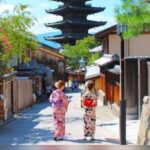
Crossing the bridge also sets you up for how Arashiyama works. You’ll walk through town at an easy pace, not yet in “temple trekking mode.” You get a taste of the area’s everyday Kyoto energy—shops, small lanes, and the kind of atmosphere that makes you slow down without someone forcing you to.
Then the tour starts moving toward the bamboo area. This is where your guide’s timing matters. Kyoto can bunch people up fast. Having someone handle the flow helps you avoid the worst press of bodies and keeps your photos from turning into a sea of heads.
The Bamboo Forest Trail: what to expect from 50 minutes of walking
Next comes the Bamboo Forest Trail, about 50 minutes. This is the main “wow” moment for many people—so it’s worth thinking about what your time there really buys you.
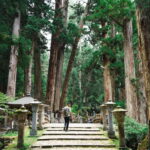
A bamboo grove is photogenic, sure. But it’s also atmospheric in a very specific way: tall vertical lines, filtered light, and a cool hush compared with open streets. In practice, 50 minutes is enough to:
- see the bamboo stretch and the path feel
- do a slow walk for photos
- get a couple of viewpoints without rushing
This stop also connects to the deeper story the guide brings. The bamboo cultivated by nobles of the Heian era still echoes in the way the place is used and remembered today. You don’t have to be a culture expert to enjoy it; you just need a guide who can explain why this grove became famous and why it has kept its meaning.
Possible drawback: bamboo time is the one area where pacing can feel off. Some people felt the Bamboo Forest portion ran long compared with what they wanted, while other parts felt tighter. That doesn’t mean it’s wrong—it just means your expectations should match the format: a “see the big three” day, not a choose-your-own adventure.
Arashiyama lunch break: use that hour wisely
After bamboo, you’ll spend about 1 hour in Arashiyama town for lunch and shopping. This is your chance to eat something local without a tour bus trick where you’re marched into one set restaurant.
Because lunch is not included, you’re in charge here. You’ll want to move quickly once you decide, because Kyoto spots can fill up. The upside is flexibility: you can go for casual noodles, grab a quick meal at a food stall, or take a break before your temple legs kick in again.
If I were planning for a smooth day, I’d treat this hour as a two-part schedule: eat first, shop second. That way, if you end up in a line, you’re not sacrificing the full shopping time. Also, wear comfortable shoes here. You’re about to go from “short stroll” to “temple steps and walking,” and you’ll be glad your feet are already settled.
Kinkakuji (Golden Pavilion): ticket-included temple time that feels iconic
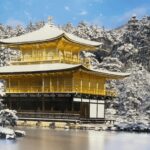
Then it’s off by private vehicle—about 25 minutes—to Kinkakuji Temple, better known as the Golden Pavilion. You get 1 hour 30 minutes, and importantly, the admission ticket is included.
This stop is the reason many people make the Kyoto day trip at all. The pavilion and surrounding garden are famous for a reason: the structure is striking, and the setting frames it in a way that feels composed rather than chaotic. Even if you’ve seen pictures, being here in person gives you a better sense of how the garden and architecture work together.
In a guided setting, the real advantage is interpretation. Your guide can point out details you’d normally miss, like the significance of the pavilion’s design and how Kinkakuji fits into Kyoto’s broader temple culture. This is the kind of stop where a good explanation upgrades the experience from sightseeing to understanding.
One practical note: Kinkakuji timing tends to matter. Kyoto can get crowded, and Golden Pavilion is one of the busiest attractions. Your small group size helps, and a guide who knows how to manage entry flow can save you from standing around.




Fushimi Inari Taisha: torii gates, stairs, and why 2 hours can feel tight
Finally, you head to Fushimi Inari Taisha Shrine, founded over 1300 years ago and dedicated to Inari Okami. The drive is about 50 minutes, and you get roughly 2 hours on site.
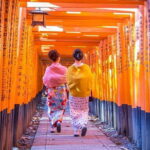
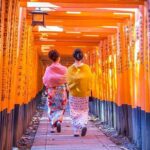
This is the emotional finish line of the tour. Fushimi Inari is red gates as far as the eye can hold, and the walking turns into a rhythm. If you take your time, you’ll notice how the gates stack and how the shrine paths change as you move deeper.
Two hours is a solid block, but it can feel short depending on your pace and stamina. Some people found this portion a bit rushed compared with the bamboo stop, so if you care most about Fushimi Inari photos or want to walk deeper, you’ll want to move efficiently at the start:
- Spend your first stretch getting oriented on the main path
- Save extra photo time for areas where the view lines open up
The tour does include walking on hills and stairs. If you’re the type who likes to stop often for photos, you may have to trade off how far up you go. A guide’s help matters here too—because getting back down when crowds swell can take longer than you think.
Still, it’s the best kind of “active sightseeing.” You’re not stuck at a single point staring at a view. You’re moving through it.
Comfort and pacing: what 8 to 9 hours feels like
The full day runs about 8 to 9 hours. That includes the drive from Osaka to Kyoto, plus time for walking and the major stops. It sounds long, but the structure helps: you get breaks built in between the big exertion zones.
Here’s what I’d plan for mentally:
- Morning: comfortable vehicle ride, then bridge and bamboo
- Midday: lunch break and a breather in Arashiyama town
- Afternoon: Golden Pavilion, then a longer walk at Fushimi Inari
Also, expect some flexibility. The schedule can change due to weather and traffic conditions. That’s not a dealbreaker—Kyoto is a living city—but it does mean you shouldn’t book a tight dinner reservation immediately after you get back to Osaka.
Group size helps pacing. With a maximum of 11 travelers, you can move as a group without the chaotic “everyone follow your guide 15 meters apart” feel you get on larger tours.
Price and value: is $105.71 a good deal?
At about $105.71 per person, this tour looks like a reasonable price for a one-day Kyoto highlights package starting from Osaka. The value comes from three things you’d otherwise pay for separately:
- a private vehicle ride that saves you time and transportation headaches
- an English-speaking conductor plus support in Mandarin
- admission ticket costs being covered for the stops where it applies (notably Kinkakuji is included)
Lunch isn’t included, so budget for a meal, and gratuity isn’t included either. But beyond that, the tour lists “all fees and taxes,” plus bottled water and WiFi. In other words, you’re not constantly breaking your flow to pull out your wallet for add-ons.
Compared with DIY, the time-saver is big. If you’re traveling from Osaka and want bamboo + Golden Pavilion + Fushimi Inari in one day, doing it yourself usually means more figuring out and more standing in line for tickets and transfers. If your goal is a clean, efficient day with guidance, this price starts to make sense fast.
Who should book this Kyoto highlights tour (and who should skip it)
This tour is a good fit if you:
- want to see the three headline sites in Kyoto without planning every step
- appreciate a guide explaining what you’re looking at
- like small-group comfort rather than big-bus chaos
- can handle walking with stairs and hills
It’s not recommended if you can’t walk long distances. The day includes multiple walking segments, and Kyoto terrain isn’t flat. Even if you’re excited by the sights, your feet and knees need to be ready.
If you’re traveling with kids or older relatives, think hard about stamina. The route tries to keep things smooth, but the physical reality is still there.
Should you book? My straight answer
If you’re short on time in Kansai and you want a guided Kyoto day that goes from Osaka, hits Arashiyama bamboo, Kinkakuji, and Fushimi Inari, and includes the key entry where needed, I think this is an easy yes. The small group size, the guided explanations, and the private-vehicle comfort are the winning combo.
But if your ideal Kyoto day is slow, optional, and sitting-heavy, skip it. The route is set, not customizable, and you’ll spend real time on your feet. In that case, you might do better with a more flexible plan where you choose fewer sights and stay longer.
FAQ
What’s the meeting time and where do I meet?
Start time is 9:45am. You meet at either Shinsaibashi or Umeda DT Tower, then the tour ends back at the meeting point area.
How long is the Kyoto tour from Osaka?
It runs about 8 to 9 hours.
How much does the tour cost?
The price is $105.71 per person.
Is lunch included?
No. Lunch is not included.
Are entry tickets included?
Yes. The tour includes admission where applicable, and tickets for Kinkakuji are included in the price. Other stops are listed as admission ticket free.
What language support do the guides provide?
The tour includes an English-speaking conductor and a Mandarin-speaking conductor. It may also be operated by a multi-lingual guide.
Will I have to do a lot of walking?
Yes. The tour includes walking and you should expect stairs and hills at the places you visit. It is not recommended if you cannot walk long distances.
What’s included in the tour besides guiding?
Included items are an air-conditioned vehicle, WiFi on board, bottled water, and all fees and taxes.
Does the tour offer pick-up or drop-off beyond the meeting points?
No extra pick-up or drop-off service is provided. You’ll return to the meeting point area, and you can request to disembark at Shinsaibashi RIMOWA or Umeda DT Tower.
How does cancellation work?
You can cancel for free up to 24 hours in advance of the experience start time for a full refund. The experience requires good weather, and if it’s canceled due to poor weather, you’ll be offered a different date or a full refund.