REVIEW · OSAKA
Kyoto and Nara Day Tour From Osaka with Deer Sightings
Book on GetYourGuide →Operated by Leda Japan · Bookable on GetYourGuide
Torii, temples, and deer in one day. I like how this Osaka-to-Kyoto-and-Nara day packs Kiyomizudera and Fushimi Inari with minimal planning, and Nara Park’s deer-feeding moment is built in. One thing to consider: English explanation can vary by driver, so you may lean on short site notes along the way.
You’ll get a comfy van ride and a small group (max 9), which makes the day feel controlled instead of chaotic. In past trips, drivers such as Ms Xiao (praised for close photo stops and a Toyota Vellfire feel) and Pony (known for getting as close as possible and pausing for coffee when timing allows) set a helpful tone.
Still, this is not a gentle stroll-through-everything plan. It’s not suitable for wheelchair users or pregnant women, and you should budget extra for admission tickets and lunch.
In This Review
- Key things that make this day tour worth your time
- How the Osaka-to-Kyoto-Nara route works
- Van comfort and the small-group advantage (max 9)
- Nara Park: 1.5 hours with sika deer and UNESCO in the distance
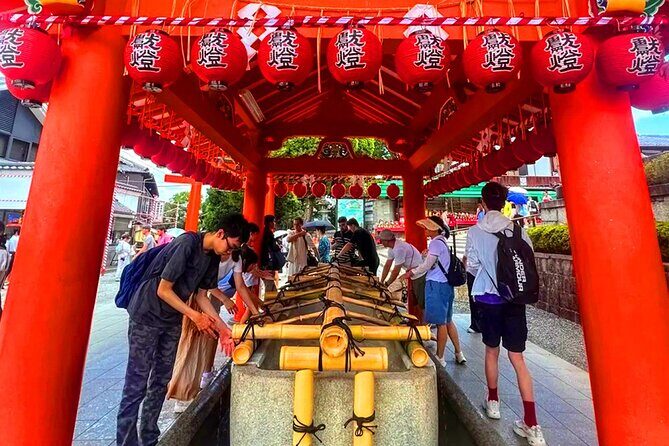
- Fushimi Inari Taisha: the torii-gate walk that makes Kyoto feel real
- Kiyomizudera and Otowa Waterfall: what to do in 3 hours
- Shinsaibashi-suji and central Osaka: where the day lets you breathe
- Price and value: is $67 a good deal for 10 hours?
- Who this tour fits best (and who should skip it)
- My decision checklist: should you book this day tour?
- FAQ
- What’s the total duration of the tour?
- How much does it cost?
- Are admission tickets included?
- Is lunch included?
- How big is the group?
- What languages are available?
- How long do you spend at each main stop?
- Can I feed the deer at Nara Park?
- Is pickup included?
- Are pets allowed on the tour?
Key things that make this day tour worth your time

- Small group size (up to 9) keeps you moving, not merging into crowds
- Nara Park deer feeding with approved crackers turns photos into an actual moment
- Fushimi Inari’s torii corridor is timed well for first-timers who want the iconic walk
- Kiyomizudera’s Otowa Waterfall and nail-less wooden stage are the main event
- Osaka return time near central shopping helps you continue the day on your own
- Drivers vary, but service style matters, and some have made photo and break stops easier
How the Osaka-to-Kyoto-Nara route works

This tour is designed for one simple goal: you see three heavy hitters in a single day without wrestling trains or transfers. You’re on the road long enough to feel like a full day (10 hours total), but the pacing leaves you with meaningful time in each place rather than a quick drive-by.
The biggest “value” here is logistics. Osaka to Nara to Kyoto can be straightforward, but it still eats time: station navigation, ticket lines, and figuring out which platform you need. With a driver and an assigned meeting point (sent to you ahead of time), you can spend your energy on the sites, not the subway.
Also, the group size stays small. That matters at places like Nara Park and Fushimi Inari where foot traffic rises fast. A smaller group helps you keep your bearings and follow a sensible flow without constant regrouping.
You can also read our reviews of more tours and experiences in Osaka.


Van comfort and the small-group advantage (max 9)
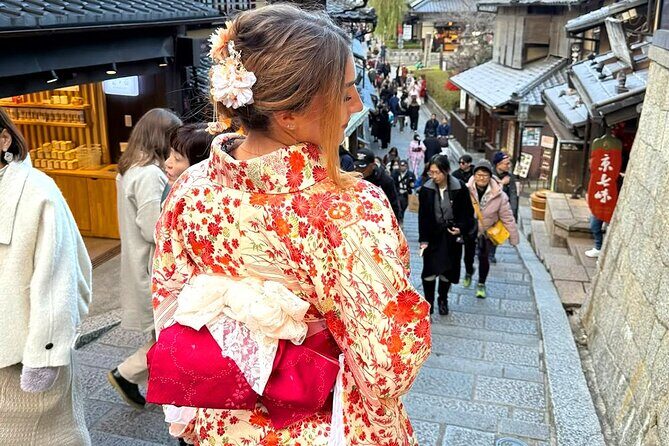
You travel in a van for the day, typically in a “ride like a limo” comfort level for Japan standards, with examples of a Toyota Vellfire showing up in guest feedback. That kind of comfort is not just nice; it buys back energy for the walking later.
The tour also runs with a driver and guide service (English included as the service language, with driver languages including Chinese, English, and Japanese). In real life, that usually means you’re not stuck with silence while you wait for the next stop. At the same time, be practical: one past experience noted limited English from their specific driver, with short descriptions sent by text. If you’re the type who needs a running commentary, plan to use your own apps and printed context at each site.
Finally, the meeting and pickup are flexible depending on your selected option. You’ll receive the guide’s contact details, car plate, and a photo of the pickup point the day before—so you can find the right vehicle without doing detective work.
Nara Park: 1.5 hours with sika deer and UNESCO in the distance

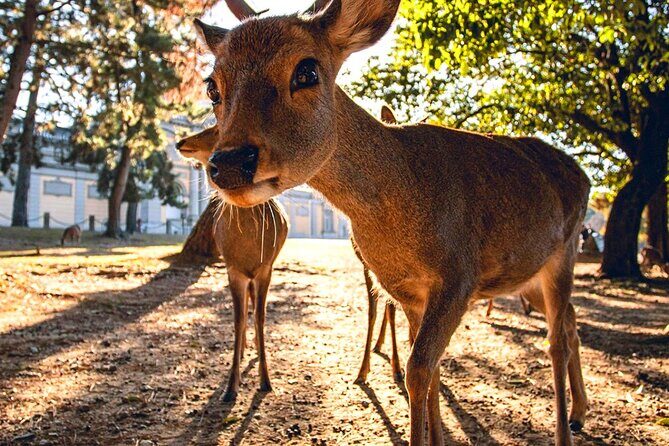
Nara Park is the kind of stop that feels like a movie set, because it’s not staged deer photos. The park is home to more than 1,000 freely roaming sika deer, and they really do wander close to pathways.
You get about 1 hour and 30 minutes here, which is long enough to do two things: enjoy the deer without sprinting, and still take in the wider historical context around the area. The tour also includes the simple but important part: you feed the deer with specially approved crackers. That helps keep things smooth and reduces the guesswork around what’s safe and what isn’t.
One bonus: you may get views of UNESCO-listed sites in the broader park area, with Todai-ji Temple visible in the distance. You won’t have time to deep-explore every temple in Nara, but that “see it from here” effect can be a smart preview if you plan a longer Nara visit later.
Tip for your shoes and timing: Nara paths can get busy, and deer are fast. Move calmly, keep your crackers secure, and treat feeding like a quick, gentle exchange rather than a full photo shoot marathon.
Fushimi Inari Taisha: the torii-gate walk that makes Kyoto feel real

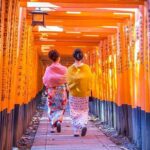
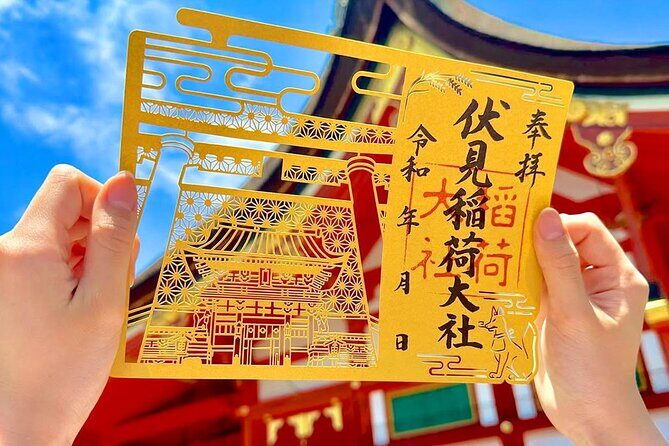
If Kyoto has a signature walk, it’s this one. Fushimi Inari Taisha is famous for its red torii gates stacked into long rows up the slopes of Mount Inari. The gates are closely packed, and the path can feel endless, even when you only walk part of it.
You’ll have about 80 minutes for this stop, which is a good balance for first-timers. You can reach a satisfying point for photos, absorb the shrine atmosphere, and still have time to rejoin the group without feeling rushed.
What I like about having a set time here is that you don’t get trapped in the classic Kyoto “one more staircase” problem. Torii paths naturally keep you going because each turn offers a new angle. The time box helps you choose a route that fits your energy and leaves you ready for the bigger temple visit later.
A small cultural note that helps the walk make sense: the shrine is dedicated to Inari, associated with rice and prosperity, and many torii gates were donated by businesses and individuals hoping for good fortune. You’re not just seeing color and architecture. You’re moving through a space that’s linked to wishes people still make today.
Kiyomizudera and Otowa Waterfall: what to do in 3 hours
Kiyomizudera is where the day earns its wow-factor. The temple sits on Otowa Mountain, and it’s a UNESCO World Heritage site. You’re given about 3 hours here, which is enough time to do the key things without turning it into a power-walk.
Start with the famous stage: the wooden platform is built without a single nail, supported by clever joinery. Even if you don’t care about construction details, it’s an important part of the experience because it frames the views over Kyoto.
Then, go to Otowa Waterfall. You can drink from the three streams said to grant wisdom, health, or longevity. I like this because it turns a tourist stop into something active—do you drink? If yes, which stream feels right for your day? You’re following a belief system, not just taking a photo.
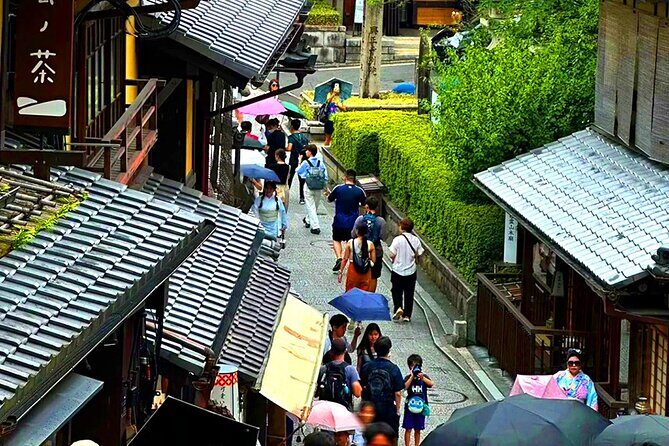
Finally, plan time for the streets below in the Higashiyama area. This is where traditional shops line up with sweets, pottery, and souvenirs. You can use this window to snack, reset your pace, and buy small things that won’t weigh your luggage down.
Reality check: you’re walking uphill and through crowds. Bring water (you can’t bring drinks in the vehicle, but you can bring your own on foot if the tour day allows it—confirm at pickup). Use layered clothing. Kyoto weather can shift.






Shinsaibashi-suji and central Osaka: where the day lets you breathe
Ending in downtown Osaka is smart. You don’t feel stranded in a quiet edge of the city after a long day of temples and deer.
The tour includes time connected to Shinsaibashi-suji Shopping Street, a lively pedestrian stretch for browsing and grabbing something to eat after you’ve been on the go all day. Even if you don’t shop, this area is a good “stand still and people-watch” break.
Your drop-off is also listed near 2-chōme-1-11 Chōdō, close to Kintetsu Nihombashi. That’s central enough to keep your evening options open—quick dinner, a last round of snacks, or a walk back toward major sights.
Price and value: is $67 a good deal for 10 hours?
$67 per person is the right kind of pricing for this format, because you’re paying for time-saving transport plus the guided/English service for a full day. The tour runs 10 hours car usage, not just a short ride between stops.
What’s not included matters for budgeting:
- Lunch
- Admission tickets
So your total day cost will be a bit higher once you add food and whatever ticket fees apply at the temples you enter. Still, you’re unlikely to spend extra time and money on transit coordination. That’s the value: you trade a chunk of autonomy for smooth movement and set time in each major site.
Group size (max 9) also supports the price. If it were a huge bus tour, the day would feel more crowded and less personal at the gates and deer areas.
Who this tour fits best (and who should skip it)
This tour fits best if you want a first-timer-style day with three major landmarks and you don’t want to plan train routes between them.
You’ll likely enjoy it if you:
- Love iconic photos but also want actual time at each stop (not just a drive-by)
- Prefer a small group and an experienced driver handling logistics
- Are comfortable walking and standing for parts of the day
It’s not a fit if you:
- Use a wheelchair (not suitable)
- Are pregnant (not suitable)
- Have pets with you (pets not allowed; assistance dogs allowed)
My decision checklist: should you book this day tour?
Book it if you want an efficient, guided day that lands you at Nara Park deer time, the torii gates of Fushimi Inari, and the main highlights of Kiyomizudera with enough room to explore.
Skip or consider another option if:
- You need detailed English narration the whole time (driver English can vary)
- You’re hoping for a slow, in-depth temple day in Kyoto (this is timed for a full loop)
- You strongly dislike crowds, because these sites can get busy
If you’re mostly after big “Japan highlights” in one day and you like the idea of having transport and meeting points handled, this is a practical choice.
FAQ
What’s the total duration of the tour?
The tour lasts 10 hours total.
How much does it cost?
The price is listed as $67 per person.
Are admission tickets included?
No. Admission tickets are not included.
Is lunch included?
No. Lunch is not included.
How big is the group?
It’s a small group limited to 9 participants.
What languages are available?
The tour is available in Chinese, English, and Japanese.
How long do you spend at each main stop?
You’ll spend about 1.5 hours at Nara Park, about 80 minutes at Fushimi Inari Taisha, and about 3 hours at Kiyomizudera.
Can I feed the deer at Nara Park?
Yes. You’ll feed the deer with specially approved crackers.
Is pickup included?
Pickup is optional, depending on the selected option. You’ll receive meeting details before the day.
Are pets allowed on the tour?
Pets are not allowed, but assistance dogs are allowed. Drinks and food are also not allowed in the vehicle.