REVIEW · OSAKA
Osaka: Japan’s Oldest Temple & Bone Buddha Walking Tour
Book on GetYourGuide →Operated by DeepExperience, Inc. · Bookable on GetYourGuide
Osaka has two faces, and this tour shows the old one. I like the way the guide makes early Buddhism feel practical (not just statues), especially at Shitennoji, and I also love the contrast of the Bone Buddha tradition at Isshinji. One thing to consider: you’ll spend real time walking between temple precincts, so plan comfy shoes if you’re not used to temple-tour pace.
You start with Japan’s early Buddhist roots and end with a very urban expression of faith, all in about 2 hours. You also get a guide in English or Japanese, which matters here because the meaning behind the layouts and rituals is the whole point.
The tour is focused and calm, not a long checklist. If you only want high-energy sights or photo stops with zero context, you might feel it’s a bit slower than other Osaka tours.
In This Review
- Key points to know before you go
- Shitennoji starts the story of Buddhism in Japan
- Pure Land Garden and the sun setting on a promise
- Isshinji’s modern gate: tradition meets design today
- Bone Buddhas (Kotsubotoke): cremated ashes become remembrance
- Walking pace, timing, and where this fits in Osaka
- Price and value: is $65 worth it for two temples?
- Who should book this Shitennoji to Isshinji tour?
- Should you book this tour?
- FAQ
- FAQ
- How long is the Osaka Old Temple and Bone Buddha walking tour?
- Where do I meet the guide?
- Which temples are included in the tour?
- What’s included in the price?
- Is transportation included?
- What language is the guide?
- How much does the tour cost?
Key points to know before you go
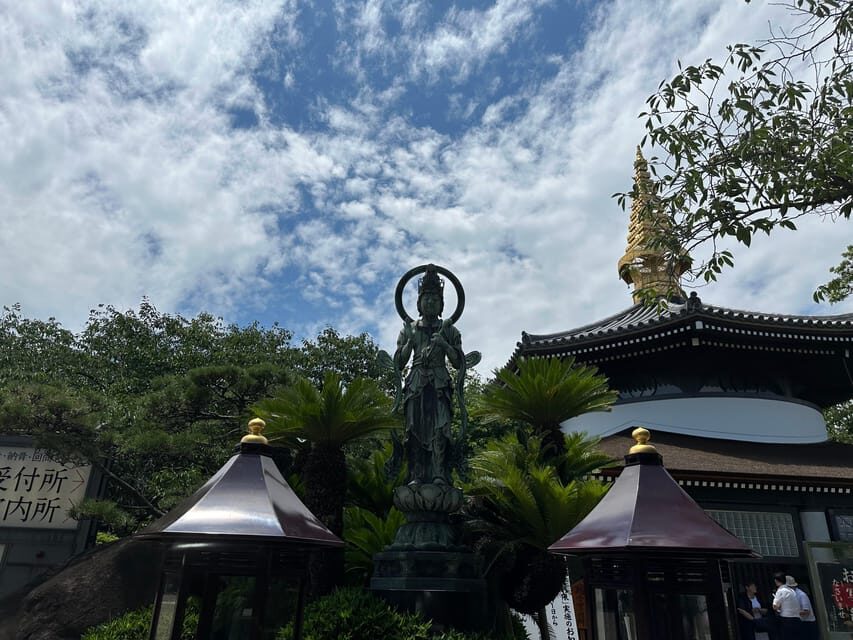
- Shitennoji (founded in 593) connects the story of Buddhism in Japan to Prince Shotoku and the Four Heavenly Kings.
- Symmetry with meaning: the central precinct layout is explained as an early Japanese Buddhist design approach.
- Pure Land Garden links the setting sun to visions of rebirth in Amida’s paradise.
- Isshinji’s modern gate creates a strong tradition-vs-innovation contrast.
- Bone Buddhas (Kotsubotoke) are made from cremated ashes and represent communal remembrance.
- Two temples, one storyline: early public Buddhism to later, family-centered urban devotion.
Shitennoji starts the story of Buddhism in Japan
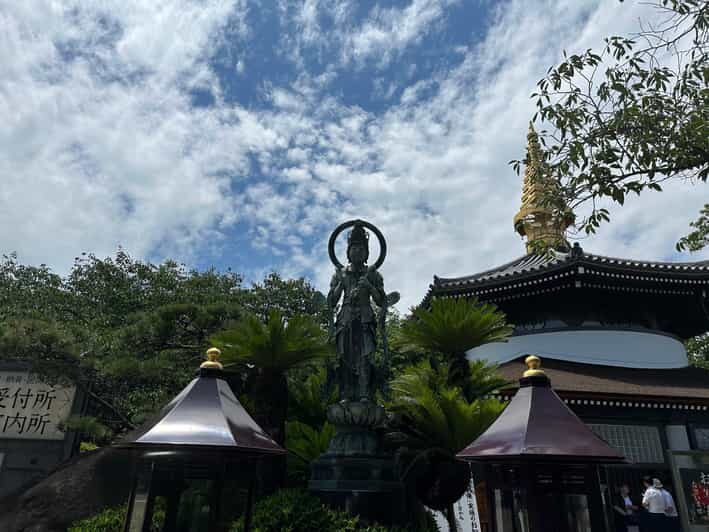
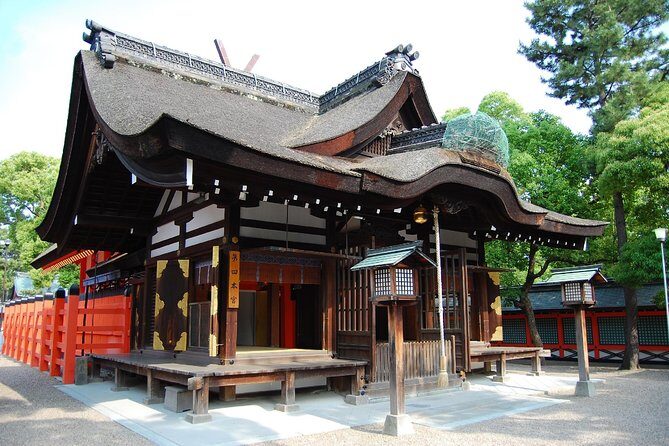
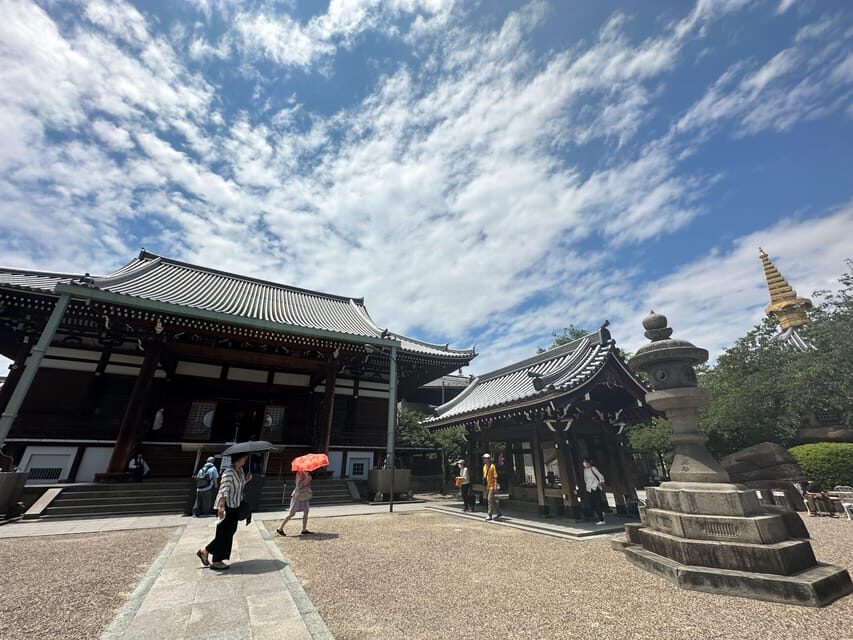
Your tour begins at Shitennoji’s main entrance, in front of the stone torii gate (Ishidori). From there, the first stop is Shitennoji, one of the oldest officially established Buddhist temples in Japan. The tone is immediately different from the neon-and-noodles side of Osaka. This is quiet space, big spiritual energy, and a lot to learn if your guide is on point.
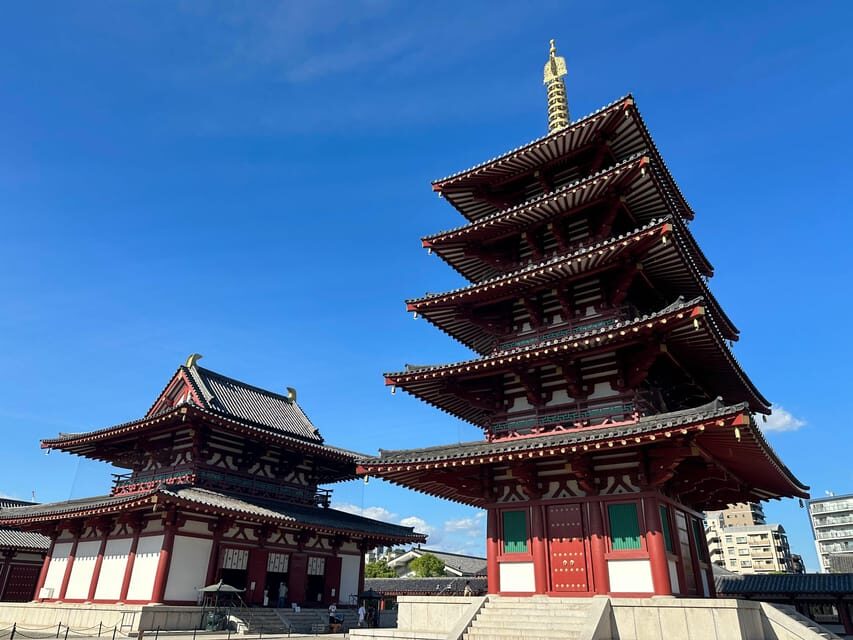
The guide frames Shitennoji around its founding in 593 by Prince Shotoku. That date matters because it marks a time when Buddhist ideas weren’t just imported curiosities. They were becoming part of social life. You’ll also hear about the Four Heavenly Kings (Shitenno), guardian deities tied to protecting the nation. It’s a strong way to understand why temples like this weren’t only about private faith—they were also tied to public identity.
What I like most is how the guide explains the temple’s symmetrical layout. Symmetry can look decorative if you don’t know the reasoning. Here, it’s treated like an intentional choice from early Buddhist design thinking—order, balance, and a sense that the sacred space has rules.
There’s also an honest lesson in endurance. The tour talks about how Shitennoji has endured fires, wars, and repeated reconstruction. That doesn’t make it grim. Instead, it helps you understand that continuity often comes from rebuilding, not from never changing.
Good to know: this part of the tour isn’t just walking through corridors. It’s structured to help you connect architecture to beliefs, and beliefs to daily life in early urban Japan.
You can also read our reviews of more walking tours in Osaka


Pure Land Garden and the sun setting on a promise
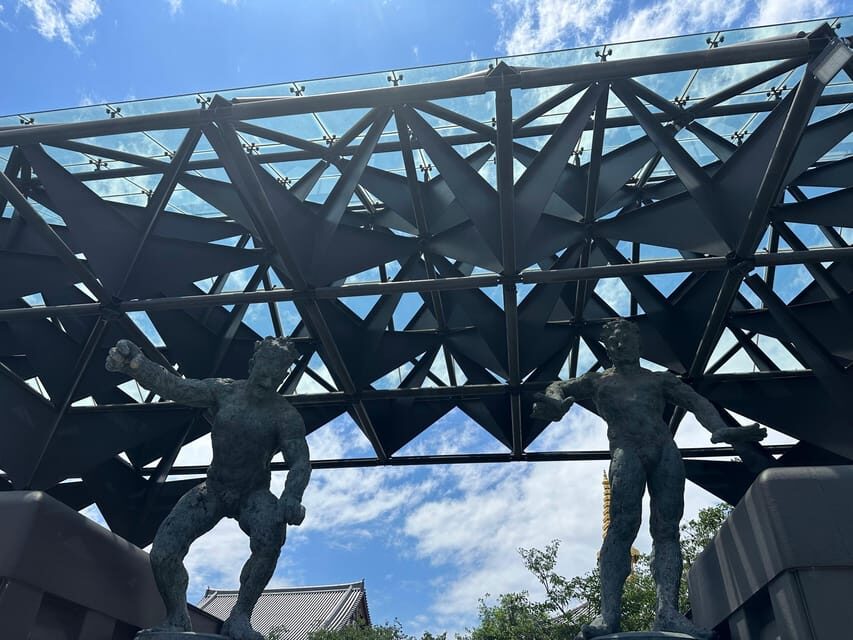
After Shitennoji’s main temple complex, you’ll spend time in the Pure Land Garden. This is where the tour turns poetic, but in a grounded way. Pure Land thought centers on visions of the Western Paradise, and the garden becomes a teaching tool.
One of the most interesting explanations you’ll get is the symbolic relationship between the setting sun and the promise of rebirth in Amida’s paradise. In other words: the garden isn’t only scenery. It’s meant to guide your attention. The way the guide describes it, you start seeing time and light as spiritual messaging, not just weather.
This matters for how you experience Osaka. Yes, the city is modern and fast. But here you’re shown how religious ideas can shape how people interpret daily moments. The tour also notes that this area of Osaka has long been associated with sunset views, so the symbolism isn’t floating off in fantasy. It has a local, lived-in connection.
If you’re the type who likes to understand what you’re looking at, this stop is a payoff. You’ll leave with a clearer mental model for why a garden design can function like a storybook.
Possible drawback: if you’re pressed for time and want only major “wow” sights, the garden segment might feel more contemplative than flashy. That’s not a problem with the tour—it’s the style.
Isshinji’s modern gate: tradition meets design today
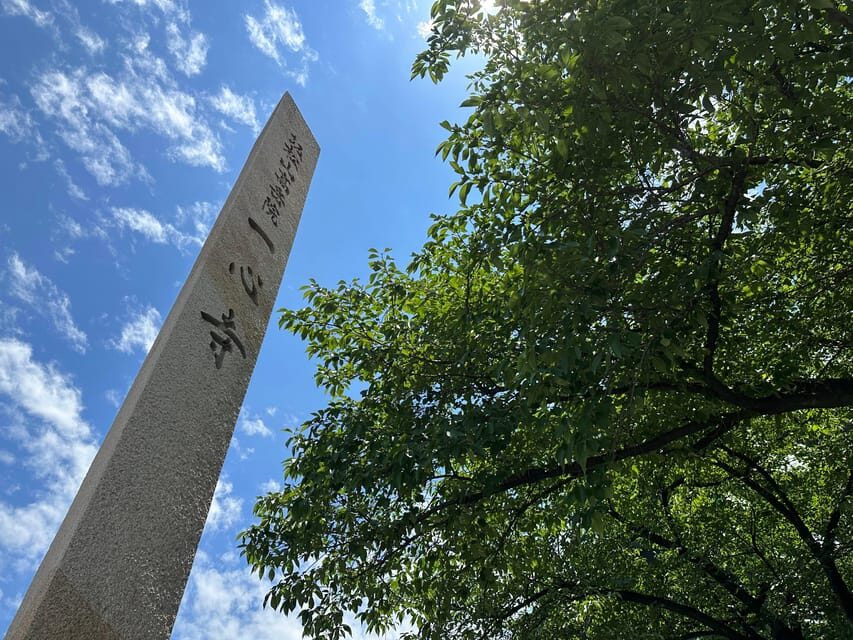
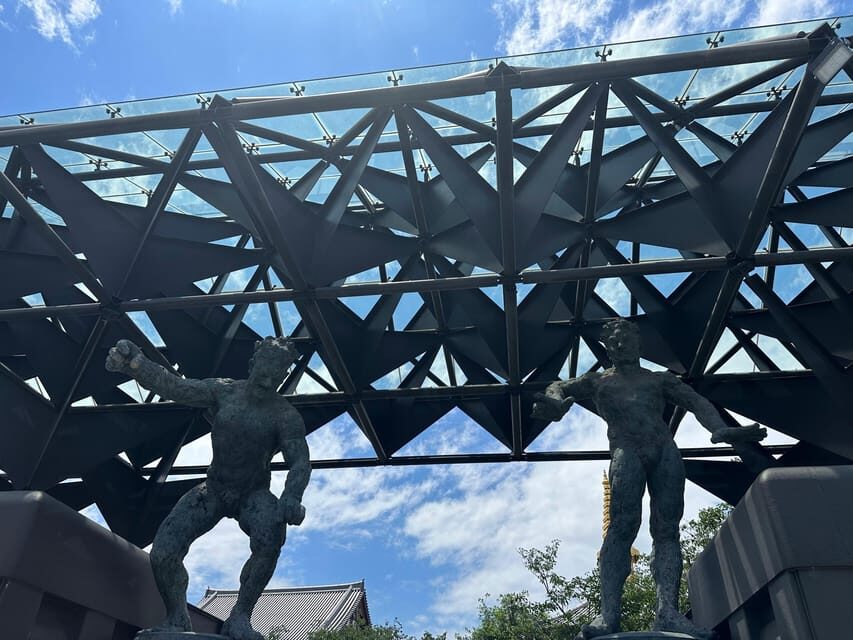
Then the tour shifts gears to Isshinji (一心寺). From the outside, it hits you with an immediate contrast: a strikingly modern main gate designed by the current head priest. That detail is important. It tells you that tradition doesn’t always freeze. Sometimes it keeps moving forward, even inside sacred space.
Approaching the gate, you get the feeling that this temple is telling two stories at once: a long devotional past and a present-day voice. Behind that bold entrance, you’ll find nearly 900 years of history. The guide uses this contrast to help you understand how Buddhism in an urban setting can take different forms across time.
Isshinji also brings a more personal theme compared with the national-protection vibe you hear at Shitennoji. This temple is closely tied to family and communal memory. Instead of guardians watching over the nation, you get devotion that stays close to home.
If you like architecture, this is the stop to pay attention. The modern gate isn’t just a curiosity. It changes how you approach the temple grounds because it sets expectations: you’re not only looking back—you’re looking at continuity that includes change.
Bone Buddhas (Kotsubotoke): cremated ashes become remembrance
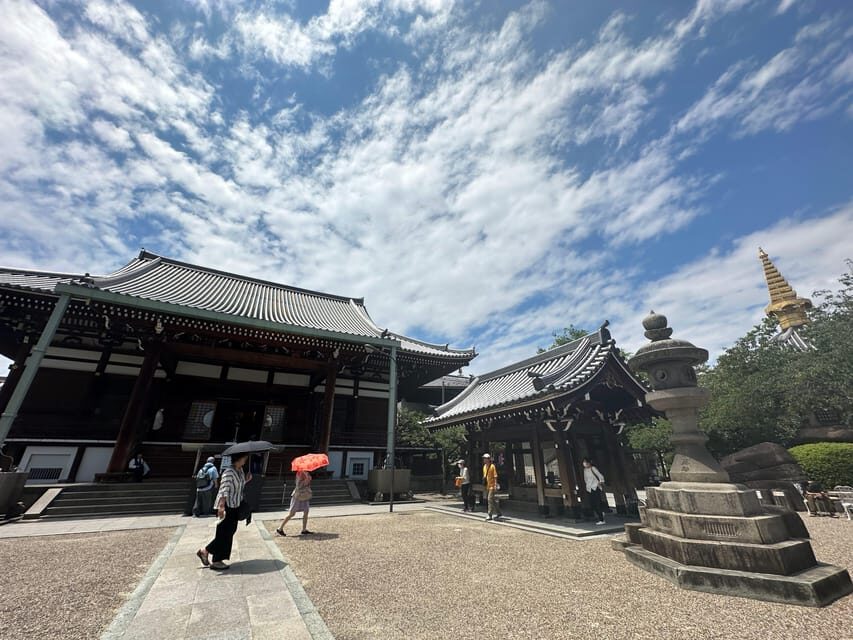
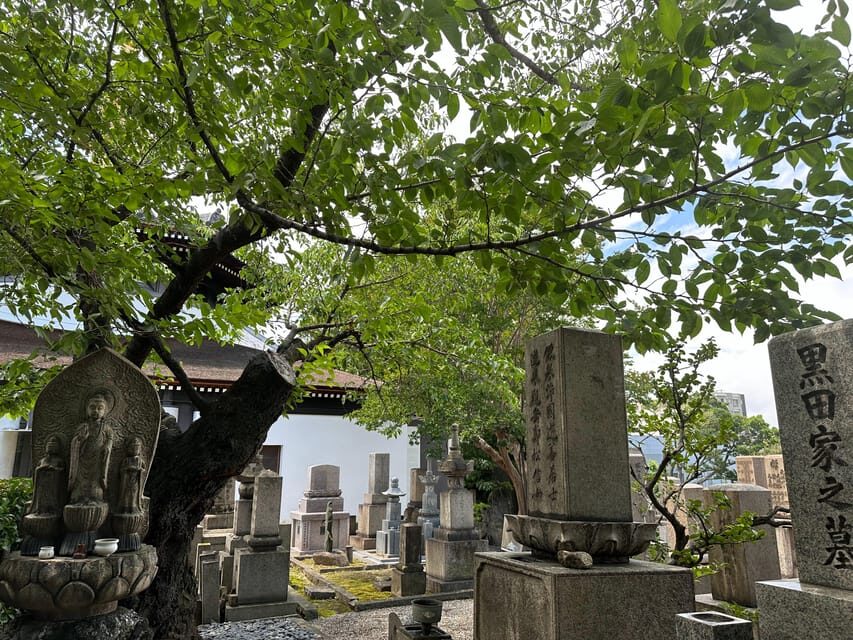
The most distinctive part of the experience is Isshinji’s tradition of the Bone Buddhas, known as Kotsubotoke. These are statues made from cremated ashes. The guide explains how the remains of ancestors are respectfully combined to create these forms of remembrance.
Here’s a number that really lands: Isshinji holds the ashes of more than two million ancestors of Osaka residents. That scale turns the idea of devotion into something you can feel. This isn’t about a private shrine in the background. It’s about a city-level practice that helps families honor people across generations.
The tour treats the Bone Buddha tradition as both spiritual and urban. It’s not only a religious ritual. It’s a community system for memory, grief, and ongoing connection. The guide also covers how the practice began and how it continues serving families today, which is key—because the meaning isn’t just in the ashes. It’s in the ongoing care.
If you’re uncomfortable with death-related traditions, you might want to mentally prepare. But if you can hold respect, it’s one of the clearest windows in Osaka into how Buddhism adapted to city life and family realities.
What you’ll take away: you’ll understand that “temple visiting” can be a form of studying society. Urban Buddhism can look different from what you expect from guidebooks.
Walking pace, timing, and where this fits in Osaka
This is a 2-hour guided walking experience, designed around two temple precincts: Shitennoji first, then Isshinji (finishing at 一心寺). The Shitennoji segment is guided for about 1.5 hours, and the remaining time covers Isshinji with 1 hour of guided exploration.
You’ll want to think about your day in terms of mood. This tour is intentionally quieter than many Osaka itineraries. So it pairs well with:
- a morning start when you want calm before crowds,
- or an afternoon break from shopping and food hopping.
Logistics-wise, your meeting point is right at Shitennoji’s stone torii gate (Ishidori) at the main entrance. It’s a short walk from Shitennoji-mae Yuhigaoka Station. The tour doesn’t include transportation, so make sure you’re already set for getting there on time.
Also, this is a private group, which helps. Temples are best when you can ask questions without feeling rushed. The guide’s job here isn’t to speed you through. It’s to connect what you’re seeing with what it means.
For anyone thinking about the balance of Osaka: I find tours like this give you the city’s context. Without it, Osaka can look like a series of neighborhoods and meals. With it, you start seeing why the city’s people built places like these in the first place.



Price and value: is $65 worth it for two temples?
At $65 per person for about 2 hours, you’re paying for three things: a professional guide, structured temple time, and included admissions for Shitennoji’s main complex plus the Pure Land Garden.
Here’s what that means in practical value:
- The guide is essential. The main features here are symbolic—temple symmetry, Pure Land ideas, and the Bone Buddha tradition. Without explanation, you’d miss a lot of what makes the experience meaningful.
- Admissions are included for the core Shitennoji areas (main temple complex and Pure Land Garden). That saves time and keeps the visit smooth.
- You get a tight itinerary: Shitennoji first, then Isshinji. You’re not spending hours commuting between multiple distant sites.
Where the cost won’t stretch automatically is transportation and food. You’ll cover getting to the meeting point yourself, and you’ll want to plan a meal before or after since the tour doesn’t include food or drinks.
If you’re the kind of traveler who likes learning why things exist—then $65 for a guide-led story across two major temples is a fair deal. If you prefer self-guided temple wandering and you don’t care about religious symbolism, you might feel you can do it cheaper on your own. But if understanding is your goal, the guide-led format is exactly what you’re paying for.
Who should book this Shitennoji to Isshinji tour?
This is a good fit for you if:
- you want Osaka’s spiritual side, not just street-level food culture,
- you enjoy architecture and how design can express belief,
- you’re curious about how Buddhism took root in Japan early and then adapted in urban life,
- you prefer a private group with room for questions.
It’s also a solid choice if you’ve already seen big, famous temples elsewhere and want something that connects religious history to a living city tradition.
If your focus is strictly Instagram photo angles and minimal walking, you might find it less satisfying. This tour is about meaning, not speed.
Should you book this tour?
Yes—if you want a thoughtful, guide-led walk that explains how early Buddhism and later urban devotion shaped Osaka. Shitennoji gives you the origin story, the Pure Land Garden adds belief through symbolism, and Isshinji’s Bone Buddhas bring the lesson to a human scale tied to family remembrance.
My advice: wear comfortable shoes, bring a curious mindset, and be ready to slow down. This isn’t a rushed checklist. It’s the kind of experience that makes Osaka feel older, deeper, and more personal in just a couple of hours.
FAQ
FAQ
How long is the Osaka Old Temple and Bone Buddha walking tour?
It lasts about 2 hours total, with Shitennoji guided time of about 1.5 hours and Isshinji guided time of about 1 hour.
Where do I meet the guide?
Meet the guide in front of the stone torii gate (Ishidori) at the main entrance of Shitennoji Temple. The meeting point is a short walk from Shitennoji-mae Yuhigaoka Station.
Which temples are included in the tour?
You visit Shitennoji Temple and Isshinji Temple (starting at Shitennoji and finishing at 一心寺).
What’s included in the price?
The price includes a professional English-speaking guide, guided visits of Shitennoji and Isshinji, admission to Shitennoji’s main temple complex, and admission to the Pure Land Garden.
Is transportation included?
No. Transportation to and from the meeting point is not included.
What language is the guide?
The live tour guide is available in English and Japanese.
How much does the tour cost?
The tour costs $65 per person.