REVIEW · OSAKA
Nostalgic Osaka, walk in totally different from Dotonbori
Book on GetYourGuide →Operated by Four-Leaves · Bookable on GetYourGuide
Osaka has a quieter side, and it starts in Karahori. I love the hidden alley maze and the old mercantile houses that survived the WWII fire, and you get to see what daily life looks like when the big downtown lights are far away. One catch: you’ll be walking through areas where some residents still live, so you have to stay calm, follow your guide, and not loiter or block doorways.
This is a 2-hour, small-group walk (up to 6 people) priced around $35 per person, led by a local guide in English or Korean. It’s not about big monuments and photo ops you can recreate alone. It’s about pace, context, and the little turns that make a neighborhood feel like a neighborhood.
If you’re late by more than 15 minutes, joining the full group gets difficult, so plan to arrive early at the station.
In This Review
- Key things I’d bet you’ll remember
- Where Karahori is, and why it feels different from Dotonbori
- Starting at Tanimachi-6Chome: quick orientation, then you’re moving
- The local market street warm-up (and why it matters)
- Maze alleys and WWII-survivor streets: how to walk without stepping on toes
- Old merchant houses: cafés and shops inside 100–200 year structures
- Tatami mat shop stop: craft that’s still part of everyday life
- Hidden Osaka Castle moat ruins and tiny shrines in the side lanes
- Break time and shopping stops: how the tour handles rest and food
- Price and value: what you’re really paying for at $35
- Rules that protect the neighborhood (and keep things comfortable)
- Who should book this Nostalgic Osaka walk?
- Should you book? My straight answer
- FAQ
- How long is the Nostalgic Osaka walking tour?
- What does the tour cost?
- Where do I meet the guide?
- Is it a small group tour?
- What’s included in the price?
- What languages is the guide available in?
Key things I’d bet you’ll remember
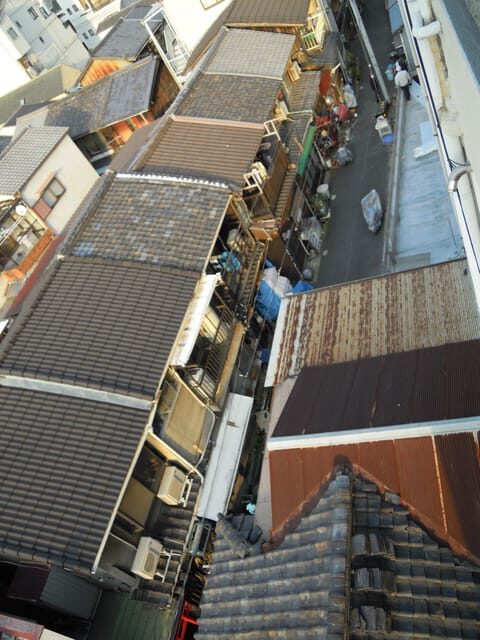
- Karahori’s “old Osaka” feel, shaped by what survived after WWII
- Off-the-beaten-path alleys where your guide reads the area like a map
- 100–200 year-old merchant houses, some now cafés and small shops
- Tatami-mat shop stop, tied to everyday craft life rather than souvenirs
- Ruin of Osaka Castle moat (15D) and tiny shrines tucked in side streets
- Small-group walking with breaks for photos, shopping, and resting
Where Karahori is, and why it feels different from Dotonbori
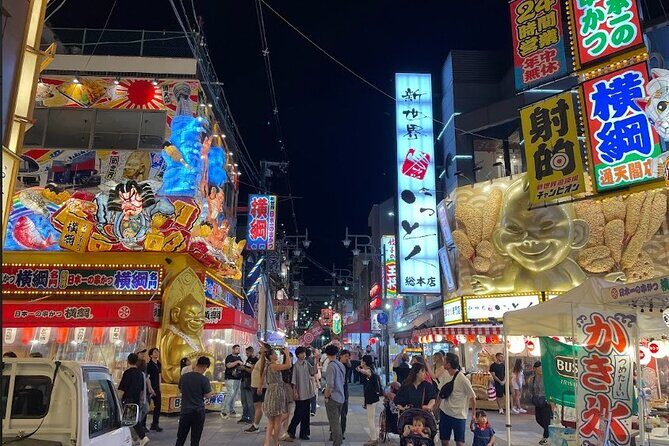
Most people land in Osaka where the energy is loud and constant—Dotonbori style. Karahori is a different story. It’s about three stations away from Namba, but the vibe drops quickly once you’re in this part of town.
Karahori’s claim to fame here is survival. The area kept an older Osaka atmosphere because it avoided the worst of the World War II fire. That means you’re not just looking at “historical buildings” from far away. You’re walking through streets that still feel tied to the day-to-day routines of the people who live there.
The architecture helps: traditional mercantile houses—some reported as 100 to 200 years old—sit next to newer remodels. You’ll notice how old and new share the same blocks, so the neighborhood doesn’t freeze in time. It keeps functioning.
For me, that’s the point of this tour. You’re not touring a theme park version of Osaka. You’re walking through a working urban fabric where daily life continues behind plain-looking doors and narrow lanes.
You can also read our reviews of more walking tours in Osaka



Starting at Tanimachi-6Chome: quick orientation, then you’re moving
The meeting point is straightforward: Osaka Metro Tanimachi-6Chome Station, Exit No. 3 at street level. It’s on the Tanimachi Line side, and it’s a crossing station, so you’ll want to be intentional with your route inside the station so you don’t waste minutes.
The tour starts with a short welcome and refreshments, plus a bottle of water and a small snack. That matters because this is 2 hours of walking with photo stops and little transitions—no long bus rides, no big “wait around” moments.
Within the first part of the walk you’ll do a quick photo stop and sightseeing segment, then head into the shopping and market area. This rhythm is useful: it gives you a mental map early, so later when the guide turns down smaller lanes, it feels guided instead of confusing.
Also, you’ll get that “local pace” right away. The guide handles where to walk, where to slow down for photos, and how to pass through areas without being in the way. If you’re someone who likes to understand how locals actually move through a neighborhood, this tour is built for you.
The local market street warm-up (and why it matters)
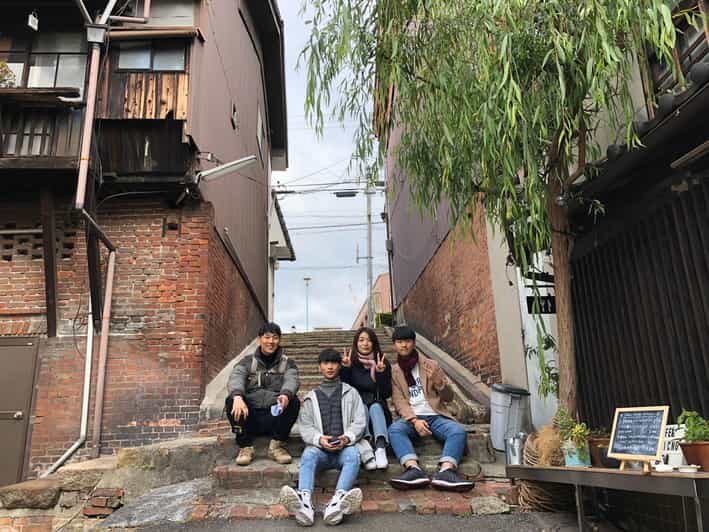
The tour includes time on a local market street for about an hour, with a mix of walking, sightseeing, and shopping. This is more than “see a market.” It sets up what you’ll notice later in the side alleys: daily needs, small storefront habits, and the kind of commerce that doesn’t rely on tourist crowds.
Expect a mix of street activity and practical stops. You might spot signs of everyday life that you’d miss if you only stayed near Namba or Osaka Castle main approaches. And because you’re in a small group, you’re not watching a crowd funnel through the same five storefronts.
There’s also a key practical point: food and drinks at shops are not included. So if you’re hungry (and you probably will be), treat this as “pay your own way” time. That keeps the tour flexible—you can grab something simple when it fits your preferences.
If you like snack-and-wander travel, this portion is a good momentum builder. It also helps you get comfortable with the guide’s style before the narrower lanes.
Maze alleys and WWII-survivor streets: how to walk without stepping on toes
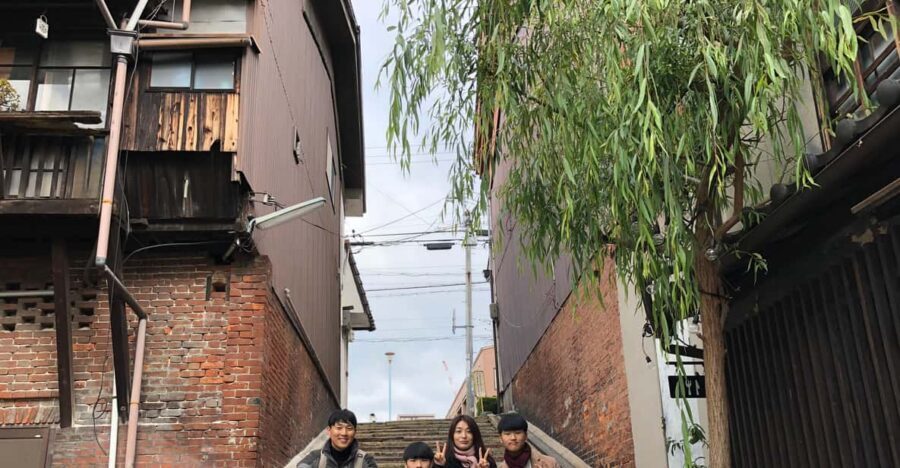
This is where the tour earns its name. After the market portion, you start getting into off-the-beaten-path lanes—some that feel like a maze. The guide leads you to turns that aren’t obvious on a normal map, including hidden alley connections that can link back to recognizable spots.
A standout detail: some alley areas are private, and some are open to walk through without obvious signage. That’s why the guide is essential. You shouldn’t assume you can freely cut through every narrow passage you see.
There’s another non-negotiable here: people still live in these lanes. The notes are clear: don’t disturb residents during hidden-path walking. That means quiet voices, no blocking doors or entrances, and no lingering for extra photos that slow the group down.
You’ll see how the old merchant houses and the alley network create a different walking “experience” than a standard sightseeing loop. It’s slower, more directional, and more observational. You’ll notice the small textures: the way walls absorb sound, how courtyards and side entries work, and how the neighborhood feels lived-in rather than curated.
If you’re the type who hates feeling rushed, you’ll probably like this part. The pace is practical—stop when it makes sense, then move on.
Old merchant houses: cafés and shops inside 100–200 year structures
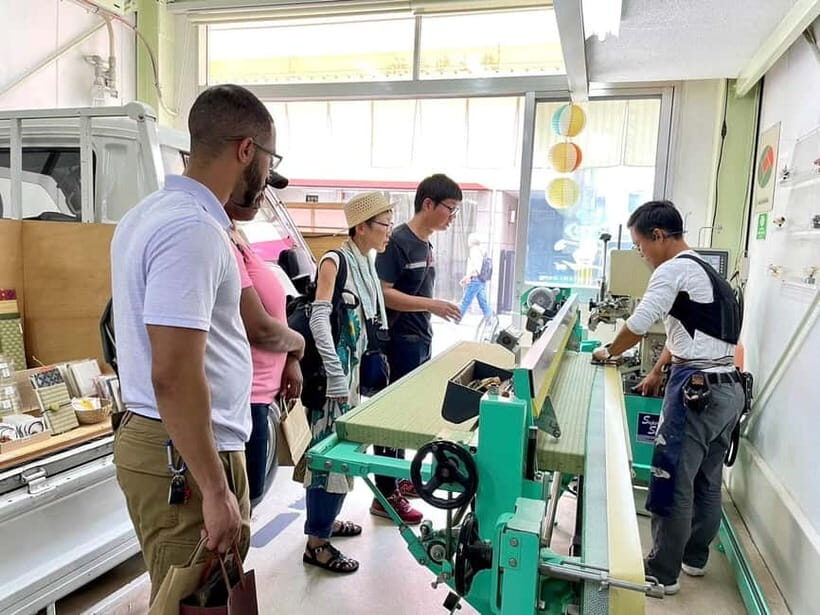
In Karahori, charming doesn’t mean “everything is renovated.” Some traditional mercantile houses still have living spaces. Others have been remodeled into cafés or cute small shops. The result is a neighborhood where you can spot a very old façade, then suddenly see a cozy interior behind it.
The tour’s route uses that contrast on purpose. You’ll get to watch how history is being used day-to-day, not just displayed. A street can look quiet and ordinary from the outside, but a narrow opening might lead to a café, a small shop, or a craft-related stop.
For you, this matters because it changes what you take home. Instead of just photos, you’ll have a better sense of how businesses survive in older neighborhoods: what gets preserved, what gets adapted, and how owners make the space practical while keeping the bones of the building.
Shopping in these small places is self-paid, and that’s important. You’re not forced to buy, and you’re not paying a packaged “tour price” that’s really just a shopping add-on. If you want a souvenir, you can pick something you truly like.
And if you just want to rest, you’ll get guidance toward cozy cafés and restaurants during breaks.






Tatami mat shop stop: craft that’s still part of everyday life
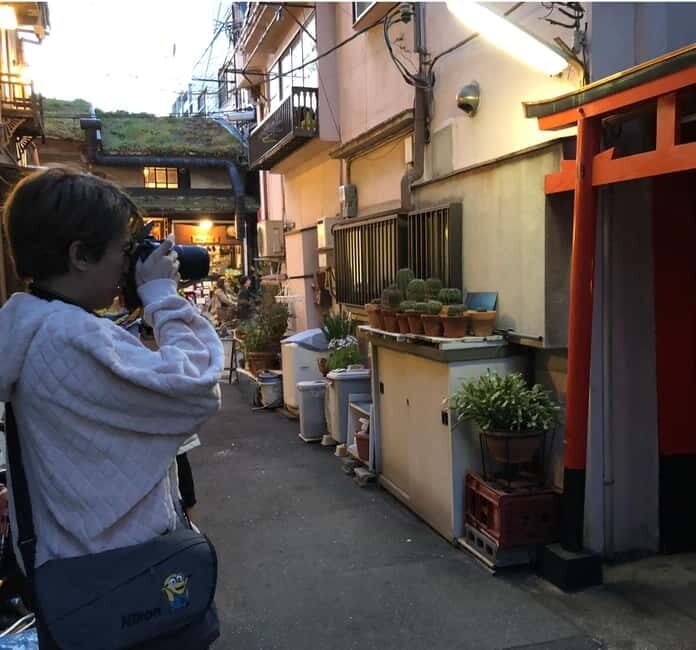
One of the scheduled stops is a Japanese tatami mat shop. Even if you don’t buy anything, the value here is understanding the craft in context. Tatami isn’t just a tourist keyword in Japan; it’s part of how rooms are built and lived in.
This stop fits well with the rest of the neighborhood. You’re not only seeing old buildings. You’re connecting the materials and trades that helped shape how people lived in older Osaka.
If you’re interested in interiors, traditional materials, or the way local crafts continue to operate, you’ll appreciate this shift from alley photography to something functional and handmade.
You’ll also notice the same rule of the day: pay your own way if you shop or take refreshments there. The tour provides access and direction; it doesn’t turn craft time into an upsell.
Hidden Osaka Castle moat ruins and tiny shrines in the side lanes
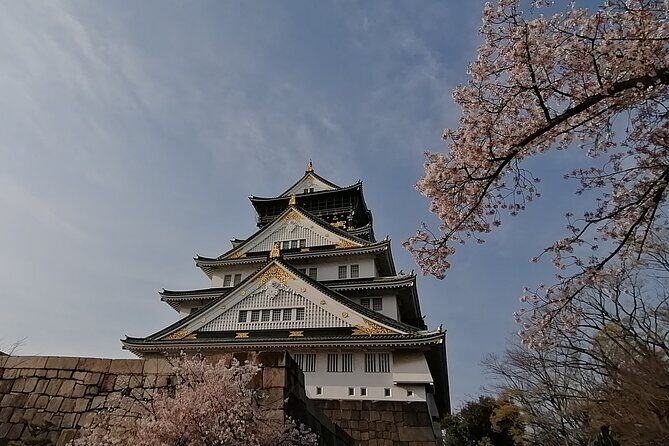
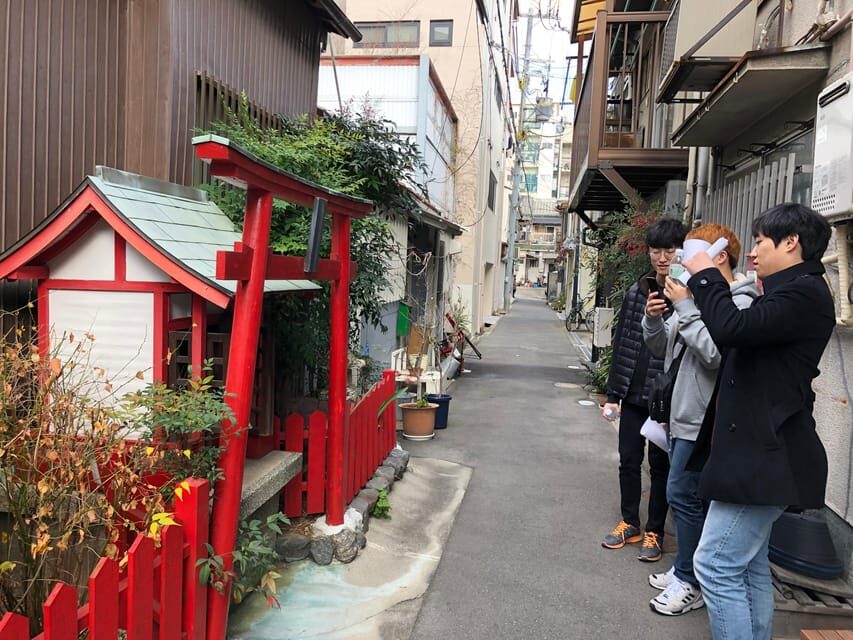
Another scheduled highlight: the tour visits the ruin of Osaka Castle moat without water along with tiny shrines. What makes this special isn’t only the subject matter. It’s the way it’s tucked into the alley system, almost like the neighborhood is layered over old geography.
Instead of visiting the moat as a standalone attraction, you experience it like a local might: passing it, noticing it, then moving on. That makes it feel less like a checklist item and more like part of the area’s everyday landscape.
Photo time happens here too—short and purposeful. You’re not expected to linger forever. But you’ll have the chance to capture the setting and also ask questions, because your guide knows the area layout well.
The shrines add a human touch. They remind you that this isn’t just a route with buildings; it’s a place with ongoing cultural practice.
Break time and shopping stops: how the tour handles rest and food
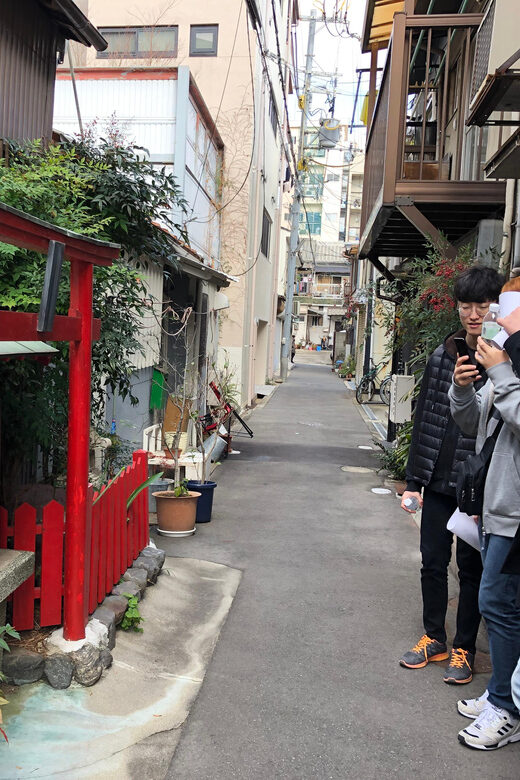
At one point there’s a break window with photo stop and shopping time. That’s a nice design choice for a walking tour. You don’t feel like you’re constantly in motion.
It also gives you a chance to reset if the alley walking gets tiring. Karahori’s lanes can be narrow and a bit uneven, so short pauses help.
For food: the tour includes opportunities to visit a food market, but meals and drinks are not included. If you eat at shops or cafés, you pay yourself. That means your meal choices can stay personal—snack, drink, or a simple sit-down option if you find something you like.
Also, this tour supports the practical reality of travel: you can take a breather without losing the group, because the guide builds rest into the flow.
Price and value: what you’re really paying for at $35
At about $35 per person for 2 hours, the value comes from three things you usually can’t replicate alone:
First, the route. You’re led into places that feel hidden—off-book alleys and connections that would take you a lot longer to find on your own.
Second, the context. The tour isn’t only walking; it’s interpretation—why Karahori’s atmosphere survived, what the old houses were for, and what you’re seeing in the neighborhood fabric.
Third, the small group cap: limited to 6 participants. With fewer people, the guide can slow down for questions and also manage the delicate part—walking through areas where residents live.
You’ll also get practical extras: water and a small snack. Those aren’t a life-changer, but they help keep the tour smooth for everyone.
So yes, you’ll still pay for anything you buy in shops or cafés. But you’re not stuck with a forced meal package. This feels more like guidance plus access than a “spend money on stuff” scheme.
Rules that protect the neighborhood (and keep things comfortable)
This tour has clear behavior rules. Drones are not allowed. No smoking indoors. No intoxication. No feeding animals. No skateboards. No making fire. And importantly: keep noise down and follow the guide’s directions in private or residential lanes.
These aren’t there to spoil your fun. They keep the neighborhood respectful. And they also make the walk easier for you, since everyone follows the same calm approach.
One more practical note: the tour doesn’t allow people under 18. If you’re traveling as a family, you’ll need to plan around that.
Who should book this Nostalgic Osaka walk?
This is a great match if you want:
- Real neighborhoods, not only big sights
- A guided route into small alleys where you’ll likely get turned around alone
- A mix of street life, old homes, and a craft stop like the tatami shop
- A small-group pace with time for photos and shopping
It’s less ideal if you want a nonstop “big attraction” itinerary. This is about character and context. Some parts are quiet by design.
Should you book? My straight answer
I’d book it if your idea of a good Osaka day includes side streets, old merchant houses, and learning what makes Karahori different from the headline areas. The small group size and the focus on alleys you can’t easily map on your own make the price feel fair.
If you’re easily bothered by narrow lanes, residential etiquette, or walking without constant landmark payoff, then you might prefer a more open, monument-based tour. But if you like atmosphere and you’re respectful of residents, this is one of those Osaka experiences that leaves you with a deeper sense of place.
FAQ
How long is the Nostalgic Osaka walking tour?
It lasts 2 hours.
What does the tour cost?
The price is listed as $35 per person.
Where do I meet the guide?
Meet at Osaka Metro Tanimachi-6Chome Station, Exit No. 3, street level.
Is it a small group tour?
Yes. The group is limited to 6 participants.
What’s included in the price?
A bottle of water and a small snack are included. Meals and drinks at shops or cafés are not included.
What languages is the guide available in?
The live tour guide speaks English and Korean. The tour is also wheelchair accessible.