REVIEW · OSAKA
Osaka: Private Japanese Traditional Ceramics Experience
Book on Viator →Operated by Ceramics Tocoton · Bookable on Viator
Clay comes with culture in Osaka. This private Japanese ceramics experience sends you into south Osaka for a hands-on session in a century-old two-storey house, not a tourist strip. You get to make something tied to Japanese eating rituals, then leave with a ready-to-use souvenir.
What I like most is the private format. You’re not squeezed into a crowded room, so Anna, Ryo, and the team can slow down and guide you when your hands (and your clay) need it.
The other standout is choosing your project up front—a sake set, sushi set, or tea bowl—with instruction in English, Spanish, Catalan, and also Japanese listed among languages offered. One thing to plan for: you won’t have everything in hand right away, since your fired pieces are typically shipped later, and shipping costs aren’t included.
In This Review
- Key highlights to know before you go
- A century-old Osaka pottery workshop, not a tourist set
- Your three projects: sake set, sushi set, or a tea bowl
- Technique plus the meaning behind the ceramics
- What you take home during the workshop (and what ships later)
- How the private format changes what you get out of it
- Timing: where the 2 hours actually goes
- Price and value: what $94.13 covers (and what it doesn’t)
- Who this Osaka ceramics class is best for
- Should you book Ceramics Tocoton in Osaka?
- FAQ
- How long is the Osaka private ceramics workshop?
- What can I make during the class?
- Will I get my pottery the same day?
- What is included in the price?
- What languages are offered for the workshop?
- Is it a private experience and what happens if weather is bad?
Key highlights to know before you go
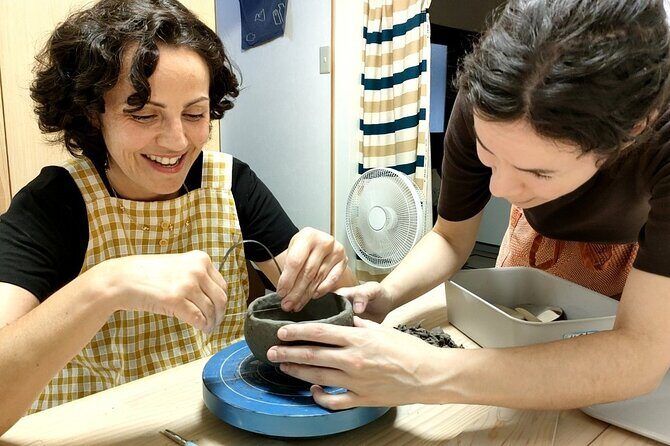
- Private instruction with Anna and Ryo in a quiet, local studio setting
- Three made-by-you choices: sake set, sushi set, or a chawan (tea bowl)
- Multilingual teaching, with Spanish and Catalan options
- A real neighborhood walk from Teradachō Station, past everyday food shops
- Small souvenir included immediately, plus your finished work ships later
- Materials and firing fee included, which matters for value
A century-old Osaka pottery workshop, not a tourist set
The class meets at Teradachō Station (2 Chome-3 Tennojichokita, Abeno Ward, Osaka). From there, you head to the studio in the south of the city, in and around a street lined with shops selling local food. That short transfer is part of the experience—this isn’t the polished, postcard Osaka you usually picture first.
The workshop happens in a historic two-storey house. It’s the kind of place that immediately signals this isn’t mass-made craft tourism. One practical perk: being in a proper home-style space tends to make the experience feel calmer and more personal, especially if you’re a beginner.
You’ll also be able to switch your pace based on the time slot you book. Morning and afternoon workshop times are offered for flexibility, and the overall experience runs about 2 hours.
You can also read our reviews of more private tours in Osaka



Your three projects: sake set, sushi set, or a tea bowl
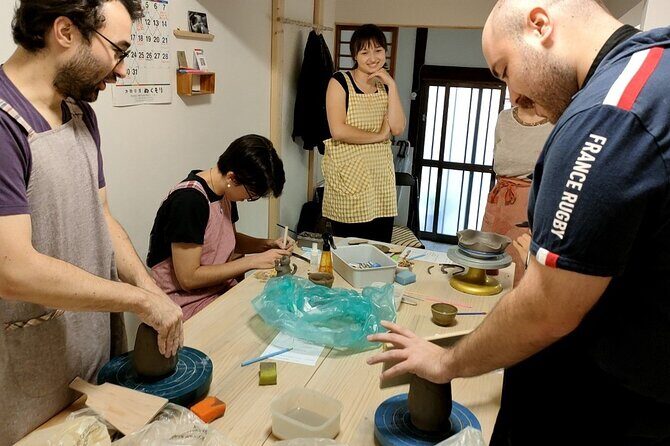
Here’s the fun part: you choose what you’d like to make from three ceramic options tied to Japanese gastronomy:
- Sake set: a small bottle and glass
- Sushi set: a sushi plate plus a chopstick holder
- Chawan (tea bowl): the classic bowl used for tea
This choice matters more than it sounds. If you love Japanese food, the forms connect directly to everyday rituals—serving and eating are built into the design, not tacked on later. If you’re more art-focused, these pieces also give you a clear target for your hands-on session, instead of a vague “make a bowl and hope for the best” situation.
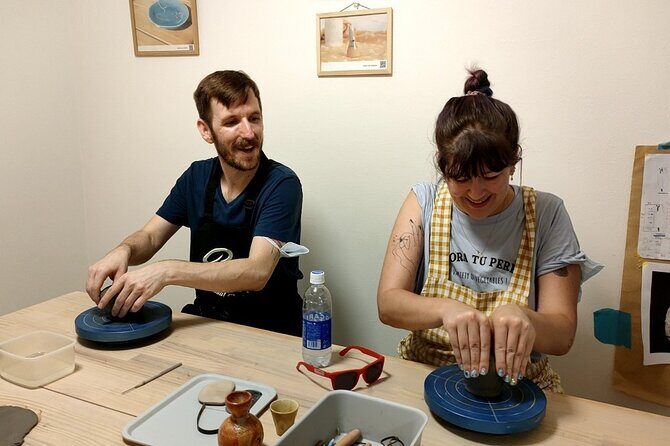
Even if you’ve never worked with clay, the workshop is structured for you. You’ll be making the items using clay (hand-building-style is implied by what’s described and what people report), and you’ll get guidance on the process.
Technique plus the meaning behind the ceramics
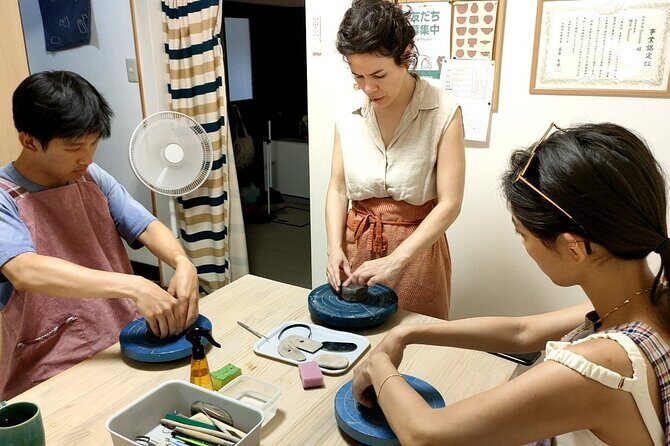
In the workshop, you’re not only learning how to shape clay—you’re also learning what these ceramics represent.
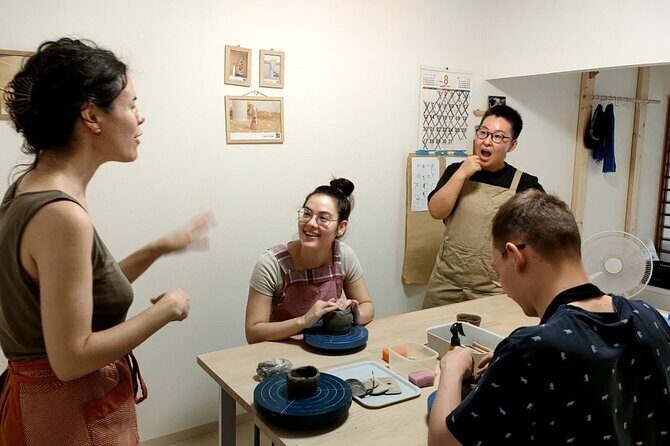
Anna, Ryo, and the team talk about Japanese culture during the class. The tone is practical and friendly, with lots of patience built in. From the way the experience is described, the instruction focuses on technique while also tying the piece to Japanese dining culture and traditional pottery ideas.
That combo is one reason this feels different from many craft classes. You’re more likely to care about what you made, not just end up with a souvenir-shaped object.
And yes, there’s also a sensory reset built in: you’ll be served Japanese green tea, coffee, or water during the session. It’s a small detail, but it makes the workshop feel like you’re actually in someone’s ceramic routine, not clocking time in a studio.
What you take home during the workshop (and what ships later)
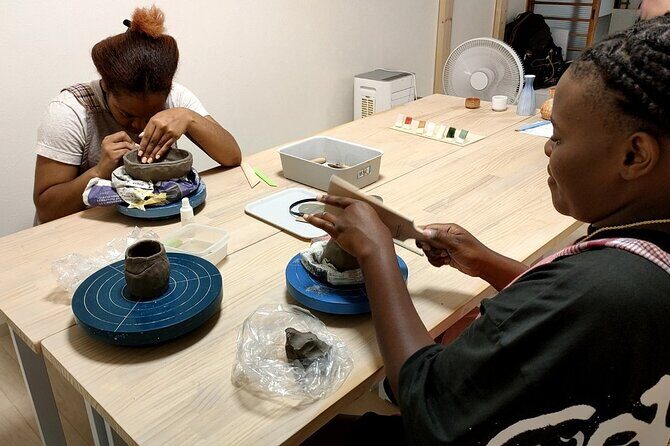
Included in the experience is more than “just materials.” You get:
- Materials costs and the firing fee
- An in-studio souvenir: a small Japanese traditional dish and a sakura-shaped chopsticks rest
- Instructor time
- Tax
- Drinks: Japanese green tea, coffee, or water
So even before the kiln does its thing, you leave with something you can use or display right away. One review also highlights a small sushi plate decorated with traditional glazes as part of what you receive as a souvenir, plus a sakura chopstick rest made by Anna. The exact souvenir experience is described as included, so you can count on getting a ready-to-go piece from the workshop itself.
Now for the big planning point: your pieces made during the session take time. It’s stated that it takes about 1.5 months to ship your pottery. Shipping is not included, so you’ll want to budget for it if you’re having the finished items sent home.
If you’re thinking like a minimalist and want everything in your luggage the same day, this isn’t that kind of pottery class. But if you like the idea of creating something and then letting it get properly fired and finished before it arrives at your door, it’s a great trade.
How the private format changes what you get out of it
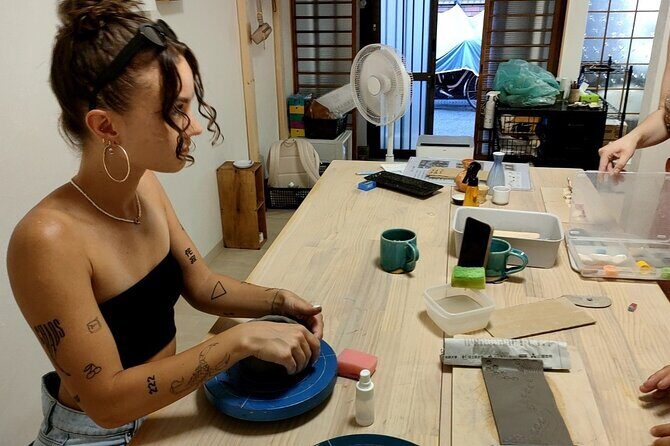
At $94.13 per person for about 2 hours, the price looks simple—but the value comes from what’s included and how the time is used.
Most importantly: it’s a private experience, meaning only your group participates. That matters because pottery is tactile and slightly unpredictable. Your hands might need a different pace. Your technique might need a quick fix. In a private setting, Anna and the team can respond without juggling a line of people.
You also get multiple language options. The class is offered in English, Spanish, Catalan, and Japanese (and the workshop is specifically described as being offered in Spanish, Catalan, or English). If you’ve ever taken a craft class where you’re nodding along while half the instructions fly past, you’ll appreciate having a language match.
The studio setting also supports the private feel. The century-old house and the non-touristy neighborhood walk help keep the workshop from feeling like a conveyor belt experience.




Timing: where the 2 hours actually goes
The workshop itself is about 2 hours, but the experience has rhythm:
- Meet at Teradachō Station and head to the studio area
- Arrive in the workshop space and get drinks
- Choose your piece (sake set, sushi set, or chawan)
- Work with clay with instruction and cultural explanations
- Receive your included souvenir items and leave with completed in-studio pieces
- Plan for shipping of your workshop-made pottery (about 1.5 months)
Since the studio is in south Osaka and described as being in a walkable local area, I’d plan to show up a little more early than usual. Wear comfortable shoes. Even if the walk is short, local neighborhoods tend to be best navigated at a relaxed pace.
If you’re booking around other Osaka sights, pair this workshop with something lighter afterward. You’ll want time to enjoy the neighborhood and settle back, rather than rushing into a full-speed itinerary.
Price and value: what $94.13 covers (and what it doesn’t)
Let’s talk money like grown-ups.
You’re paying $94.13 per person, and you should expect these things to be covered:
- Instructor guidance
- Material costs
- Firing fee
- Included souvenirs (small dish plus sakura chopstick rest)
- Drinks
- Tax
What isn’t included: shipping fees for the pottery you make. That later shipment can be the difference between a “fun add-on souvenir” and a “real budget line item.”
So the value question comes down to your preferences:
- If you’re happy to wait about 1.5 months for the finished pieces, the included firing and materials help keep this feeling fair.
- If you need everything immediately for a carry-on-only trip, this may feel less cost-effective, because shipping is required for the finished pottery you create.
Who this Osaka ceramics class is best for
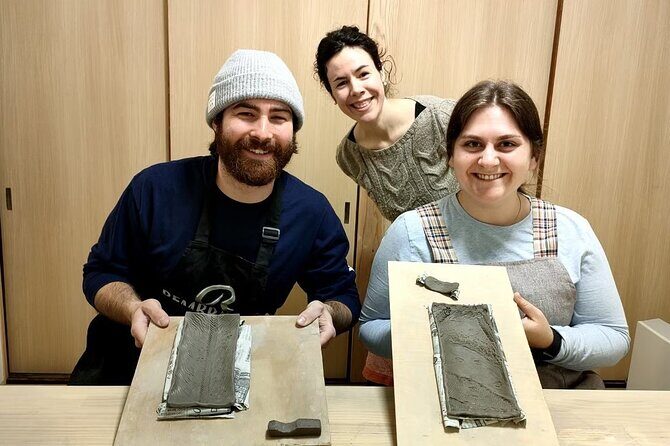
This workshop fits best if you want something hands-on, culturally grounded, and not overly rushed.
It’s especially good for:
- Beginners who want friendly, patient coaching
- People who like food-themed crafts (sake and sushi forms are built into the choices)
- Anyone who prefers a private format
- Spanish and Catalan speakers, since the workshop is specifically offered in these languages (which isn’t true of many ceramics experiences)
It may be less ideal if:
- You hate waiting for items and don’t want any shipping plan
- You’re hoping to do wheel throwing specifically (the described options focus on making sets and a tea bowl, and the class experience is described more generally around hand-building with clay)
Should you book Ceramics Tocoton in Osaka?
Yes—if you want a genuinely personal pottery experience in Osaka’s Abeno Ward, in a century-old house, and you’re excited to make one of three food-linked ceramics. The private class is a real quality upgrade, and the fact that you get instruction in English, Spanish, Catalan, and Japanese helps you actually understand what you’re doing.
Book it if you’re okay with the tradeoff: your main pieces are shipped later, about 1.5 months, and shipping costs aren’t included. If that waiting period works for your travel timeline (or you’re okay receiving ceramics after your trip), this becomes an easy “worth it” kind of souvenir.
FAQ
How long is the Osaka private ceramics workshop?
The workshop runs about 2 hours.
What can I make during the class?
You can choose to make a sake set, a sushi set, or a tea bowl (chawan).
Will I get my pottery the same day?
Not all of it. The pieces made during the workshop take about 1.5 months to ship, and shipping fees are not included.
What is included in the price?
The price includes the instructor, material costs, firing fee, a small traditional dish and a sakura-shaped chopsticks rest, drinks (Japanese green tea, coffee, or water), and tax.
What languages are offered for the workshop?
The class is offered in English, Spanish, Catalan, and Japanese.
Is it a private experience and what happens if weather is bad?
It is private, with only your group participating. The experience requires good weather; if it’s canceled due to poor weather, you’ll be offered a different date or a full refund.