REVIEW · OSAKA
Private Tour to Nara from Osaka with English speaking Driver
Book on Viator →Operated by Japan Guide Agency · Bookable on Viator
Nara in a day, without transit stress. This private tour makes it easy to enjoy Nara’s big-name sites from Osaka, with the comfort of a private vehicle and an English-speaking driver. You can focus on the temples, deer, and gardens instead of fighting bus transfers and ticket lines.
What I like most is the pacing: you’re not shoved from stop to stop. The route is built around Nara highlights, and you can tailor the day by choosing 3–4 sites from the list, so the visit matches your interests. One consideration: you do not get a licensed local English-speaking guide, so the depth of commentary depends on your driver.
In This Review
- Key highlights at a glance
- Why a private Nara day works so well from Osaka
- The English-speaking driver experience (and why it matters)
- How the route flows in an 8-hour day
- Todai-ji and Nara Park: the starting point that makes everything click
- Kasuga Taisha and Wakakusayama views: the shrine-and-hill combo
- Horyu-ji: the older-temple stop for history lovers
- Naramachi old streets: where the day becomes local
- Kofuku-ji and the Fujiwara connection
- Yakushiji and Shin-Yakushiji: symmetry and medicine in one concept
- Heijō Palace Site and the “capital in your imagination” effect
- Isuien and Yoshikien: gardens that work as a reset button
- Toshodai-ji: the Ganjin story that adds a human thread
- Nara National Museum: when you want context beyond the buildings
- Price and value for a private group of up to five
- Practicalities that can make or break your day
- Should you book this Nara private tour?
- FAQ
- What’s included in the private tour?
- How many people can be in a group?
- How long is the Nara day trip from Osaka?
- Are entrance fees and lunch included?
- Can I choose which sites to visit?
- Is the tour good for cruise port timing?
Key highlights at a glance
- Private car from Osaka so you skip the stress of public transport
- English-speaking driver who explains the places as you go
- Pick 3–4 stops from major temples, shrines, old streets, and gardens
- A mix of famous and quieter sights around Nara’s park and beyond
- Free-time breathing room so you can explore on your own at each stop
- A smooth return plan that works even if you’re visiting from a cruise port
Why a private Nara day works so well from Osaka
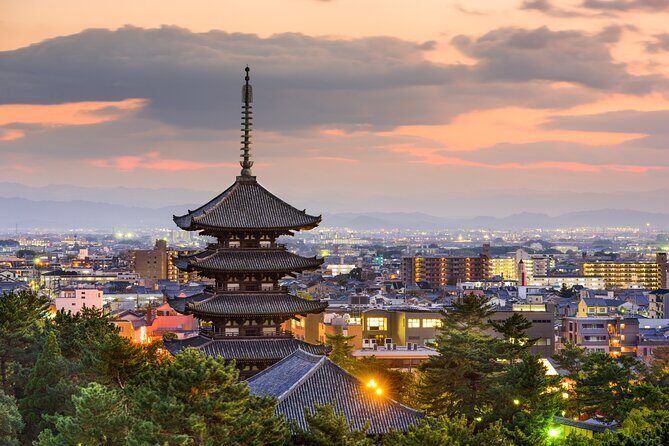
Osaka and Nara sit close enough that a day trip actually feels satisfying. Nara is famous, yes, but it can also feel chaotic if you try to do everything by train and bus in one day. A private vehicle fixes that. You spend your energy looking at temples and scenery, not decoding routes.
The tour also fits how independent travelers like to move. You get a plan, but you’re not locked into a rigid script. When I think about a good day trip, I want control over time, and this itinerary structure helps with that.
You can also read our reviews of more private tours in Osaka

The English-speaking driver experience (and why it matters)
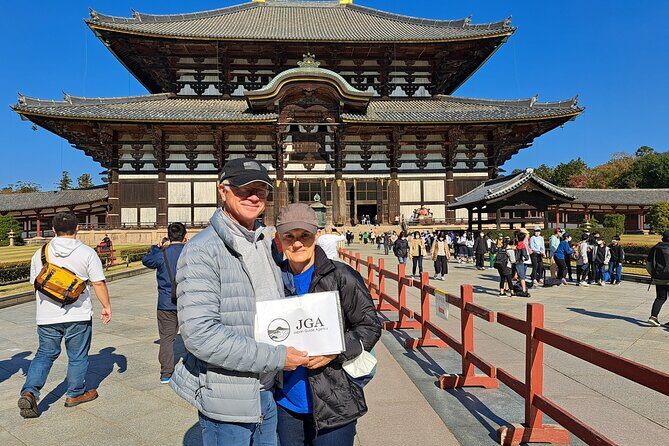
This is a private tour with an English-speaking driver, not a driver who just drops you off. The practical win is simple: you can ask questions in plain language, and you can get context while you’re riding between sites.
In the feedback for this tour, the standout name is Kazunori Maeda (often called Kazu Maeda). People praised his friendliness and the way he connected history and culture to each stop. That kind of guidance changes how you read a temple courtyard, or why a shrine is positioned where it is, instead of just treating everything as photos.
Just keep expectations steady: this is not the same as having a licensed local English-speaking guide. You’ll get helpful explanation from the driver, but if you want deep, sourced interpretation of every artifact, you’ll need to rely on what you read on-site and what your driver can cover.
How the route flows in an 8-hour day
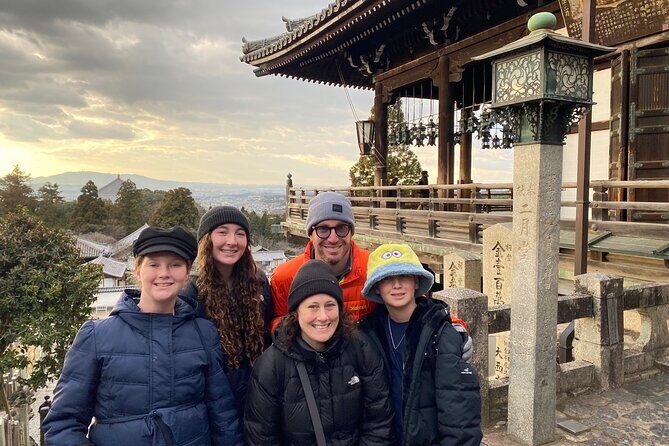
The day is about 8 hours, and that time gets organized around Nara’s main areas plus a few worthwhile detours. Many of the stops are close enough that the day feels cohesive, but different enough that you’re not seeing the same “temple view” over and over.
Also, the tour is customizable: you choose 3–4 sites from the listed highlights. That makes the day trip work for both “I want the top hits” travelers and “I love gardens and quiet corners” travelers.
Here’s how the stops break down conceptually, so you can choose wisely.
Todai-ji and Nara Park: the starting point that makes everything click
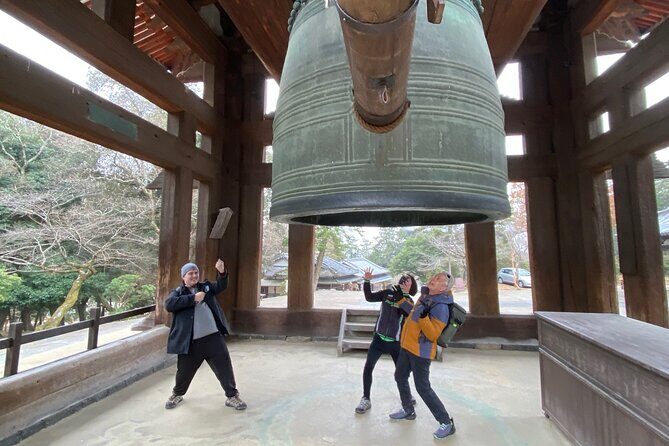
Todai-ji is the heavyweight. It’s one of Nara’s most famous and historically significant temples, with roots reaching back to the 700s. If you’ve come to Nara, this is the stop that gives your day a strong anchor. Even if you’re not chasing every detail, the scale and the sense of importance are the point.
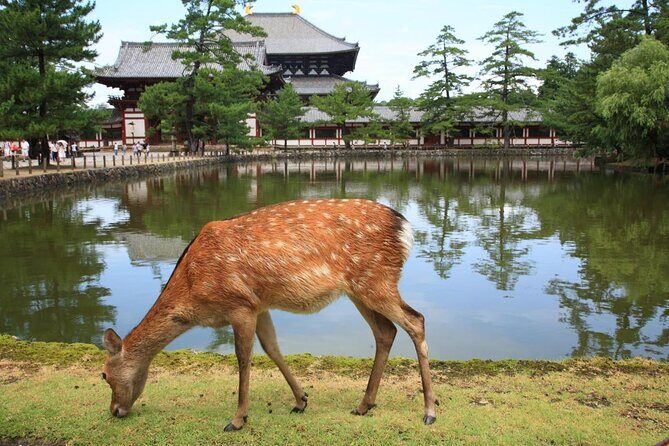
From there, Nara Park is the easy transition. It’s a large park in central Nara and a hub for multiple major attractions, including Todai-ji and other key sites nearby. If you want the deer experience, this is where you’ll build it into your walk naturally.
A small planning thought: Nara’s famous deer area can feel busy, depending on the time you arrive. Still, it’s one of the reasons Nara feels different from most Japanese temple towns—you’re walking in a living cultural landscape, not just through a ticketed museum route.
Kasuga Taisha and Wakakusayama views: the shrine-and-hill combo
Kasugataisha is Nara’s celebrated shrine, established in the same era as the capital’s early history and dedicated to a deity tied to protecting the city. It’s a big deal in Nara spirituality, and it tends to feel more atmospheric than a “check-the-box” stop.
Mount Wakakusayama (the grass-covered hill behind Nara Park) adds a nice contrast. It’s not presented as a long hike, more like a viewpoint and a breather. The idea is that after temples and crowds, you step into open sightlines over Nara.
If you like photos with depth—rooflines, hill shapes, temple edges—this is the combination that makes your afternoon feel less flat.
You can also read our reviews of more tours and experiences in Osaka




Horyu-ji: the older-temple stop for history lovers
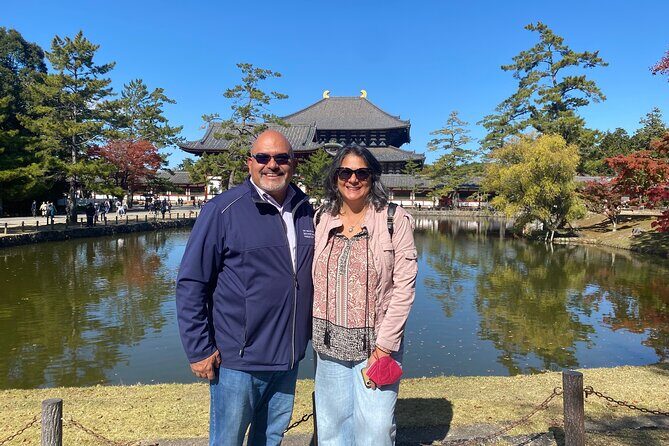
Horyu-ji is for travelers who like their temples with an early timeline. It’s associated with Prince Shotoku and credited with early promotion of Buddhism in Japan. It’s also described as one of the country’s oldest temples, and that “oldest” factor matters if you want more than just scenic buildings.
This stop works well when you want variety. Todai-ji and Nara Park are the high-energy center. Horyu-ji gives your day a shift into something older and more grounded.
One practical consideration: because it’s a temple, you’ll want to pay attention to how your feet feel that day. If you pick Horyu-ji as one of your 3–4 sites, consider reducing the number of additional stops nearby so your day doesn’t turn into standing and walking without pauses.
Naramachi old streets: where the day becomes local
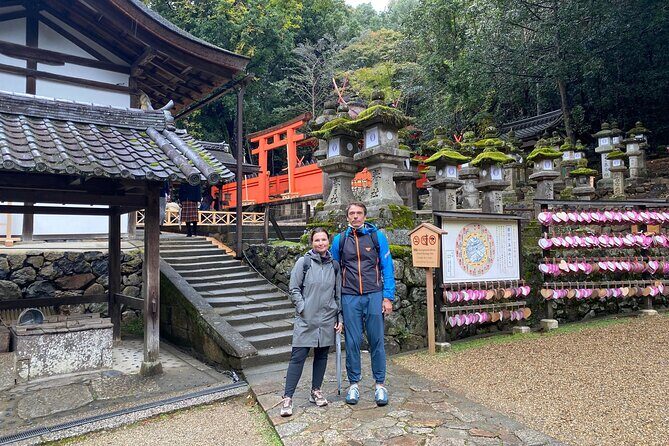
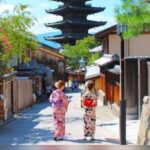
Naramachi is the former merchant district, with preserved traditional residential buildings and warehouses open to the public. If temples are the big draw, Naramachi is where you get the “how people lived” side of Nara.
It’s also a relief when you want a more human-scale wandering session. This is the kind of stop where shops and cafes show up naturally, and the pace feels different from shrine courtyards.
In a curated day trip, Naramachi is often best as a mid-to-late slot—after you’ve built your temple knowledge but before you feel tired from it. If you choose only one non-temple stop, this is the one I’d usually back.
Kofuku-ji and the Fujiwara connection
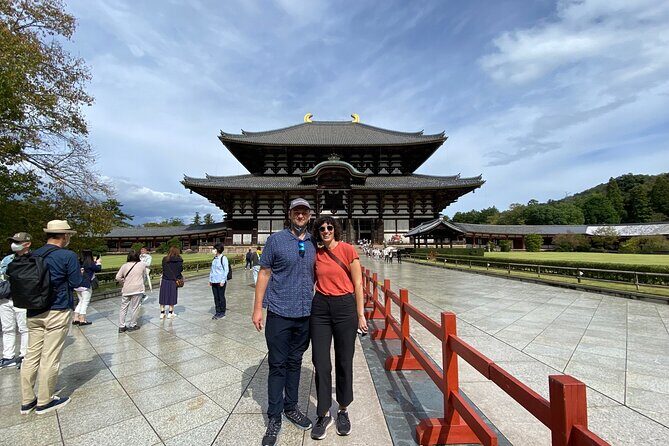
Kofuku-ji was the family temple of the Fujiwara, one of the most powerful aristocratic clans during the Nara and Heian periods. That link gives the stop a specific historical angle: this wasn’t just religious architecture, it was tied to political influence.
In practice, it can be a rewarding stop if you’re trying to connect the dots between early Japanese power structures and the temples that supported them. It also pairs well with other sites in the central Nara area, since you’re not changing your whole day’s rhythm.
Yakushiji and Shin-Yakushiji: symmetry and medicine in one concept
Yakushiji is described as constructed by Emperor Tenmu in the late 700s for the recovery of the emperor’s sick wife. It’s also known for a strictly symmetric layout. That symmetry can be the reason this stop feels calming: your eyes get a structure to follow.
Shin-Yakushiji is devoted to Yakushi Buddha, the patron of medicine. If you like the idea that religion shaped daily concerns—from illness to healing—this is a meaningful pairing with Yakushiji.
These two stops are a smart choice if you want a day that feels varied rather than repetitive. Instead of only chasing famous landmarks, you’re building a theme: Buddhist practice, protection, healing, and architectural intention.
Heijō Palace Site and the “capital in your imagination” effect
The Heijō Palace Site Historical Park points you back to Nara’s role as Japan’s capital during the Nara period (710–794). The palace itself stretched about a kilometer wide and a kilometer long, so even if you’re looking at a site rather than a full reconstructed building, the scale can land.
This stop is often what makes a day trip feel bigger than “temples and deer.” It’s the moment you mentally zoom out—how did a capital city function, and what did these sacred spaces mean inside that system?
If you enjoy thinking visually, this is the stop where you picture streets and life around the palace grounds, even without every structure preserved.
Isuien and Yoshikien: gardens that work as a reset button
Isuien is a Japanese garden that uses “borrowed scenery” from Todaiji’s Nandaimon gate and Mount Wakakusayama. That’s a clever design idea: the garden isn’t just a fenced-in space, it uses the bigger setting as part of the artwork.
Yoshikien is another garden option, named after the Yoshikigawa River. It’s built on the site of Kofukuji Temple’s former priests’ living area, which gives it a layered feeling: nature, history, and daily religious life all wrapped together.
If you’re the kind of traveler who needs a breather halfway through a cultural day, these garden stops are the easiest win. They also reduce the “constant entry fees / constant walking” effect that can happen when every stop is a big-ticket landmark.
Toshodai-ji: the Ganjin story that adds a human thread
Toshodaiji (唐招提寺) was founded in 759 by Ganjin, a Chinese priest invited to Japan by the emperor to train priests and improve Buddhism. That origin story gives the stop a human thread—people moving, learning, adapting.
This is a good choice if you want your day trip to include not just what was built, but why it evolved through cross-cultural exchange.
Nara National Museum: when you want context beyond the buildings
The Nara National Museum focuses on Japanese Buddhist art. It’s a helpful addition if you want to understand what you’re seeing at the temples, especially if you enjoy art history.
The museum can also be a smarter pick if you’re visiting on a day when weather might make outdoor walking less pleasant. It’s still part of Nara Park’s overall area, so it doesn’t yank you away from the rest of your route.
Price and value for a private group of up to five
The price is $848.72 per group up to 5 people, for an ~8-hour private day trip. On its face, that sounds “expensive,” until you pencil what private transport usually costs in Japan and what you’re buying: direct control, less friction, and an English-speaking driver handling the driving.
Value comes from two places:
- You’re paying for convenience and time saved, not just a ride.
- You’re paying for the flexibility to choose 3–4 sites, which can prevent wasted hours if your group has different interests.
Also, many of the listed stops are shown with admission marked free, but your booking details note entrance fees aren’t included. That doesn’t mean you’ll pay a lot—it means you should double-check any museum or special exhibit fees on the day. Still, the structure suggests you can build a strong day without getting hit repeatedly by ticket costs.
If you’re traveling solo, the cost per person is naturally higher than a shared group tour. If you’re a small family or a group of up to five adults, this is where the math tends to feel kinder.
Practicalities that can make or break your day
Pickup is offered, and mobile tickets are included. Those details matter more than they sound, especially when you’re working within an 8-hour window.
One more real-world note: there are limited car seats and booster seats. Rear-facing car seats aren’t available, and you’re asked to contact directly if you need them. If you have a child who needs specific seating, plan ahead so your day trip doesn’t turn into a scramble.
For cruise passengers, the feedback includes a smooth port-day experience with a timely return (one group said they were back by 3:30). If you’re arriving from a port, this is a reassuring sign that timing is taken seriously.
Should you book this Nara private tour?
Yes, if you want Nara’s highlights with the freedom to explore at your own pace. This tour is especially worth it when you care about comfort from Osaka, you like a relaxed schedule, and you’re happy to use your driver for interpretation instead of needing a full licensed local guide.
I’d skip it (or at least adjust expectations) if you want highly specialized, deep art-historical commentary for every temple. The structure is built for a smooth day and smart selection of stops, not for an academic-style guide in every museum room.
If you do book, I’d recommend choosing your 3–4 sites with a theme. For example: Todai-ji + Nara Park + Kasugataisha + one garden, or Horyu-ji + Naramachi + Yakushiji + Heijō Palace Site. That keeps the day varied and keeps your feet happy.
FAQ
What’s included in the private tour?
The tour includes an English-speaking driver, a private vehicle, and a customizable plan where you can choose 3–4 sites from the available list.
How many people can be in a group?
The price is per group, up to 5 people.
How long is the Nara day trip from Osaka?
The duration is about 8 hours.
Are entrance fees and lunch included?
Entrance fees, lunch, and other personal expenses are not included. Some listed stops are marked as admission ticket free, but it’s still best to verify anything you plan to enter.
Can I choose which sites to visit?
Yes. The tour is customizable, letting you pick 3–4 sites from the provided list of highlights.
Is the tour good for cruise port timing?
It’s described as working well for port visits, and one review specifically noted returning on time after touring from Osaka Port.