REVIEW · OSAKA
Samurai Calligraphy:Final brushstrokes of a lifetime before a War
Book on Viator →Operated by SAMURAI HONOR · Bookable on Viator
One brushstroke, and you rethink endings. Osaka samurai resignation calligraphy turns the idea of last words into a hands-on lesson, with calm guidance and a big payoff. I love how you choose a kanji and reflect on what you want it to mean, and how the session ends with a bold single-character performance using a huge brush. One thing to consider: you’ll mainly work on one character, so if you’re hoping to produce lots of finished pieces, this isn’t the longest art workshop.
The best part is the feel of the teaching. In small groups (max 8), your instructor Kaori-style attention really matters, and you get English or Chinese support plus professional photos. You’ll leave with a strong sense of how Japanese shodo uses spacing, rhythm, and control, even when you’re new.
In This Review
- Quick hits before you go
- Samurai Calligraphy in Osaka: Why the Lesson Centers on Last Words
- The 60-Minute Japanese Shodo Block: Stroke Order, Basics, and Control
- The 30-Minute Samurai Calligraphy Finale: One Character, Big Brush, Real Rhythm
- Choosing Your Kanji: Meaning Matters More Than Looking Cool
- Oversized Brush, Big Paper, and the Photo Package
- Your Instructor, Kaori, and Why Small-Group Feedback Helps
- Where It Happens in Joto Ward, Osaka: Getting There Without Stress
- Price in Context: What $64.38 Buys You in Real Value
- Who Should Book Samurai Calligraphy (and Who Might Skip It)
- Should You Book Samurai Calligraphy in Osaka?
- FAQ
- How long is the Samurai Calligraphy experience in Osaka?
- Do I get to decide the kanji character I write?
- What happens during the Japanese Shodo portion?
- What happens in the 30-minute Samurai Calligraphy part?
- What is included with the tour price?
- Is there help in English or Chinese?
- What outfit do you provide?
- Are there optional add-ons I can purchase?
- Where is the meeting point and how do I return?
- What is the cancellation window?
Quick hits before you go
- Choose your resignation kanji and practice the stroke order tied to its meaning
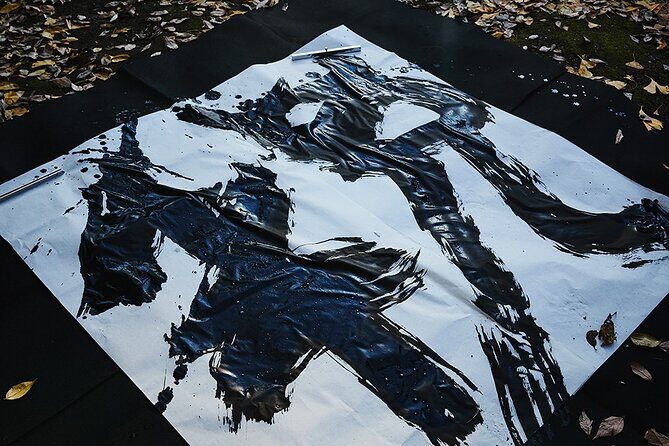
- Oversized brush performance on a 150cm x 150cm sheet for one powerful character
- Taiko rhythm moments that turn the final write into a dramatic, memorable beat
- Shodo basics first so the strokes feel grounded before you go big
- Kaori-style coaching and small-group pacing (up to 8 people)
- Photos and samurai clothing included, plus optional upgrades if you want to go further
Samurai Calligraphy in Osaka: Why the Lesson Centers on Last Words
This isn’t calligraphy as decoration. It’s calligraphy as meaning.
The story behind the experience comes from a samurai theme: when death feels near, a person looks back and writes last words. In the Warring States Period, life and death were close enough that writing could become part farewell, part focus. Your “resignation” character is meant to capture the feelings you want to leave behind and the story you want your one symbol to carry.
Two ideas make this workshop feel very Japanese in a practical way. First is the idea that each kanji character has its own meaning, so choosing isn’t random. Second is the way Japanese art values blank spaces and the beauty of margins. You’re not only judged by how you shape the ink inside the lines. You’re also learning when to leave space alone.
If you like experiences that slow you down and give your brain a simple task, this works. You’re not wrestling a complex craft from day one. You’re guided into reflection, then into controlled motion. That’s why so many people describe it like meditation, even though you’ll be using a brush the size of your arm.
You can also read our reviews of more tours and experiences in Osaka.


The 60-Minute Japanese Shodo Block: Stroke Order, Basics, and Control
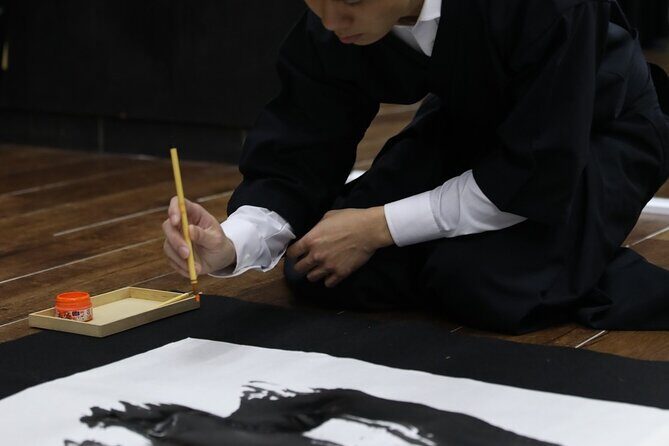
The first hour is all about getting your body and eyes ready for shodo. Even if you’ve never held a brush for ink art, you’ll get the basics you need so the second half doesn’t feel like a free-for-all.
During Japanese Shodo, you practice basic brush strokes and, most importantly, stroke order for the character you’ll later use for your resignation writing. That part matters. In shodo, the stroke order isn’t a formality. It’s how the character stays true and how your movement becomes part of the meaning.
You’ll also be nudged into the planning side. The concept is simple: decide on the last character, then think about what it should say about your life. Since each kanji has its own meaning, you’re encouraged to reflect rather than pick something that just looks nice. This is where the workshop separates itself from typical “try calligraphy” activities. You’re not just copying lines. You’re choosing a symbolic language and then practicing how to speak it with your hand.
A nice practical bonus: this block gives you a foundation for the huge-brush stage later. If you’ve ever tried a craft and felt rushed, you’ll appreciate that the lesson doesn’t throw you straight into the dramatic finale.
The 30-Minute Samurai Calligraphy Finale: One Character, Big Brush, Real Rhythm
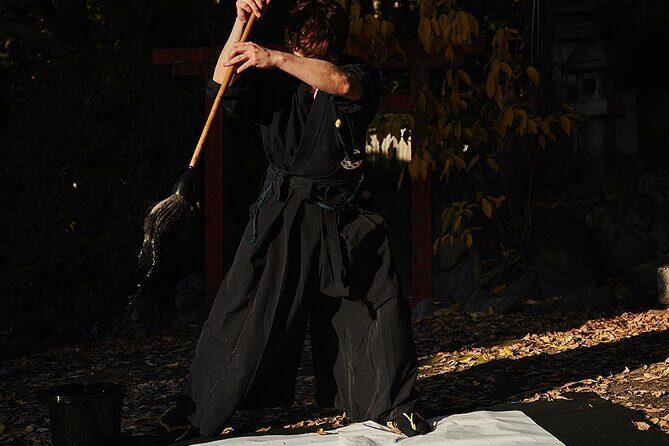
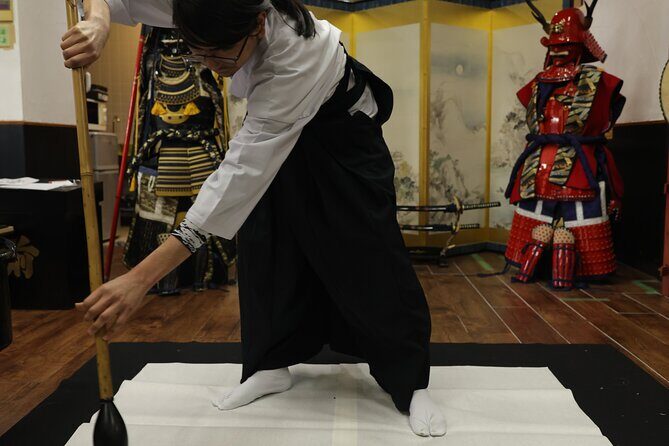
Then comes the part that people remember: the Samurai Calligraphy session built around a single character and an oversized tool.
You’ll be writing one character for resignation, after you’ve imagined the story behind it and the feelings you want to leave behind. The class approach here is very focused: reflect, choose your design, practice the basic motion, then commit.
Here’s what makes it visually dramatic and technically serious:
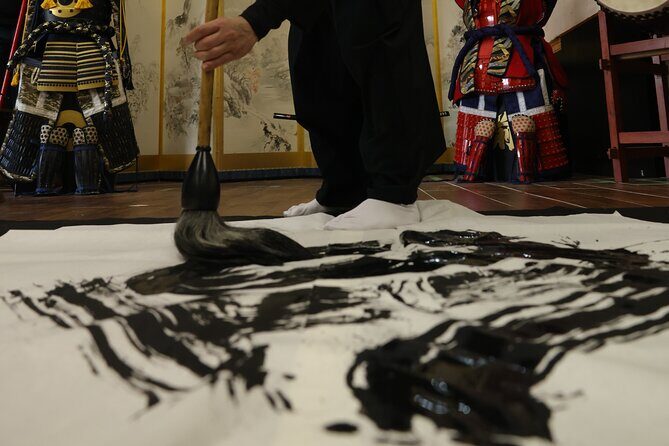
- You use an oversized brush that’s described as more than five times larger than usual
- You work on a 150cm x 150cm sheet of paper
- The artist uses their whole body to control the brush, so it’s not just handwork
- The character is meant to feel powerful, fragile, and beautiful at the same time
There’s also a rhythm element. One part of the flow includes writing a bold circle symbol (◯) to the beat of taiko drums. Even if you don’t know what you’re doing at first, the drum beat gives you a shared tempo. That helps your writing feel connected to the performance side of the craft, not just the ink side.
One subtle detail I’d keep in mind: shodo often looks effortless when you watch experts. In reality, it’s about pressure, direction, and timing. This finale stage is designed so you can feel those principles without needing years of practice. You’re making one strong decision with your brush, and the huge scale makes that decision obvious.
Choosing Your Kanji: Meaning Matters More Than Looking Cool
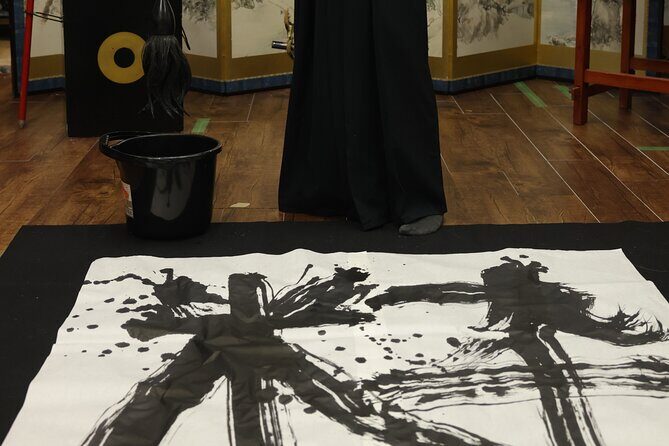
In many art workshops, you pick a subject and then copy a shape. In this one, the picking is part of the art.
You’re asked to decide on the last character, because each kanji character has meaning. That means you’ll likely spend time thinking about what you want your symbol to represent, not just how it will look on paper. You imagine the story of who and what feelings you want to carry into your last words before going to war, and then you think about the character composition design.
This reflection portion is the value. It turns the final brush stroke into something personal and less performative. Even if your character isn’t perfect, the process is coherent: you chose it, you practiced it, and then you wrote it with intention.
If you’re the type who likes clear prompts, this works. The workshop gives you enough structure to decide without overthinking for days. You get guided thinking, then guided movement.
And if you’re worried about your handwriting style, don’t. Shodo isn’t about looking like a printed font. It’s about expressing motion and balance, including the spaces around your character. That’s where the margins and blank spaces idea becomes real, not just a cultural trivia point.
Oversized Brush, Big Paper, and the Photo Package
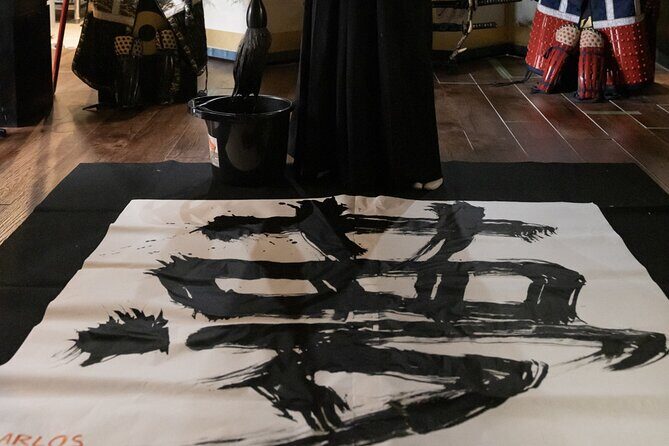
You’re not going to be hidden behind a tiny easel here. You’re on a large sheet, using a big brush, and making a visible statement. The workshop also includes a professional photographer, which changes the whole experience.
Why does that matter for you? Because it means you can focus on doing the writing, not documenting it. You don’t need to guess the right angle, timing, or lighting. You can also relax about the fact that the performance part is fleeting. In many classes, people leave with shaky phone photos and a vague sense of what happened. Here, the photo support is part of the package.
You’re also dressed for the mood. Included items include samurai outfit elements: hakama and kimono are provided, but it’s noted that it is not a full set of kimono. That matters practically. You’ll likely feel the costume more as a styling piece than a full traditional wardrobe experience, but it’s still enough to set the tone and make the final character feel ceremonial.
One more thing: some people add on extra photo-style upgrades. The optional items listed are movie shooting (¥11,000 per person) and wagami—collected hair plus kanzashi (¥3,300 per person). If you want the most Instagram-friendly and most dressy result, these options can help, but the base experience still has the core ingredients: teaching, tools, costume elements, and photographer coverage.




Your Instructor, Kaori, and Why Small-Group Feedback Helps
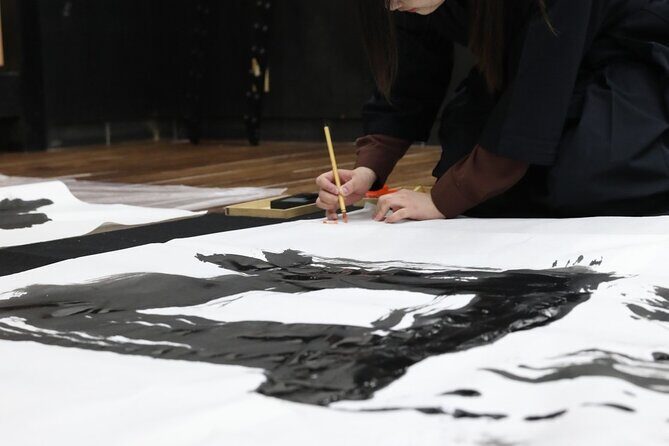
The workshop is max 8 people. That’s a sweet size. It usually means you get enough attention without feeling like a studio with one teacher chasing ten details.
In the reviews, your teacher is named as Kaori, and she’s described as both encouraging and actively involved—writing students’ names and helping pick symbols related to what they were working on. That kind of personalization helps you leave with the feeling that your session wasn’t just a production line.
You also get an English or Chinese speaking assistant. That’s big for beginners. Japanese calligraphy has terms that can confuse you even when you try hard. Having help in your language means you can actually follow stroke direction, rhythm cues, and the meaning behind the prompts rather than guessing.
If you’ve ever been in a class where you understand maybe half the instructions, this is where it becomes comfortable. You can ask questions, you can clarify, and you can practice with fewer wrong turns.
Where It Happens in Joto Ward, Osaka: Getting There Without Stress
The activity starts and ends at the same meeting point in Osaka, Joto Ward: 536-0014 Osaka, Joto Ward, Shiginonishi, 2-chōme319 エクセレンス高山.
It’s described as near public transportation, which is exactly what you want for a 90-minute activity. Calligraphy workshops don’t work well when you’re sprinting across town. A nearby station reduces that risk, and you don’t have to build your day around long transit breaks.
You’ll also receive a mobile ticket, so plan to have your phone ready. Most people do fine with this kind of activity, since it’s noted that most travelers can participate. If you can sit, follow basic instructions, and use a brush with guidance, you’re in the right range.
Also, since the experience ends back at the meeting point, you can plan dinner or your next stop nearby. That keeps your day smooth and helps you avoid the classic Japan problem: great cultural activity, then a frantic scramble to get back to where you’re staying.
Price in Context: What $64.38 Buys You in Real Value
The price listed is $64.38 per person for about 1 hour 30 minutes, with a mobile ticket and a max group size of 8.
At first glance, it can look like “just a class.” But the value comes from what’s included:
- Shodo tools are included
- Hakama and kimono elements are included (not a full set, but you’re still dressed)
- You get an English or Chinese speaking assistant for clarity
- A professional photographer is included
- The structure goes from shodo basics into a samurai-themed resignation finale
If you’ve ever paid for cultural workshops where you bring your own supplies, dress yourself, and then take your own photos, you’ll notice the difference fast. Here, key friction points are handled.
You should also consider the experience design: you’re not paying for unlimited art time. You’re paying for guided reflection, guided stroke learning, then a high-impact performance moment with a huge brush and large paper. That’s a specific outcome. The more you like focused, meaningful activities, the better this price feels.
If you want only a quick photo moment, you might feel it’s more than you need. But if you enjoy process and symbolism, it’s a strong use of your time in Osaka.
Who Should Book Samurai Calligraphy (and Who Might Skip It)
This is a great fit if:
- you want a hands-on Japanese cultural activity with a strong theme
- you enjoy prompts and meaning, not just technical practice
- you like calm, mindful activities where the pace stays manageable
- you want photos and a samurai-style outfit included
It might be less ideal if:
- you’re expecting multiple different finished artworks in one session
- you prefer classes that focus on technique only, with minimal reflection
- you’re not interested in choosing one character with meaning
The good news is that the lesson duration is short enough to fit into a packed Osaka day. The pacing also makes it friendly for first-timers, since the shodo basics come first.
Should You Book Samurai Calligraphy in Osaka?
Yes, if you want a cultural experience that feels personal, not touristy. The combination of kanji choice, shodo stroke practice, and the final oversized brush performance is exactly the kind of Japan workshop that makes your photos feel earned and your memory feel specific.
I’d book it especially if you’re traveling solo or with someone who likes different kinds of activities. Calligraphy works as a shared activity even when your characters end up different. You’ll leave with one strong symbol, one set of photos, and a calmer mindset than you started with.
If you’re short on time but still want something real, this is one of the cleaner bets: 90 minutes, small group, language help, and a built-in performance moment that doesn’t require expertise.
FAQ
How long is the Samurai Calligraphy experience in Osaka?
It’s about 1 hour 30 minutes total, combining Japanese Shodo (60 minutes) and Samurai Calligraphy (30 minutes).
Do I get to decide the kanji character I write?
Yes. You will decide on the last character, and the lesson includes reflecting on what that character should mean for your life and feelings.
What happens during the Japanese Shodo portion?
You practice basic brush strokes and stroke order for the chosen kanji as part of the Japanese calligraphy lesson.
What happens in the 30-minute Samurai Calligraphy part?
You create one character for your resignation theme, using an oversized brush on a 150cm x 150cm sheet of paper, with emphasis on a powerful final result.
What is included with the tour price?
It includes a professional photographer, samurai outfit elements (hakama and kimono, not a full set of kimono), shodo tools, and an English or Chinese speaking assistant.
Is there help in English or Chinese?
Yes. The tour includes an English or Chinese speaking assistant.
What outfit do you provide?
You’re provided hakama and kimono, and it’s specifically noted that it is not a full set of kimono.
Are there optional add-ons I can purchase?
Yes. Movie shooting is available as a paid option for ¥11,000 per person, and wagami (collected hair + kanzashi) is available for ¥3,300 per person.
Where is the meeting point and how do I return?
The meeting point is in Joto Ward, Osaka at 536-0014 Osaka, Joto Ward, Shiginonishi, 2-chōme3۱۹ エクセレンス高山, and the activity ends back at the meeting point.
What is the cancellation window?
You can cancel for free up to 24 hours in advance for a full refund. If you cancel less than 24 hours before the start time, the amount paid is not refunded.