REVIEW · OSAKA
Samurai Show, Tea Ceremony, Japanese Traditional Activities
Book on Viator →Operated by 道-michi- · Bookable on Viator
Samurai, tea, and ink in one afternoon. This Osaka experience pairs calligraphy practice with samurai move training, then wraps it up with music and a performance that makes Japanese culture feel practical, not just scenic. One catch: full kimono or armor dressing is not included in the base ticket, so budget for add-ons if you want the full costume look.
I especially like the indoor format in a big facility, so the plan holds up even if Osaka weather changes. The staff team includes people like Yui and Miyu, and the vibe is friendly and hands-on, with translators helping you get through each station.
You’ll also be moving through a lot in a short window (about 2.5 hours), so it helps to pace yourself, say yes to photos, and leave enough time to recover your focus before dinner around Dotombori.
In This Review
- Key Highlights (Why This Works So Well)
- What You’re Actually Getting: Samurai, Tea, Calligraphy, Music
- Arriving in Osaka: Meet Near Shinsaibashi, Then Head to the Activities
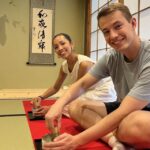
- Tea Ceremony Station: Etiquette You Can Do, Not Just Watch
- Calligraphy Practice: The Fun Part Is the Practice
- The Samurai Show and Sword-Move Practice: Theater With Training Wheels
- Traditional Music Workshops: Try the Instruments, Then Appreciate the Sound
- Optional Upgrades: Kimono and Samurai Armor Aren’t Included
- Timing and How to Plan Your Afternoon Without Stress
- Who This Is Best For (And Who Might Want to Skip It)
- Price and Value: Why $44.92 Can Make Sense in Osaka
- Should You Book It?
- FAQ
- FAQ
- Where is the meeting point for the Osaka experience?
- What is included in the ticket price?
- Are samurai armor and kimono included?
- Is the samurai sword activity safe?
- How long should I plan for?
- What happens if weather is bad or I need to cancel?
Key Highlights (Why This Works So Well)
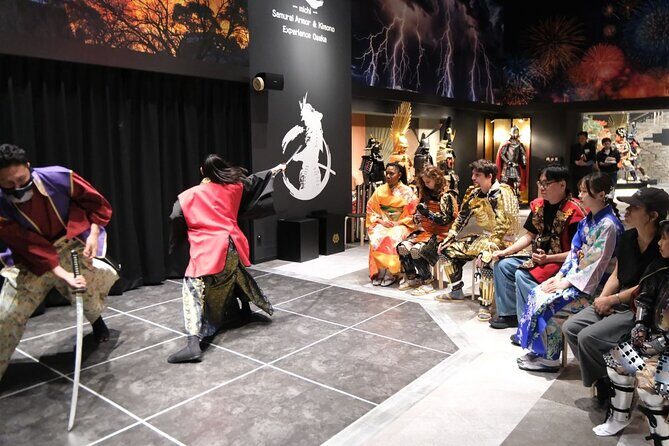
- Samurai show plus safe participation: you can practice sword-style moves without anything real
- Hands-on calligraphy station: you learn, try it, and leave with a take-home item
- Tea ceremony that teaches the why: more than a performance, it’s a proper process you can follow
- Traditional music workshops: you get to try instruments, not just watch
- Small group size (max 20): enough attention without feeling stuck in a crowd
- Staff support for language barriers: translators help you stay confident through every step
What You’re Actually Getting: Samurai, Tea, Calligraphy, Music
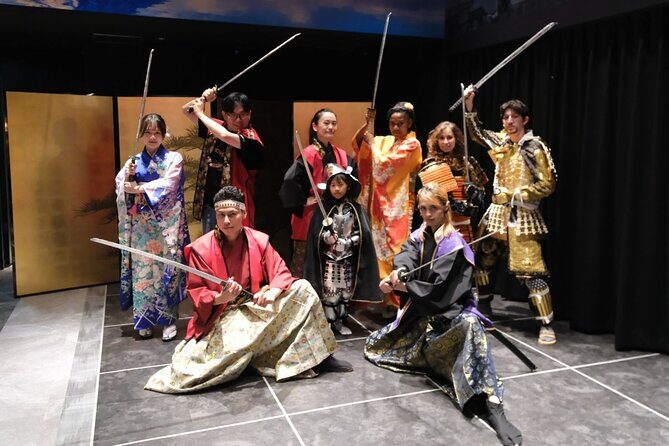
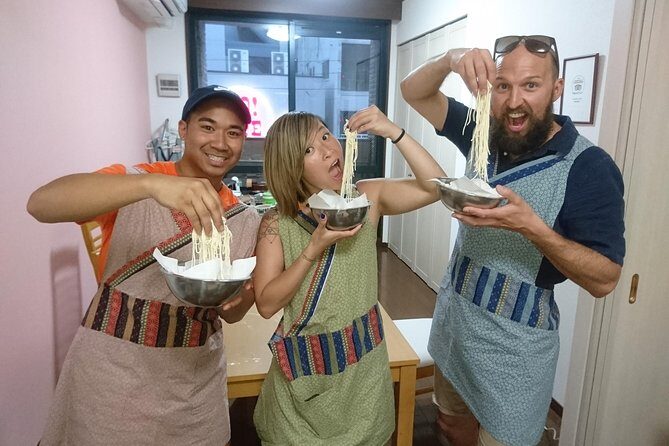
This is one of those Osaka activities that compresses a lot of culture into a single afternoon without turning it into a rushed shopping tour. The heart of it is simple: you watch a samurai performance, then you do structured cultural workshops right after—tea ceremony and calligraphy—and you end with traditional music where you can try instruments.
The scheduled show-and-workshop time runs about 150 minutes, but real life often takes a bit longer once you factor in questions, photos, and transitioning between stations. A lot of people plan for around 3 hours so they don’t feel like they’re chasing the clock.
The venue is described as a big facility, and multiple experiences point out that it’s effectively indoors. That matters in Osaka, where you can get rain and sudden temperature shifts. If you want a plan that doesn’t depend on perfect weather, this one behaves.
You can also read our reviews of more tours and experiences in Osaka

Arriving in Osaka: Meet Near Shinsaibashi, Then Head to the Activities
You meet at Shinsaibashi ARTY Inn, located at 2-chōme-17-3 Nishishinsaibashi in Osaka. It’s in the central Osaka area, close enough to public transit that you’re not stuck battling complicated bus routes.
The ticket uses a mobile format, and you should receive confirmation at booking time. The experience ends back at the meeting point, so you’re not forced into an awkward end-location scramble.
If you’re staying near the Dotombori and Shinsaibashi zones, the timing works well. You can do this in the afternoon, then walk out and grab takoyaki or street snacks afterward. Even if you don’t know Osaka well yet, this meeting area is easy to navigate once you get your bearings.
Tea Ceremony Station: Etiquette You Can Do, Not Just Watch
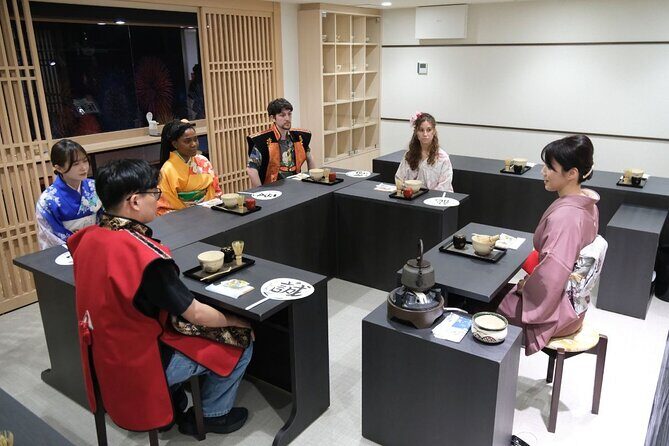
The tea ceremony part is one of the biggest reasons people rate this so highly. This isn’t only about someone pouring tea while you observe. You’re guided through the process in a way that makes the steps feel doable.
What I like about this format for real visitors: it turns a cultural topic into a sequence. You’re learning order, timing, and the basic flow of the ceremony, which gives you a mental picture you can remember after you leave. And because it’s hands-on, you’re not stuck watching people for a full hour without understanding what you’re seeing.
A lot of the value here comes from the staff pacing and instruction. Even when language is a barrier, the activity is structured. You can ask questions, follow along, and correct your technique with help close at hand.
If you’re the type who usually skips formal demonstrations, this is still worth your time because the tea portion is built for participation. You’re there to try, not just to be impressed from a distance.
Calligraphy Practice: The Fun Part Is the Practice
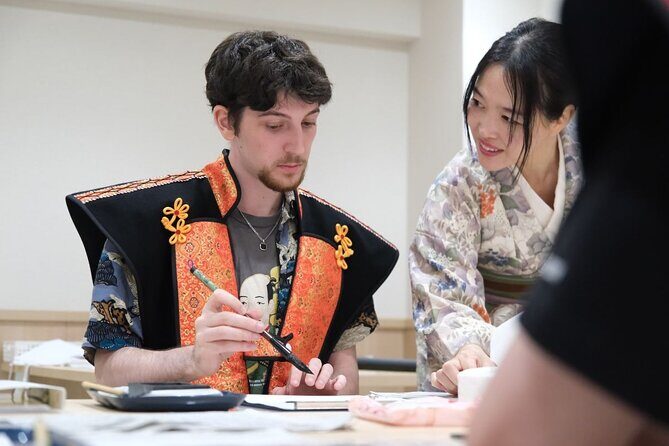
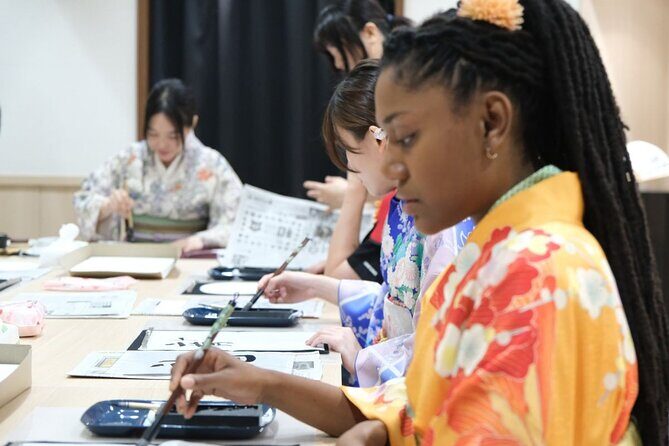
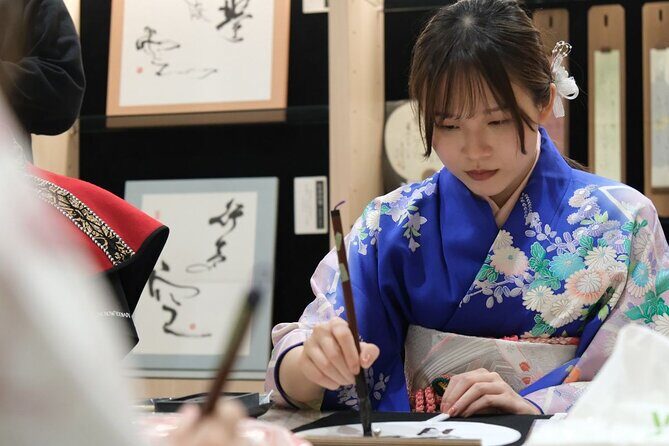
Calligraphy is another station that reliably lands well. You don’t just see ink on paper; you practice. The goal is to help you understand how the strokes connect and how the tool behaves—ink, brush, and pressure all matter.
The best part for many people is that it’s tactile. You’re making choices, not just following directions. And it’s culturally meaningful without being too academic. You get enough instruction to take away something real, plus a personalized take-home item (like a fan) is part of the experience format.
This station can be surprisingly emotional in a good way. Writing something by hand tends to stick in your brain, and your souvenir is also proof you did the activity, not just passed through.
One practical tip: go in with a relaxed expectation. Calligraphy is hard the first time for everyone. Your win is learning the basics and leaving with something you made, even if it doesn’t look like a museum piece.
The Samurai Show and Sword-Move Practice: Theater With Training Wheels
The samurai performance is dramatic, and the activity uses that drama to teach you. You’ll see a show with samurai themes, then you get a chance to practice moves as part of the experience.
The important safety point: you’re not handling real swords. The action is staged and taught in a way designed for participants of different ages. Reviews also highlight that it’s playful and a bit wacky in the best way—serious culture presented with humor.
What makes this section genuinely useful is the combination of performance and participation. You see what samurai theater looks like, then you try a simplified version of the movements so you understand it physically, not just visually.
For families, this is often the memorable highlight. Kids like the action, adults like the context, and nobody is expected to be a martial arts expert. It’s a fun way to break the stiffness that can come with traditional performances.
Also, the armor story matters even if full dressing is optional. The experience notes craftsmanship by Marutake Industries for the samurai armor element, so it’s not just costume theatrics. Even if you don’t pay for full wear, you’re still learning that these things have real craft behind them.



Traditional Music Workshops: Try the Instruments, Then Appreciate the Sound
Music is built into this experience in two ways: a performance and hands-on participation. You can try instruments rather than staying passive.
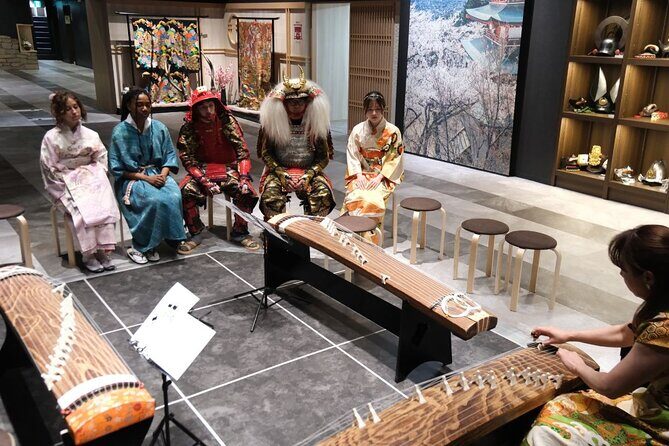
In the materials and experiences, you’ll see mention of multiple instrument types, including a harp and other Japanese traditional instruments like a Japanese flute. There’s also a workshop described as a complex Japanese keyboard-like instrument (the exact instrument name isn’t specified in the info you provided, so I’ll keep it general).
This section often surprises people because it’s not just entertainment. You’re learning the mechanics enough to understand why the sound is the way it is. Even basic participation helps you hear with more detail afterward.
If you’re worried about music workshops being intimidating, that fear is usually misplaced here. The format is designed to be interactive and supported, with translators available and staff guiding you through each station.
And on a rainy day, music in a big indoor facility can feel like a perfect reset. You’re warmed up, laughing, learning, and then heading out to Osaka with better memories than a museum-only afternoon.
Optional Upgrades: Kimono and Samurai Armor Aren’t Included
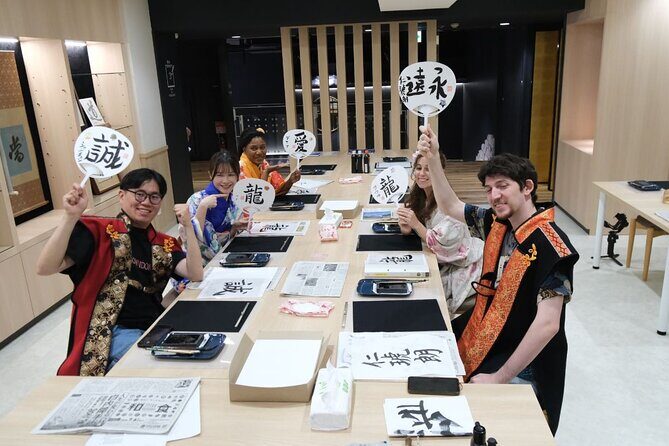
Your base ticket includes the tea ceremony, calligraphy, traditional music, and the samurai performance. It does not include costume add-ons like samurai armor, kimono, or ninja attire.
That said, the experience often offers options for costume dressing. One review mentions a kimono upgrade of 5,000 yen and describes the dressing process with attendants and photo help. Another mentions choosing samurai attire as an option. If costumes matter to your trip, budget time and money for the add-on.
Practical guidance: if you’re only doing one activity in Osaka and you want strong photos, consider upgrades. If you’re traveling light and want the best value, skip the full costume and spend that time on the workshops you can already do.
Either way, don’t expect the base ticket to include full outfit dressing. The value is in the hands-on cultural stations, not in being costumed from the start.
Timing and How to Plan Your Afternoon Without Stress
The scheduled content is about 2 hours 30 minutes (approx.), with about 150 minutes focused on shows and activities. But your actual timeline depends on how many questions you ask, how quickly you move between stations, and whether you do optional photo moments.
A smart planning move: treat this like a half-day activity and give yourself space. If you’re trying to squeeze it between two major sightseeing stops, you might feel rushed.
Also, because the venue is in a central Osaka area, you can pair it cleanly with nearby sightseeing:
- Start with this activity, then head toward Dotombori for dinner
- Or do it after a morning walk so you’re not stuck deciding what to do when crowds get thick
Who This Is Best For (And Who Might Want to Skip It)
This works especially well for people who want culture that’s active. If you like learning by doing, you’ll get value from the structure: tea, ink, music, then samurai theater with safe participation.
It also fits families and mixed ages. Reviews mention grandparents and children, and the experience style is built for broad participation rather than specialist-only knowledge.
You might want to consider a different option if your top priority is a long, historical lecture or if you want full costume dressing included automatically. Since kimono and armor dressing are not included in the base ticket, cost-conscious travelers might find a different, cheaper activity better if photos are the only goal.
But if you want one outing that gives you hands-on culture plus entertainment in one indoor block, this is a very solid match.
Price and Value: Why $44.92 Can Make Sense in Osaka
At about $44.92 per person, the ticket price isn’t low, but it also isn’t inflated for what you actually do. You’re paying for a bundle of experiences that normally cost more when they’re separate:
- tea ceremony instruction and participation
- calligraphy practice (with a take-home item)
- samurai show
- traditional music performance and instrument try-outs
On top of that, the group size is capped at 20, which helps keep the experience more personal than “sit and watch” tourism. You also get on-site translators and staff support throughout the stations.
When you compare this kind of packed program to paying for one workshop plus a separate show, the value starts to look clear. You’re essentially buying an afternoon of structured fun with cultural teaching built into it.
Should You Book It?
Book it if you want an afternoon in Osaka that’s:
- hands-on (tea, calligraphy, instrument trying)
- family-friendly without being boring
- well-structured with staff support and translations
- indoors and weather-resilient
Skip or pick a different option if:
- you want the full kimono/armor photo package included in the base price
- you prefer purely observational activities with no participation
- your schedule is too tight and you won’t tolerate an extra hour for photos and questions
If you’re on the fence, my advice is to book it when your calendar has breathing room. This is the type of experience that turns an ordinary afternoon into a trip memory you can still explain later at dinner.
FAQ
FAQ
Where is the meeting point for the Osaka experience?
You start at Shinsaibashi ARTY Inn, 2-chōme-17-3 Nishishinsaibashi, Chuo Ward, Osaka, 542-0086, Japan. The activity ends back at the meeting point.
What is included in the ticket price?
The included activities are a tea ceremony experience, a calligraphy experience, traditional Japanese music, and a samurai performance, plus participation in those activities.
Are samurai armor and kimono included?
No. The information you have lists samurai armor, kimono, and ninjya as not included. Costume dressing options may be available as upgrades.
Is the samurai sword activity safe?
The experience is designed for participation and the samurai element is not presented as real sword handling. The theme is safe, with practice moves taught for visitors.
How long should I plan for?
Plan for about 2.5 hours total, and consider budgeting closer to 3 hours so you can do everything comfortably and take photos.
What happens if weather is bad or I need to cancel?
The experience notes it requires good weather. If it’s canceled due to poor weather, you’ll be offered a different date or a full refund. Cancellation is free up to 24 hours in advance; within 24 hours, you don’t get a refund.