REVIEW · OSAKA
Sharpen Japanese Knives in Osaka
Book on Viator →Operated by JLB Tours · Bookable on Viator
Knives come alive in Sakai. I love starting at Sakai Traditional Industrial Hall, where you see knives made by hand and learn their different purposes. I also love the hands-on whetstone sharpening and learning how to fit a handle the traditional way.
The one catch is that this experience needs good weather, and the booking is non-refundable and can’t be changed for any reason. So it’s smart to keep your day plan flexible enough to handle a weather shuffle.
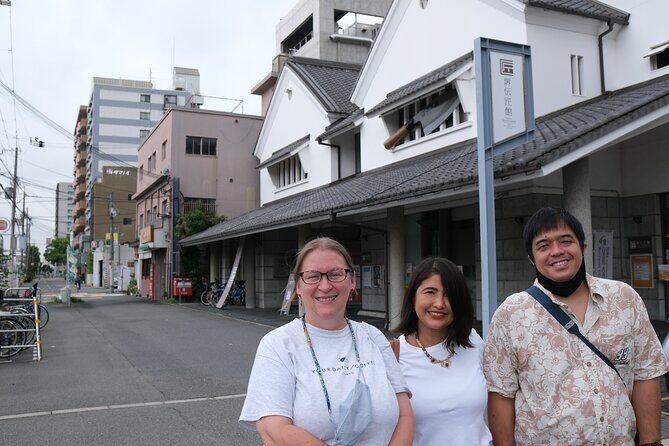
Yuji is the guide in this workshop, and he meets you on time around Sakai Station before walking you to the area stops. With a max group size of 5, you’re not stuck watching from the sidelines. You’ll get apron, tools, and coffee or tea, and you’ll take the skill home.
In This Review
- Key things I’d circle before you book
- Knife City Sakai: what you’re really paying for
- Meeting Yuji in Sakai without overthinking it
- Stop 1 at Sakai Traditional Industrial Hall: knives as tools first
- Wada Store sharpening lesson: whetstones and a real skill
- The handle-fitting lesson is the secret confidence boost
- What to bring (and what to expect while you practice)
- Duration and pacing: a focused 2 hours that doesn’t stall
- Price check: $213 worth it if you want a real skill
- Who this workshop fits best
- Should you book Sharpen Japanese Knives in Osaka?
- FAQ
- How long is the knife sharpening experience?
- Where does the tour start?
- What does the tour cost?
- What’s included in the workshop?
- Is lunch included?
- Do I need to bring a knife?
- How big is the group?
- What happens if the weather is bad?
Key things I’d circle before you book
- Two-stop format: a short knife context visit, then a longer hands-on sharpening session
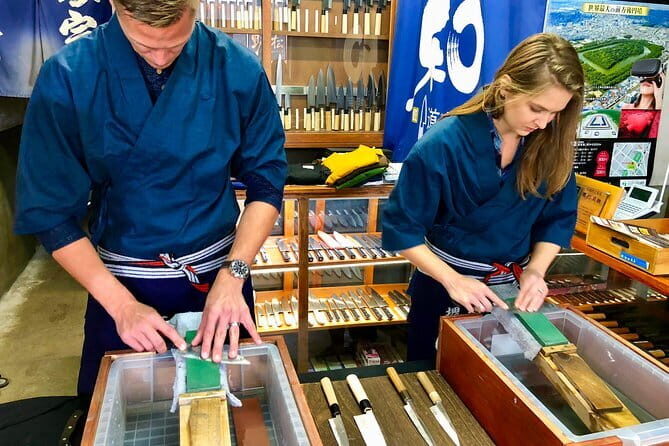
- Whetstones in your hands, not just photos or lectures
- Traditional handle fitting: learn how the handle goes onto the blade
- Small group limit (max 5) for real attention while you practice
- Apron + coffee or tea included, so you start comfortable and not rushed
Knife City Sakai: what you’re really paying for
Osaka’s Sakai area has been tied to knife craft for centuries, and it’s still a working place for the skills behind those famous blades. The reason this tour feels worth it isn’t just because it’s about knives. It’s because you get both sides: the context and the technique.
You’ll spend about 2 hours total, split into two meaningful phases. First, you see how blades are made by hand and how different knives exist for different jobs. Then you do the part most people miss when they visit Japan: you practice sharpening with whetstones and learn how the handle is attached traditionally.
The price is $213, which might feel steep until you break down what’s included. You’re getting the museum-style stop (with admission covered), a guided sharpening lesson, tools provided, an apron, plus coffee and/or tea. And most importantly, you bring your own knife to work on. That last detail changes the value. You’re not just learning theory. You’re leaving with a usable skill and a better relationship with the blade in your kitchen drawer.
This also has a strong track record: a 5/5 rating and a 100% recommendation rate from 10 write-ups. That doesn’t guarantee your experience will be perfect, but it does suggest the workshop hits its mark.
You can also read our reviews of more tours and experiences in Osaka.



Meeting Yuji in Sakai without overthinking it
Your tour starts at Wada Store in Sakai Ward, Osaka (1-chōme-1-1 Shinmeichōhigashi, Sakai Ward, Sakai, Osaka 590-0935, Japan). The tour ends back at the meeting point, so you’re not stranded across town after the workshop.
Here’s what helps: it’s near public transportation, and Yuji is known for meeting people on time around Sakai Station before walking you to the first stop. Plan for a short walk through the neighborhood area. With only about 5 people in the group, the pace stays human, not chaotic.
You’ll also have a mobile ticket. That’s one less thing to worry about when you’re juggling subway lines, station exits, and the usual Japan travel logistics.
Stop 1 at Sakai Traditional Industrial Hall: knives as tools first
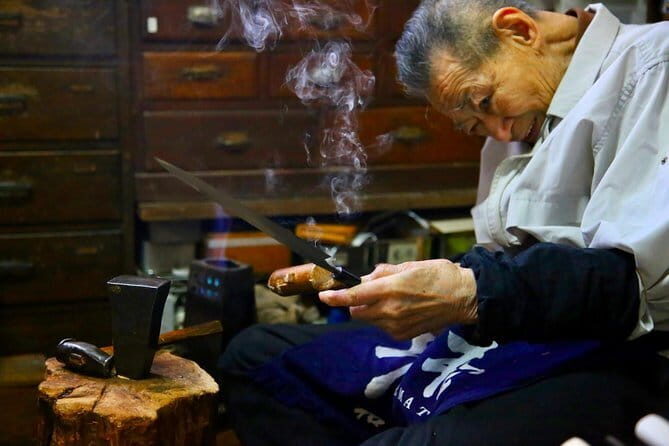
The first stop is Sakai Traditional Industrial Hall, and it’s scheduled for about 30 minutes. You don’t pay extra there because the hall admission is covered as part of the experience.
What I like about this portion is that it pushes you to look at knives as practical tools, not only as collectibles. You’ll learn that knives exist for different purposes, and you’ll see how blades are made by hand. Even if you’ve never thought much about metallurgy or craft, the visit helps you understand why sharpening matters. A knife isn’t one thing. It’s a system: steel, shape, edge geometry, and how that edge should behave for its intended task.
A possible drawback: because this part is only 30 minutes, you’ll get a focused overview, not a long museum-style day. If you want hours of reading labels and deep technical history, you may wish you had more time in the hall. But for most people, that short start is exactly the right warm-up before getting hands-on.
Wada Store sharpening lesson: whetstones and a real skill

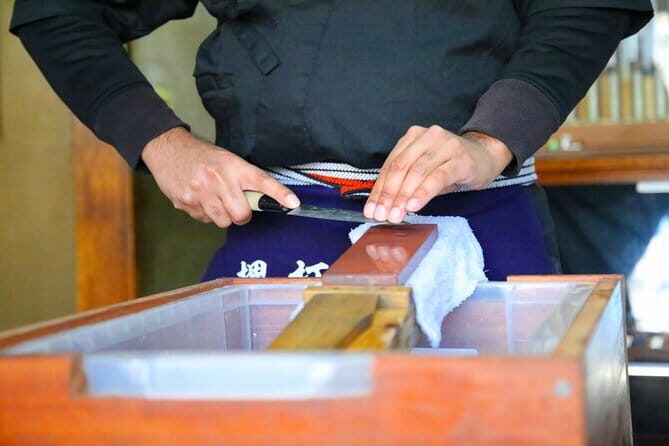
The heart of the experience is at Wada Store, where you’ll spend about 1 hour 30 minutes. This is where the tour goes from interesting to useful.
You’ll do a sharpening lesson using whetstones, guided by the workshop team. You’ll also learn how to properly sharpen your knife and how to fit the handle into the blade in the traditional way. The session is structured so you’re actively participating, not just watching someone else work.
What makes this stop valuable for your everyday life is that it teaches a maintenance skill. Many people leave Japan fascinated by tools, then go home and never figure out how to keep the blade performing. Here, you’re practicing the exact kind of sharpening you can use later, with the same stone-based approach.
You’ll get an apron, tools for sharpening knives, and you’ll use your own knife for the lesson. Coffee and/or tea are included too, which sounds small, but it helps you settle in. Knife work takes attention. Being offered a drink makes it easier to focus instead of feeling like you’re running on fumes and jet lag.
The handle-fitting lesson is the secret confidence boost

Plenty of sharpening workshops teach you how to touch up the edge. Fewer teach you the connection between the blade and the handle.
In this session, you learn how to fit the handles into the blades traditionally. That matters because a knife isn’t just a sharp edge. It’s balance, comfort, and control. If a handle is fitted right, your grip feels secure and your sharpening work becomes easier to repeat consistently.
I also like that it’s not presented as a museum trick. You’re learning a practical craft action. And that makes the whole experience feel closer to what professionals actually do.






What to bring (and what to expect while you practice)

Your knife is included, meaning you should plan to bring a knife you want to sharpen. You’ll work with the workshop setup, including tools and an apron provided by the experience.
Because the instruction time is limited, bring a blade you actually care about. If you show up with a random novelty knife, you’ll still be doing the movements, but you’ll lose that payoff of taking home a tool you’ll genuinely use.
Also, remember the tour doesn’t include lunch, dinner, or snacks. So if your day starts to run late, you may want to eat beforehand or plan a nearby meal after.
Duration and pacing: a focused 2 hours that doesn’t stall

This is an approx 2-hour experience total, and it stays tight by design. Stop 1 is about 30 minutes. Stop 2 is about 1 hour 30 minutes. That pacing matters because it keeps you from getting mentally tired before you start the hands-on portion.
The group size is capped at a maximum of 5. That small limit is a big deal during a sharpening lesson. It means you’re more likely to get personal attention while you practice, instead of waiting your turn or guessing based on what you saw earlier.
If you like your activities active and skills-based, this format hits well.
Price check: $213 worth it if you want a real skill
Let’s do a quick value reality check.
For $213, you’re getting:
- The Sakai Traditional Industrial Hall stop (admission covered)
- A guided sharpening lesson with whetstones (about 1 hour 30 minutes)
- Tools for sharpening knives and an apron
- Coffee and/or tea
- Use of your own knife during the practice
- A small group setting (max 5)
- A tour that ends back where you started
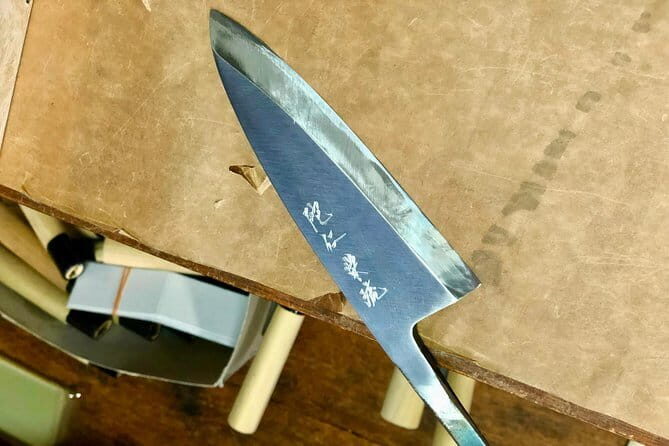
If all you wanted was sightseeing, you’d probably find cheaper options in Osaka. But the workshop isn’t pretending to be just a show. It’s skill training with a craft approach. The whetstone part and the handle-fitting part are exactly the kind of knowledge that pays off for years if you’ll actually use it.
So I’d treat this as a hands-on craft lesson, not a casual add-on.
Who this workshop fits best
This experience is a great match if:
- You love Japanese craftsmanship and want to see how it turns into hands-on skill
- You’d like to sharpen a real knife, not just watch someone else do it
- You enjoy smaller group activities where you can ask questions
- You like learning how tools are made and maintained, not only admired
It might be less ideal if you only want a long, slow museum experience. Also, plan around the good weather requirement. If rain or weather disruption hits, the day may need a different date, or you’ll have to reorganize.
Should you book Sharpen Japanese Knives in Osaka?
I think you should book it if you want one of the more practical crafts experiences in the Osaka area. The two-part structure works: you get the why behind the knives in the first stop, then you practice the how with whetstones at Wada Store. Add in the small group size and Yuji’s solid English, and it’s the kind of activity that leaves you with a lasting capability, not just photos.
If weather is your biggest risk and you hate losing plans, take that into account. Otherwise, this is a smart, skill-focused way to experience Sakai’s knife culture in a way you can actually use at home.
FAQ
How long is the knife sharpening experience?
It’s approximately 2 hours total, split between about 30 minutes at Sakai Traditional Industrial Hall and about 1 hour 30 minutes at Wada Store.
Where does the tour start?
The meeting point is at Wada Store, 1-chōme-1-1 Shinmeichōhigashi, Sakai Ward, Sakai, Osaka 590-0935, Japan. The activity ends back at the meeting point.
What does the tour cost?
The price is $213.
What’s included in the workshop?
Included items are an apron, tools for sharpening knives, your knife, and coffee and/or tea. The Wada Store admission is included as well.
Is lunch included?
No. Lunch, dinner, and snacks are not included.
Do I need to bring a knife?
Yes. Your knife is part of what you use during the sharpening lesson.
How big is the group?
The tour has a maximum of 5 travelers.
What happens if the weather is bad?
This experience requires good weather. If it’s canceled due to poor weather, you’ll be offered a different date or a full refund. The booking is non-refundable and cannot be changed for any other reason.