REVIEW · OSAKA
Kintsugi Workshop: Beauty in Brokenness
Book on Viator →Operated by Pinpoint Traveler, Inc · Bookable on Viator
Gold mends what cracks. I like that this kintsugi workshop happens in a real artisan studio in Osaka, with Tomoko-san and her apprentice guiding you step by step, and I like the visual payoff of silver-based gold powder over your repaired seams. One thing to consider: you use broken pottery chosen from the studio’s selection, so if you’re very picky about a specific shape or look, you may want a backup plan.
Kintsugi (joined by gold) isn’t just craft time. It’s a hands-on lesson in Japan’s comfort with impermanence and imperfection—rooted in wabi-sabi—done with modern, synthetic materials. You’ll have about 3 hours to learn the method and finish with your own repaired piece in hand, ready to wrap up and bring home.
In This Review
- Key points to know before you go
- Kintsugi in Osaka: Joined by Gold, Not Cover-Ups
- Inside Tomoko-san’s Workshop: Your Piece, Your Pace
- Repair Process in Plain Steps: Lacquer, Resin, Gold Powder
- 1) Bonding the broken pieces with synthetic lacquer
- 2) Filling missing fragments with resin
- 3) Finishing with silver-based gold powder
- Timing and flow inside the 3 hours
- What You Take Home: A Finished Piece With a Story
- Price and Value: Is $97.73 Worth It in Osaka?
- Getting There at 3pm: The Osaka Meeting Point That Actually Matters
- Who This Workshop Is Best For (and When It’s Not)
- Should You Book This Kintsugi Workshop in Osaka?
- FAQ
- What is the duration of the kintsugi workshop?
- What does the $97.73 price include?
- Do I need any prior experience?
- Where is the workshop located and when does it start?
- Is transportation included?
- Can I cancel for free if my plans change?
Key points to know before you go
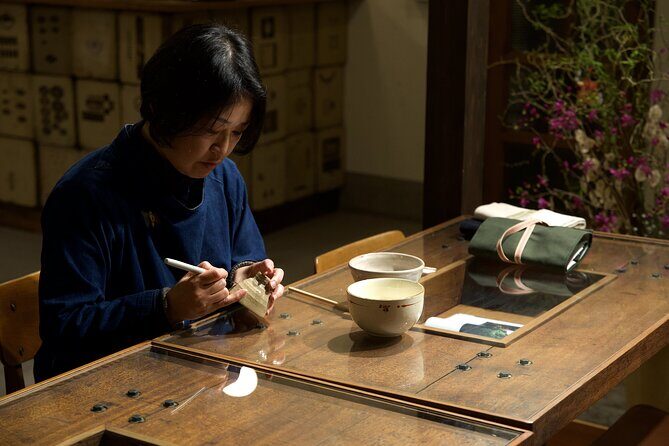
- Small group size (max 8) keeps the instruction close and makes it easier to ask questions while you work.
- Tomoko-san’s step-by-step teaching comes up again and again, and it’s especially helpful if you’re not “crafty.”
- Traditional approach with modern materials: synthetic lacquer, resin filling, and silver-based gold powder for the signature look.
- You start from broken pottery and learn how the repair is planned around the crack and missing bits.
- Take-home finished item: you leave with a completed piece, safely handled so you can transport it home.
- Optional follow-up photos: at least one participant reported receiving photos the next day, so it’s worth watching for that message.
Kintsugi in Osaka: Joined by Gold, Not Cover-Ups
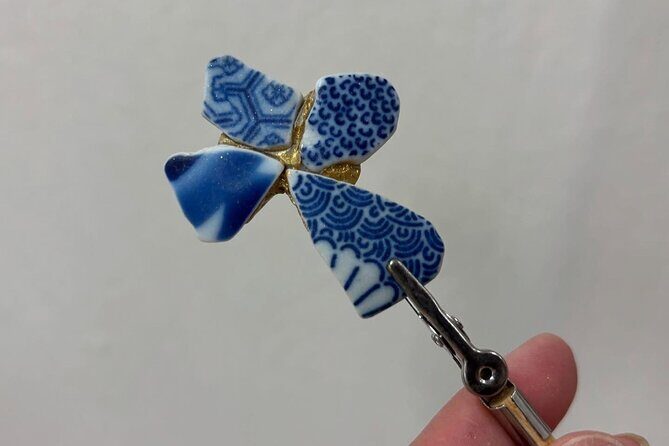
Kintsugi literally means joined by gold. The idea goes back centuries, when Japanese artisans repaired broken ceramics with lacquer mixed with precious metal dust—not to hide damage, but to mark it. That mindset is why this workshop feels more like a cultural practice than a souvenir craft.
In this Osaka session, you’re not just painting a pretty line. You’re learning how the repair is supposed to look like part of the object’s life. The gold-like veins become a map of the fracture, and the missing areas get filled so the object still has a future. It’s a gentle shift in perspective: instead of treating breakage as failure, you treat it as a chapter.
And you get that lesson through your hands, not just your ears. Even if you’ve never done anything like this before, the process is structured—bonding broken pieces, filling gaps, then adding that metallic finish.
You can also read our reviews of more tours and experiences in Osaka


Inside Tomoko-san’s Workshop: Your Piece, Your Pace
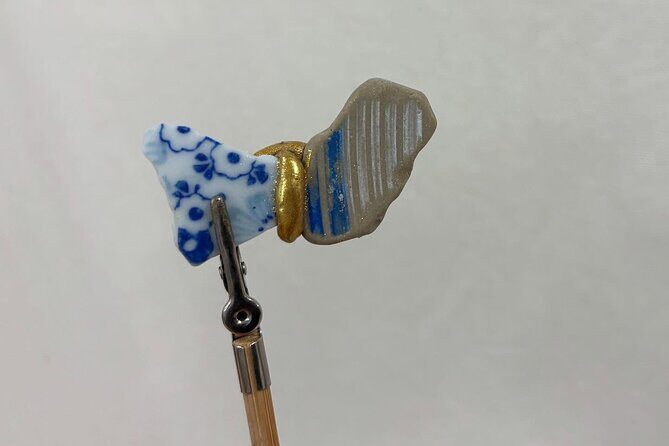
The workshop takes place in Tomoko-san’s artisan studio in Joto Ward, Osaka—at 102, 1-chōme-4-18 Shigita. It’s set up for hands-on work, not a lecture hall. You’ll want to arrive a little early so you can settle in before you start repairing.
A big plus here is the small group limit: up to 8 people. That matters. With kintsugi, you need time to look closely at the crack lines and then work carefully along them. A smaller group usually means less waiting, more direct guidance, and fewer “watch me do it” moments.
From what you’re told upfront, you don’t need experience. Tools and materials are provided. The studio also gives you a selection of broken pottery to repair. That’s convenient—but it also connects to the main trade-off: you won’t choose your item from an endless menu. If you’re particular about the shape, color, or pattern, think about it before you go (more on that in a practical tip below).
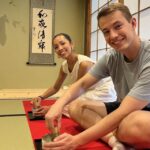
Tomoko-san and her apprentice lead the session with patience and a step-by-step approach. That shows up clearly in the feedback: people felt comfortable even when they weren’t confident with crafts. In other words, this isn’t a test of artistic talent. It’s a guided repair.
Repair Process in Plain Steps: Lacquer, Resin, Gold Powder
The workshop is designed around the core kintsugi workflow. You’re given access to broken pottery pieces, then walked through each stage.
1) Bonding the broken pieces with synthetic lacquer
First, you deal with the big question: how the pieces should come together. You’ll use lacquer—specifically a synthetic lacquer in this workshop—to bond the broken ceramic parts. This is where you learn to align the fracture so the final seams look intentional, not messy.
It’s also where patience pays off. If you rush the alignment, the gold lines will end up emphasizing the wrong places. The instruction style here is meant to slow you down without frustrating you.
2) Filling missing fragments with resin
When there are gaps or missing bits, lacquer alone won’t do the job. You’ll use resin to fill those missing areas so the repaired section looks complete. This step is important because it determines how smooth the transition feels once the gold-like finish goes on.
Think of resin as the structural bridge. It’s not just cosmetic. It helps the object hold together visually and physically.




3) Finishing with silver-based gold powder
Then comes the signature kintsugi moment: dusting your repair seams with a silver-based gold powder. This is the step that turns technique into that instantly recognizable kintsugi look—the shimmering metallic lines that make the break visible on purpose.
You’ll learn how the powder is applied so the veins look like they belong to the ceramic, not like an added sticker. The goal is contrast: the repair line should be noticeable, but still harmonious with the object’s original character.
Timing and flow inside the 3 hours
The workshop runs about 3 hours. That’s long enough to do real work—bond, fill, and finish—without the “one step, then you wait” feel you can get in some classes. You’ll also have time to ask questions as you go.
One practical upside: you leave with your finished, repaired piece. That means you can plan your day around taking the item home rather than returning for a separate pickup later.
What You Take Home: A Finished Piece With a Story
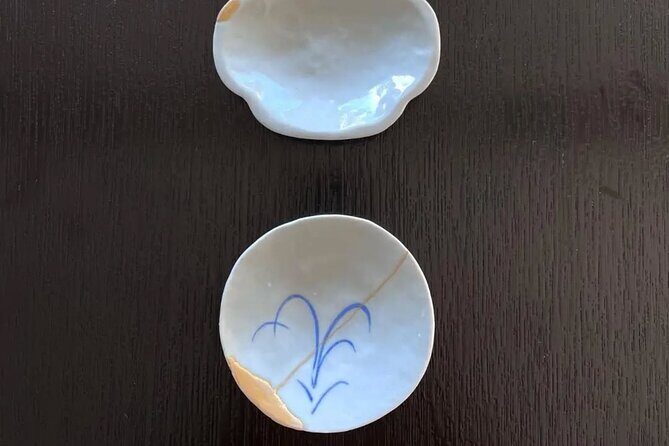
This is not a “watch while they make something” experience. Your workshop includes your completed kintsugi piece, plus the tools and materials to do the work. You’ll take your restored ceramic home as a tangible reminder.
In one experience shared, the workshop ended with a safely wrapped teacup for transport. That’s exactly what you want: a finished item that’s handled so it can survive the trip back to your apartment or house.
Now, a realistic note: you’re working in a workshop setting with repair materials. That means your piece is special because it’s handmade and unique, not because it’s designed for rough daily use like a factory-made mug. If you want to display it, great. If you want to use it, just treat it like the delicate repaired object it is.
Also, even though the finished look is guided, your result won’t be identical to anyone else’s. That’s part of the point. Kintsugi celebrates how each break has its own geometry—and your repaired seams become your signature.
Price and Value: Is $97.73 Worth It in Osaka?
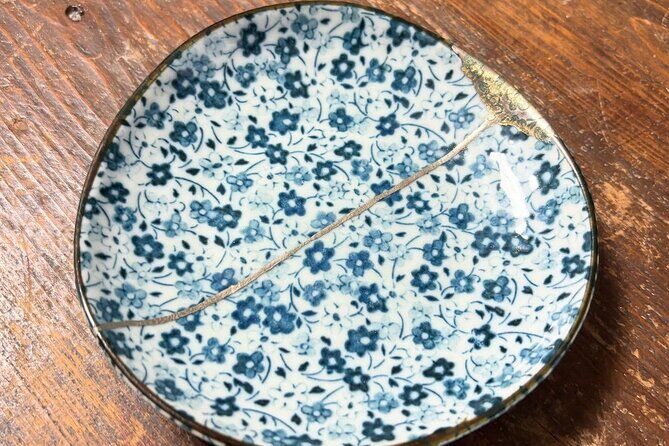
At $97.73 per person for about 3 hours, this workshop sits in the “serious activity” category—cheaper than many private classes, but more than basic craft workshops. The value comes from what’s included.
What you’re getting for the price:
- Instruction by an artisan (Tomoko-san and support)
- Materials and tools for the full repair process
- A completed piece to take home
- Background on history, philosophy, and cultural significance
If you’ve done cheap workshops before, you might have noticed the pattern: you pay for a short demo, you make something generic, and you leave with no real craft knowledge. Here, you’re learning the logic of kintsugi—bonding, filling, and finishing—so the skill has meaning. And you leave with the physical result, not just a notebook page.
Group discounts may be available as well, which can improve the value if you’re booking with someone. Also, it’s booked on average about 20 days in advance, so it’s not the kind of thing you want to treat as last-minute in peak weeks.
One more value angle: location. The studio is near public transportation, and a participant noted it’s an easy ride on the Osaka Loop train. That reduces the hassle cost. Getting to and from a class without stress is part of what makes it feel worth the money.
Getting There at 3pm: The Osaka Meeting Point That Actually Matters
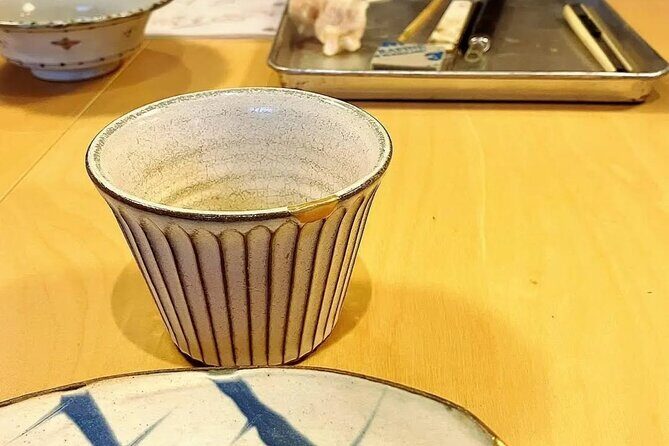
The start time is 3:00 pm, and the session ends back at the same meeting point. The address is: 102, 1-chōme-4-18 Shigita, Joto Ward, Osaka, 536-0015, Japan. Since transportation isn’t included, you’ll plan your own route.
Practical advice:
- Aim to arrive early enough to find the studio before your start time.
- Use public transit since the workshop is near it.
- If you’re going from central Osaka, give yourself time for local stops and a short walk.
One interesting practical detail: you receive a confirmation at booking, and there’s a mobile ticket. That’s the kind of setup that keeps your day smooth once you’re in Osaka.
Also note this: the experience requires good weather. The workshop is in a studio, so this can feel surprising. Still, treat it as a heads-up that your date might shift if conditions are poor. If that would throw off your plans, book dates with a little buffer.
Who This Workshop Is Best For (and When It’s Not)
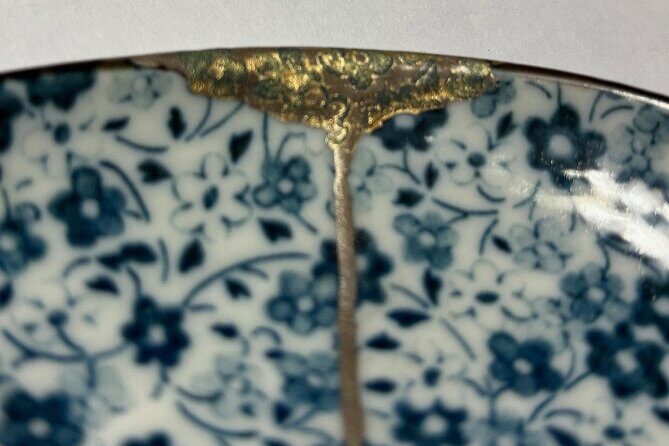
This kintsugi workshop is a great fit if you:
- Want a hands-on Japanese craft with cultural meaning, not just a quick activity
- Enjoy careful, focused work and like the idea of learning a real technique
- Don’t have experience and still want to leave with something truly personal
- Want to take home a one-of-a-kind repaired piece
It’s also ideal for people who like “slow travel” moments—doing something thoughtful, sitting in a small studio, and creating rather than rushing through sights.
When it might not be ideal:
- If you’re extremely selective about the exact pottery you want to work on. Since the studio provides the broken pieces, you may end up with an item that isn’t exactly your dream shape or color.
A useful workaround came up directly: if you have a specific preference, bringing your own broken dish could help. Not every workshop accepts outside items, but if you’re the picky-about-details type, it’s worth asking ahead of time.
Should You Book This Kintsugi Workshop in Osaka?
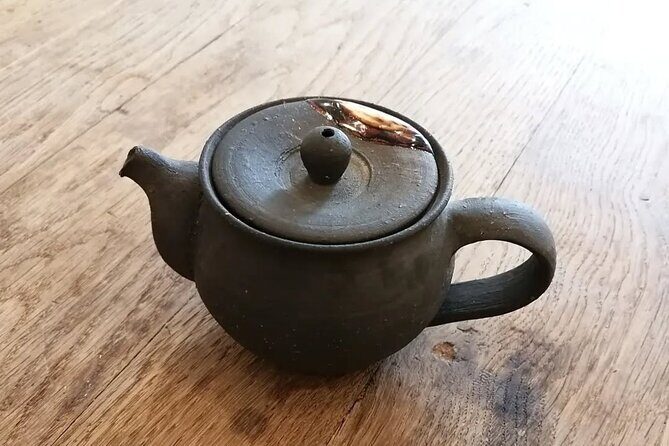
Book it if you want a meaningful Osaka experience that’s genuinely hands-on. For the money, you get real instruction, full materials, and a finished piece you can take home—plus a philosophy you can carry around after the class ends.
Skip it or rethink your plan if:
- You need total control over the piece you repair (shape and color matters a lot)
- You’re tight on time and can’t manage the 3-hour block
- Weather issues would put you in a scheduling mess
If you’re open to working with the studio’s pottery selection, this is exactly the kind of class that turns “I learned something about Japan” into “I made something with Japan.” And when the result has gold-like seams that celebrate the break, you’ll have a conversation piece that’s also a lesson. Not bad for three hours.
FAQ
What is the duration of the kintsugi workshop?
The workshop lasts about 3 hours.
What does the $97.73 price include?
It includes hands-on instruction by an artisan, all necessary tools and materials (like resin, lacquer, brushes, and silver-based gold powder), access to broken pottery pieces to repair, your completed kintsugi piece to take home, and an overview of the history and philosophy of kintsugi.
Do I need any prior experience?
No experience is required. Most people can participate.
Where is the workshop located and when does it start?
It starts at 3:00 pm and meets at 102, 1-chōme-4-18 Shigita, Joto Ward, Osaka, 536-0015, Japan. It ends back at the meeting point.
Is transportation included?
No. You are responsible for getting to the venue.
Can I cancel for free if my plans change?
Yes. You can cancel up to 24 hours in advance for a full refund. The experience also requires good weather, and if it’s canceled due to poor weather, you’ll be offered a different date or a full refund.