REVIEW · OSAKA
Koyasan Day Trip by Private Car from Osaka
Book on Viator →Operated by MagicalTrip Inc. · Bookable on Viator
Koyasan feels remote, but the day is easy. This private outing from Osaka trades train juggling for a dedicated English-speaking guide and a comfortable private vehicle, so you can focus on temples, rituals, and quiet corners instead of logistics. I particularly like the way the route mixes big, famous sights with off-limits temple access, plus a traditional monk-style meal you don’t usually get on a quick day tour. One thing to keep in mind: it’s a full 10-hour day, so you’ll want decent energy for walking, especially in Okunoin.
You also get a guide experience that can really shape the trip. In guides’ own words and style from past tours, people like Meri and Megui have been praised for staying warm and informative while giving the right amount of context at each stop. If your Japanese reading is minimal (mine would be), this is a big plus.
The one possible drawback is value perception. At $520.29 per person, this costs more than group bus options, so you’ll want to be sure you’re paying for private transport, ticketed entries, lunch, and the ritual-focused itinerary rather than just scenery.
In This Review
- Key highlights you’ll remember
- Why a private car day to Koyasan is worth it
- The Osaka start point and how to plan your morning
- Katsuragi-cho shrine: a quiet start by a sacred waterfall
- Mt. Koya: learning the core ideas behind the place
- Danjyo Garan: the classic temple complex with symbolic architecture
- Kongobu-ji and Japan’s rock garden: quiet, wood corridors, big stillness
- Shojin ryori vegan lunch: eating like monks, not like tourists
- Shojoshin-in: normally off-limits access, then a monk-guided tour
- Goma fire ceremony: intensity you can see and feel
- Okunoin: a lantern-lit cemetery walk for the final mood shift
- Price and what you actually get for $520.29 per person
- Who this Koyasan private day trip suits best
- Should you book this Koyasan private day trip?
- FAQ
- How long is the Koyasan day trip from Osaka?
- What is the price per person?
- What time does the tour start, and where is the meeting point?
- Is the tour private?
- What is included during the day?
- Can you handle dietary restrictions for the vegan lunch?
- Are there any exclusive temple or ritual experiences?
- What happens if weather or closures affect the schedule?
Key highlights you’ll remember
- Private car pickup and a chauffeured day mean fewer transfers and less stress from Osaka to Mt. Koya
- Exclusive temple access at Shojoshin-in includes visiting a normally off-limits temple space
- Goma fire ceremony is one of the most visually intense rites in esoteric Buddhism on this route
- Shojin ryori vegan lunch follows the monk-style Buddhist cooking tradition, not a tourist version
- Okunoin’s lantern-lit cemetery walk ends the day on a serious, calm note
Why a private car day to Koyasan is worth it
Koyasan is the kind of place where timing matters. Your day starts in Osaka at 8:00 am and runs about 10 hours, so you don’t want to lose time wrestling with schedules, transfers, and ticket lines.
On this tour, you’re in a private vehicle with hotel pickup offered and a chauffeur driving you through the long day. That matters because Koyasan isn’t close, and the route can feel slow even when everything goes right. Here, the travel time is part of the plan, not a punishment.
The private format also changes the feel at temple stops. Your guide can slow down for questions and pacing, which is huge in places like Kongobu-ji and Okunoin where silence and observation are part of the experience.
You can also read our reviews of more private tours in Osaka
The Osaka start point and how to plan your morning
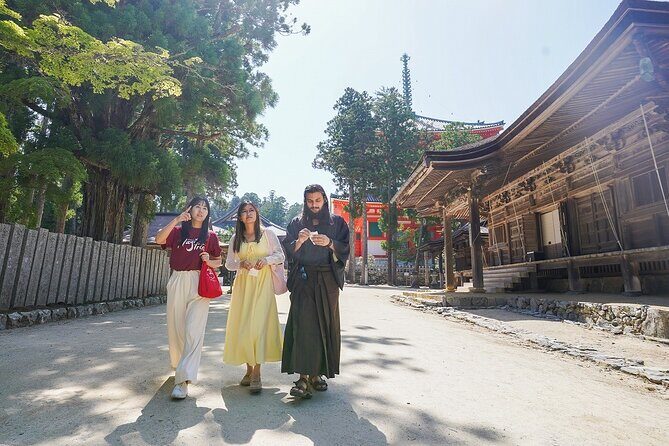
The meeting point is McDonald’s at JR Osaka Station Sakurabashi Exit, in the restaurant area (Umeda, Kita Ward). The tour begins at 8:00 am, and it ends back at the same meeting point.
I’d treat this as an early-day commitment. Show up with a bit of buffer so you’re not doing last-minute sorting while everyone else is already moving.
Because the itinerary is time-based and some stops are ticketed, you’ll get the best experience if you’re ready to leave on time. If you tend to run late, this is the kind of day trip where late usually costs you real temple time.
Katsuragi-cho shrine: a quiet start by a sacred waterfall
Your first stop is Katsuragi-cho, where you visit a local shrine tied to a sacred waterfall. The description points to an upstream location along the Anabushi River system (also referenced as the Shijuhasse River), with the source connected to Mount Mikuni and Mount Shuku.
That’s a good early choice. Big temple complexes can feel intense later in the day, so starting with a shrine-and-water pause helps reset your brain. It also gives your guide a foothold to explain how nature, place, and belief connect in Koyasan’s world.
Admission is listed as free here, so it’s a low-pressure way to get oriented and start reading the spiritual landscape before the ticketed temple highlights.
Mt. Koya: learning the core ideas behind the place
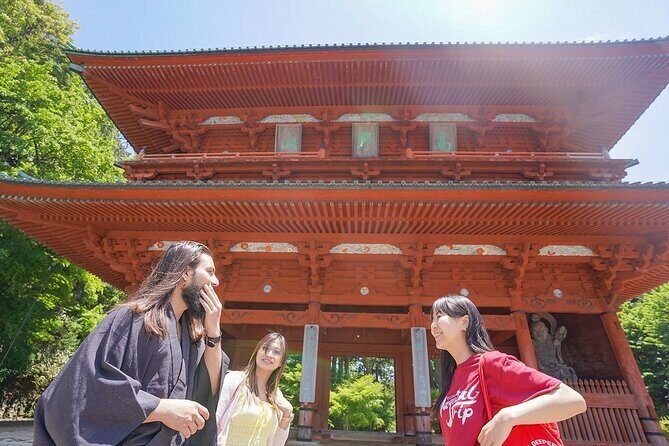
Next you head up to Mt. Koya. This part is brief (about 10 minutes), but it’s not just a photo stop. Your guide explains core beliefs of Japanese Buddhism and shares the story of Kūkai, the monk who established this sanctuary over 1,200 years ago.
In practice, this short orientation works because it prepares you for what you’ll see right after. If you arrive cold, it’s easy to treat temple architecture as “pretty old stuff.” With a quick framing, those buildings, symbols, and rituals start making emotional sense.
Because the admission ticket is included for this step, you’re not juggling cash or figuring out what requires payment at the last minute.
Danjyo Garan: the classic temple complex with symbolic architecture
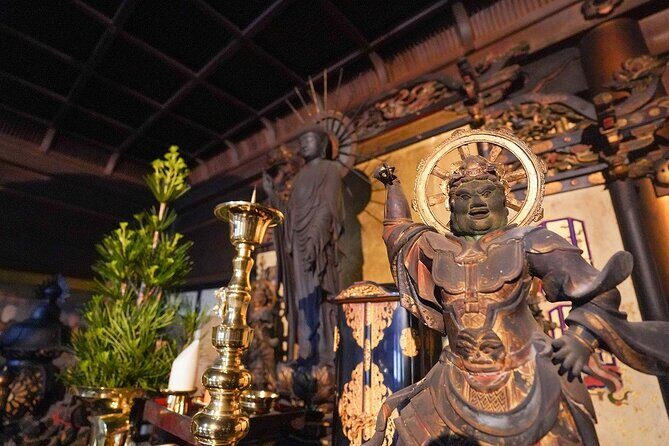
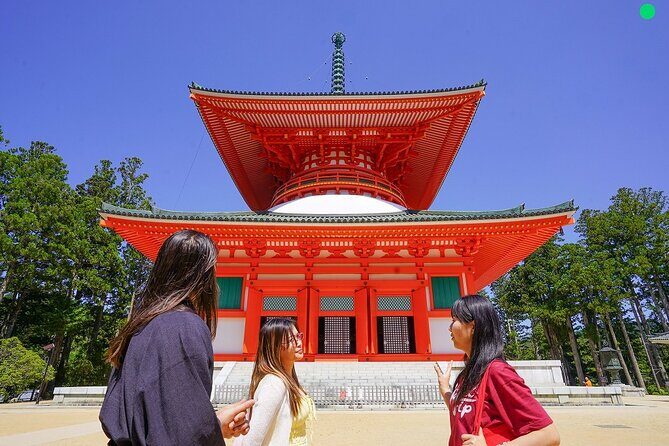
At Danjo Garan, you visit one of Koyasan’s most significant temple complexes. Expect pagodas, tranquil halls, and architectural elements that reflect esoteric teachings.
This stop is about 20 minutes. That’s enough time to appreciate the overall layout and take in the visual grammar—what’s central, what’s meant to draw you in, and how the space “directs” your attention.
The main consideration here is mental pacing. Danjyo Garan can look overwhelming at first glance. Let your guide do the pointing and connecting. Don’t try to memorize everything. This is more about understanding how the site is meant to be walked through.
Admission tickets are included here, so again, you stay focused on the visit.
You can also read our reviews of more tours and experiences in Osaka

Kongobu-ji and Japan’s rock garden: quiet, wood corridors, big stillness
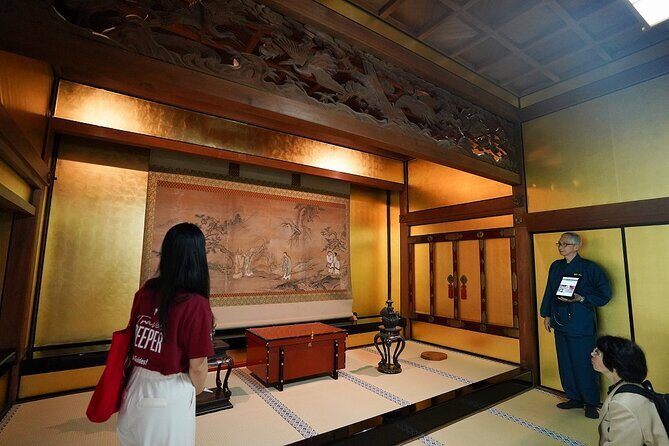
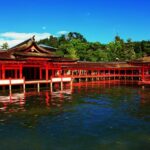
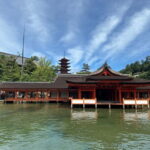
Your route continues at Kongobu-ji, described as the main temple of the Shingon sect. The headline detail is Japan’s largest and most striking rock garden, plus hushed wooden corridors where you can slow down.
This stop is longer (about 40 minutes), and that longer time is important. A rock garden isn’t a quick look. Even if you don’t “get” it immediately, you can feel the intention: controlled space, careful viewpoints, and a slower rhythm than a typical sightseeing stop.
If you like art and design but also want spiritual meaning, this is one of the best places in the itinerary to mix both. Your guide’s interpretation is likely to shape how you see the garden’s layout.
Tickets are included, so there’s no hassle factor added to an already calm environment.
Shojin ryori vegan lunch: eating like monks, not like tourists
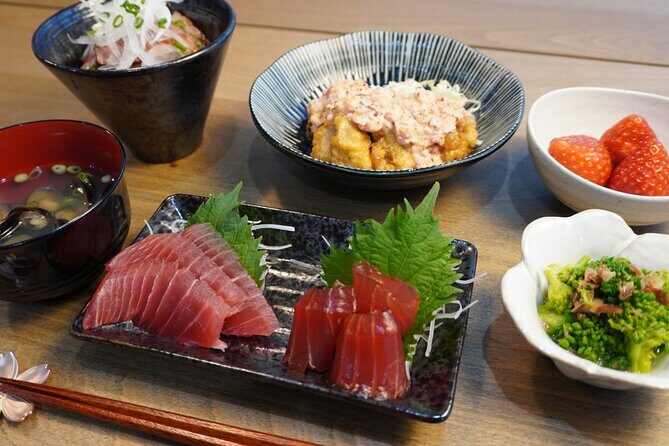
After temples, you’ll have lunch in Koya-cho: Shojin Ryori, a traditional Buddhist vegan meal once reserved for monks.
The tour description emphasizes it as plant-based and developed by Buddhist monks, and the stop lasts about 1 hour. In a good day trip, lunch is where you can actually breathe between heavy sights. Here, it’s also where you get a slice of spiritual culture through food, not just words.
I like that this meal is included and treated as part of the experience, not an optional extra. You also submit dietary needs at booking, with vegetarian and vegan options available.
So if you’re planning your day around comfort—rather than squeezing in convenience-food between stops—this lunch is one of the best “value-per-time” parts of the itinerary.
Shojoshin-in: normally off-limits access, then a monk-guided tour
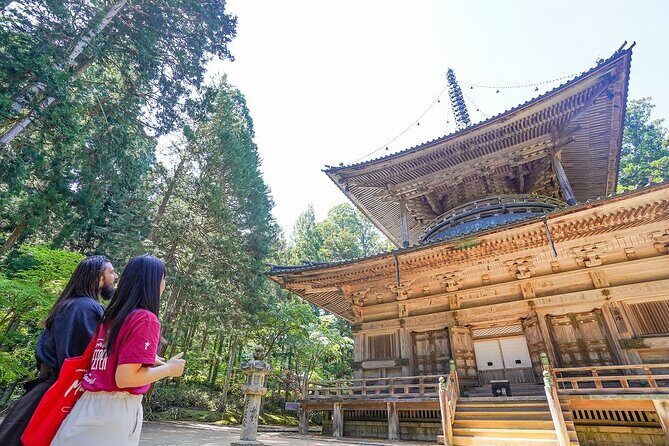
Then comes one of the most distinctive elements: Shojoshin-in. First, you step into a temple area that is normally off-limits and is opened exclusively for this experience.
This stop is about 30 minutes, and it includes touring inside with a resident monk. Your guide provides translation, so you’re not just following silent gestures. You’re getting the meaning behind what you’re seeing.
This is where private format pays off. On a group tour, you might get a quick pass. Here, you’re getting structured access to a space that otherwise wouldn’t be part of many casual visits.
If you’re someone who likes respectful, structured encounters—someone who wants to ask questions, but also likes quiet observation—this should land well.
Admission is included.
Goma fire ceremony: intensity you can see and feel
Right after Shojoshin-in, you join the Goma purification fire ceremony. This is described as one of the most visually striking and spiritually charged rites in esoteric Buddhism.
Time is tight here too: about 30 minutes. But that’s often the right length for a ritual like this. You get the arc—setup, meaning, and the experience itself—without turning it into a “watch for the whole afternoon” event.
A practical note: rituals are sensory events. Expect sights, sounds, and strong atmosphere. If you prefer very passive sightseeing, you might find this more intense than the temple tours. If you’re curious about living practice—this is the moment you came for.
Tickets are included.
Okunoin: a lantern-lit cemetery walk for the final mood shift
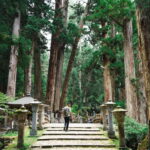
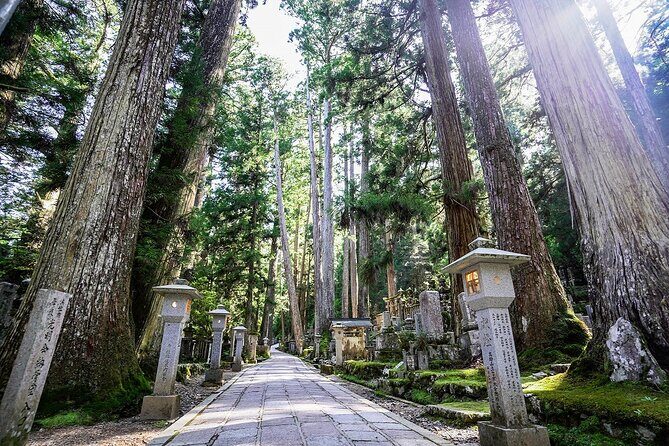
To end the day, you walk to Koyasan Okunoin Temple. The route is described as Japan’s most sacred cemetery, with a path past moss-covered gravestones toward the resting place of important figures. You’ll follow a lantern-lit path.
This is about 1 hour. It’s also the stop where the day’s energy changes. You start the day in Osaka mode, then you move through architecture and rituals, and finally you land in a quieter, more contemplative space.
If you’re visiting Koyasan for atmosphere as much as history, Okunoin is where it clicks. You don’t need to “know” everything. You just need to walk slowly enough to notice the mood.
Admission tickets are included here too.
Price and what you actually get for $520.29 per person
At $520.29 per person, this isn’t a budget day trip. So the value question is simple: are you getting enough included to justify private costs?
From the structure of the day, you are. You’re paying for:
- Private vehicle with pickup offered (so less time lost in transport logistics)
- A dedicated English-speaking guide throughout
- An experience layout that includes ticketed temple entrances across multiple stops
- Shojin Ryori vegan lunch
- Exclusive access at Shojoshin-in, plus the Goma fire ritual
- A private format where only your group participates
There’s also mention of group discounts and mobile tickets. If you’re traveling with friends, that’s where your cost per person can start to feel more reasonable.
If you’re the type who can handle trains and self-guided temple hopping, you might find cheaper ways to visit. But if you want the day to feel intentional and guided—especially for ritual access—this price starts to look less random and more like paying for the right doors being opened.
Who this Koyasan private day trip suits best
This tour fits you best if you:
- Want English guidance in a religious site where context makes everything clearer
- Care about rituals, not just sightseeing photos
- Prefer a private, timed itinerary over flexible but slower DIY travel
- Appreciate a structured cultural meal like Shojin Ryori
It’s also a strong fit for couples, friends, and families—especially if you’re trying to reduce the friction of travel days.
If you’re traveling with limited walking tolerance, the overall day length and the Okunoin cemetery walk could be the hardest part. The tour is listed as suitable for most travelers, but you should still plan for a long day on your feet.
Should you book this Koyasan private day trip?
Book it if you want a guided, ticketed, ritual-focused Koyasan day that’s built around access—rather than trying to piece together transportation and temple timing yourself. The best reasons are the combination of private car comfort, exclusive Shojoshin-in access, Goma ceremony participation, and a monk-style Shojin Ryori lunch.
Don’t book it if you’re chasing a low-cost temple highlight. This is priced like a premium day, and it only feels like a win when you truly value the guided context and the inclusion-heavy schedule.
If you’re on the fence, here’s my practical rule: if you’d feel stressed managing trains for Koyasan, this private format will probably make the day feel calm and meaningful. If you’d be happy self-guiding and skipping rituals, you’ll likely find better value elsewhere.
FAQ
How long is the Koyasan day trip from Osaka?
The tour runs for about 10 hours.
What is the price per person?
The price is listed as $520.29 per person.
What time does the tour start, and where is the meeting point?
It starts at 8:00 am. The meeting point is McDonald’s at JR Osaka Station Sakurabashi Exit Restaurant (Umeda, Kita Ward), and the tour ends back at the same meeting point.
Is the tour private?
Yes. It is a private tour/activity, and only your group participates.
What is included during the day?
A private vehicle with pickup offered, a dedicated English-speaking guide, and included admission tickets at multiple stops. Shojin Ryori vegan lunch is included as well, and a mobile ticket is provided.
Can you handle dietary restrictions for the vegan lunch?
You’re asked to inform the provider of dietary restrictions at booking. Vegetarian and vegan options are available.
Are there any exclusive temple or ritual experiences?
Yes. You visit Shojoshin-in, described as a normally off-limits temple opened for this experience, and you also join the Goma purification fire ceremony.
What happens if weather or closures affect the schedule?
The itinerary may be adjusted, and in some cases canceled depending on weather or traffic. Refunds aren’t provided for limited visibility due to weather. If facilities are closed, alternative locations may be visited without refunds.