REVIEW · OSAKA
Kyoto & Nara & Uji: Full Day Sightseeing Tour from Osaka or Kyoto
Book on Viator →Operated by F Trip · Bookable on Viator
Red gates, big temples, matcha—one full day.
What makes this tour appealing is the mix of classic sights and easy pacing by bus, linking Nara’s deer park with Uji’s tea culture and Kyoto’s famous torii walk. I like that you get guided structure for the tough parts, especially when crowds hit—plus you still have moments that feel flexible once you arrive at each spot. One thing to keep in mind: with a packed schedule (and a maximum group size of 45), some stops can feel a bit tight if you like to linger.
My favorite parts are the deer encounter at Nara Park and the UNESCO-level wow factor of Byōdo-in’s Phoenix Hall. In between, the day also throws in the Uji River area and Byōdoin Omotesandō street for that very Kyoto-adjacent, slow tea-shop vibe. A possible drawback is that guide quality and language can vary, so if you’re relying on English narration for every detail, you’ll want to be flexible.
For the price, I think the best way to judge value is not just $67, but the fact that most stops have free admission and only two major temples charge entry fees. Still, you should budget for Byōdo-in (¥700) and Todai-ji (¥800), and you’ll want to plan your lunch on your own during the provided break.
In This Review
- Key highlights that make this day tour work
- Why this Nara–Uji–Kyoto day is a smart one-day plan
- Price and value: what you pay vs. what you’ll top up
- Getting there from Osaka or Kyoto: bus comfort, big-group reality
- Nara Park deer time and Todai-ji’s huge Buddha moment
- Uji Park and the Uji River: a calmer break between crowds
- Byōdo-in’s Phoenix Hall and Byōdoin Omotesandō matcha street
- Senbon Torii at Fushimi Inari: the walk you’ll remember
- Time pressure: how to handle a packed 9-hour route
- Guides and group size: why the same tour can feel different
- Lunch time: what to do so you’re not hungry or late
- Who this tour is best for (and who should pick something else)
- Should you book this tour?
- FAQ
- FAQ
- How long is the Kyoto & Nara & Uji full day sightseeing tour?
- How much does the tour cost?
- Where does the tour start?
- What’s included in the price?
- What isn’t included?
- What are the admission fees for the paid temples?
- Which parts have free admission?
- Is lunch provided?
- How large are the groups?
- What if I’m traveling with stroller or large luggage?
- Can I cancel for a full refund?
Key highlights that make this day tour work
- Nara Park deer time (about 50 minutes) with a guide keeping you on track
- Todai-ji Temple for a quick hit at one of Nara’s biggest landmarks
- Uji River + Uji Park for scenic breaks between bigger crowds
- Byōdo-in Temple and Phoenix Hall (built in 1053, tied to the 10 yen coin)
- Byōdoin Omotesandō matcha street for tea browsing without rushing
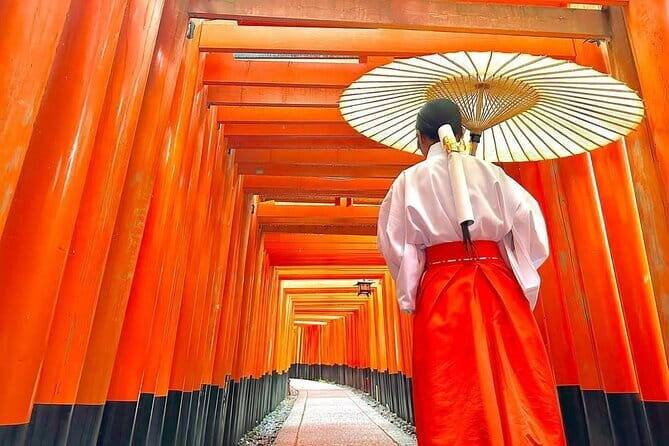
- Senbon Torii at Fushimi Inari (1 hour 20 minutes, around 30,000 torii)
Why this Nara–Uji–Kyoto day is a smart one-day plan
This is the kind of day tour that works when you want famous places without spending your vacation figuring out transfers, platforms, and the best walking routes. The route strings together three regions that are each worth a day on their own—Nara, Uji, and the Kyoto shrine areas—but it compresses them into a manageable timeline with bus comfort and a guide.
What I like is how the stops naturally balance each other. Nara Park gives you an immediate, playful scene (those deer aren’t shy), Todai-ji gives you a “how is this real” monument moment, and Uji adds a calmer, slower rhythm with the river and tea shops. Then Fushimi Inari’s thousands of torii switches the mood again—still spiritual, but with a very physical, walk-through feel.
You can also read our reviews of more tours and experiences in Osaka
Price and value: what you pay vs. what you’ll top up
At about $67 per person, the headline value comes from the structure. You’re paying for air-conditioned transportation plus a guide. The day’s entry costs are the main add-on:
- Byōdo-in Temple: ¥700
- Todai-ji Temple: ¥800
Everything else is listed as free admission, including Nara Park, Uji Park, Byōdoin Omotesandō, Uji River, and Senbon Torii.
So the “real” cost depends on how much you care about those two ticketed temples. If you’re happy to treat Byōdo-in and Todai-ji as the two pay-to-enter anchors of the day, the rest feels like bonus sightseeing you’d likely pay for (or spend extra time chasing) on your own.
Getting there from Osaka or Kyoto: bus comfort, big-group reality
This tour runs from Osaka or Kyoto, and it uses a mobile ticket, which is convenient if you don’t want to hunt for paper vouchers. Duration is about 9 hours, so expect a full day even with breaks built in.
Because the group can be up to 45 travelers, you’re likely traveling with a mix of ages and personalities. The best days feel organized and smooth. The less-great days tend to come from the same source as any big group tour: not everyone moves at the same pace, and not everyone is in a cheerful mood.
A practical note I’d take from past experiences: one group pointed out the bus may not have a bathroom, so don’t count on it. Another mentioned bus windows could be dirty, which matters if you want to look out while riding.
Nara Park deer time and Todai-ji’s huge Buddha moment
Nara Park is built for that instant Kyoto-to-Japan wow switch. It’s a very large park—660 hectares—and it’s famous for the free-roaming deer that approach visitors. Your time here is about 50 minutes, which is enough to see the deer, take photos, and walk toward Todai-ji without feeling like you’re sprinting the entire time.
The deer part can also set the tone for the whole day. It’s fun, but it’s also busy and a little chaotic. The upside of having a guide is simple: you’re not guessing how to handle the situation. Some guides on past departures were specifically praised for keeping people safe around the deer, which is exactly what you want in a place where animals are part of the attraction.
Next is Todai-ji Temple for about 30 minutes. This is one of Nara’s best-known temples and a UNESCO World Heritage Site (as part of the Historic Monuments of Ancient Nara). It’s also one of those places where the scale hits you fast—you go from street-level to “why is this so monumental?” in a hurry.
Downside: 30 minutes is a short window for a site this important. If you love reading every sign and looking at smaller details, you’ll probably feel time pressure. If you’re more about the main sights and photos, it’s a good length for a day tour.
Uji Park and the Uji River: a calmer break between crowds
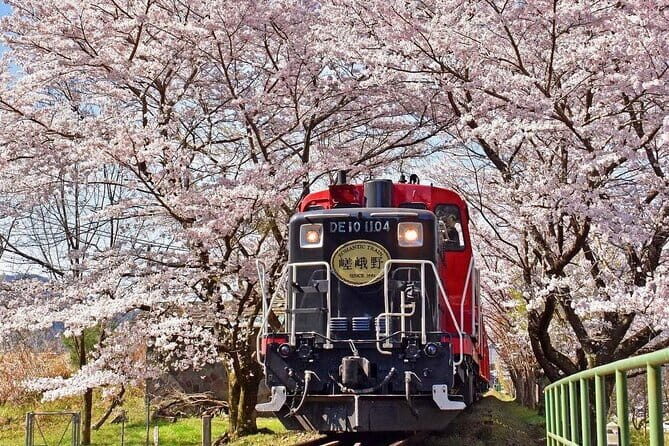
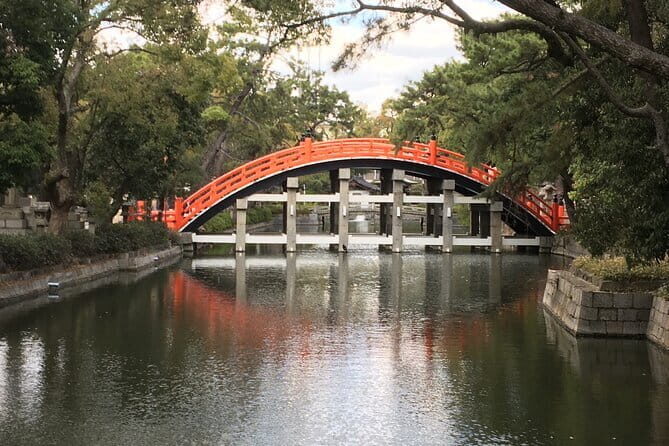
After Nara and Todai-ji, Uji is a nice change of pace. You start with Uji Park, which is described as an island park surrounded by the Uji River, with the river’s flow divided downstream. It’s connected to the riverbanks by three bridges, which makes this stop more scenic and walkable than a typical “quick rest break.”
Time here is about 30 minutes, and admission is free. The value of Uji Park isn’t just the views—it’s the mental reset. You go from temples and deer crowds into a river-and-bridge walking zone, where you can slow down and breathe before the big temple and torii segments.
Then you get Uji River itself for about 20 minutes. The river is notable because it’s described as the only river that originates from Lake Biwa, and it has served as an important waterway connecting Shiga and Osaka since ancient times. Even if you’re not the “history document” type of traveler, that detail adds meaning to what you’re seeing. You’re not just passing time—you’re walking a place that ties two major regions together.




Byōdo-in’s Phoenix Hall and Byōdoin Omotesandō matcha street
This is the heart of the day for most people, and for good reason. Byōdo-in Temple is a UNESCO World Heritage Site, and it’s also described as one of Japan’s best-preserved national treasures. The star of the show is the Phoenix Hall, including the fact that it was built in 1053 and is tied to the 10 yen coin design.
Your time here is about 30 minutes, and admission is ¥700. That length is enough to reach the iconic structures and get the photos people come for. If you want to read everything slowly or explore extra angles, you may wish you had more time. But for one-day coverage, it hits the key moment.
Next comes Byōdoin Omotesandō, also about 40 minutes. This is where Uji’s reputation becomes real. The street is lined with shops selling tea and tea-related products, and it’s a great place to browse without turning your day into a museum-stumble marathon. If you’re a matcha fan, this is the stop that feels most like an activity rather than a site checkmark.
Practical tip for your mindset: Byōdoin Omotesandō can be a little tempting because it’s easy to spend 40 minutes just wandering. I’d set a simple goal for yourself—maybe a drink and a small souvenir—then enjoy the rest of the day without feeling rushed at the gates.
Senbon Torii at Fushimi Inari: the walk you’ll remember
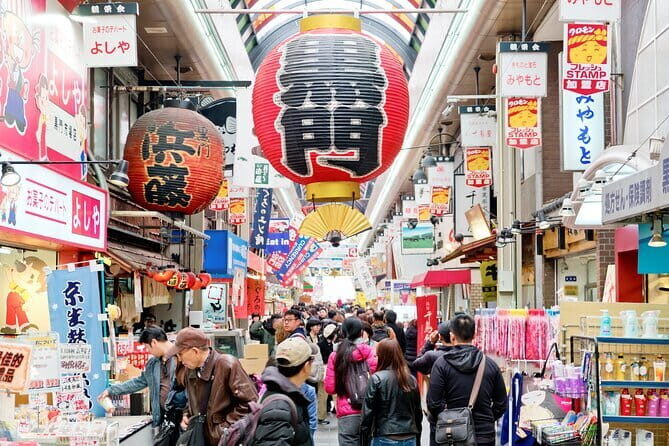
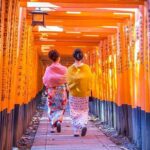
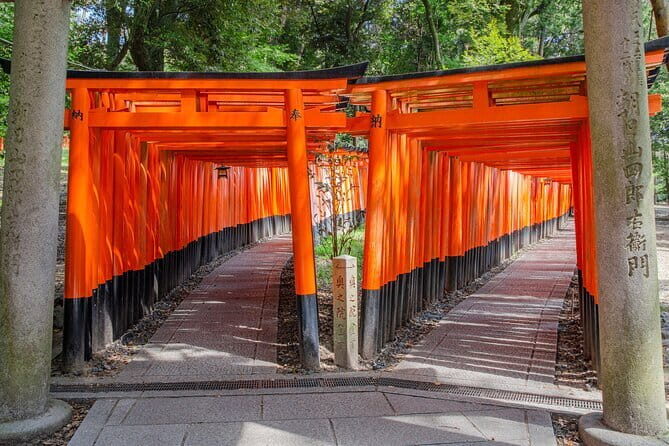
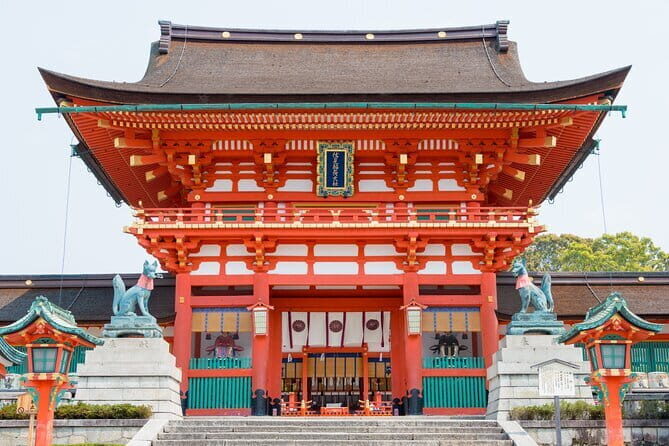
The final big headline is Senbon Torii, the thousands of vermilion torii gates famous at Fushimi Inari Taisha. The tour gives you about 1 hour 20 minutes here, and admission is free.
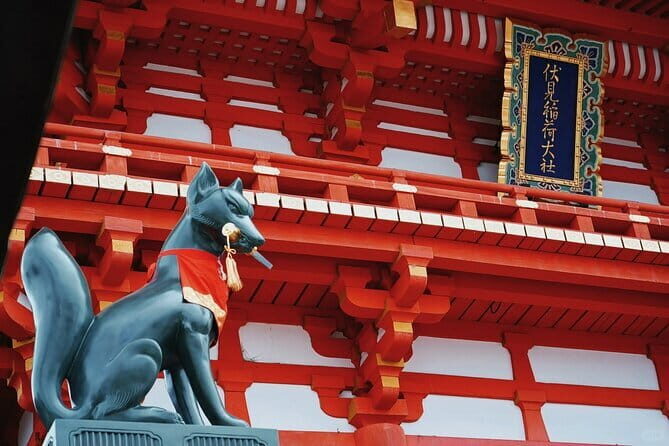
This stop is different from the temples earlier because it’s a physical experience. You’re not just standing in front of something. You’re moving through corridors of gates, and the longer you walk, the more dramatic it feels. The shrine is associated with Inari, the Shinto god of rice, and it’s described as having around 30,000 Inari shrines in Japan, with Fushimi Inari Taisha as the head shrine.
If you’re traveling with kids or people who dislike uphill walking, you’ll still get value because the area is famous at every stage. But since your time is 1 hour 20 minutes, you’ll want to decide how deep you want to go rather than drifting. That keeps you from arriving at the “just one more section” moment where the bus timing starts to matter.
Time pressure: how to handle a packed 9-hour route
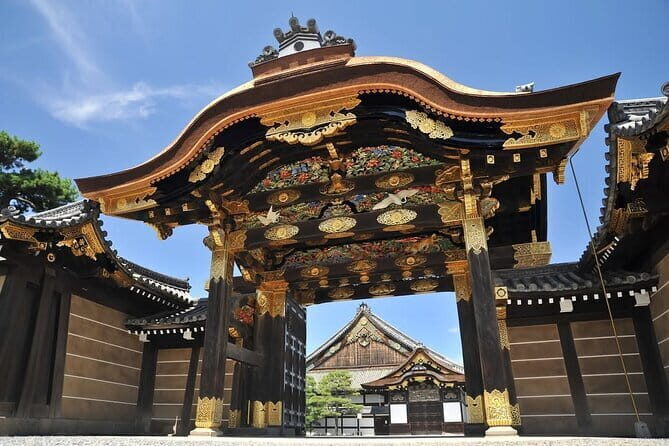
This is a 9-hour day, and multiple stops are timed around 30 minutes each (with a couple of longer windows like Senbon Torii at 1 hour 20 minutes). That means the tour is designed for seeing the big beats, not slow travel.
Here’s how I’d make it work in real life:
- In the ticketed temples (Byōdo-in and Todai-ji), prioritize the main landmark and one or two nearby photo angles.
- In the free sightseeing zones (Nara Park, Uji Park, river, street), take your time with walking paths, but don’t let browsing eat your entire schedule.
- In Fushimi Inari, set a turn-around point so you don’t end up rushing at the end.
Some people find this pacing enjoyable because it feels like a highlight reel. Others prefer breathing room. If you’re the type who likes to meander and read everything, you’ll probably feel the schedule more. If you’re the type who wants a lot of iconic Japan in one day, this tour is set up for you.
Guides and group size: why the same tour can feel different
One of the most important variables here is not the places—it’s the guide and the group dynamic.
Past departures show a range of guide names, including Candy, Steven, John, Amanda, Eve, Amy, Joy, Cicy, Laura, and Bryan. Some of these guides were praised for clear English, cultural tips, and keeping everyone organized. Others received complaints about limited English, fast explanations, or confusion about where to meet at a given entrance.
So here’s my practical advice: treat the tour as a shared experience with guidance, but don’t assume every sentence will land perfectly in English. If English clarity is critical to you, ask yourself how you’ll handle moments when you only get part of the instruction. You can reduce stress by using visual cues on-site: follow the group, find the main landmark paths, and keep an eye on where the bus meeting point usually is.
Also remember the group size: up to 45. Even with a good guide, the day can slow down if people get separated or if some participants move slower than the pace.
Lunch time: what to do so you’re not hungry or late
Lunch isn’t included, but the day provides time for independent dining. That means you’ll likely eat near one of the stops rather than on a scheduled restaurant break. My suggestion is boring but effective: choose something quick that you can eat efficiently, then get back to the walking flow.
This matters because the day’s success depends on timing. If you spend too long in line or wander too far to find a perfect meal, you can lose minutes you’ll later feel at Todai-ji, Byōdo-in, or Senbon Torii.
Who this tour is best for (and who should pick something else)
This tour is best for you if:
- you have one day and want a strong hit of Nara + Uji + Kyoto shrine sights
- you want bus help and a guide to coordinate the flow
- you love matcha culture and don’t mind buying a temple ticket or two
- you’re okay with a fairly fast pace
You might not love it as much if:
- you’re the slow-travel type who needs lots of time per site
- you get irritated by big groups
- you need very detailed commentary in English at every step
Should you book this tour?
I’d book it if your priority is maximum sightseeing value in a single day, with free admission for most stops and only two key temple fees. The deer-and-temple combination works well, Uji gives you a refreshing change of scenery, and Fushimi Inari is one of those places where even a shorter visit feels meaningful.
Skip it or consider alternatives if you know you dislike tight schedules, or if language clarity matters a lot for how you experience culture. In that case, you might prefer a smaller-group option with more time at fewer sites.
FAQ
FAQ
How long is the Kyoto & Nara & Uji full day sightseeing tour?
It runs for about 9 hours.
How much does the tour cost?
The price is $67.00 per person.
Where does the tour start?
It departs from either Osaka or Kyoto.
What’s included in the price?
You get air-conditioned transportation and a guide, and you receive a mobile ticket.
What isn’t included?
Lunch is not included, and temple admission fees are not included.
What are the admission fees for the paid temples?
Byōdo-in Temple is ¥700 per person, and Todai-ji Temple is ¥800 per person.
Which parts have free admission?
Nara Park, Uji Park, Byōdoin Omotesandō, Uji River, and Senbon Torii are listed as free admission.
Is lunch provided?
Lunch is not provided, but the schedule includes time for you to eat independently.
How large are the groups?
The maximum group size is 45 travelers.
What if I’m traveling with stroller or large luggage?
You should indicate this when booking, and you’ll want the operator to plan appropriately.
Can I cancel for a full refund?
Yes. You can cancel up to 24 hours in advance for a full refund.