REVIEW · OSAKA
Kyoto One Day Sightseeing Tour from Osaka or Kyoto
Book on Viator →Operated by F Trip · Bookable on Viator
Nine hours, Kyoto hits hard.
This guided day trip strings together major icons like Nijo-jo Castle and Kinkaku-ji with the quieter, scenic stops in Arashiyama, so you see a lot without spending your whole day figuring out trains.
I especially like two things: the air-conditioned vehicle for a long day, and the guided format that helps you understand what you’re looking at before you walk into each site. The route is built for efficiency, and that matters when you only have one day.
One thing to plan around: key entry fees are not included, so you’ll need to pay extra for Nijo Castle and Kinkaku-ji, and the time at each place is naturally tight.
In This Review
- Key Highlights You’ll Feel Immediately
- Why This One-Day Kyoto Route Works So Well From Osaka
- Nijo-jo Castle: Feudal Power in a UNESCO-Listed Palace
- How to make the most of your hour
- Senbon Torii at Fushimi Inari: The Torii Trail Without the Stress
- Arashiyama: One Timed Block Covering Nature and Landmarks
- The Arashiyama pacing tip
- Arashiyama Bamboo Forest: Iconic and Surprisingly Calm
- Nonomiya Shrine and the Black Torii Look
- Arashiyama Kimono Forest: A Color Stop That’s Easy to Miss
- Togetsukyo Bridge: The “Icon View” for a Heian-Era Site
- Kinkaku-ji (Golden Pavilion): Why It’s the Ending You Remember
- A practical way to enjoy it
- Price and Logistics: What $65 Gets You (and What You Still Pay)
- One trade-off to accept
- Group Size, Guide Style, and the One Thing to Watch
- Who This Tour Is Best For
- Should You Book This Kyoto One-Day Sightseeing Tour?
- FAQ
- How long is the Kyoto One Day Sightseeing Tour?
- Where does the tour depart from?
- What is included in the tour price?
- Which entrance tickets are not included?
- Is lunch provided?
- What is the group size limit?
- Is there free cancellation?
Key Highlights You’ll Feel Immediately
- Nijo-jo Castle in Edo-period palace style with a UNESCO-tagged site
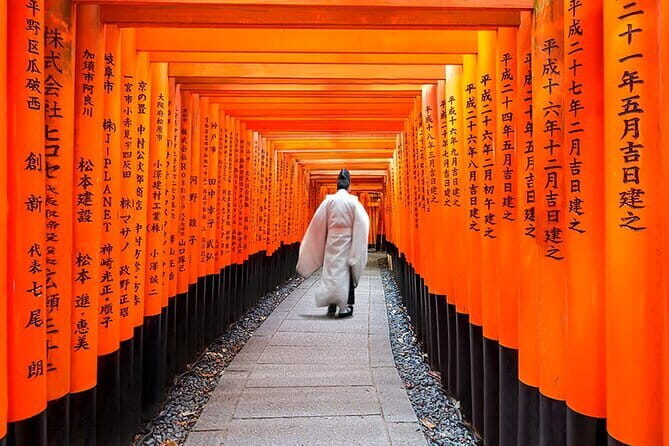
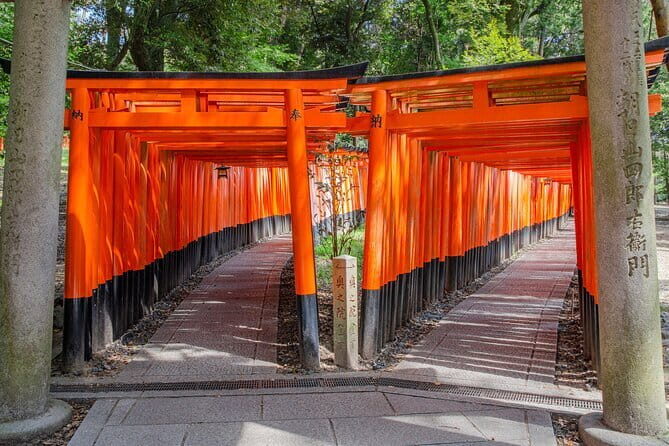
- Senbon Torii at Fushimi Inari with its famous vermilion gate trail
- Arashiyama Bamboo Forest and Togetsukyo Bridge in one focused west-Kyoto block
- Quick, varied Arashiyama stops like Nonomiya Shrine and the Kimono Forest installation
- Small-group touring for a day trip (maximum 45 people) with an on-board guide
- Mobile tickets so you’re not scrambling for paperwork
Why This One-Day Kyoto Route Works So Well From Osaka
Kyoto is beautiful, but it can also eat time. This tour is designed to solve the big problem: you get a packed route with a guide, plus bus transport so you can move between neighborhoods without constantly recalculating train transfers.
Starting from Osaka or Kyoto also helps. If you’re already based in Osaka, you don’t need to overnight in Kyoto just to hit the headline sites. If you’re already in Kyoto, you can still keep your day tight and leave the rest of Kyoto for another trip.
The big “value” idea here is that you’re paying for a guided, timed day. At $65 per person (with transportation and a guide), it’s not trying to be a slow, independent exploration. It’s trying to get you comfortable quickly, then deliver the main sights in one go.
You can also read our reviews of more tours and experiences in Osaka
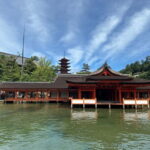
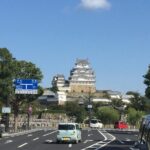
Nijo-jo Castle: Feudal Power in a UNESCO-Listed Palace
You’ll start at Nijo-jo Castle, built in 1603 as the Kyoto residence of Tokugawa Ieyasu, the first shogun of the Edo Period. The tour gives you about 1 hour, and you’ll know you’re in a special category of Japanese castle architecture: palace-like buildings rather than just defensive walls.
This is one of those stops where a short visit can still feel meaningful because the site is so connected to Japan’s political shift into the Edo era. Even if you don’t consider yourself a castle person, the story of power moving into the Tokugawa shogunate is the kind of context that turns “pretty walls” into “this is why it mattered.”
Important practical note: the Nijo Castle & Ninomaru Goten Palace ticket is not included and costs 1,300 yen. That means your day budget needs a little flexibility for on-site entry fees.
How to make the most of your hour
- Go in ready to focus on layout and rooms, not just photos. In a one-hour window, that’s what makes it feel worth it.
- If you’re the type who likes details, you’ll benefit from the guide’s explanations early, before you start walking through.
Senbon Torii at Fushimi Inari: The Torii Trail Without the Stress
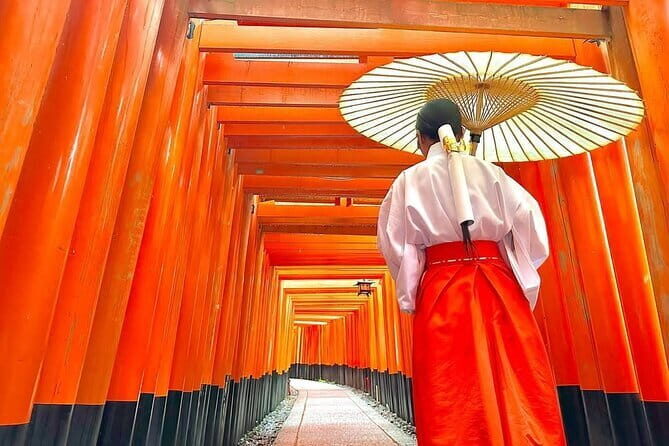
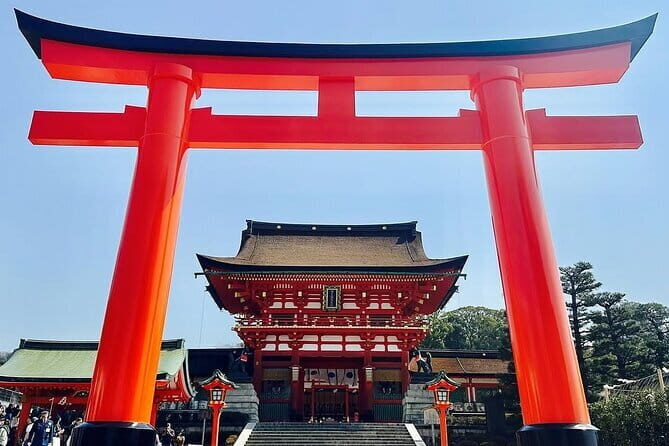
Next up is the Senbon Torii (Thousand Torii Gates) at Fushimi Inari Shrine. This isn’t just a scenic stop. It’s a pilgrimage route tied to Shinto worship of Inari, a rice-related deity.
The experience you’ll get is the scale. The shrine is known for thousands of vermilion-red torii gates, and the tour gives you about 1 hour 10 minutes here. That’s enough time to walk the gate-lined paths at an unhurried pace, then circle back for photos without racing.
This stop is free for you: the time listed includes the Senbon Torii, with an admission ticket free note.
One more practical thing: this is a high-photography area, so you’ll likely want to pick a simple plan. Do you want the classic gate corridor photos, or are you more interested in walking deeper? With a timed tour, deciding early saves time later.
Arashiyama: One Timed Block Covering Nature and Landmarks
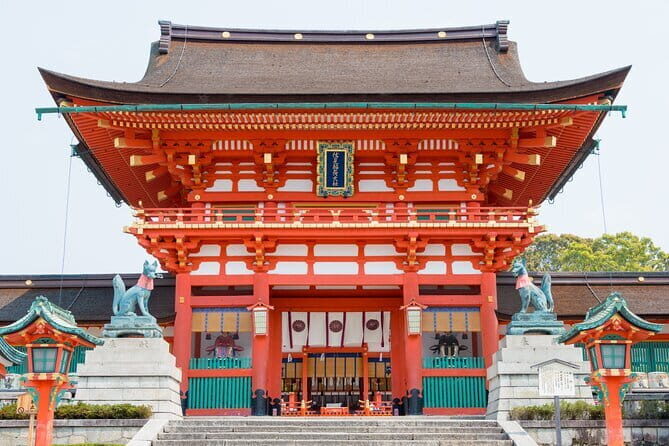
Arashiyama is where the tour shifts from “historic buildings” to “Kyoto-as-scene.” It’s in west Kyoto and known for natural beauty plus classic sights, and you’ll spend about 20 minutes at the area overall before splitting into specific stops.
The way this tour uses Arashiyama is smart for day-trippers: it clusters several close-by sights so you don’t lose time on transit. You’ll move through a sequence that gives you variety rather than repeating one type of scenery.





The Arashiyama pacing tip
If you’re hoping for long, quiet moments in nature, this tour is not that kind of experience. It’s fast and structured. But if you want the biggest “Arashiyama hits” in one day, this format helps you see more, even if you don’t linger as long as you would on a solo day.
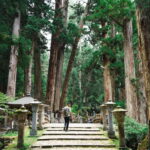
Arashiyama Bamboo Forest: Iconic and Surprisingly Calm
Then comes the Arashiyama Bamboo Forest, one of Kyoto’s most recognizable symbols. You get about 40 minutes, which is just enough to walk among towering bamboo stalks and soak in the quieter atmosphere people come for.
Even when it’s busy, bamboo has a way of changing the mood. The tall stalks create that visual rhythm, and the forest gives you a break from the street intensity you may have felt earlier in the day.
This is also a great stop for buying time emotionally. If your morning felt like checkpoints, the bamboo forest gives you a slower, more sensory pause.
The bamboo stop is marked as free, which helps your budget and lets you spend your energy on walking instead of ticket math.
Nonomiya Shrine and the Black Torii Look
Right after bamboo, the tour includes Nonomiya Shrine, about 20 minutes. Unlike many Kyoto shrines with bright vermilion torii gates, Nonomiya Shrine is known for its distinctive black torii gate.
This is a subtle but worthwhile contrast. When your day includes multiple shrine-adjacent stops, it’s easy to blur them together. A black torii gives you an immediate visual hook, which helps the stop feel specific.
Free admission here makes it easy to treat as a breather stop. If you’re traveling with kids or just want a short walk without big-ticket pressure, it fits.
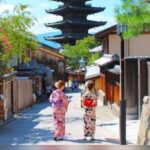
Arashiyama Kimono Forest: A Color Stop That’s Easy to Miss
Next, you’ll see Arashiyama Kimono Forest, described as an installation of 600 clear acrylic cylinders, each about 2 meters tall, decorated with vibrant kimono fabric designs.
This isn’t a temple you’ll study for its religious role. It’s more of a designed visual moment, and that’s why it works on a one-day tour: it keeps your day from being all serious architecture and strict shrine etiquette.
It’s also free and timed at 20 minutes, so it doesn’t steal time from the heavier hitters.
If you’re a photo person, this stop can be a strong one. If you’re not, it’s still worth a quick look because the colors give you a visual memory that’s distinctly modern-adjacent.
Togetsukyo Bridge: The “Icon View” for a Heian-Era Site
Then you’ll hit Togetsukyo Bridge, a landmark in Arashiyama. The tour notes it spans the Katsura River and that it traces its history to the Heian Period, with a more recent reconstruction in the 1930s.
You’ll have about 20 minutes here. That sounds short, but it’s enough for the main bridge view and a few framing options, especially if the guide helps you pick where to stand for photos.
This stop also works as a transition point. You’ve been moving through smaller shrine/forest moments. A bridge gives you open space and a wider Kyoto view.
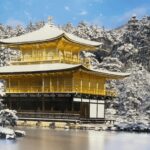
Kinkaku-ji (Golden Pavilion): Why It’s the Ending You Remember
Finally, the tour arrives at Kinkaku-ji (Golden Pavilion), a Zen Buddhist temple and UNESCO World Heritage site. The exterior is famous for its dazzling gold appearance, and the tour gives you about 40 minutes.
This is the kind of stop where the “hourly stress” of a one-day schedule can pay off. When you reach the final highlight, you’re ready for it. You get enough time to see the golden facade and walk through the surrounding garden areas at a reasonable pace.
Here’s the key cost detail: Kinkaku-ji Temple ticket is not included, and the listed cost is 500 yen.
A practical way to enjoy it
Go in expecting crowds, but don’t rush your walking. In a time-limited tour, your goal is to find a couple of angles where the gold and reflections make sense, then enjoy the garden quiet for a few minutes instead of trying to photograph everything.
Price and Logistics: What $65 Gets You (and What You Still Pay)
Let’s talk value in plain terms. Your base price is $65 per person, and it includes:
- Air-conditioned vehicle
- Guide
- A mobile ticket
- The scheduled stops
What you should expect to pay extra for:
- Nijo Castle & Ninomaru Goten Palace: 1,300 yen
- Kinkaku-ji Temple: 500 yen
- Lunch (not included)
That means the tour is still a good deal for many people because you’re not only paying for transit. You’re paying for someone to connect the dots between sites so you don’t feel lost at each one. And after a long day, having an air-conditioned vehicle is not a luxury you’ll regret.
One trade-off to accept
This is a 9-hour (approx.) experience with a full itinerary. That makes it efficient, but it can also feel like a “see it, move on” day. If your idea of Kyoto is slow strolling with lots of unscheduled time, you might prefer a different style of tour.
Group Size, Guide Style, and the One Thing to Watch
The tour caps at 45 travelers, which usually keeps logistics manageable on a day trip. You’ll also get notes that it’s near public transportation, and there are instructions about letting the provider know if you have a stroller or large luggage.
Guide quality shows up as a major factor in satisfaction. Some guides are described as organized, professional, and even funny—names like Theodore Chan and Jay show up in positive feedback. That kind of guiding is exactly what helps at places like Nijo-jo Castle and Kinkaku-ji, where context makes your visit feel fuller.
One caution from the overall rating range: a low rating mentioned the tour felt too unguided, with the guide offering limited explanation while the bus was driving. You can’t know in advance how every day’s narration lands, so I’d go in with the right mindset: use the guide for quick explanations, but plan to enjoy each site primarily through your own walking time.
Who This Tour Is Best For
This one-day itinerary is a great fit if you:
- Want Kyoto highlights without changing hotels
- Like a structured day with a plan and transport handled
- Prefer a guided experience at iconic sites like Fushimi Inari and Kinkaku-ji
- Don’t mind paying small additional entrance fees on top of the tour price
It’s also a decent choice if you’re traveling solo or as a couple. The group size is not tiny, but it’s not huge either, and the schedule keeps you from getting stuck waiting around for the next transport step.
If you’re the type who wants hours and hours in one neighborhood, you may find the pace too tight. In that case, you might choose a slower Kyoto plan instead.
Should You Book This Kyoto One-Day Sightseeing Tour?
Book it if you want a fast, high-visibility Kyoto day with major sites covered in one route. The mix of Nijo-jo Castle, Fushimi Inari’s torii trail, Arashiyama’s bamboo and bridge, and Kinkaku-ji gives you a strong snapshot of what Kyoto feels like.
Skip it or rethink if you hate paying extra at the gate or you need long time at each stop. Also consider that the pacing is efficient, and if you want heavy, stop-by-stop lecturing, you might need to adjust your expectations.
If you’re working with limited time in Japan and you want your day to feel organized, this tour is built for that job.
FAQ
How long is the Kyoto One Day Sightseeing Tour?
It runs for about 9 hours.
Where does the tour depart from?
The tour departs from either Osaka or Kyoto.
What is included in the tour price?
It includes an air-conditioned vehicle and a guide, and you’ll receive a mobile ticket.
Which entrance tickets are not included?
Nijo Castle & Ninomaru Goten Palace are not included (1,300 yen), and Kinkaku-ji Temple is not included (500 yen).
Is lunch provided?
No, lunch is not included.
What is the group size limit?
The tour has a maximum of 45 travelers.
Is there free cancellation?
Yes. You can cancel for a full refund up to 24 hours in advance of the experience start time.