REVIEW · OSAKA
Kyoto Top Four Highlights Day Trip from Osaka or Kyoto
Book on Viator →Operated by F Trip · Bookable on Viator
Kyoto in one long, well-run day. This day trip is built to stack major sights into a single route, mixing Tokugawa-era castle power, Zen calm, and the famous red gates at Fushimi Inari. You’ll ride in an air-conditioned vehicle, get a guide to keep you moving, and still get breathing room to look around.
I love two things most. First, the guided pacing: with help from guides like Teddy and Theodore Chan, you get clear context on what you’re seeing and how to move between stops without turning the day into a transit math problem. Second, the way the tour balances ticketed must-sees (Nijo Castle and Kinkaku-ji) with free-access Arashiyama time, so your day feels like sightseeing, not just paying entrance fees.
One possible drawback: it’s a 9-hour highlights sprint. Even with good timing, you’ll want to accept that you’re not “lingering” all day, especially around the Bamboo Forest and Togetsukyo Bridge where crowd flow and photo lines can slow things down.
In This Review
- Key things that make this Kyoto day trip work
- How the day starts: pickup, mobile ticket, and a real-world schedule
- Nijo Castle: the Tokugawa residence you’ll remember
- Golden Pavilion at Kinkaku-ji: Zen gardens in a tight time block
- Arashiyama essentials: Bamboo Forest, shrine stops, and the classic bridge
- The Kimono Forest and Rilakkuma Tea House: fun stops with a photo-friendly pace
- Senbon Torii at Fushimi Inari: the end-of-day walk you’ll feel in your legs
- Price and value: what the ¥ tickets really mean for your total
- What the guide quality feels like on the ground
- Logistics and timing: where you’ll feel the “9-hour day”
- Who should book this Kyoto highlights trip (and who might skip it)
- Should you book this tour?
- FAQ
- How long is the Kyoto Top Four Highlights day trip?
- Do I start from Osaka or Kyoto?
- What’s included in the tour price?
- Are lunch and entrance tickets included?
- Is this a mobile-ticket tour?
- How long do I spend at the main attractions?
- Is there free time during the day?
- How big is the group?
- Can I cancel for a refund?
- What if I’m traveling with stroller or large luggage?
Key things that make this Kyoto day trip work
- One-route efficiency: major Kyoto stops with a planned order instead of random hopscotch
- Guide support that keeps you oriented: clear directions and helpful on-site explanations
- Value mix of paid and free sights: you pay for two big temples/castle, and the rest is largely free to enter
- Arashiyama variety in one pocket: bamboo, shrines, a bridge, and a few fun pop-culture stops
- Senbon Torii time allocation: enough time to walk into the gate tunnel and back out
- Group size kept reasonable: capped at 45 travelers, which helps with logistics
How the day starts: pickup, mobile ticket, and a real-world schedule
This is designed as a full-day push, about 9 hours long. It runs from either Osaka or Kyoto, and the operator uses a mobile ticket, which is handy when you’re juggling phones, transit cards, and photo gear.
The tour includes an air-conditioned vehicle and a guide. That matters more than it sounds: Kyoto’s sites are spread out enough that you’d otherwise spend time figuring out trains, stations, and timing windows for paid attractions. With a guide and vehicle handled, you can focus on what you came for.
Your day flows in set segments. You’ll have guided time at the main stops, plus free time and a lunch window for independent dining. That lunch flexibility is good if you already know what you want to eat, but it does mean you should plan for a bit of searching when you get your break.
You can also read our reviews of more tours and experiences in Osaka
Nijo Castle: the Tokugawa residence you’ll remember
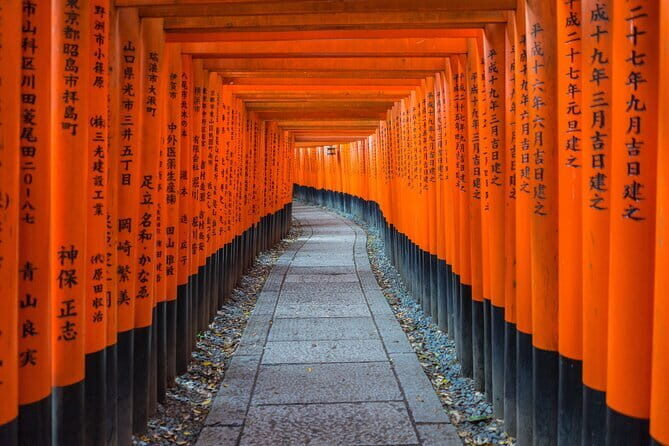
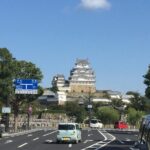
Nijo-jo Castle is first on the route, built in 1603 as the Kyoto residence of Tokugawa Ieyasu, the first shogun of the Edo Period. This isn’t just a fortress—this is a palace complex, and it’s known for surviving castle-palace architecture from that feudal era. If you like the idea of seeing how power worked before modern Japan, this stop gives you the foundation.
You’ll get about 1 hour here, and entrance is extra. Specifically, the tour lists the Nijo Castle & Ninomaru Goten Palace ticket cost as ¥1,300 per person. That fee is for you to step inside the palace buildings, where the visual details are the payoff.
What I find practical about starting with Nijo Castle is pacing. Early in the day, you’re still fresh, and the castle’s interior views and architectural layout are easier to absorb before you hit Arashiyama’s sightseeing flow.
A small note to plan for: this is a historical site where walking and standing add up. Wear shoes you’d use for a long city day, not the “pretty but not supportive” ones.
Golden Pavilion at Kinkaku-ji: Zen gardens in a tight time block
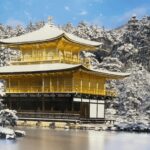
Next comes Kinkaku-ji (the Golden Pavilion), a Zen Buddhist temple and UNESCO World Heritage site. The draw is the golden exterior paired with calm gardens, the kind of scene that looks even better when you’re not rushing past it for the next photo op.
You’ll have about 40 minutes at Kinkaku-ji. Entrance is not included, and the tour lists the ticket as ¥500 per person.
In a packed day, this stop is short by design. The trick is to treat those 40 minutes as a mini “reset.” Walk slowly enough to see the garden rhythm, then take your time near the pavilion viewpoint before you move on.
If you’re someone who always wants one more angle, bring the mindset that you’re picking one best view and committing to it. In a day trip, that’s how you avoid the frustration of trying to do everything.
Arashiyama essentials: Bamboo Forest, shrine stops, and the classic bridge
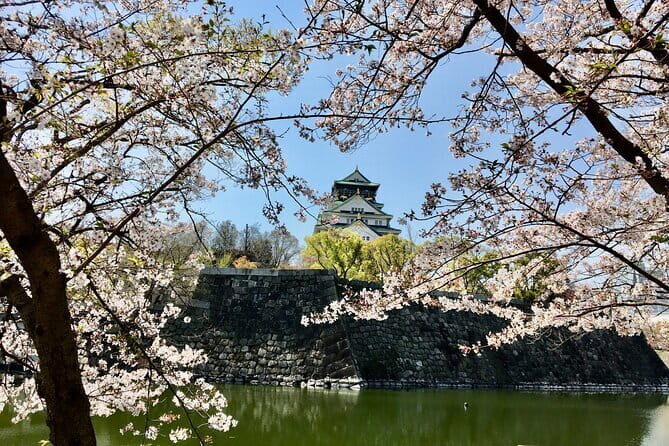
After the temples, the tour spends time in Arashiyama, Kyoto’s western sightseeing zone. Arashiyama is famous for natural beauty and historic sites, and this route uses it to give you variety without burning your whole day on transit.
You’ll spend time around the Arashiyama core highlights, starting with a quick stop near Nonomiya Shrine. This shrine has a distinctive black torii gate, which stands out because most visitors expect the usual vermilion. You get about 20 minutes, with free admission.
Then comes the Arashiyama Bamboo Forest for about 40 minutes. The bamboo stalks are the star here—towering, rhythmic, and quiet enough that even in a group setting, you still get that “walk-through” feeling. It’s also a place where crowd density changes how enjoyable it is. Go in with a plan: expect to pause, take one or two photos, and keep moving so you’re not stuck behind a camera line.
Next is Togetsukyo Bridge, the iconic crossing over the Katsura River area. You’ll get about 15 minutes, and it’s free to enter the area. The bridge has Heian-period roots and was reconstructed in the 1930s, so you’re standing in a spot with long continuity, not just a modern photo platform.
This Arashiyama block is where the tour balances “famous” with “actually different.” Bamboo is nature, Nonomiya is shrine atmosphere, and the bridge ties it together with a classic Kyoto river view.
The Kimono Forest and Rilakkuma Tea House: fun stops with a photo-friendly pace
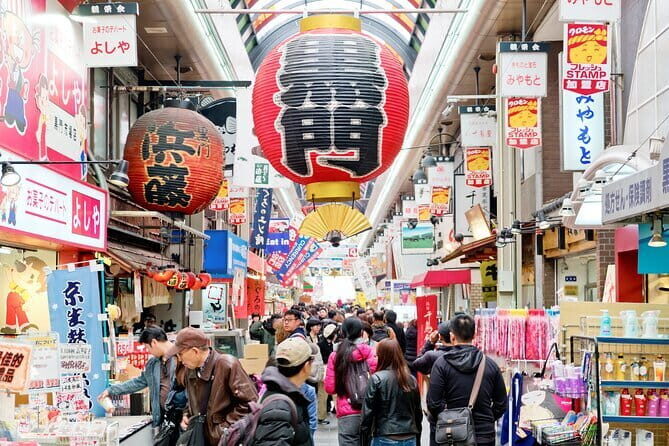
Between the larger historical stops, you’ll also see the Arashiyama Kimono Forest. It’s described as a textile art installation made of about 600 clear acrylic cylinders, each 2 meters tall, decorated with colorful kimono fabric patterns. Time here is about 20 minutes, and admission is free.
Then there’s the Arashiyama Rilakkuma Tea House. This is a lighter, playful stop built for wandering and photos. The tour keeps it short—about 15 minutes—and it’s free to enter the area. If you like quirky side attractions (and not just temples), this is where your day gets a break from serious stone and incense.
The practical value of these stops is that they act like “pace control.” They’re not massive time sinks, so you can enjoy them without feeling like you lost hours when you check your watch.

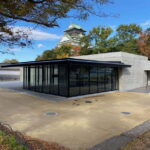



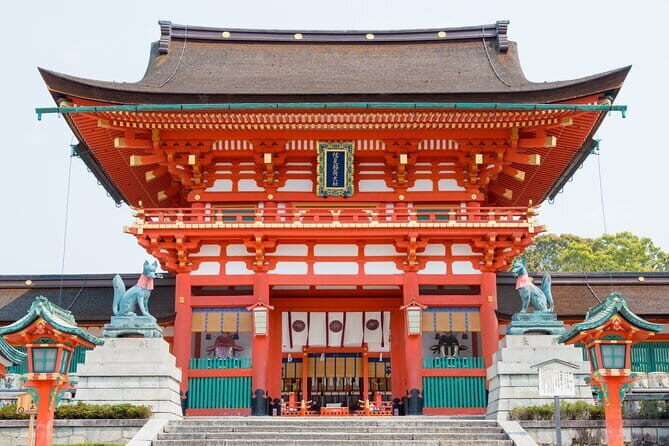
Senbon Torii at Fushimi Inari: the end-of-day walk you’ll feel in your legs
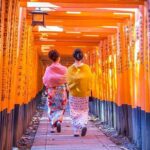
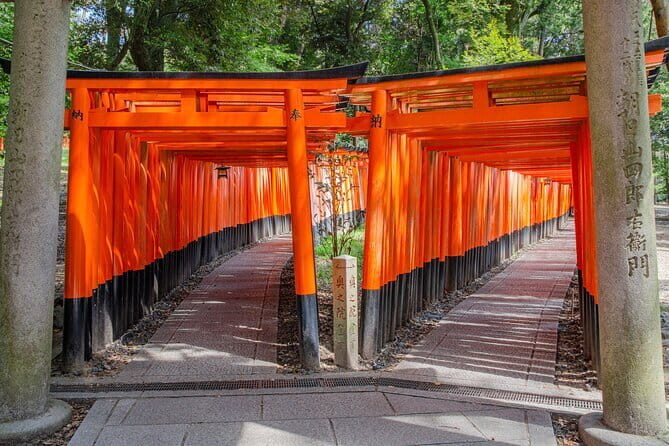
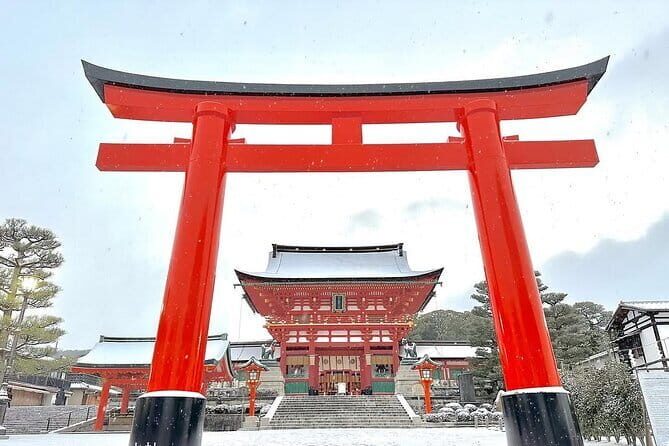
The final stop is Senbon Torii, the famous thousand-gate system linked to Fushimi Inari Taisha, the head shrine for Inari worship. This area is known for thousands of vermilion red torii gates, and you’ll spend about 1 hour 10 minutes here—one of the longer blocks of the entire route.
This is the stop where the tour’s timing matters. You want enough time to walk in, follow the gate tunnel in a way that feels satisfying, and then have time to come back without rushing. The extra length compared with Kinkaku-ji helps a lot here.
If you’re sensitive to walking distance, plan your energy. The gates look close on maps, but in person the walk adds up. The upside is that the experience is flexible: you can adjust how far you go and still get the main effect.
And yes, it’s also a photo stop. If you want photos without constant crowd pressure, pick a few strategic viewpoints rather than trying to photograph every meter of gate corridor.
Price and value: what the ¥ tickets really mean for your total
The listed price is $67.00 per person, and it’s a good sign that this includes an air-conditioned vehicle plus a guide for a full day. That reduces the big hidden costs you’d otherwise handle alone: multiple rides across different Kyoto areas and the time spent solving routes for paid entries.
But two major tickets are not included:
- Nijo Castle & Ninomaru Goten Palace: ¥1,300
- Kinkaku-ji Temple: ¥500
Lunch is also not included; you get time for independent dining.
So the true total cost for a typical booking is your $67 plus those entrance fees, plus lunch you choose yourself. For many people, that still ends up good value because you’re buying organization and interpretation. You’re not just moving from point A to B; you’re also getting guided context while you’re at the paid sites.
The best value angle is timing. You’re packing Kyoto’s biggest “high-impact” sights into one day. If you only have a short stay and want to see the greatest hits without building an itinerary from scratch, this format makes sense.
What the guide quality feels like on the ground
The tour is full of guides who manage both info and pace. People consistently highlight that the guide doesn’t just talk history—they also help you work the day.
For example, Teddy is noted as knowledgeable and entertaining, and Teddy-style energy shows in how the group stays cared for. Theodore Chan stands out for clear communication and adjustments like checking in on motion sickness and offering the front seats. Another guide, Brian, is praised for staying organized all day and giving practical directions so you know how to find your way back on time. That kind of logistics brain matters in Kyoto where trains and walking routes can eat time.
One more detail I like: guides sometimes help with language access. Theodore Chan is specifically mentioned as translating to Mandarin as needed, which can be a big relief if you’re not fully comfortable in English-only explanations.
Overall, this trip’s guide strength is a major part of the value you’re paying for.
Logistics and timing: where you’ll feel the “9-hour day”
This isn’t a slow, reflective tour. It’s a structured day with defined stops, and the time blocks are short at the places that don’t require ticketing. That’s how the tour fits so much in.
Expect:
- About 1 hour at Nijo Castle
- About 40 minutes at Kinkaku-ji
- Several 15–40 minute blocks in Arashiyama
- About 1 hour 10 minutes at Senbon Torii
If you’re the type who wants to spend an hour at one temple and then wander forever, you might feel a little compressed. If you prefer to see a lot and then come back later for the deep, slow version, this day trip is a great first pass.
Also note the group size cap: maximum of 45 travelers. That helps with coordination, especially when the tour needs to keep everyone together for pickup timing.
Who should book this Kyoto highlights trip (and who might skip it)
This is a strong choice for you if:
- You have limited time in Kyoto
- You want the major icons in one day
- You like guided interpretation and clear routing
- You’d rather pay for organization than build a DIY plan
It may not be the best fit if:
- You want long, quiet stays at just one or two sites
- You hate crowds and photo lines, even with good pacing
- You’d rather spend more time on smaller, less famous corners of Kyoto
That said, even if you prefer slower travel, this can work as a “bookmark day.” See the big ones now, then pick your favorites later.
Should you book this tour?
I’d book it if you want a straightforward way to hit Kyoto’s top visual hits—Nijo Castle, Kinkaku-ji, the Bamboo Forest, and Senbon Torii—without worrying about connections and ticket timing. The combination of vehicle support, a guide who helps keep the group on track, and a route that mixes paid and mostly free stops makes the day feel efficient.
If you’re on the fence, decide based on your travel style. If you’re here for the highlights and want a clean plan, this is a solid value. If you’re more of a long-stay wanderer, you might feel the schedule squeeze.
FAQ
How long is the Kyoto Top Four Highlights day trip?
It runs for about 9 hours.
Do I start from Osaka or Kyoto?
You depart from Osaka or Kyoto, depending on the option you book.
What’s included in the tour price?
The price includes an air-conditioned vehicle and a guide.
Are lunch and entrance tickets included?
No. Lunch is not included (you’ll have time for independent dining), and entrance tickets for Nijo Castle & Ninomaru Goten Palace (¥1,300) and Kinkaku-ji (¥500) are not included.
Is this a mobile-ticket tour?
Yes, the tour uses a mobile ticket.
How long do I spend at the main attractions?
Time varies by stop, including about 1 hour at Nijo Castle, 40 minutes at Kinkaku-ji, and about 1 hour 10 minutes at Senbon Torii.
Is there free time during the day?
Yes. The schedule includes time to explore on your own, including a lunch window for independent dining.
How big is the group?
The tour has a maximum of 45 travelers.
Can I cancel for a refund?
Yes. You can cancel up to 24 hours in advance for a full refund.
What if I’m traveling with stroller or large luggage?
You should indicate that when booking. The tour also notes it’s near public transportation, so you’ll want to plan around carrying luggage during site visits.