REVIEW · OSAKA
Tea and Calligraphy Session at a Table in Osaka
Book on Viator →Operated by 道-michi- · Bookable on Viator
A table in Shinsaibashi teaches two classics. The limited-time plan pairs a guided tea ceremony with hands-on calligraphy in a new facility, so you get Japanese culture without needing prior experience. I like that it is designed for beginners (table seating, not traditional tatami) and that the hour is structured enough to feel satisfying rather than rushed.
The tea master guides you personally, and you leave with your own calligraphy artwork to take home. One thing to consider: it is about 1 hour, so if you want deep, slow repetition, you might wish you booked a longer class instead of bundling both.
In This Review
- Key highlights before you go
- Shinsaibashi at the ARTY Inn: where tea and ink meet
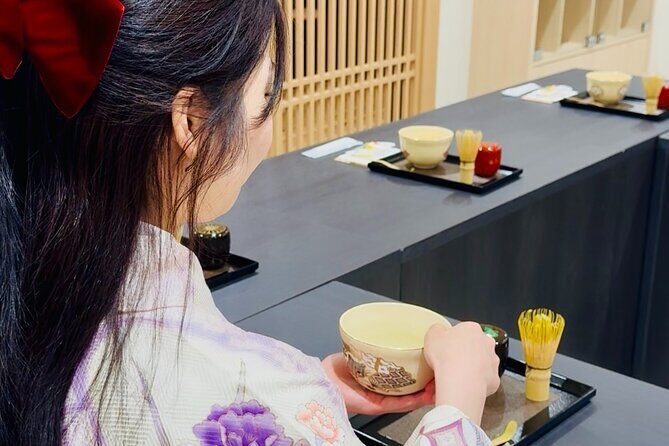
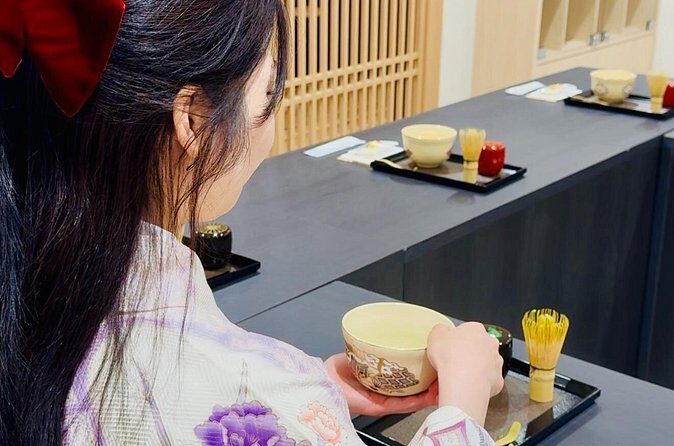
- Tea ceremony at the table: matcha, sweets, and a guided pace
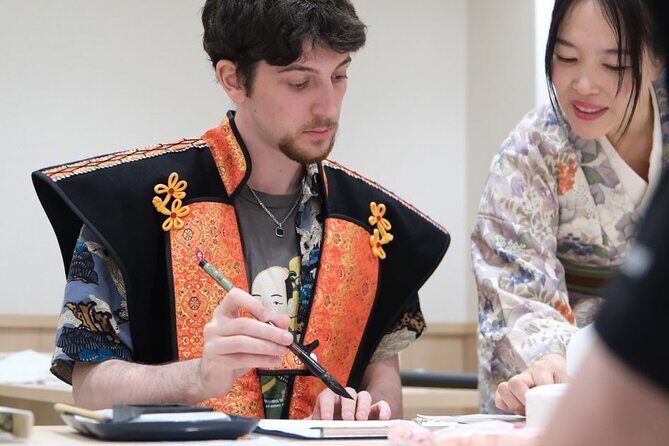
- Calligraphy at a table: create something you can take home
- Doing both together: how the hour feels practical (not rushed)
- Optional samurai extras: what you can add and what you can skip
- Logistics that keep it smooth in Osaka
- Who this experience fits best
- Should you book tea and calligraphy in Shinsaibashi?
- FAQ
- Can I do just tea ceremony or just calligraphy?
- What is included in the tea ceremony?
- What is included in the calligraphy part?
- How long does the experience take?
- Where is the meeting point?
- Is there a maximum group size?
- What tickets do I need to bring?
- Are samurai, kimono, or ninja dressing add-ons included?
- What is the cancellation policy?
Key highlights before you go
- Table seating in Shinsaibashi makes the experience feel beginner-friendly and comfortable.
- Tea master guidance keeps the pace steady and helps you avoid common mistakes.
- Matcha plus Japanese sweets are included, not an optional add-on.
- Make-and-take calligraphy means you leave with a finished piece.
- Small groups (up to 10) help the staff answer questions and help with photos.
- Samurai-themed venue extras may be on display, even if you skip paid dressing add-ons.
Shinsaibashi at the ARTY Inn: where tea and ink meet
This experience takes place in Shinsaibashi, one of Osaka’s easiest areas to get around. Your meeting point is at 2-chōme-17-3 Nishishinsaibashi, Chuo Ward, Osaka, with the activity ending back there.
What I like about this setup is the choice to do both arts in one place and at one table. You are not doing a long hop between neighborhoods, and you are not stuck translating instructions in a big crowd. The venue is built for this kind of hands-on cultural session, which helps you feel oriented fast.
Also, you get a mobile ticket, and the experience runs for about one hour. In plain terms: it fits cleanly into a day of shopping and sightseeing, and you do not need to plan a half-day around it.
You can also read our reviews of more tours and experiences in Osaka.



Tea ceremony at the table: matcha, sweets, and a guided pace
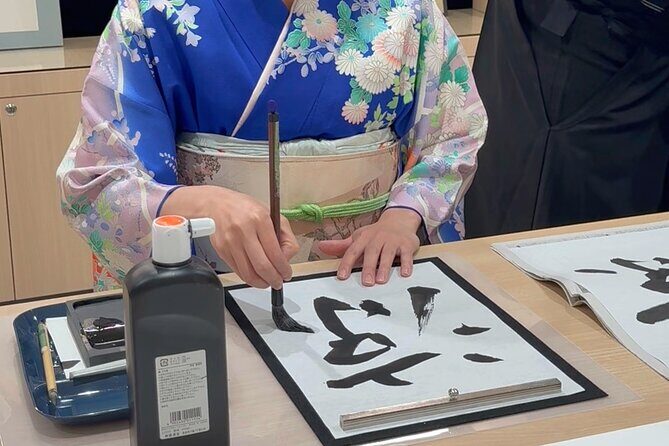
The tea ceremony part includes matcha and Japanese sweets. That matters because matcha is the star drink, but the sweets help balance the flavors and make the whole moment feel complete, not like a quick sip-and-go.
You should expect a professional tea master to guide you through what to do and what to look for. The table format is a big deal for first-timers. Traditional settings can feel intimidating if you are not used to sitting a certain way, but here you can focus on the ritual steps and the taste.
A practical tip: treat the tea ceremony as a sensory lesson, not a performance. Look closely at what you are holding, slow down for the first few sips, and notice how the sweets change the experience. That is where the hour starts to feel worth it.
Calligraphy at a table: create something you can take home
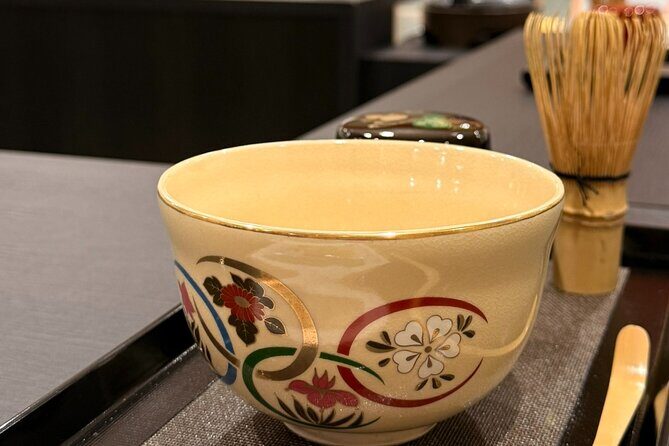
The calligraphy class is hands-on, and you create a piece you can take home. That is one of the strongest reasons to book this particular combo, because it gives you a souvenir with meaning, not just a photo.
The experience frames calligraphy as something you can learn quickly with professional guidance. You are not expected to have artistic training. Instead, you get a structure that helps you practice the basics and then produce a finished artwork.
What makes this especially good for beginners is the same table setup as the tea portion. If you have ever worried about sitting low on tatami or managing awkward angles, this approach reduces the friction. You can focus on brush control and character formation rather than the physical setup.
One more real-world point: the staff are described as attentive and friendly, including helping with photos. If you are the type who wants to remember the moment, that kind of support helps you get pictures without feeling like you are doing it while everyone else is waiting.
Doing both together: how the hour feels practical (not rushed)
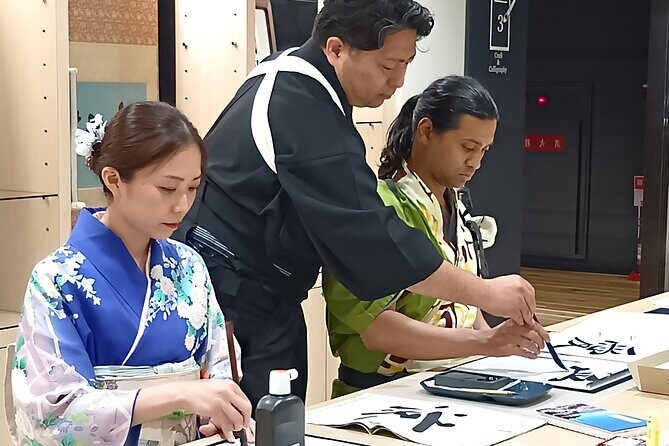
The main idea is simple: two traditions in one hour with one professional team. You can also choose to do only tea or only calligraphy if you prefer, so the package works even if you are undecided when you book.
In terms of value, the price is $22.76 per person, and the included items are the tea ceremony (matcha and sweets) plus calligraphy (create and take home). For many cultural activities, you might pay similar money and still only get one side of the experience. Here, you are getting both within a tight timeframe, which is exactly what makes it practical.
The trade-off is time. If you want to perfect your brush strokes over several sessions, one hour can only get you so far. But if your goal is a real taste of Japanese tea culture and ink work, this format is designed to deliver that in a single visit.
And because the group is capped at 10 travelers, the experience tends to feel more personal than most big-class setups. A smaller group means more chance for the staff to notice when you need a hand.
Optional samurai extras: what you can add and what you can skip
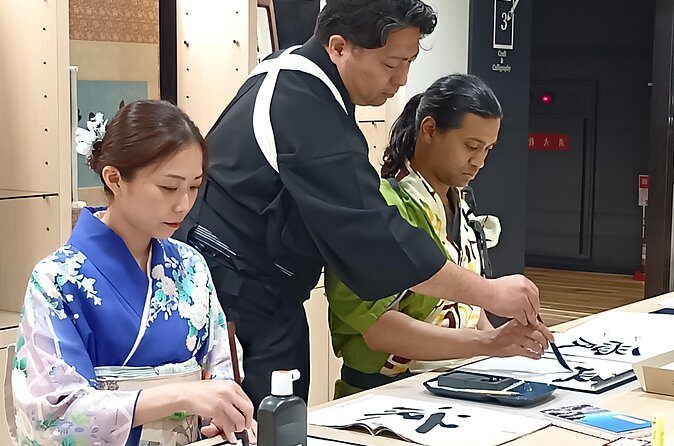
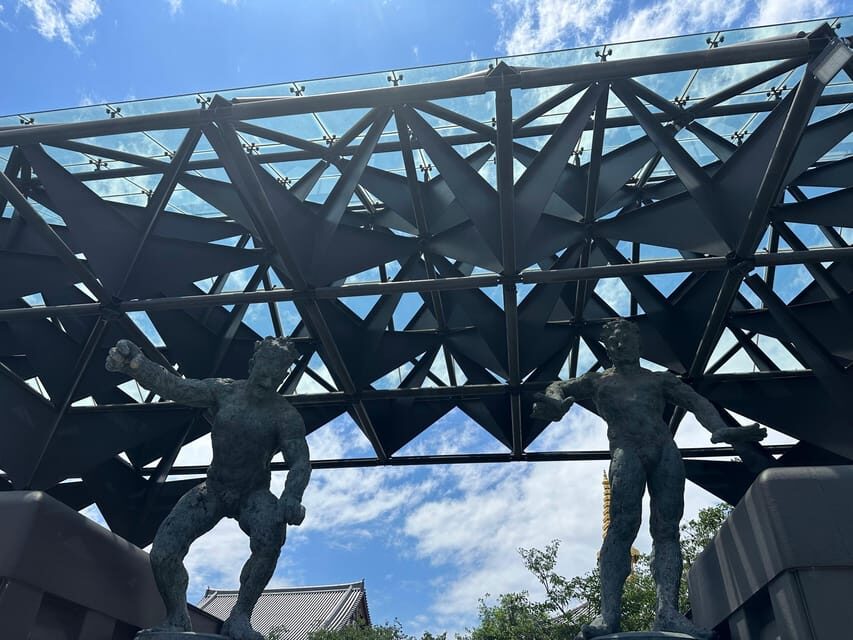
Even if you are here primarily for tea and calligraphy, the venue has a samurai theme that people notice. There is a display of samurai outfits, and that visual detail is part of why some folks describe the setting as fun and memorable.
That said, the experience data lists several optional add-ons that are not included in the base price. Examples include:
- Samurai immersive experience
- Samurai armor dressing
- Kimono dressing
- Ninja dressing
- Traditional Japanese music (listed with a yen price)
So here is the balanced way to think about it: this class gives you the core cultural activities, and the samurai element is more like a bonus atmosphere plus optional upgrades. If you want a quick, respectful cultural lesson, you can ignore the add-ons. If you want costumed photo moments, you can consider them later.




Logistics that keep it smooth in Osaka
This activity is built for easy participation. You get confirmation at booking, service animals are allowed, and it is near public transportation. Most people can participate, and the session ends back at the meeting point, which means you do not lose time figuring out where to walk next.
Duration is listed at about one hour. That short timeline is helpful if you are pairing it with other plans in Shinsaibashi, like shopping or grabbing street food before dinner. It also reduces the risk of feeling like you booked a long commitment on a day when your energy might be lower.
Finally, the group size max of 10 travelers matters for real-life comfort. You will likely spend more time actually doing the activities rather than waiting for space, and staff attention tends to be easier with fewer people in the room.
Who this experience fits best
This is a great fit if you want Japanese culture that is hands-on but not intimidating. The table format, the guided instruction, and the make-and-take calligraphy piece all point to a beginner-friendly plan.
It also works well if you:
- want something compact in Shinsaibashi
- like learning by doing instead of watching
- care about leaving with an actual crafted souvenir
- prefer a smaller group setting
If you are an expert calligrapher or tea practitioner, you might find the hour covers only a basic introduction. But as a first step, it is a smart way to get context for both arts without getting lost in details.
Should you book tea and calligraphy in Shinsaibashi?
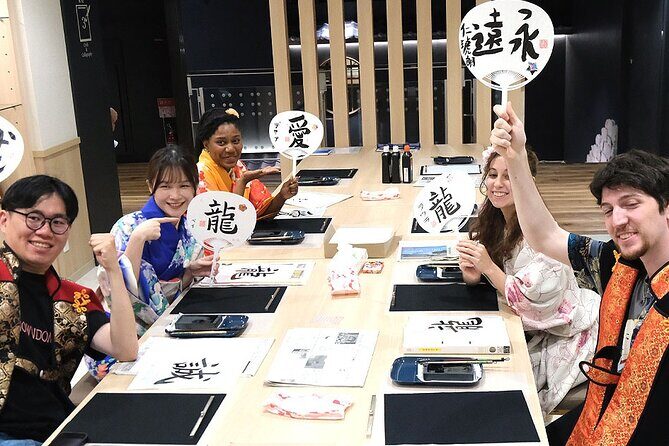
My straight take: yes, if you want a beginner-friendly cultural lesson with a tangible result. The combination of matcha and sweets plus calligraphy you take home makes the $22.76 price feel more like a complete package than a single activity ticket.
Book it especially if you are short on time in Osaka and want something you can do without planning a whole afternoon. The small group cap and staff attention (including help with photos) also make it a lower-stress choice.
Skip or reconsider if you are looking for long-form practice or deep technical training. One hour will give you a taste and a keepsake, but not mastery.
FAQ
Can I do just tea ceremony or just calligraphy?
Yes. The plan is a limited-time option where you can do both together, or choose to do only tea ceremony or only calligraphy.
What is included in the tea ceremony?
Tea ceremony includes matcha and Japanese sweets.
What is included in the calligraphy part?
You will do Japanese calligraphy, including creating artwork and taking it home.
How long does the experience take?
It runs for about 1 hour.
Where is the meeting point?
You meet at 2-chōme-17-3 Nishishinsaibashi, Chuo Ward, Osaka, 542-0086, Japan (Shinsaibashi area).
Is there a maximum group size?
Yes, the experience has a maximum of 10 travelers.
What tickets do I need to bring?
You receive a mobile ticket.
Are samurai, kimono, or ninja dressing add-ons included?
No. Samurai immersive experience, samurai armor dressing, kimono dressing, and ninja dressing are listed as not included. Traditional Japanese music is also listed as not included.
What is the cancellation policy?
Free cancellation is offered up to 24 hours in advance for a full refund. If you cancel within 24 hours, the amount you paid is not refunded.