REVIEW · OSAKA
Meet Locals and Japanese Speaking Experience at British Pub Osaka
Book on Viator →Operated by Welcome Tokyo · Bookable on Viator
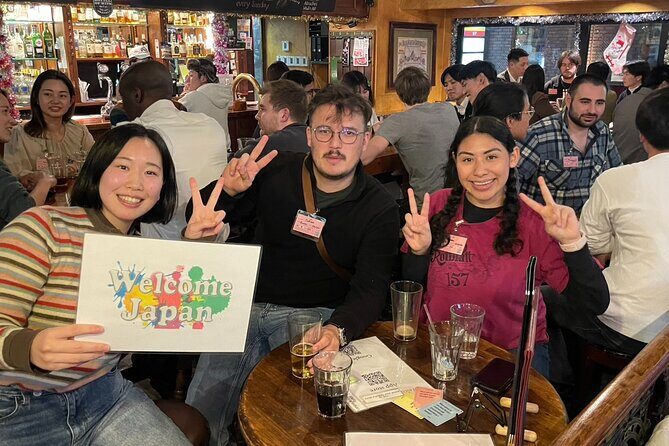
A language exchange at a pub feels more natural than a classroom. In Osaka, you’ll meet Japanese locals and foreigners living in Japan, rotate seats often, and use topic cards to keep the conversation going for about 2 hours.
I especially like the way the organizers handle mixing people. You’re grouped in small sets (3–4), staff adjust the seating so you talk to more than just the first people you meet, and you can walk away with new contacts plus useful local tips.
The main drawback: it’s held at a specific place inside a busy area (HUB Umeda Chayamachi), so if you’re late, you’ll miss some of the easiest conversation rounds. Arrive early and give yourself buffer time.
In This Review
- Key highlights you’ll feel right away
- A British Pub Language Exchange in Osaka: What the 2 Hours Really Feels Like
- HUB Umeda Chayamachi at 7:30 pm: Meeting Point and Arrival Tips
- Topics Cards and Seat-Switching: How You Meet 4–5 New People
- English and Japanese Practice Without Pressure
- What You Pay For ($30) and What You’ll Still Need to Buy
- The Osaka Local Info Advantage You Actually Get
- Who This Works Best For (And Who Should Rethink It)
- A Quick Practical Plan for Your Night
- Should You Book This Osaka Pub Meet-and-Greet?
- FAQ
- What is the meeting point for this Osaka experience?
- What time does it start?
- How long does the event last?
- Is the event ticket a mobile ticket?
- Does the $30 price include drinks or food?
- Do I need to speak Japanese to join?
- How are people grouped during the conversations?
- What is the minimum age to participate?
- Can I get a full refund if I cancel?
Key highlights you’ll feel right away
- Topic cards that help you talk even if your Japanese is rusty
- Seat-switching so you meet different people instead of getting stuck with one group
- Mixed groups (Japanese + foreigners) for real-life language balance
- A 15-minute English conversation slot to trade practice both ways
- Pay only for what you choose to drink; the $30 covers the event fees
- Strong community vibe where people sometimes continue the night for drinks
A British Pub Language Exchange in Osaka: What the 2 Hours Really Feels Like
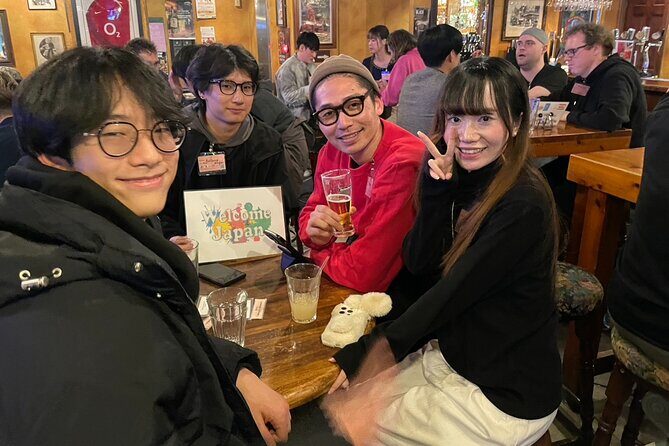
This is a casual language exchange set inside a British pub vibe in Osaka. The format is built for action, not perfection. You show up, get seated, and start talking with the help of prompts and rotation.
For $30 (all fees included), you’re buying time with real people and structured chances to speak. The event is designed so you don’t have to be good at Japanese to participate. If you can point, smile, and try a few phrases, you’ll be fine.
I like that it’s not a one-note exchange. You get the mix of Japanese locals plus foreigners living in Japan, and the topics card approach keeps things from stalling when everyone’s trying to think of what to say next.
There’s also a confidence boost factor. When the staff actively re-mix seating, you don’t have to awkwardly hunt down new conversations yourself. That matters when you’re traveling alone or you don’t know anyone in Osaka yet.
And it helps that the event has a 4.9 rating (21 reviews) with 100% recommended—not a guarantee of fit, but a good sign you’re stepping into something well-run.
You can also read our reviews of more drinking tours in Osaka



HUB Umeda Chayamachi at 7:30 pm: Meeting Point and Arrival Tips
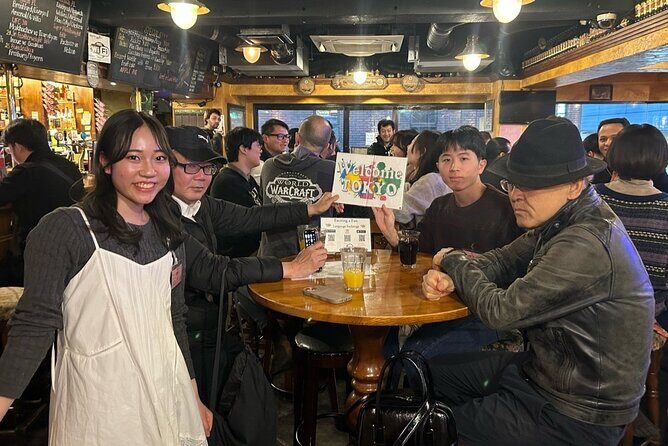
The meeting point is HUB Umeda Chayamachi, starting at 7:30 pm. It’s near public transportation, which is what you want for a night activity—easy to reach, easy to return to when you’re done.
Here’s the practical advice I’d follow: show up early enough to find the right entrance, check in without rushing, and get a drink before the conversation starts. One of the most common ways these events go sideways is simple—people lose minutes locating the place, especially when maps and station exits feel less precise than expected.
Once you check in at the reception, you can buy a drink from the store area right there. Then the event moves into seating and conversation rounds with the topic cards ready for you.
If you’re coming from another day trip, give yourself buffer time. Osaka trains can be quick, but getting from the station to the exact pub can still take longer than you expect when you’re carrying bags and reading signs.
Bring your phone for the mobile ticket confirmation. You’ll want the screen ready at check-in.
Topics Cards and Seat-Switching: How You Meet 4–5 New People
This is the part that makes the event more fun than the typical standing-around “language swap.” The night is set up so you change seats and meet different people repeatedly.
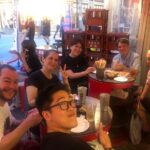
The structure is like this: when the event begins, staff prepare seats per person and hand you topic cards. Then the organizers split attendees into small groups of about 3–4 people per group, mixing Japanese locals with foreigners.
After that, staff change seats so you get a chance to speak with more people than just the first group you land in. The goal is at least a couple of conversation rounds beyond the initial meet. In practice, it means you’re much more likely to talk to multiple people and hear multiple perspectives in one night.
You’ll also find that each seat change restarts the conversation with a new set of prompts. That’s why the topic cards matter. Even if you freeze when you hear a question, you can anchor the talk to the prompt and keep moving.
What I like most: the group swapping reduces awkwardness. You’re not stuck trying to force small talk for the entire event with the same three people. You get a fresh start each round, which makes the whole thing feel lighter.
And since the event brings together locals from across Japan and foreigners living in Japan, your conversations can cover places you wouldn’t naturally compare on your own. Expect suggestions on what to see, where to eat, and what to plan next—especially from people who’ve lived the route you’re about to take.
English and Japanese Practice Without Pressure
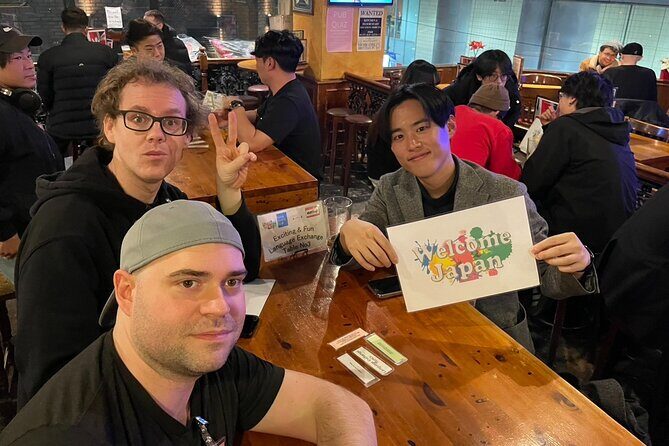
You don’t need to master Japanese to join. The event is meant to create opportunities to use the language you have—and to help you build confidence through short, manageable conversations.
There’s a specific schedule element built in: there’s a 15-minute English conversation segment. That’s important because it levels the playing field. Even if your Japanese is limited, you can still contribute and get real listening practice in the English portion.
During the rest of the time, the mix of Japanese locals and foreigners living in Japan naturally creates a back-and-forth environment. People often trade languages without turning it into a formal lesson. You can practice Japanese phrases you already know, or use simple ones as you test what’s understandable.
The best part is you get feedback simply by being in the conversation. If a phrase doesn’t land, you can try again a minute later with a new prompt or new person. That quick retry loop is exactly how speaking practice should feel.
If you’re worried you’ll run out of things to say, lean on the topic cards. Don’t treat them like a script. Use them like a trampoline—jump off the prompt, then follow where the other person’s answer takes you.
Also, don’t stress about sounding perfect. The event’s whole design suggests the win condition is participation and trying. If you can ask basic questions and share small details about where you’re going and what you like, you’ll get plenty of conversation back.
What You Pay For ($30) and What You’ll Still Need to Buy
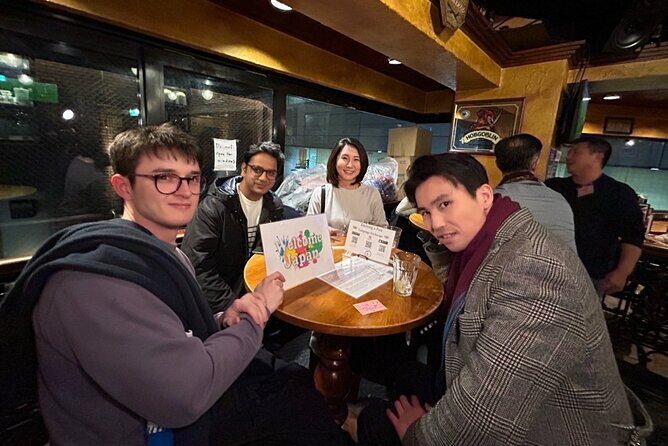
The price is $30.00 per person, and it includes all fees and taxes. That’s the value angle: you’re not paying extra for the event structure, the seat management, and the topic-card setup. You’re paying for the experience itself.
What’s not included is alcohol, food, and drinks. You’ll need to buy what you want once you’re there. That’s normal for pub-based events, and it gives you control—coffee, soda, beer, whatever fits your budget.
In terms of planning, think of this as an “hourly conversation cost.” It’s about 2 hours, so the cost breaks down into a few short conversation rounds plus the 15-minute English slot. For the access to multiple locals in one evening, it’s a practical deal.
One more small planning note: because the pub is part of the experience, your spending will depend on what you order. If you want to keep costs tight, set a drink limit before you arrive.


The Osaka Local Info Advantage You Actually Get
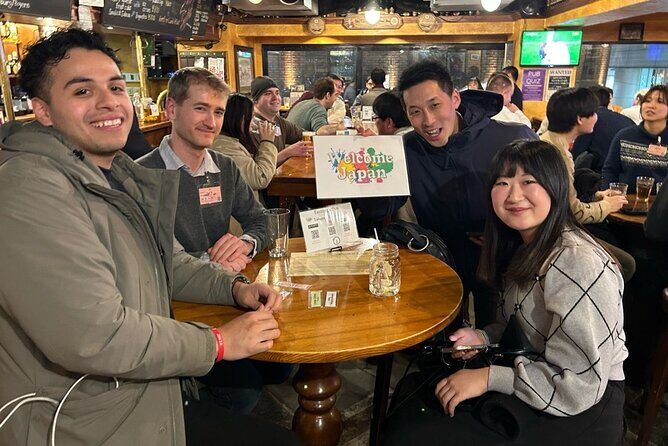
Language exchange is the headline. But the useful payoff is local knowledge. Because you’ll talk to Japanese locals from different areas and also hear from foreigners living in Japan, the advice you collect tends to be practical.
This matters because the best trip improvements are often small: which train line is less annoying at night, what neighborhoods feel easiest to walk, or which sights are better earlier in the day. Even if you already researched, local comparisons can save you time and help you choose what to skip.
You can also make real friends, not just chat once. The event format encourages exchanging contact information, and people sometimes form groups with like-minded members.
That social thread is part of why this experience can become memorable. If the night goes well, you might find yourself continuing the conversation over a second stop—or at least connecting with people who know how you should plan your next days.
Just keep your expectations flexible. The event provides the structure for meeting. The follow-on plans depend on who you click with that evening.
Who This Works Best For (And Who Should Rethink It)
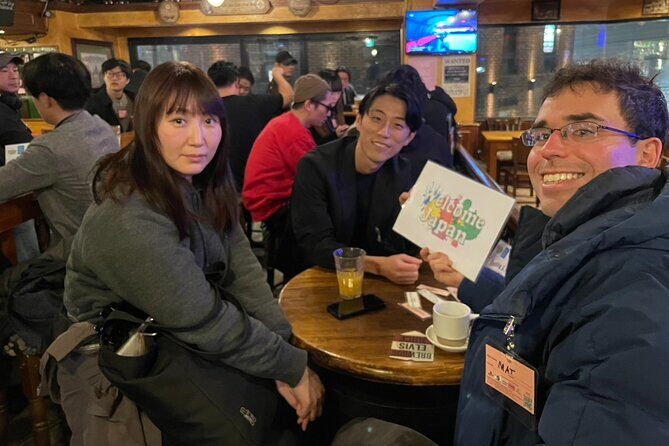
This is best if you want to do more than “see Osaka.” You want to meet people and practice speaking in a real setting.
It’s also a strong fit if you’re traveling solo. Seat-switching plus small groups means you’re not expected to magically entertain yourself for two hours. You’ll be pulled into conversation repeatedly, which makes it easier to relax.
It can also work well for couples or friends who want to branch out. Just be aware you’ll likely spend time rotating between multiple groups, so plan to share what you learn with each other afterward.
The one clear limitation: it’s age over 20. If that doesn’t fit your group, you’ll need another activity.
If your goal is a structured grammar lesson, this may not satisfy that. The event is for conversation and exchange—guided, but still spontaneous.
And if you hate noise and social mixing, a pub setting might feel too stimulating. That said, it’s still a small-group setup, not a giant lecture hall experience.
A Quick Practical Plan for Your Night
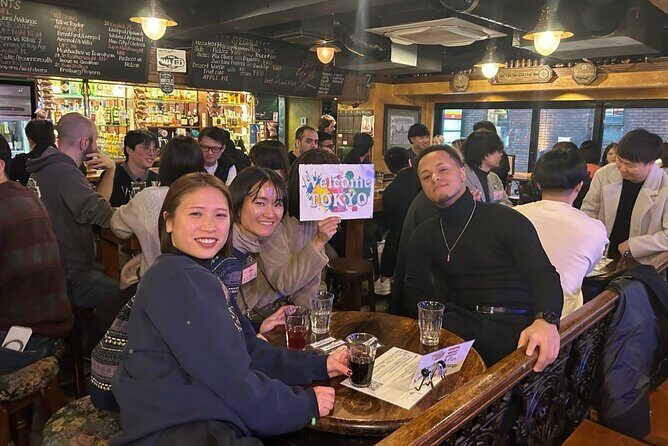
Here’s how to set yourself up for success.
Start with arrival. Aim to get there early enough to check in comfortably and buy a drink without pressure. Then keep one mental rule: every time you get moved to a new seat, treat it like a reset, not a continuation. Ask a new question and use the topic card to start strong.
Also, decide what you want from the Japanese practice. Do you want to ask for directions? Share what you like? Talk about Osaka and where you’re headed next? If you choose one or two goals, you’ll feel less scattered.
Finally, keep an easy attitude toward mistakes. Speaking is mostly about trying, adjusting, and trying again. The event format gives you the repetition you need without making it feel like homework.
Should You Book This Osaka Pub Meet-and-Greet?
I’d book it if you want a low-cost, real-people night in Osaka. The structure—topic cards, mixed small groups, and staff-assisted seat rotation—means you’re likely to talk to multiple locals and not just end up in one conversation loop.
It’s also a good choice when you’re brand new to Japan and want the social shortcut. The event handles the hard part: getting you into conversation with the right mix of people.
Skip it only if you know you won’t enjoy pub-style social settings or if you’re expecting a formal teaching program. This is conversation first.
If you do book, go in with a relaxed plan: show up early, bring your phone for the mobile ticket, and be ready to use even basic Japanese phrases. You’ll get more out of the evening when you treat it like practice and connection, not a test.
FAQ
What is the meeting point for this Osaka experience?
The experience meets at HUB Umeda Chayamachi in Osaka.
What time does it start?
It starts at 7:30 pm.
How long does the event last?
The duration is about 2 hours.
Is the event ticket a mobile ticket?
Yes, you receive a mobile ticket.
Does the $30 price include drinks or food?
No. Alcoholic beverages and food are not included. You’ll buy your own drink and any food you want at the venue.
Do I need to speak Japanese to join?
No. You don’t need Japanese mastery to participate. The event is designed to help you talk and use phrases you already know.
How are people grouped during the conversations?
Staff split attendees into small groups of about 3–4 people, mixing Japanese locals and foreigners. Seats are changed so everyone has multiple chances to speak.
What is the minimum age to participate?
Participants must be over 20 years old.
Can I get a full refund if I cancel?
Yes. You can cancel up to 24 hours in advance for a full refund. If you cancel less than 24 hours before the start time, the amount paid is not refunded.