REVIEW · OSAKA
Nara 8hr Private Tour – Osaka DEP. with Licensed Guide
Book on Viator →Operated by Japan Guide Agency · Bookable on Viator
Nara is better when you skip the map work. This private, licensed day trip from Osaka lets you focus on temples, shrines, deer, and calm gardens without stressing about directions or language. You’ll build a plan with your guide from a set of must-see sites, either from the Nara Park classics or deeper temple and museum options.
What I like most is the English-speaking guide and the fact that it’s customizable. Your guide leads the way, sets the pace, and keeps you from feeling like you’re just hopping between crowd magnets.
One thing to consider: admission tickets are not included for many major stops, and since you’re choosing 3–4 sights, you’ll want to think ahead about what’s worth paying for versus what’s free.
In This Review
- Key things to know before you go
- Why a private Nara day feels calmer than a checklist tour
- From Osaka to Nara: pacing, pickup, and choosing 3–4 sights
- Todai-ji and Nara Park: deer, scale, and your first wow
- Kasuga Taisha and Mt. Wakakusayama: shrine calm plus hilltop views
- Horyu-ji: stepping into one of Japan’s oldest temple stories
- Kofuku-ji, Yakushi-ji, Shin-Yakushi-ji, and Toshodai-ji: temples for the detail lovers
- Naramachi and museum stops: where Nara slows down
- Gardens like Isuien and Yoshikien: the calm break in your itinerary
- Price and value for a licensed private guide
- Should you book this Nara private tour from Osaka?
- FAQ
- How long is the Nara private tour from Osaka?
- What is the price per person?
- What does the tour include?
- Are admission tickets included?
- Can I customize which sights I visit?
- Does the guide speak English?
- Is pickup available from Osaka?
- Is this a private tour?
- Are service animals allowed?
- Is free cancellation available?
Key things to know before you go
- Licensed, government-approved guide who handles navigation and explains what you’re seeing
- Choose 3–4 sights from a larger menu, instead of being rushed through everything
- Meet-up with pickup from Osaka (within a designated area), so you’re not starting the day alone
- A walking-style day with about 30 minutes per stop, plus time to breathe and regroup
- Great for theme travelers: pick temples, gardens, old town, or museums based on your mood
Why a private Nara day feels calmer than a checklist tour
Nara can be deceptively simple until you’re standing there with a phone battery at 18%. This kind of private tour fixes the main pain point: you don’t have to figure out routes, translations, or which entrance is the one that actually saves time.
You’ll also like the rhythm. The plan is built around a private group experience where your guide controls the flow, and each stop is kept to around 30 minutes. That matters because it reduces the feeling of being “on rails,” especially with temple visits where you might want an extra minute to look closer at carvings or step back for a wider view.
And yes, deer are part of the story. Nara Park is famous for a reason, but the bigger payoff is that your guide can help you connect the deer-and-park scene to the religious and cultural backbone of the area.
In the feedback, guides like Noriko and Hiro get praised for being organized and for adding helpful touches that make the day feel human, not mechanical. That lines up with what you want from a private guide: calm guidance plus context.
You can also read our reviews of more guided tours in Osaka

From Osaka to Nara: pacing, pickup, and choosing 3–4 sights
This is an 8-hour private experience that starts in Osaka and is designed around walking and light touring. You’ll have a meet-up that includes pickup offered, and it’s handled on foot within a designated Osaka area. That’s useful if you’re trying to avoid the hassle of public transportation timing while staying flexible once you arrive.
The biggest planning advantage is that you’re not forced into a fixed itinerary. You choose 3–4 sights from a menu that includes temples, shrines, gardens, and museums. So if you love big name landmarks, you can lean classic. If you’d rather slow down and look at details, you can swap in more focused stops.
To make your day work well, I’d think in terms of themes:
- Spiritual highlights: Todai-ji, Kasuga Taisha, plus one or two other major temples
- Old capital and Buddhist arts: museum time paired with temple visits
- Peace breaks: gardens and old-town streets to reset your legs and your brain
Because each stop is roughly 30 minutes, you also get a built-in choice: go broad across Nara’s icons, or go deeper into fewer places. It’s a good setup for couples, families who want a smoother pace, and solo travelers who want structure without feeling boxed in.
Todai-ji and Nara Park: deer, scale, and your first wow
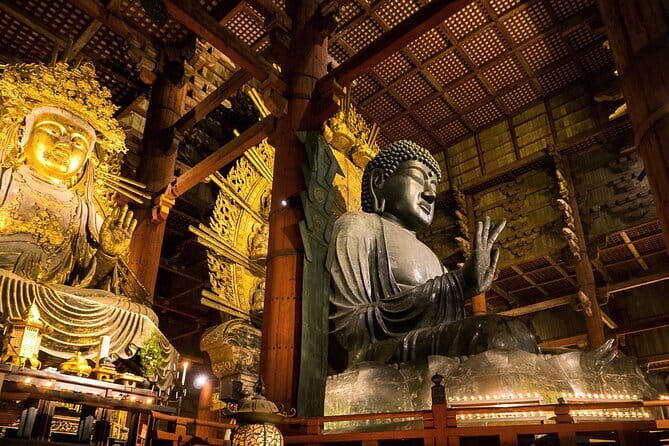
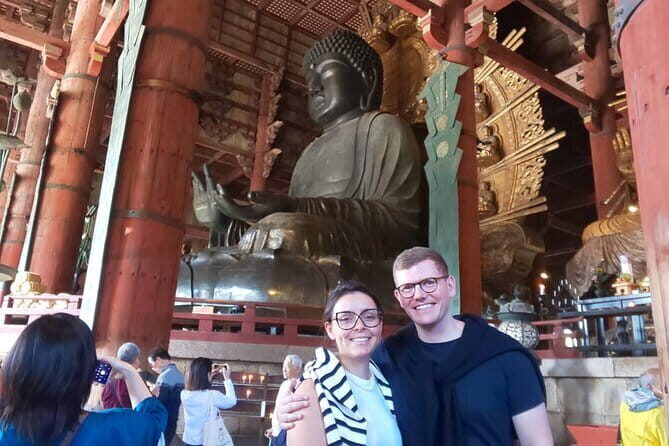
If Nara is your first stop in Japan’s temple world, Todai-ji is the natural opener. This landmark temple is one of Japan’s most important historic sites, and it was constructed in 752. Even when you’re not studying architecture, the scale of Todai-ji tends to hit you fast. Your guide can also point out what to notice so it feels more like a living story than just a big building.
Then comes Nara Park, where the park setting and temple concentration overlap. The park is central to many major attractions and has been around since 1880. The most practical benefit here is that Nara Park is a “hub” for the day, so you’ll likely feel less time wasted moving from one area to another.
One small consideration: Nara Park is popular. It’s still worth it, but you’ll enjoy it more if you’re ready for short bursts of crowd energy and then the calm that follows once you move back into temple lanes.
If you like having your day shaped by what you care about, this is where the private aspect pays off. Your guide can steer the order and timing of your first big hits so you’re not only stuck in the busiest moments.
Kasuga Taisha and Mt. Wakakusayama: shrine calm plus hilltop views
Next up is Kasuga Taisha, one of Nara’s most celebrated shrines. It’s dedicated to a deity said to protect the city, and it has strong ties to the timeline of Japan’s early capital era. The emotional tone here often feels different than Todai-ji. Expect a more shrine-like atmosphere: slower, more reverent, and usually easier to appreciate at a walking pace.
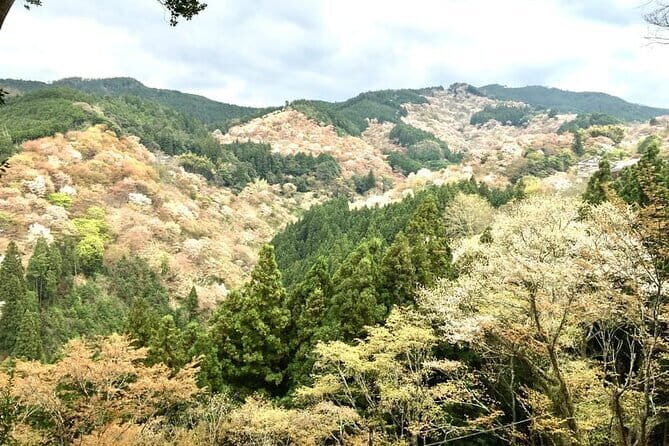
Then, if you want the view and the “Nara from above” feeling, ask about Mount Wakakusayama (Mt. Wakakusayama). It’s about 350 meters tall and sits right behind the park area between Todai-ji and Kasuga Taisha. That location is exactly why it works as part of a curated day: you’re close to major sites, but you’re also getting a breather from the busiest streets.
A practical point: Mount Wakakusayama is an optional “add-on” style stop here, and admission may be required. If you’re going with older family members, or anyone who has limited walking tolerance, it’s worth confirming your comfort level with your guide before committing. (The overall tour is described as walk-focused, so plan accordingly.)
Horyu-ji: stepping into one of Japan’s oldest temple stories
If you’re the type who likes earlier chapters of history, Horyu-ji is a strong pick. It’s associated with Prince Shotoku and dates back to 607, which makes it one of the country’s oldest temples. It’s also tied to Buddhist history at a foundational level in Japan.
This stop can be a great contrast to Todai-ji. Where Todai-ji is about monumental scale and a later “great eastern temple” identity, Horyu-ji often feels like you’re visiting something that has been part of the landscape for ages, even if the details you see change over time.
As with other paid stops, you’ll likely want to budget for admissions (many major temples here are listed as not included). If you want maximum value, choose the few sites that matter most to you, rather than trying to check off every famous name.
You can also read our reviews of more private tours in Osaka

Kofuku-ji, Yakushi-ji, Shin-Yakushi-ji, and Toshodai-ji: temples for the detail lovers
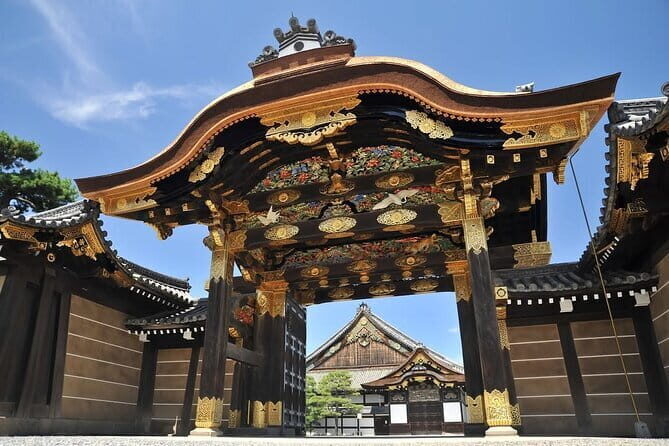
This is where Nara becomes more than a photo stop. The tour includes several major temple options, each with different origin stories and visual styles.
Kofuku-ji is tied to the Fujiwara clan, which was powerful during the Nara and Heian periods. The family-temple angle is useful because it helps you understand why temples weren’t only spiritual spaces; they were also tied to influence, patronage, and political life.
Then you have Yakushi-ji, built in the late 7th century for the recovery of an emperor’s sick wife. Yakushi-ji is known for a strictly symmetric layout, so it rewards careful looking. Symmetry can feel “dry” on paper, but in person it’s often impressive because your eye naturally organizes itself around the design.
A companion option is Shin-Yakushi-ji, founded during the Nara period by an empress for the sake of an ailing emperor. It’s devoted to Yakushi Buddha, the patron of medicine in Japanese Buddhism. This is a good choice if you want the emotional thread of illness, healing, and devotion woven across related sites rather than hopping randomly.
Finally, Toshodai-ji links Nara’s Buddhist development to a specific figure: a Chinese priest named Ganjin, invited to Japan to train priests and improve Buddhism. If you’ve ever wondered how Buddhism shifted as it moved across countries, this kind of stop helps connect the dots.
A drawback to watch: with multiple temple choices, it’s easy to overcommit. Since your private plan is 3–4 sights, you’ll get more out of your day if you pick temples with distinct stories rather than adding too many that blur together.
Naramachi and museum stops: where Nara slows down
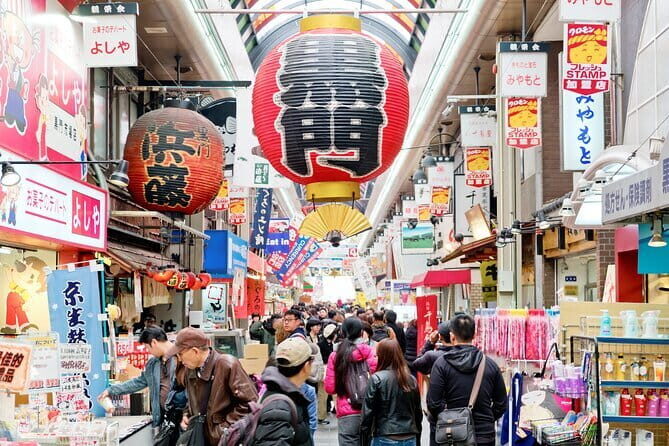
Not every great Nara moment is a shrine gate. The tour also offers a traditional neighborhood stop in Naramachi, described as the former merchant district where traditional residential buildings and warehouses are preserved and open to the public. This is a smart “reset stop” because it shifts the day from sacred structures to everyday historical streets.
If you want a break from walking temples, consider museum time. Nara National Museum focuses primarily on Japanese Buddhist art and includes exhibitions that can make temple details more legible once you’ve actually seen the structures outside. And Heijo Palace Museum covers the former capital area, with the Heijo-kyo palace extending about one kilometer wide and one kilometer long during the Nara period. Even if you only spend about 30 minutes, museum stops can turn your day from impressions into understanding.
The consideration here is simple: museums can feel like slower pacing inside a day that already has temples and shrine walks. If you’re tired, pick one museum max, and use it as a way to sit down and recharge.
Gardens like Isuien and Yoshikien: the calm break in your itinerary
Two of the options here are Japanese gardens: Isuien and Yoshikien.
Isuien is known for using elements of the surrounding scenery as part of the garden design, including borrowed scenery connected to Todai-ji’s Nandaimon gate and Mount Wakakusayama. That design choice is the point: you’re not just looking at a garden. You’re watching how the garden frames the larger Nara setting.
Yoshikien is a pleasant garden in central Nara and is named after the Yoshikigawa River. It’s built on the site of Kofukuji’s former priests’ quarters, which gives it an added “layers of time” feeling.
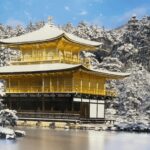
This is also the kind of stop where private guides can shine. One guide, Kaeko, received strong praise for the peace and tranquility created during a garden walk, described by guests as the Silver Pavillion gardens. Even without locking into that exact reference, the takeaway is clear: gardens are your best tool for stepping away from crowd tempo.
If you’re the type who wants a day that feels like a story with quiet chapters (not only action), plan at least one garden or old-town block.
Price and value for a licensed private guide
At $198.72 per person for an 8-hour private tour, the price isn’t “cheap.” It’s in the middle of the private-tour world where you’re paying for a real guide, not just transportation. The value comes from what you don’t have to do: navigate, translate, decide which stop is worth your time, and keep everyone moving in a sensible order.
This tour also includes:
- a government licensed guide
- the flexibility to pick 3–4 sights
- pickup offered in the Osaka area and meet up within a designated area
- a mobile ticket
- private-only participation, meaning it’s just your group
When I think about value, I compare it to the cost and stress of trying to do Nara alone while also buying multiple admissions and figuring out timing. If you’re going to pay for temple tickets anyway, a licensed guide becomes more than “nice to have.” It’s what helps your money turn into understanding.
Also, the tour is described as having group discounts, which can help if you’re traveling as a family or small group.
One final practical note: since admissions are not included for many stops, build a small budget cushion. The guide can help you decide what’s most worth paying for based on your priorities.
Should you book this Nara private tour from Osaka?
Book it if you want a Nara day that feels controlled by you, not by transit schedules or map confusion. It’s especially worth it if you care about context (temple origins, shrine purpose, how the old capital fits together) and you want an English-speaking licensed guide who can keep your pacing comfortable.
Pass or at least adjust expectations if you’re hoping for a full “hit every landmark” marathon. This experience is designed for 3–4 sights, with time kept reasonable. That’s a feature, but it means you’ll leave some famous things for another trip.
If you want the smoothest experience, pick stops that match your mood: classic Nara Park and Todai-ji for the big first hit, then one deeper temple cluster or a museum/garden reset. Done right, this is a day where you actually remember what you saw, not just where you walked.
FAQ
How long is the Nara private tour from Osaka?
It’s listed as approximately 8 hours.
What is the price per person?
The price is $198.72 per person.
What does the tour include?
It includes a government licensed guide, a customizable private tour of 3–4 sights you choose, and a meet up with the guide on foot within a designated area of Osaka. Mobile ticket is also mentioned as a feature.
Are admission tickets included?
Admission tickets are not included for most stops listed, including Todai-ji and several temples. Nara Park and Kasuga Grand Shrine are listed as free, but many others are not.
Can I customize which sights I visit?
Yes. The tour is described as customizable, focused on 3–4 sights of your choice from the available options.
Does the guide speak English?
Yes. The tour description says there are no language barriers with an English-speaking guide.
Is pickup available from Osaka?
Pickup is offered, and meet up with the guide is described as on foot within a designated area of Osaka.
Is this a private tour?
Yes. It’s a private tour/activity, and only your group will participate.
Are service animals allowed?
Yes, service animals are allowed.
Is free cancellation available?
Yes. You can cancel up to 24 hours in advance for a full refund, based on the experience’s local time.