REVIEW · OSAKA
Osaka Castle & Temple Walking Tour with Multilingual Audio Guide
Book on Viator →Operated by N.E.C.O. Walking Tour · Bookable on Viator
Two icons, one tidy walking route. You get Shitennoji’s Central Complex plus Osaka Castle’s Main Tower viewpoints, guided by a local host and supported by a QR-stream audio guide in English, French, Spanish, German, Dutch, and Japanese. I love the small-group limit and the way you can switch languages mid-walk. One watch-out: you’ll be on your feet for nearly four hours, and the tour depends on good weather.
A big plus is the host’s quick intro in simple English, then the audio does the heavy lifting when you want more detail. The free WiFi near the host makes it easier to stream your smartphone audio, and the Central Complex admission at Shitennoji is included.
In This Review
- Key things to know before you go
- Osaka’s temple-and-castle story in one tight route
- Meeting at Tennōji Station and how the timing actually works
- Chausuyama in Tennoji Park: three spots, audio at two
- Isshinji’s Sanzenbuddha Hall: statues in a focused 10 minutes
- Entering Shitennoji Central Complex: pagoda and Golden Hall close-up
- From Shitennoji to Osaka Castle Park: a 5-minute subway hop
- Osaka Castle Park viewpoints: where the stories meet the skyline
- Audio guide and QR codes: how to use it without wasting time
- Your local host matters: AJ Kajiiwara and the power of good storytelling
- Price and value: is $35.77 a fair deal?
- Should you book this Osaka Castle and Temple walking tour?
- FAQ
- FAQ
- How long is the tour?
- Where do I meet and where does the tour end?
- What time does the tour start?
- What languages are available for the audio guide?
- Do I need to pay for Shitennoji entrance?
- Is the subway fare included between Shitennoji and Osaka Castle Park?
- What’s included if it rains?
- Is goshuin stamp collecting included?
- What’s the cancellation policy?
Key things to know before you go
- Up to 5 people means a calmer pace and more time for your questions and photos
- QR-code audio in 6 languages (plus Japanese) you can stream via smartphone
- You enter Shitennoji and see the layout up close, not just from the gate
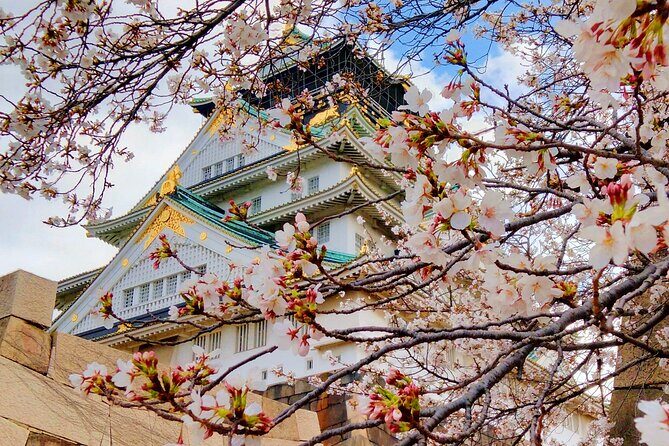
- Photo-focused Osaka Castle Park time with host-led viewpoints
- Quick subway hop on the Tanimachi Line keeps the day moving
- Rain poncho and bottled water are included to help you stay comfortable
Osaka’s temple-and-castle story in one tight route
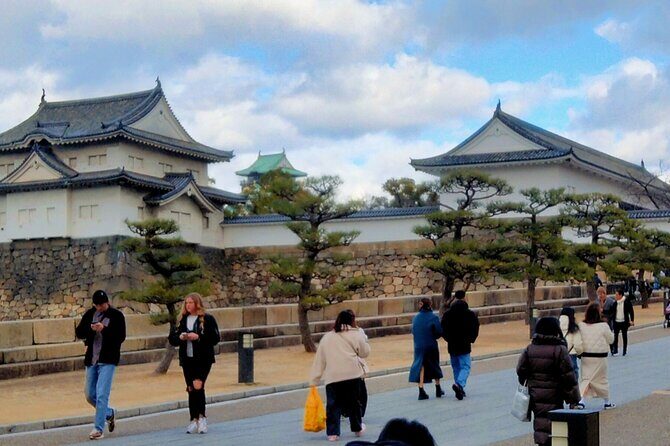
Osaka can feel fast and loud, but this tour carves out a calmer slice of the city. You’re pairing two places that tell different sides of Japan: religious tradition at Shitennoji, then political power and civic identity at Osaka Castle.
What I like most is the way the tour uses the audio guide to add context while you’re walking. Instead of stopping every five minutes, you get short, on-the-spot explanations from the host, then deeper background through the multilingual guide when you want it.
It’s also practical. You’re not just “seeing” landmarks. You’re learning how to look—where to stand for the best angles, what to notice in the temple space, and how the castle grounds fit into the wider scene.
You can also read our reviews of more walking tours in Osaka

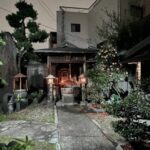

Meeting at Tennōji Station and how the timing actually works
You start at the JR Ticket Office at Tennōji Station (10-45 Hideninchō, Tennoji Ward). The start time is 8:30 am, and the tour runs about 3 hours 45 minutes.
The plan moves in a sensible order: begin in the Tennoji area, then head to Shitennoji, and finish at Osaka Castle Park. There’s a short subway transfer on the Tanimachi Line—around 5 minutes—from Shitennojimae-Yuhigaoka Station to Yanimachi-4chome Station, where the tour ends in front of the station.
One cost note that matters: the metro fare for the Tanimachi Line isn’t included. It’s listed at 190 JPY, so it’s smart to have cash or an easy payment method ready.
And because the group is capped at five, you’re less likely to get dragged along at a pace that’s too quick for temple photography and slow wandering.
Chausuyama in Tennoji Park: three spots, audio at two
Stop 1 is Chausuyama, tied to Tennoji Park. You’ll visit three spots in that area, with detailed audio guidance at two of them and free admission.
This first stop is a good warm-up. It’s not a “big monument” moment yet. Instead, it sets the tone: you start learning how the ground-level space in this part of Osaka fits into the story of temples and sacred sites.
If you’re a photo person, this is also where you can practice your rhythm. Tennoji Park area viewpoints can be easier before the castle grounds get crowded, so I’d use this time to get comfortable with the route and your camera settings.
For people who hate rushed starts, this is a gentle opener: around 15 minutes with a light physical load.
Isshinji’s Sanzenbuddha Hall: statues in a focused 10 minutes
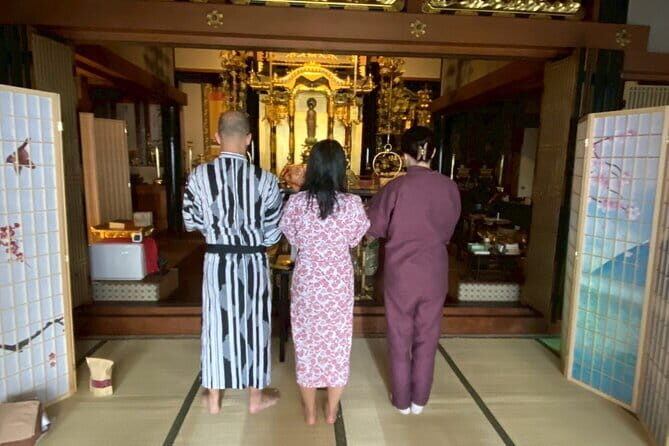
Stop 2 is Isshinji Temple, specifically the Sanzenbuddha Hall. You’ll see a number of Buddhist statues there, in about 10 minutes, and admission is free.
This is a smart “change of pace” stop between the park area and the main temple visit. The statues at Sanzenbuddha Hall are meant to be looked at closely, but you’re not trapped here for an hour. You get the essentials, then you move on.
Because time is tight, I suggest you keep your phone ready to use the audio guide without digging through apps. When you’re hearing explanations in your chosen language, it’s easier to notice what makes the hall feel special.
Also, don’t expect a sprawling complex. The goal here is a quick, meaningful hit of Buddhist art and symbolism before you go inside Shitennoji.
Entering Shitennoji Central Complex: pagoda and Golden Hall close-up
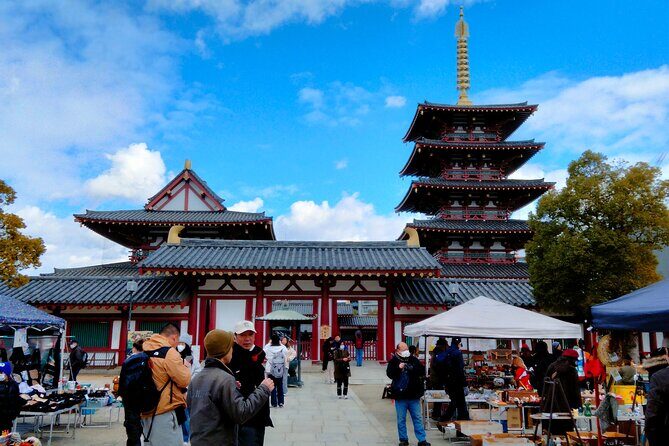
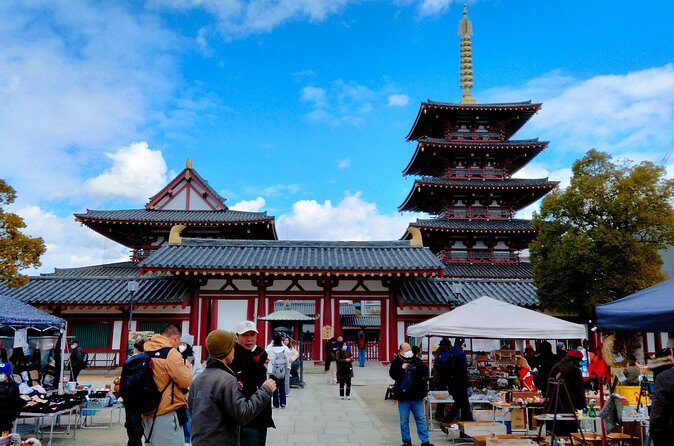
Stop 3 is the heart of the tour: Shitennoji. You’ll enter the Central Complex, spend about 30 minutes inside, and the admission fee for the Central Complex is included.
This part matters because it changes the whole experience. Temple tourism can turn into a photo-from-the-steps routine. Here, you’re walking within one of Japan’s older temple spaces and learning the traditional layout—so you understand what you’re looking at.
Two specific sights get your attention as you move through: the Five-Story Pagoda and the Golden Hall. The best angle isn’t just about getting a clean picture. It’s about how the buildings relate to each other in the space, which is why the host intro plus audio commentary works well.
One more practical tip: this is the section where you’ll benefit most from slowing down for audio. If you rush the listening, you’ll miss the “why” behind the layout. If you take your time, the Central Complex starts to click.
You can also read our reviews of more guided tours in Osaka



From Shitennoji to Osaka Castle Park: a 5-minute subway hop
After Shitennoji, you take the Tanimachi Line subway. The train ride is about 5 minutes, and then you arrive near the start of Osaka Castle Park.
This short transfer is a relief. It prevents the day from becoming a long slog on sidewalks, and it keeps your energy for the final segment, which is the longer walking period.
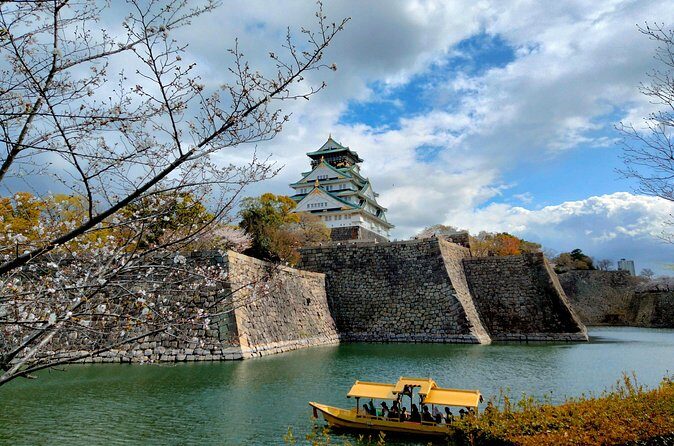
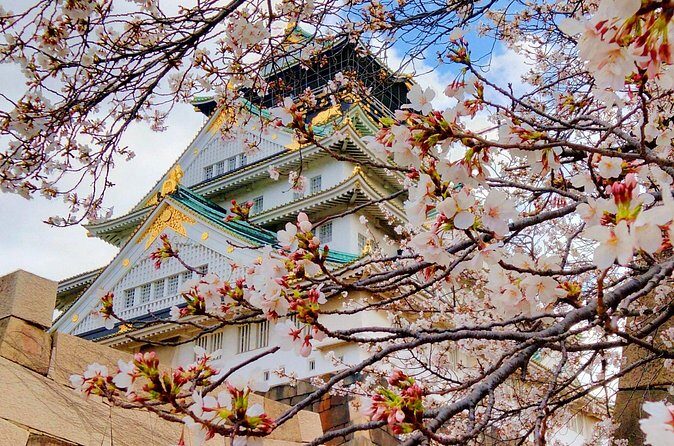
When you come out into Osaka Castle Park, you’re shifting from sacred religious space to a very public, civic landmark. The lighting and sightlines also change fast here, so give yourself a moment to stand still and orient. Your host will steer you toward key viewpoints and photo spots of the exterior of Osaka Castle’s Main Tower.
Osaka Castle Park viewpoints: where the stories meet the skyline
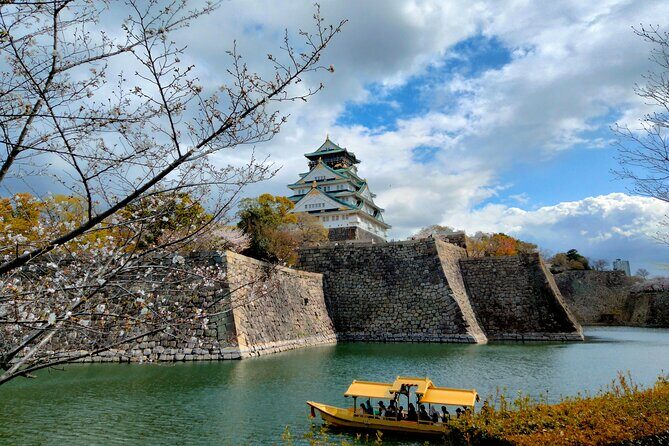
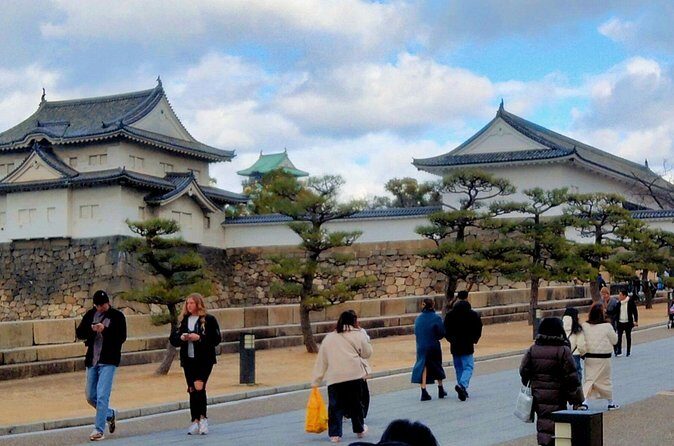
Stop 4 covers about two hours at Osaka Castle Park, with free admission. The audio guide adds in-depth stories, while your local host points you toward key viewpoints and the best photo spots of the Main Tower’s exterior.
What I like about this segment is that you’re not standing in one spot waiting for the right shot. The host leads you to different angles, which helps you capture the castle in context—not just as a single front-facing postcard.
Also, the castle at this stage is about perspective. The “best view” isn’t only height or symmetry. It’s the way surrounding elements frame the Main Tower, and how the grounds stretch behind you.
If you care about photos, this is the time to be extra intentional. Keep moving at the host’s pace, but stop often enough to let your eyes adjust before snapping. In this part of the day, small changes in position can make a big difference in what fills the frame.
Audio guide and QR codes: how to use it without wasting time
This tour’s standout tech is the multilingual audio guide. The guide is created by locals and available in English, French, Spanish, German, Dutch, and Japanese. You access it by scanning a QR code at key locations.
There’s also free WiFi near the host, so you can stream the audio on your smartphone instead of downloading everything first. Your host also gives a short intro in simple English at each stop, and then you can switch into the audio track in your language for the deeper explanation.
Here’s how you’ll get the most value out of it:
- Start the audio right when you enter a new area, not when you’re already in your photo position.
- If you’re using Japanese, set expectations: you’ll learn faster if you accept a bit of silence while you look.
- If you’re using a European language option, keep your ear on the explanations first, then let your eyes do the comparing.
This is one of those tours where the audio doesn’t just “talk at you.” It becomes your second guide—one you control.
Your local host matters: AJ Kajiiwara and the power of good storytelling
The tour runs with a local Japanese host in simple English. The difference between an average explanation and a great one is usually timing and focus: what they choose to point out, and how clearly they connect the dots.
In particular, AJ Kajiiwara is noted for being thorough and detailed, sharing history with the right level of explanation. He’s also credited with finding photo angles that many people miss, including spots that feel more local than tourist-standard.
I also appreciate that the tour format supports questions. With a maximum of five travelers, you’re less likely to feel like you’re interrupting. That matters at temples, where people often have questions about layouts and symbolism.
One more useful note: goshuin stamp collecting isn’t included, but the host supports it when possible. During busy periods, it can’t be guaranteed, so if stamps are your top priority, keep flexibility in your schedule.
Price and value: is $35.77 a fair deal?
At $35.77 per person, this tour sits in the “good value” category for Osaka, mainly because you’re getting a lot of guided content for that price.
You’re paying for four key things:
- A local host who directs you to specific viewpoints (especially at Osaka Castle Park)
- A multilingual audio guide available in multiple languages through QR codes
- Admission to the Central Complex at Shitennoji (this isn’t always included on similar walks)
- Extras that help you stay comfortable: a rain poncho and bottled water (with a note that these aren’t included for children)
What’s not included is also clear: the subway fare for the Tanimachi Line (190 JPY) and any insurance. So you should budget a bit extra for the transfer.
For me, the best value comes from the small group size. When you can move at a human pace—stop for pictures, listen without racing—it feels worth more than the headline price.
This tour is best for people with moderate physical fitness. It’s walking-focused, and you’ll be moving through active temple and park areas.
Should you book this Osaka Castle and Temple walking tour?
If you want an Osaka day that’s not just photos, I’d book this. You’ll get Shitennoji from the inside, plus guided Osaka Castle viewpoints that actually help you see the building in context. The multilingual QR audio is also a huge win if you’re traveling with different language comfort levels—or if you simply want your own pace.
I’d skip it if you’re looking for a very long, slow wandering experience with no transit at all, or if your schedule is ultra tight and you can’t handle a weather-dependent outing. Also, if you want lots of time specifically for stamp collecting, understand it isn’t guaranteed.
Overall, I think this is a smart choice for first-timers who want to understand the city’s identity using two of its most important landmarks, with guidance that doesn’t feel mechanical.
FAQ
FAQ
How long is the tour?
It runs about 3 hours 45 minutes.
Where do I meet and where does the tour end?
You meet at Tennōji Station JR Ticket Office (10-45 Hideninchō, Tennoji Ward). It ends in front of Yanimachi-4chome Station on the Tanimachi Line (the tour notes the finish point as 1-1-1 Katamachi, Miyakojima Ward).
What time does the tour start?
The start time is 8:30 am.
What languages are available for the audio guide?
The audio guide is available in English, French, Spanish, German, Dutch, and Japanese.
Do I need to pay for Shitennoji entrance?
The admission fee for the Central Complex at Shitennoji is included.
Is the subway fare included between Shitennoji and Osaka Castle Park?
No. The metro fare for the Tanimachi Line is listed as 190 JPY.
What’s included if it rains?
A rain poncho is included, along with bottled water for adults.
Is goshuin stamp collecting included?
Goshuin stamp collecting is not included in the tour, but the host will support it when possible. It cannot be guaranteed during busy periods.
What’s the cancellation policy?
You can cancel for a full refund up to 24 hours before the experience starts. The experience requires good weather, and if it’s canceled due to poor weather, you’ll be offered a different date or a full refund.