REVIEW · OSAKA
Osaka Food Adventure Tour: Walking with a Local Guide
Book on Viator →Operated by Cooking Sun · Bookable on Viator
Neon streets, dinner, and a local guide. This max 8-person Osaka walk turns 3 hours into 6–10 local dishes you’ll actually want, plus 1 alcoholic or non-alcoholic drink, while steering you away from the usual tourist picks.
One thing to plan for: food choices can include meat, seafood, wheat, and dairy, and the exact lineup can shift with what the group likes and what shops have that day.
In This Review
- Key things to know before you go
- Why this Osaka food walk makes sense (especially on a first trip)
- Start at Ebisucho Station, finish at the Glico Sign in Dotonbori
- Stop 1: Tsutenkaku Tower views (and what to expect)
- Shinsekai for 1.5 hours: retro streets and the foods you usually miss
- Takashimaya depachika: 15 minutes of ordering confidence
- Hozenji Yokocho: a short alley break with traditional atmosphere
- Dotonbori finale: neon signage, canal energy, and last bites
- What you’ll eat: 6–10 local dishes, but with real variation
- Drink choice: where the tour budget quietly adds value
- Price and value: $79.28 for 3 hours of guided ordering
- The guide effect: why humor and personalization matter
- Public transportation practice: a small cost for big confidence
- Who should book this Osaka food adventure, and who should think twice
- Should you book it
- FAQ
- How long is the Osaka Food Adventure Tour?
- How much does the tour cost?
- What’s included in the tour price?
- How many dishes will I try?
- How many people are in the group?
- Where do I meet the guide, and where does the tour end?
- Are admission tickets included for every stop?
- Is there an extra subway cost during the tour?
- What’s the cancellation policy and what if the weather is bad?
Key things to know before you go
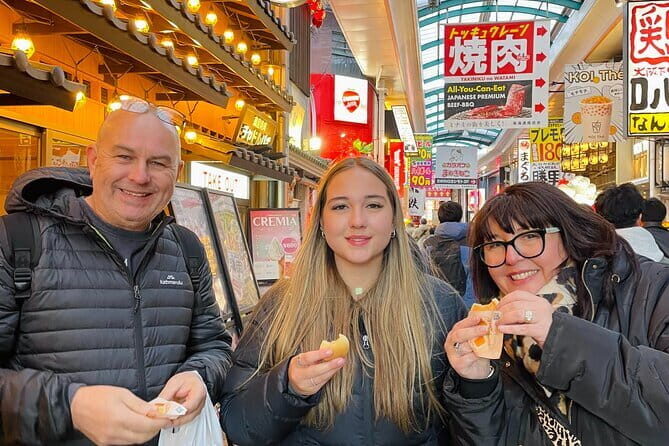
- Max 8 people: more time to ask questions and less rushing.
- 6–10 tastings + a drink: you come hungry and leave fed.
- Shinsekai → Hozenji Yokocho → Dotonbori: classic Osaka streets in one run.
- Department-store depachika stop: easier ordering than wandering solo.
- Public transit help: plus a ¥190 subway fee from Shinsekai area to Namba (not included).
Why this Osaka food walk makes sense (especially on a first trip)
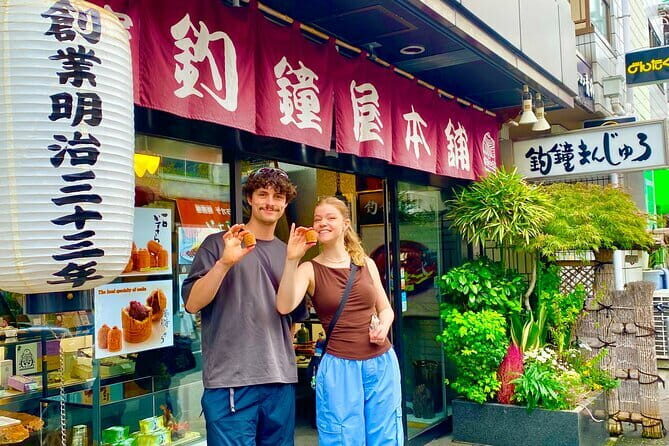
Osaka food tours work best when they do two things: they get you into the right neighborhoods and they help you order with confidence. This one aims at both. You’re walking through the city’s familiar entertainment lanes and food-side alleys, but with a guide managing the “what is this and how do I order it” part.
I also like the timing idea: lunch or dinner-time, when you’re most likely to feel truly hungry. That matters. If you show up after you’ve already grazed, the tour can start to feel like snack homework. The design here is meant to prevent that.
The pacing is built for a short, focused outing: about 3 hours, with a moderate walking level and stops clustered in a way that keeps it from dragging.
You can also read our reviews of more walking tours in Osaka

Start at Ebisucho Station, finish at the Glico Sign in Dotonbori
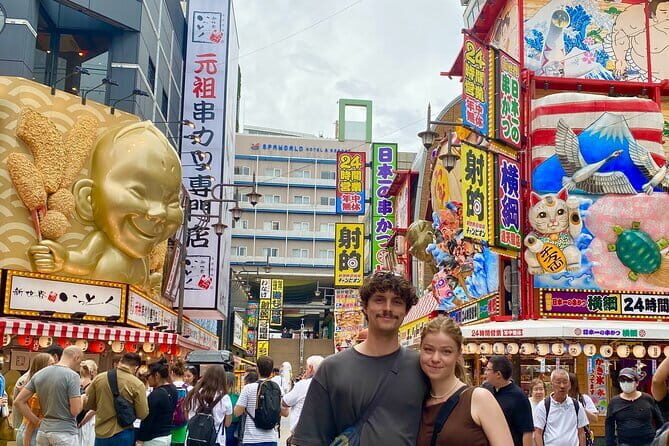
The tour starts at Ebisucho Station (address given for the meeting area) and ends at the bridge in front of the Glico Sign in Dotonbori. That end point is practical: once you’ve got the famous sign behind you, it’s easy to keep exploring on your own.
A useful real-world tip: if you’re near the correct exit, you should be able to spot Tsutenkaku Tower nearby. If you can see that landmark when you come up from the station, you’re probably in the right zone.
Expect a walking route where you’re moving, not waiting in long lines. You’ll spend your time eating, stepping between spots, and listening as your guide explains what you’re about to try.
Stop 1: Tsutenkaku Tower views (and what to expect)
You begin with Tsutenkaku, a tower that’s been a symbol of Osaka since 1912, rebuilt in 1956, and rising to 103 meters. The stop is about 30 minutes, with the tower’s admission not included.
Why this matters for a food tour: it’s a quick mental reset. You see where you are in the city before the eating starts, and it helps the neighborhoods make more sense when you start walking into street-food territory.
The trade-off: since admission isn’t included, you should decide on the day whether you want to pay extra for the observation decks. If your main goal is eating, you can treat this as a short photo-and-orientation stop.
Shinsekai for 1.5 hours: retro streets and the foods you usually miss
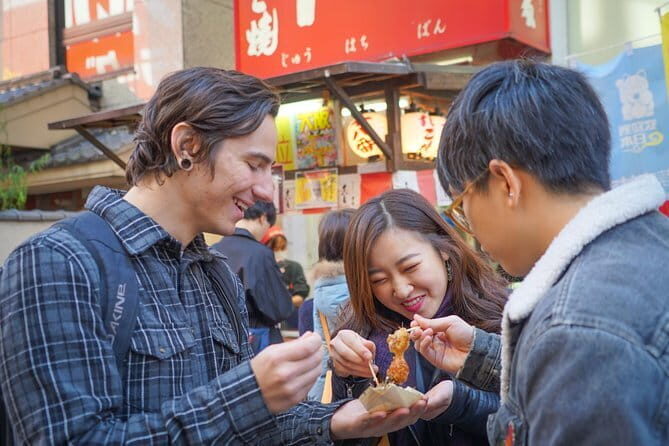
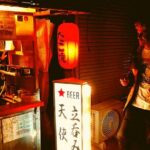
Next is Shinsekai, about 1 hour 30 minutes, and this is one of the core blocks of the experience. Shinsekai means New World, and it’s known for that older Osaka vibe—neon signage, local eateries, and streets where people come specifically to eat.
This is also where you’re most likely to get iconic items. The tour food list can include kushikatsu (deep-fried skewers) from the Shinsekai area, plus other favorites depending on what’s available that day.
What makes Shinsekai work here is direction. If you wander on your own, it’s easy to end up ordering the same thing everyone else sees on social media. With a guide, you can point to what you want and get help with ordering and eating style.
Potential drawback: Shinsekai can be busy with foot traffic. If you dislike crowds, keep your expectations realistic. You’re not going for quiet cafés. You’re going for street-food Osaka.
Takashimaya depachika: 15 minutes of ordering confidence
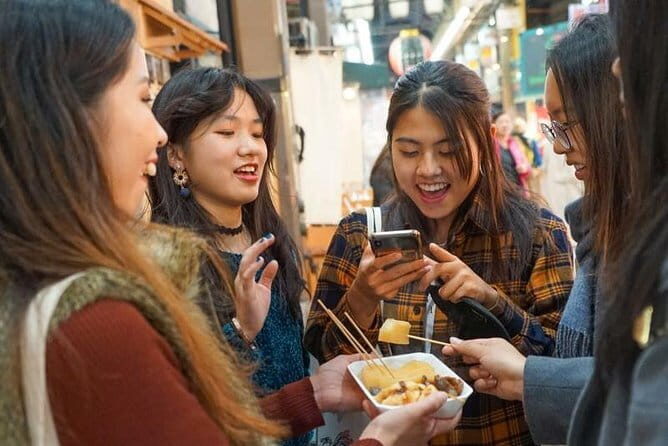
Then you’ll step into Takashimaya Osaka’s food basement, often called depachika. Your time here is about 15 minutes, and admission is not included.
This stop is smart for two reasons:
1) depachika areas are built for sampling and takeout, so ordering is easier than it looks from the outside
2) you get quality food options without needing a map and a translator
From the tour’s possible tastings, you might see items like croquettes from a historic butcher shop. Other sweets can show up too; the tour list includes wagashi from a store described as being 200 years old.
The limitation is time. Fifteen minutes can’t cover everything. It’s designed as a tasting stop, not a full shopping spree. Go with the plan: try what the guide suggests, then save your personal food hunt for after the tour.
You can also read our reviews of more food & drink experiences in Osaka


Hozenji Yokocho: a short alley break with traditional atmosphere
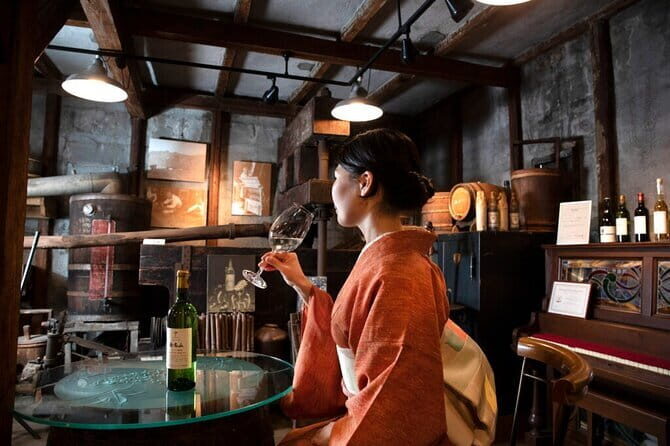
About 10 minutes is set aside for Hozenji Yokocho, a narrow alley near Hozenji Temple, lined with older-style buildings and small eateries. Admission is listed as included for this stop.
This portion is your palate reset. After Shinsekai’s street-energy, Hozenji feels more tucked-in. You get a contrast that makes the whole route feel like a real walk through different Osaka moods, not just a food parade.
The tasting lineup here can vary, but the format stays the same: walk in, try a specific item, listen to what makes it local, and keep moving before you get tired.
Dotonbori finale: neon signage, canal energy, and last bites
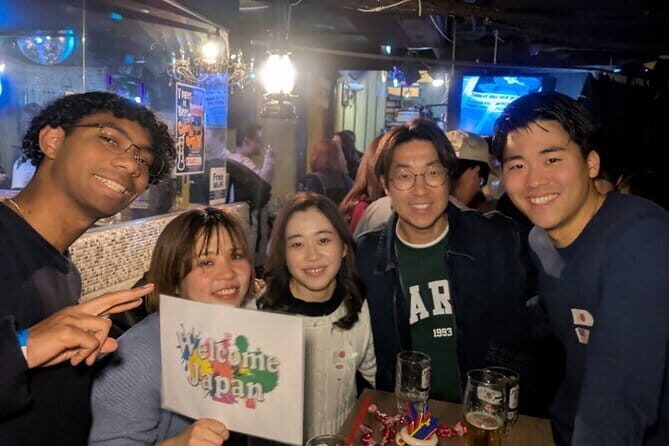
Your final food time is around 30 minutes in Dotonbori, with admission listed as included. Dotonbori is famous for its large signs, bright lighting, and constant activity along the canal.
This is where the tour often feels most like the Osaka people picture. You’re finishing near the Glico Sign, so you can use the tour as both a meal plan and a way to orient yourself in the area.
Street-food here can include takoyaki (octopus balls). The tour food examples mention Osaka’s oldest takoyaki shop, but remember: the exact item lineup can change based on availability and group preferences.
Also, keep your energy up for the end. By the last stop, you’ve already tried multiple foods. It’s normal if you feel a little full. The guide’s job is to spread flavors in a way that still feels fun instead of overwhelming.
What you’ll eat: 6–10 local dishes, but with real variation
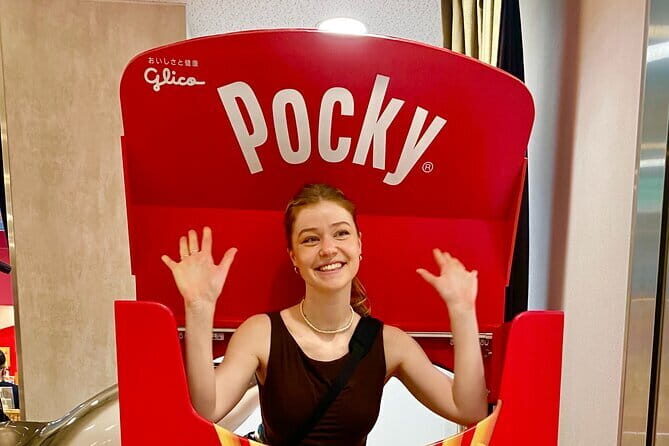
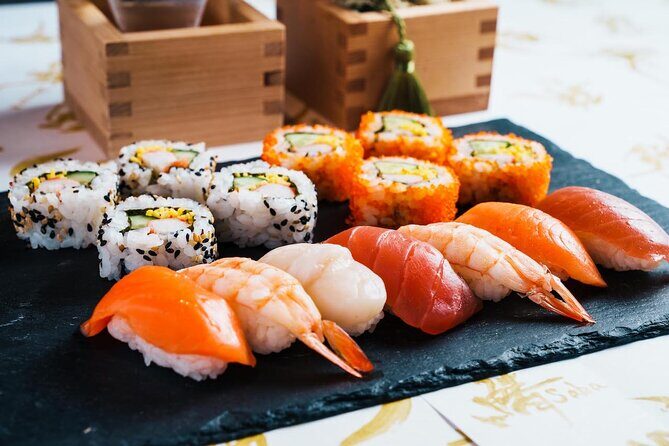
The headline promise is clear: 6–10 local foods plus 1 drink (alcoholic or non-alcoholic). That combination is one of the main reasons the tour feels worth it. You’re not just tasting one or two bites per stop.
The tour also gives specific examples of what might show up:
- croquettes from a historic butcher shop
- traditional wagashi from a store described as 200 years old
- kushikatsu in the Shinsekai area
- takoyaki from Osaka’s oldest takoyaki shop
- steamed meat buns (butaman)
Here’s the practical truth: the selection can vary based on the group’s preferences and what the shops have available. So if you’re fixated on one exact item, don’t bet the farm on it. Instead, use the tour as a sampler of the Osaka style—then build the rest of your meals around what you liked most.
Dietary caution is important. The tour data notes that meals may include meat, seafood, wheat, and dairy. If you have allergies or a serious restriction, contact the provider in advance to ask about accommodations.
Drink choice: where the tour budget quietly adds value
You get one drink choice, either alcoholic or non-alcoholic. That’s not a small add-on in Osaka, where food portions can be generous.
I like how this keeps your spending predictable. You’re budgeting for one meal experience rather than guessing which drinks you’ll want at each stop.
If you’re going alcohol-free, the tour still works well because you’re not losing “coverage” of the meal experience. You still get 6–10 foods.
Price and value: $79.28 for 3 hours of guided ordering
At $79.28 per person for about 3 hours, the value comes from stacking several things you’d otherwise piece together:
- a guide to help you order in local settings
- a structured route across key neighborhoods
- multiple tastings (6–10) instead of a single bite
- 1 included drink
- and some admissions marked included for specific stops
What can reduce value for some people is what’s not included. Tsutenkaku admission isn’t included, Takashimaya’s depachika admission also isn’t listed as included, and there’s a ¥190 subway fee from the Shinsekai area to Namba. If you plan to avoid extra payments entirely, skim your budget before committing.
But if you like the idea of eating several local specialties with less guesswork, this price is easier to justify. You’re buying time, local guidance, and a tight list of food targets.
The guide effect: why humor and personalization matter
The biggest pattern in the guide experience is communication plus personality. Names like Ayako, Chiyoe (often called Aunty), Kaoru, Bryan, Sue, Emi, Hiro, and Sumiyo show up repeatedly, with comments about guides making it fun and clear.
More practical than the jokes: guides are described as checking what you do and don’t like, then steering the tastings accordingly. That’s exactly what you want on a food tour. If you hate one category, nobody wants to burn the whole afternoon on it.
Language is also listed as English and Japanese, which makes the experience more confidence-friendly if you’re not fluent. If you want to ask what something is, how it’s made, or how locals eat it, this kind of guide-led setup helps.
Public transportation practice: a small cost for big confidence
One of the tour highlights is learning how to use public transportation in Osaka with your guide’s help. That’s a real benefit if you’re also trying to cover other areas on your own after the tour.
Just budget for it: the tour data specifies a subway fee from the Shinsekai area to Namba of ¥190 per person (not included). Bring cash or have an IC card ready, so you aren’t scrambling at the station.
Even if you don’t ride every train perfectly, the guidance can help you feel steadier for the rest of your trip.
Who should book this Osaka food adventure, and who should think twice
This tour fits best if you want:
- a guided route through Shinsekai and Dotonbori
- multiple tastings (6–10) in about 3 hours
- help with ordering and local food context
- a smaller group experience (max 8)
You might hesitate if:
- your dietary needs are complicated and you don’t have time to contact the provider ahead of your tour date
- you dislike neon and busy street areas
- you want a fully self-paced tour where you decide every stop
If you like planning your day around food, this is a strong use of a morning, lunch, or evening block.
Should you book it
I’d book this tour if you’re visiting Osaka and want the quickest path to tasting the local food style without building a spreadsheet of where to eat. The small group size, the 6–10 dish target, and the included drink make it feel like an actual meal experience, not a string of samples.
I’d also book it if you’re the type who likes structure. You’ll walk, you’ll eat, you’ll learn what to order next time. And you’ll get dropped at a landmark like the Glico Sign, which makes it easier to continue exploring.
Just do two prep things: check dietary needs early, and plan for the fact that a couple of admissions and one subway fee may be extra.
FAQ
How long is the Osaka Food Adventure Tour?
It runs for about 3 hours.
How much does the tour cost?
The price is $79.28 per person.
What’s included in the tour price?
You get lunch (or dinner depending on your tour time) with 6–10 local foods, 1 choice of drink (alcoholic or non-alcoholic), and an English/Japanese guide. You also receive a mobile ticket.
How many dishes will I try?
You’ll try 6–10 local dishes.
How many people are in the group?
The tour has a maximum of 8 travelers.
Where do I meet the guide, and where does the tour end?
You start at Ebisucho Station and end at the bridge in front of the Glico Sign in Dotonbori.
Are admission tickets included for every stop?
No. Tsutenkaku admission is not included, while Shinsekai, Hozenji Yokocho, and Dotonbori are listed as having admission included. Takashimaya Osaka Store admission is also not included.
Is there an extra subway cost during the tour?
Yes. The subway fee from the Shinsekai area to Namba is ¥190 per person and is not included.
What’s the cancellation policy and what if the weather is bad?
You can cancel for a full refund up to 24 hours before the experience start time. The tour requires good weather, and if it’s canceled due to poor weather, you’ll be offered a different date or a full refund.