REVIEW · OSAKA
Osaka: Nara, Todaiji, Uji Matcha, and Hot Spring Tour
Book on Viator →Operated by TREVOPEDIA · Bookable on Viator
One day, three different vibes in Japan. This Osaka tour strings together Nara Park’s deer time, the Great Buddha at Tōdai-ji, Uji’s matcha culture, and a real onsen soak at Genji-no-Yu, all with round-trip transport from Osaka and a multilingual guide.
I especially like the mix of nature + temple power. You get open-air Nara Park time first, then move into the big-ticket sites like Tōdai-ji and Kasuga-taisha, and you end with a hot spring that actually helps your legs recover.
One thing to consider: it’s a long day (8–9 hours) with multiple stops, and some entries and meals cost extra. If you hate rushing, or you’re traveling in very cold weather, wear good shoes and keep expectations realistic.
In This Review
- Key highlights
- How this Osaka to Nara and Uji day fits together
- Nara Park deer time: fun photos, real crowd energy
- Tōdai-ji Temple and the Great Buddha: the stop that takes your breath away
- Kasuga-taisha Shrine: quick, meaningful, and good for variety
- Uji matcha, Byōdō-in, and Phoenix Hall: slowing down without losing the schedule
- Genji-no-Yu hot spring: your legs will thank you
- Price and what you’ll likely pay on top
- Practical tips so the day feels smooth (not exhausting)
- Should you book this Osaka, Nara, Tōdai-ji, Uji matcha, and hot spring tour?
- FAQ
- What time does the tour start?
- How long is the Osaka to Nara and Uji tour?
- Where is the meeting point in Osaka?
- What’s included in the tour price?
- What isn’t included?
- Is there a minimum number of travelers?
- How big are the groups?
- Are tattoos or unaccompanied minors allowed?
- What’s the cancellation rule?
Key highlights
- Deer at Nara Park: sacred, roaming, and great for photos and sightseeing time you can pace yourself
- Tōdai-ji’s Great Buddha: a massive 15-meter bronze Daibutsu you can’t really “speed-run”
- Kasuga-taisha Shrine: a classic Shinto stop that balances the temple-heavy morning
- Uji matcha culture: time to slow down with tea in a place known for high-quality green tea
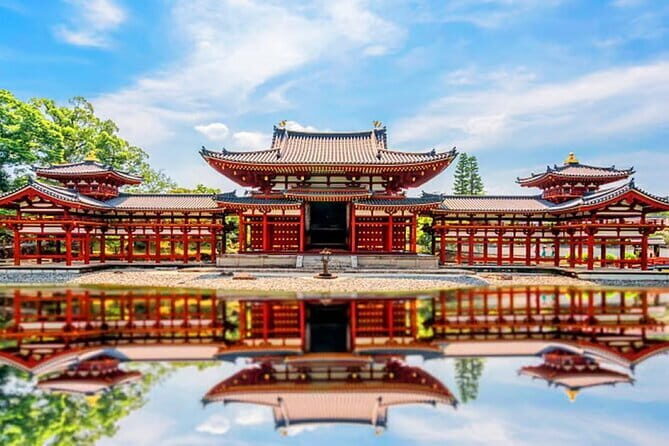
- Byōdō-in Phoenix Hall: a UNESCO World Heritage site tied to one of Japan’s most famous temple images
- Genji-no-Yu hot spring: your payoff—natural baths to reset after a lot of walking
How this Osaka to Nara and Uji day fits together
This tour is built like a full “day circuit”: hotel-to-pickup style transport from Osaka, then west toward Nara, and later over to Uji. You start at 8:30am at 1-chōme-3 Nipponbashi Parking and end back at the same meeting point.
Because it runs for about 8–9 hours, the schedule matters. You’ll likely get a set amount of time at each stop, so the winners are travelers who like structured days and people who enjoy seeing big sights even if they can’t linger for hours.
The payoff is variety. You’re not just doing temples—you’re mixing park time, shrine time, matcha culture, a UNESCO temple, and then a soak. That kind of variety is why this route works well as a one-day sampler of the Kansai region.
You can also read our reviews of more tours and experiences in Osaka

Nara Park deer time: fun photos, real crowd energy
Your first major stop is Nara Park, which is famous for free-roaming deer protected as a national treasure. You’ll have about 1 hour 20 minutes, which is enough time to walk the main paths, enjoy the deer, and still get moving before the day gets even busier.
What I like about Nara Park on a guided day is simple: you don’t have to figure out transit, and you can focus on being in the moment. Deer can be bold, and the area can feel busy, so having a plan helps.
Possible drawback: because it’s open public space, you’ll be dealing with other visitors and the general flow of park traffic. If you’re the type who hates crowds, aim to keep your early energy up and don’t get stuck trying to get the perfect deer photo for 30 minutes.
My practical tip: keep your snacks and bags managed. Deer are curious, and you don’t want your day starting with a grab-and-run incident.
Tōdai-ji Temple and the Great Buddha: the stop that takes your breath away
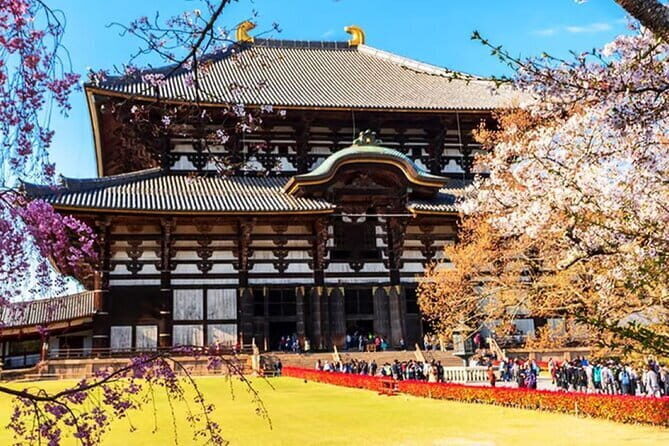
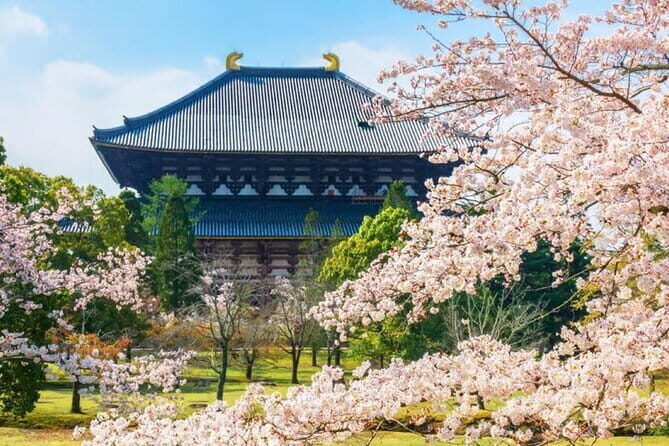
Next up is Tōdai-ji Temple, home to the Great Buddha (Daibutsu). The tour allots about 40 minutes here, and that’s a key detail: the Daibutsu is enormous—15 meters tall—so you’ll spend real time just orienting yourself.
Tōdai-ji is also UNESCO-linked, and it has that wow-factor you feel even if you’re not a “temple person.” The scale is the point. You’re not just visiting a building; you’re standing near something engineered to overpower your sense of size.
Keep in mind: Tōdai-ji entry is not included. So if you’re budget-conscious, you’ll want to factor in tickets before you go, rather than assuming everything is covered.
How to make 40 minutes work: decide what matters to you. If the Great Buddha is your priority, focus on the main viewing area and don’t spend the whole time hunting extra corners. The temple is big, and the tour clock is real.
Kasuga-taisha Shrine: quick, meaningful, and good for variety

After Tōdai-ji, you’ll head to Kasuga-taisha Shrine. The tour time is about 40 minutes, and this is one of those stops that adds balance after the big temple scale.
Kasuga-taisha is a major Shinto site, founded in the 8th century, dedicated to Futsunushi no Mikoto, the protector of the Fujiwara clan. If you’ve only ever seen Buddhist temples, a shrine like this gives you a different “Japan feeling” without turning the day into a museum marathon.
Like Tōdai-ji, Kasuga-taisha entry is not included. So you’ll likely pay a separate ticket here, and it’s worth doing because the shrine is the kind of place where details matter more than speed.
Possible drawback: this stop is shorter than the deer park, so if you’re the type who likes to wander slowly, you may feel a little pressed. Still, as a mid-day rhythm reset, it works.
Uji matcha, Byōdō-in, and Phoenix Hall: slowing down without losing the schedule
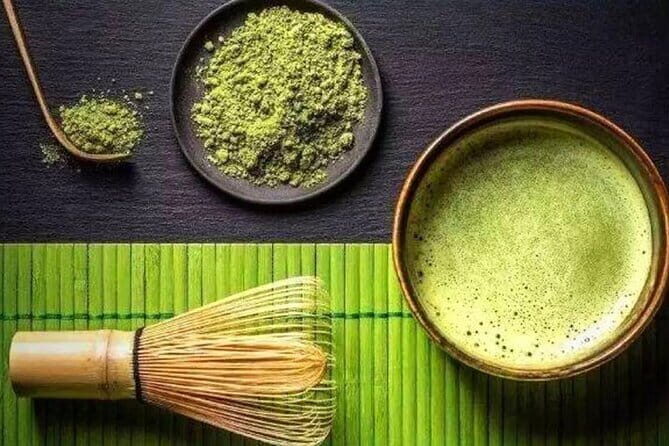
Uji is where the tour shifts gears. In the afternoon, you’ll have time in Uji for matcha culture, including a chance to enjoy green tea at a traditional tea house. Uji is known for high-quality matcha, so this portion is more than a generic “tea break.” It’s your cultural palate cleanser before the last big sightseeing hit.
Then comes Byōdō-in, the UNESCO World Heritage temple famous for the Phoenix Hall. If Tōdai-ji is your morning “scale shock,” Phoenix Hall is your afternoon “icon image” moment.
Here’s the important reality check: tickets for Byōdō-in are not included, and there’s also mention of the Tale of Genji Museum with tickets not included. That doesn’t mean you’ll never see these places—it means you should budget for entry costs so you don’t feel surprised later.
If you want this section to feel rewarding, don’t treat it like another checkbox. Even if the time is limited, pick one thing to focus on:
- the matcha experience (how the tea is served and what it tastes like)
- or the Phoenix Hall viewing (being present for the iconic architecture)
My advice: choose one priority, because your day already has momentum.



Genji-no-Yu hot spring: your legs will thank you
The finale is Uji Natural Hot Spring Genji-no-Yu. The tour includes a block of onsen time, and this is where the long day pays off.
The hot spring is named after The Tale of Genji, which fits the Uji storyline nicely. And because it’s natural hot spring waters, it’s the kind of finish that helps with that “I walked all day” feeling.
One caution: the overall tour info lists hot spring costs around $10 as not included, even though the schedule shows hot spring admission as included for one segment. Translation: don’t assume every aspect is fully covered—check what you’ll pay at the facility when you arrive.
What to bring depends on the rules at the bath. The tour doesn’t specify items like towels or swimwear, so plan to handle standard hot spring expectations on-site. If you have swimwear, having it can reduce stress, but follow whatever the facility requires when you get there.
This is also a good place to reset your mood. If the earlier stops felt like a sprint, this is where you slow down.
Price and what you’ll likely pay on top
At $81 per person, you’re paying for the big value pieces: round-trip transportation from Osaka, an air-conditioned vehicle, and a multilingual guide and driver. For an 8–9 hour day that hits several major landmarks, that base price is usually reasonable—especially if you don’t want to plan transit between Osaka, Nara, and Uji yourself.
What you should expect to pay extra for:
- Tōdai-ji entry
- Kasuga-taisha entry
- Byōdō-in entry (and any related site entry, if you go into the museum area)
- Food and drinks
- Hot spring entry may be an additional charge (listed around $10)
So your real budget becomes base tour price plus those ticket and meal add-ons. If you eat lightly and keep museum add-ons minimal, you’ll stay closer to the $81 figure. If you want to pay for all entries and enjoy snacks freely, your total will be higher.
Practical tips so the day feels smooth (not exhausting)
This is a long day, and the route includes walking through park areas and temple grounds. Wear comfortable, supportive shoes. In cold weather, surfaces can be slick, and temple grounds aren’t always flat.
Group size is capped at 15 travelers, which is nice. You won’t feel swallowed by a massive bus crowd, but it’s still a group schedule, so you’ll be moving as a unit.
A couple of “check before you go” points:
- Visible tattoos are not allowed.
- Unaccompanied minors are not allowed, meaning kids need a responsible adult with them.
- The tour requires at least 4 people to run, and if that minimum isn’t met, you’ll be offered cancellation or a route change.
- Your guide is multilingual, which helps a lot when you’re trying to understand what you’re looking at in places like Tōdai-ji and Kasuga-taisha.
Tiny strategy that helps: decide how you’ll handle the time-limited stops. In Tōdai-ji and Byōdō-in, you’ll enjoy the experience more if you focus on your main sight first and treat the rest as bonus.
Should you book this Osaka, Nara, Tōdai-ji, Uji matcha, and hot spring tour?
I think you should book this tour if you want one day that gives you a balanced hit of deer park fun, major temple highlights, Uji matcha culture, and a hot spring reset. It’s especially a strong choice for people who like structured sightseeing and don’t want to stitch together transit plans between cities.
You might skip (or at least adjust expectations) if:
- you hate long days and lots of walking
- you need extra time at each site rather than a set tour clock
- you’re very sensitive to added ticket and meal costs
If you’re a first-timer to this part of Kansai and you want an efficient route without feeling totally rushed, this tour can be a great fit—just go in with sturdy shoes, a flexible mindset, and the understanding that you’ll likely pay a few tickets and enjoy meals separately.
FAQ
What time does the tour start?
It starts at 8:30am.
How long is the Osaka to Nara and Uji tour?
The total duration is 8 to 9 hours (including transportation time).
Where is the meeting point in Osaka?
Meet at 1-chōme-3 Nipponbashi Parking, 1-chōme-3 Nipponbashi, Chuo-ku, Osaka, 542-0073, Japan.
What’s included in the tour price?
Included are round-trip transportation from Osaka, travel by an air-conditioned vehicle, and a multilingual guide and driver. Nara Park admission is listed as included, and hot spring admission is listed as included for part of the schedule.
What isn’t included?
Not included: food and drinks, entry tickets for Tōdai-ji, Kasugataisha Shrine, Byodoin Temple, Tale of Genji Museum, and hot springs (around $10).
Is there a minimum number of travelers?
Yes. The tour needs at least 4 people to run. If the minimum isn’t met, you may be offered cancellation or a route change.
How big are the groups?
The tour has a maximum of 15 travelers.
Are tattoos or unaccompanied minors allowed?
Visible tattoos are not allowed. Unaccompanied minors are not allowed.
What’s the cancellation rule?
You can cancel for a full refund up to 24 hours before the experience starts. Cancellation later than that isn’t refunded.