REVIEW · OSAKA
Osaka: Private Samurai Experience – Train with Sword Master
Book on GetYourGuide →Operated by DeepExperience, Inc. · Bookable on GetYourGuide
Sword training in a quiet Osaka temple feels rare. This 3-hour private class in the Minoh area pairs hands-on kenjutsu practice with a temple visit and an exclusive sword performance led by Tatsuya Watanabe, a senior teacher tied to classical schools.
I love two things most. First, the instruction is practical and calm, with clear posture and striking cues delivered fast enough to fit the short time window. Second, you get private access to temple spaces that are normally closed, so you’re not just watching a demo—you’re stepping into the setting that shapes the discipline.
One drawback to weigh: at $158 per person for about 270 minutes, this is a focused experience, not a multi-session training program. If you want hours and hours of repetition, you’ll feel the time limit.
In This Review
- Key points to know before you go
- Samurai training in Minoh: the setting matters
- Meeting at Minoh Station: quick start, clear direction
- Ryuan-ji or Saiko-ji: temple tour first, then sword
- First you watch: Watanabe’s performance sets the standard
- The training itself: short drills, clear corrections
- What you learn beyond the cuts
- Price and value: what $158 buys you in real terms
- Who this suits best (and who might struggle)
- Little details that affect your experience
- Should you book this private samurai training in Minoh?
- FAQ
- Where do I meet the guide?
- How long is the experience?
- Is this a private group?
- What languages are available?
- Do I get to train with swords or only watch?
- Is there a sword performance during the tour?
- What is the cancellation policy?
Key points to know before you go
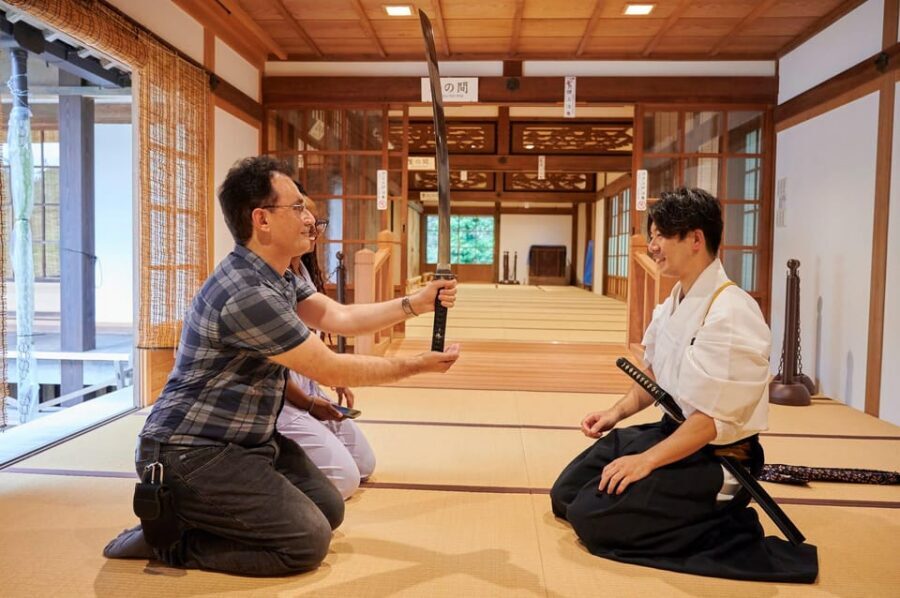
- Private training grounds inside Ryuan-ji or Saiko-ji areas that are typically closed to the public
- A special sword performance that you won’t find as a standard Osaka show
- Classical swords schools in the background, via Watanabe’s training path and current leadership role
- English/Japanese/French translation options, including interpreter support during practice
- Technique plus mindset, with attention to calm control, not just power
Samurai training in Minoh: the setting matters
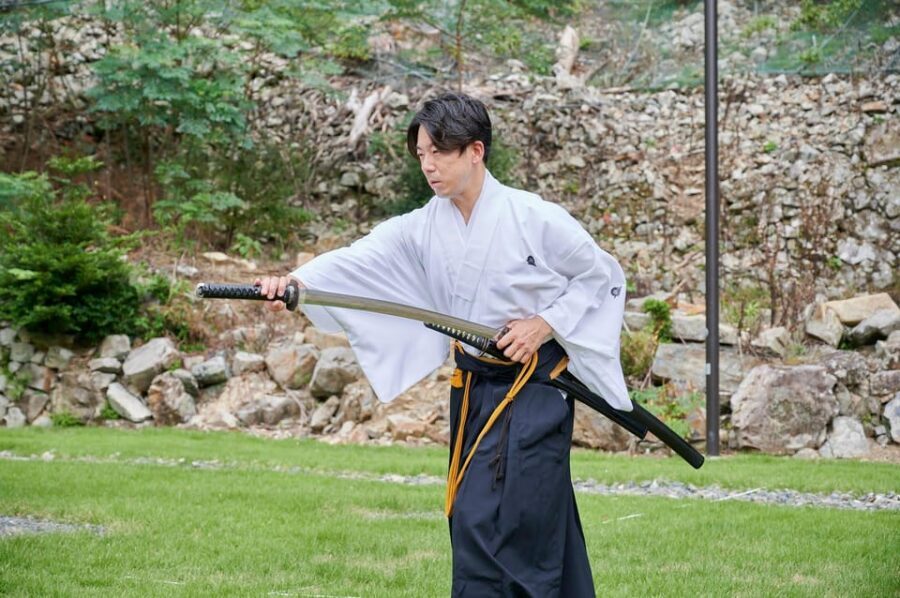
Osaka gets plenty of tourist attention, but this experience steers you into the Minoh hills, where forests and temple grounds do most of the talking. The tour heads to either Ryuan-ji or Saiko-ji in the Minoh area, and the biggest value is that you’re not squeezed into a public viewing area. The training happens in restricted areas that are opened specifically for this program.
That change in setting is more important than it sounds. Swordsmanship training is about movement accuracy, timing, and mental focus. When the space is quiet and controlled, you can actually notice your own mistakes—your stance drifts, your grip tightens too much, your cut becomes a swing instead of a line. The temple atmosphere helps you slow down, even when you’re moving fast.
And yes, you’ll also get a genuine temple visit here, not just a quick photo stop. So you’re tying the sword to a place where discipline, ritual, and history show up in daily life, not as trivia.
You can also read our reviews of more private tours in Osaka


Meeting at Minoh Station: quick start, clear direction
Your day starts at Minoh Station. Meet your guide out front while they hold a yellow DeepExperience sign. This matters because the temple access is not like a casual walk-in. You want to arrive with your bearings sorted, then follow the group without fuss.
In past sessions, interpretation has been handled by friendly guides such as Benoit (and other guide/translator staff who support English). The tour runs as a private group, which helps because instruction and translation can be tailored to your pace and questions. If you’re coming with a friend or family, you’ll likely feel more like a class than a spectator.
Timing-wise, the whole program is about 270 minutes. That’s long enough to include temple time, a performance, and real practice—but short enough that you should pay attention the first time you’re shown a technique. The tour is structured, and the most common regret people have in hands-on activities is simple: they wished they’d watched more carefully during the early teaching.
Ryuan-ji or Saiko-ji: temple tour first, then sword
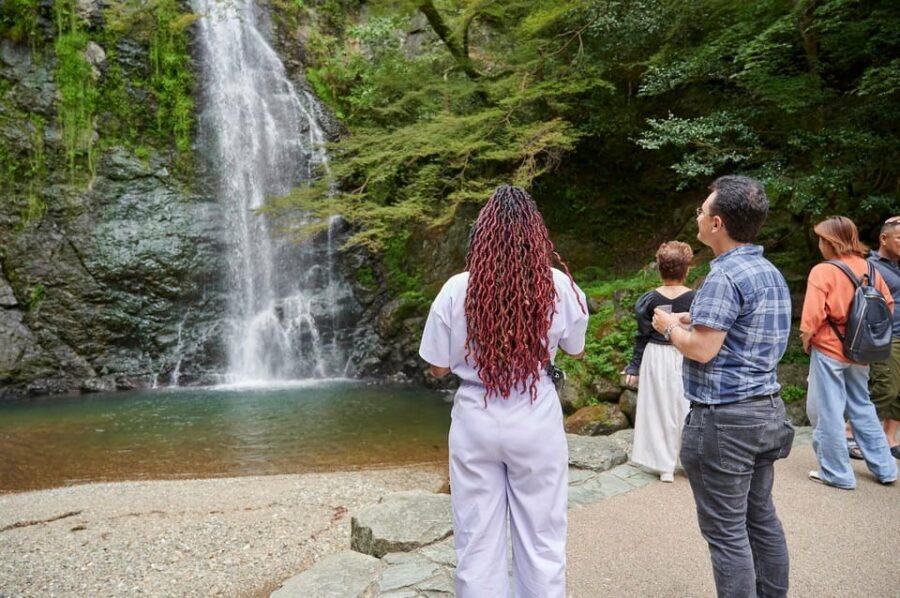
One of the best parts is that the sword work doesn’t start immediately. You get a guided look around the temple grounds before the training. This is where the day feels like more than a sport demo.
Temple time gives you context you can actually use. You’ll learn why the site is spiritually significant and how the atmosphere connects to the warrior mindset: self-control, respect, and a kind of focus that doesn’t require shouting. Even if you only catch part of the explanation in a second language, the meaning lands through the way the guide frames the space.
Also, you’re moving from public areas into restricted access spaces. That shift changes the mood. In the public zones, you’re a visitor. In the training zone, you’re a student. Past participants have highlighted that getting special access to areas normally closed to the public can be a real highlight, because it turns the temple from a backdrop into the stage for practice.
Two practical notes for you:
- Wear comfortable shoes. Temple ground walks plus training space equals more steps than you might expect.
- Keep your questions simple at first. The guide and sword master are balancing translation, instruction, and safety.
First you watch: Watanabe’s performance sets the standard
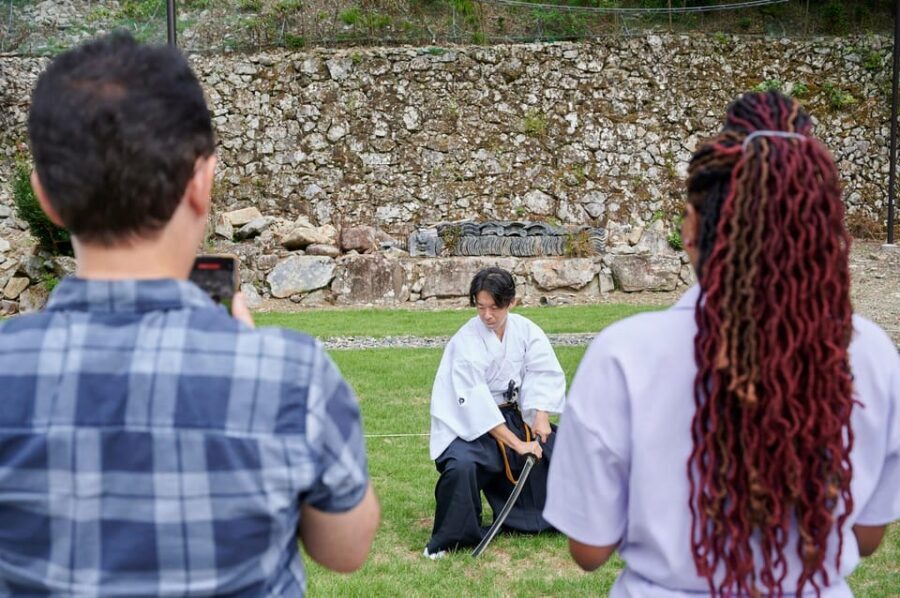
Before you pick up a sword, you watch Tatsuya Watanabe perform. This is not a random flourish. The performance is designed to show you what good looks like: precision, control, and calm presence.
In the sessions described by participants, the demonstration stood out for its fluidity and the way the movements seem to carry a meditative quality. That sounds poetic, but it has a practical angle. When you see the master’s pacing—how he commits to the line of movement—you learn what you’re aiming for. Then, when you practice, you stop thinking in terms of muscle effort and start thinking in terms of timing and balance.
This performance also functions as a safety and etiquette primer. You’ll see how the teacher handles the weapon and how the training space is respected. That matters when you later go from watching to doing, even with wooden swords and structured drills.
The training itself: short drills, clear corrections
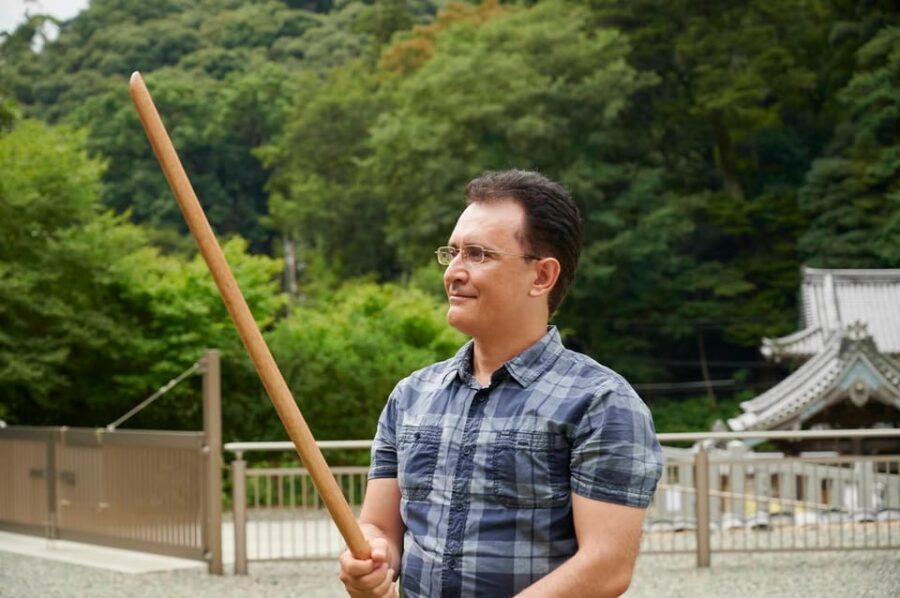
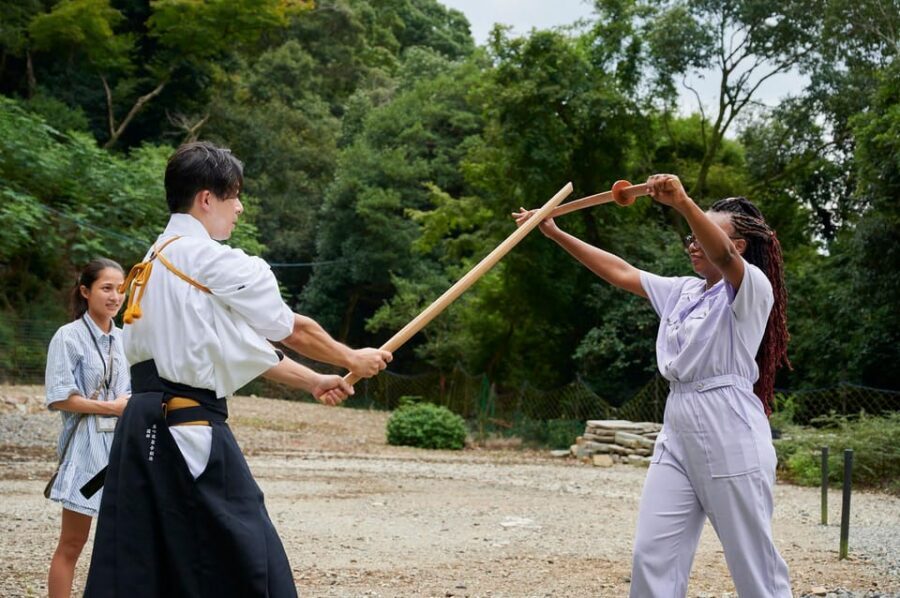
Your hands-on time is about 1.5 hours of actual practice, and the training is done with a sword format used for instruction in a controlled way. Multiple participants mention starting with wooden swords (bokken) and then progressing depending on the session and teaching flow.
Don’t assume you’ll automatically cut paper, or handle a real sword. The only safe claim here is that the experience is described as practical practice that may include progression beyond bokken in some sessions. One participant specifically notes moving on to real swords and being able to cut paper, but you should treat that as a possibility, not a guarantee.
How the instruction feels in practice:
- You get basic technique guidance early (stance, grip, and striking motion).
- You practice, then get corrections that focus on what breaks down first: posture, timing, and follow-through.
- Translation keeps you connected during drills, so you’re not just mimicking blindly.
Some participants noted that they received tips on strike mechanics and posture adjustments, and that having a translator present during training was a huge help. That’s a big deal. In sword practice, small differences matter. If you only half-understand the cue, you’ll practice the wrong fix with full confidence—which is how bad habits get stuck.
A small mindset shift helps you enjoy it more. You’re not trying to become a swordsman in one afternoon. You’re learning how a real teacher breaks a movement into teachable parts, then how you can apply those parts immediately.




What you learn beyond the cuts
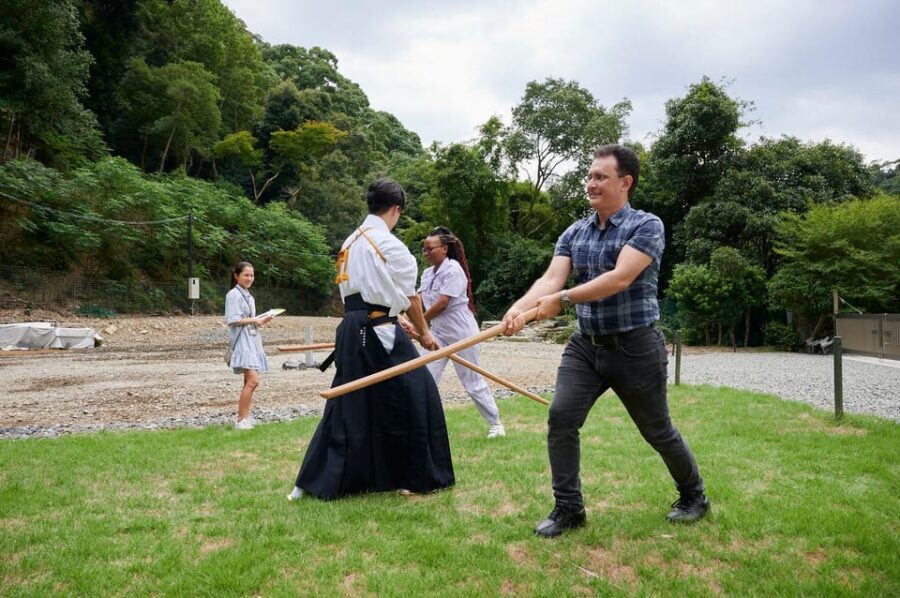
This program isn’t only about swinging a sword. The most praised element across participants’ comments is that it’s also a cultural and historical experience, with the “why” explained along with the “how.”
That’s largely because of who Watanabe is and how he frames the craft. His path includes:
- Starting in kendo when he was young
- Entering Yagyū Shinkage-ryu, a renowned classical school of kenjutsu
- Later training in other lineages, including Suishin-ryu, where he was appointed soke (headmaster) at a notably young age
- Continuing day-to-day practice while promoting and preserving sword culture through performances and international programs
What does that mean for you in the training room? You’ll likely hear emphasis on discipline, spiritual teaching, and the aesthetic values tied to the movement. That doesn’t mean you’ll be lectured the whole time. In the best moments, it shows up in how the instructor expects you to move: controlled, respectful, and mentally present.
One participant put it in a personal way: the routine and dedication inspired them, and they left motivated to keep training. You may not go that deep right away—but you’ll probably leave with a stronger sense of what separates swordsmanship from generic “martial arts hype.” The focus is on technique you can feel in your body, plus a mindset you can carry back home.
Price and value: what $158 buys you in real terms
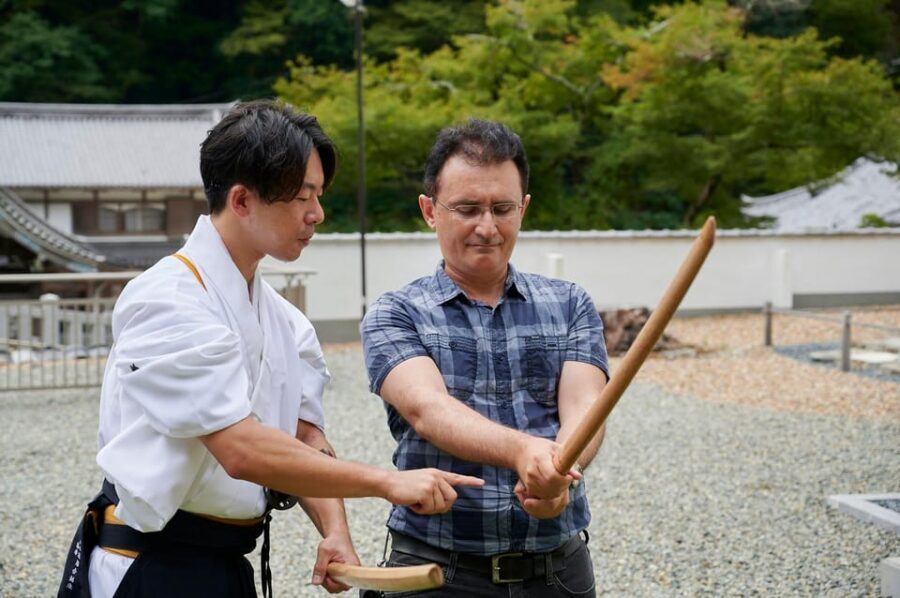
At $158 per person for about 3 hours, this isn’t a bargain-bin activity. So let’s do the practical math and the practical judgment.
You’re paying for:
- Private instruction from a sword master with credentials tied to classical schools
- Restricted temple access that isn’t normally available to the public
- A temple tour plus a special sword performance
- Translation support (English/Japanese/French offered) and guide time
A typical public martial arts demo can feel like a show. You watch, you clap, you leave. Here, the value is that you practice in a guided setting where corrections happen during your movement—not after it.
Is it worth it? If you want a memorable, instruction-heavy experience that feels connected to culture and a real teacher, it’s a solid yes. If you want a low-cost activity where you mostly observe, you’ll likely feel the price. This is for people who want to do the work, ask a question, and leave with a clear idea of what proper technique feels like.
Also consider opportunity cost. If you’re short on time in Osaka, this program is concentrated. You can spend a full day bouncing around urban sights, or you can spend a controlled afternoon in a place where the tempo of the day changes.
Who this suits best (and who might struggle)
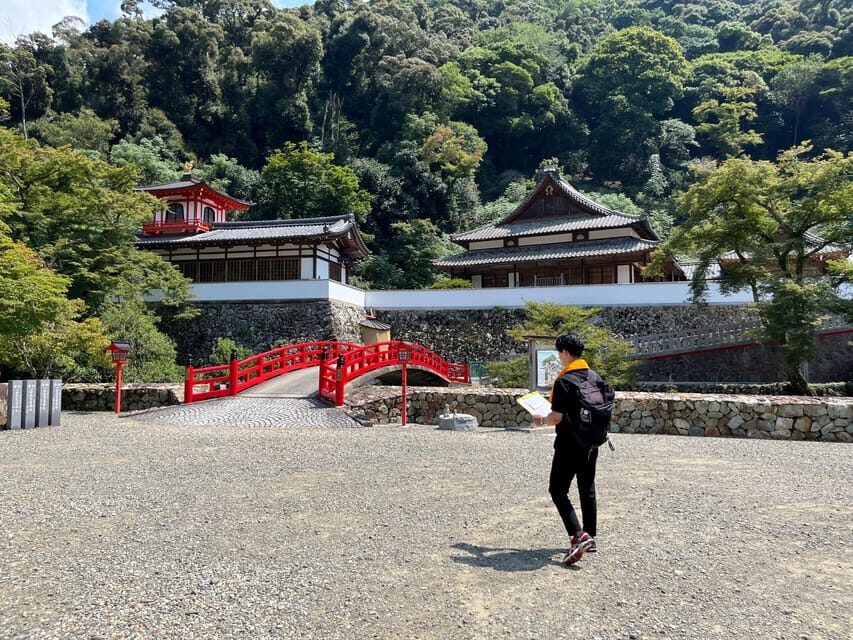
This private class is a great match if you:
- Like hands-on cultural experiences, not only museums
- Want a structured class with translation so you can understand the cues
- Enjoy disciplined activities where the teacher’s method matters
- Travel as a duo or family and want attention that doesn’t vanish in a large crowd
It may be less ideal if you:
- Expect a long, multi-week training path from a single afternoon
- Get easily frustrated when corrections are constant (this is a teaching environment, not a free play session)
- Prefer purely sightseeing over active practice
You should also think about comfort with physical movement. Even when the session is paced, stance work and repeated drills can be tiring. If you’re nursing an injury, plan carefully.
Little details that affect your experience
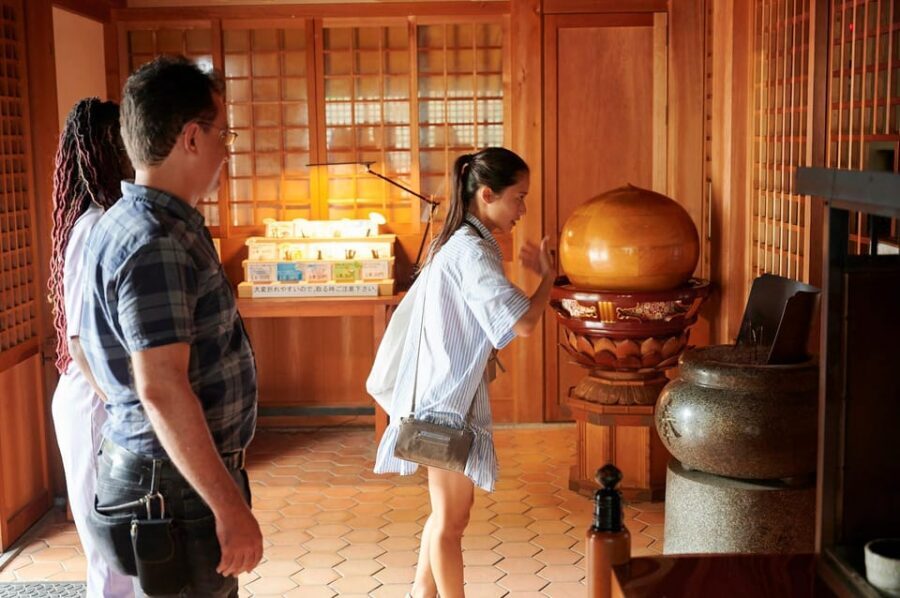
Based on the way the program is described, a few factors can make or break your enjoyment:
- Watch attentively early. Your first cues set the shape for the rest of your practice time.
- Ask one clear question at a time. Translation helps, but the session is timed.
- Respect the rules of the training space. This is tied to temple etiquette and weapon discipline.
- Dress for comfort and steady steps. Temple grounds plus walking and practice adds up.
If you arrive late, it sounds like the staff can sometimes adjust to keep the experience intact. Still, treat that as a kindness, not a plan. Get there early enough that you can breathe, not rush.
Should you book this private samurai training in Minoh?
If you want one Osaka experience that feels personal, teachable, and grounded in a real setting, I’d book it. The strongest reasons are simple: you get private access to temple grounds, a special sword performance, and hands-on practice led by a sword master who’s invested in both technique and the cultural meaning behind it.
You might skip it if you mainly want casual sightseeing or if $158 feels like too much for a single session. But if you’re the kind of traveler who likes doing the thing—learning a skill, feeling what correct posture means, and connecting it to a place—this class is exactly that.
FAQ
Where do I meet the guide?
Meet your guide in front of Minoh Station. The guide will be holding a yellow sign with the DeepExperience logo.
How long is the experience?
The tour runs for 3 hours (270 minutes).
Is this a private group?
Yes. It’s described as a private group experience.
What languages are available?
Live tour guide languages listed are English, Japanese, and French.
Do I get to train with swords or only watch?
You’ll take part in sword training during the session. Based on participant descriptions, training may begin with wooden swords and can include progression in some sessions, but the exact progression isn’t specified in the core details.
Is there a sword performance during the tour?
Yes. You get a special sword performance exclusive to this program.
What is the cancellation policy?
You can cancel up to 24 hours in advance for a full refund.