REVIEW · OSAKA
Osaka to Nara Day Trip with a Local – Private & Personalized
Book on Viator →Operated by City Unscripted · Bookable on Viator
Deer, temples, and a guide who saves time. This Osaka-to-Nara day trip is built around a private, personalized guide and includes entry to top sights like Todai-ji, Kasuga Taisha, and Isuien Garden. I like that you get pickup offered (and guides can be flexible if plans change), and I also like that key tickets are included, so you’re not doing ticket math all day. The main tradeoff: it’s a walking-first outing with no private vehicle, so comfy shoes matter.
You’ll spend about 9 hours total, including getting from Osaka to Nara, and the flow can be adjusted to your interests after you fill out a short questionnaire. If you hate crowds, hate stairs, or want heavy food time, you’ll need to manage expectations.
In This Review
- Key Points at a Glance
- Deer First, Temples Next: Why This Nara Day Trip Feels Personal
- Osaka Pickup and Getting There: Trains, Tickets, and Time Math
- Nara Park With Deer: How to Walk the Wide Open Spaces
- Todai-ji and Nigatsu-do: The Daibutsu’s Scale Hits in Person
- Kasuga Taisha and Kofuku-ji: Lantern Paths and Buddhist Power
- Isuien Garden: The Quiet Reset After Big Buildings
- Food, Shopping, and Budget Reality in Kansai
- Price and Value: What You’re Actually Paying For
- Who Should Book This Nara Day Trip
- Should You Book This Osaka-to-Nara Private Tour?
- FAQ
- How long is the Osaka to Nara day trip?
- Is this tour private?
- What’s included in the ticket prices?
- Is the train transportation included?
- Is food included?
- Does the tour include local transport in Nara?
- What does the JR Nara bus pass cover?
- Can I cancel for free?
Key Points at a Glance
- Private guide, not a bus tour: you plan around your interests after a short questionnaire.
- Major entrances are included: Todai-ji, Nigatsu-do, Kasuga Taisha, Kofuku-ji, and Isuien Garden.
- Nara Park on foot: deer and wide green spaces start the story, before the temples.
- A JR Nara bus pass is included: one day free pass from JR Nara for easier local hopping.
- Rail tickets are arranged, but cost extra: train transport isn’t included, though the guide helps with navigation.
- Multiple guide styles show up: some guides are praised for flexibility and time management, so be clear about what you want to learn.
Deer First, Temples Next: Why This Nara Day Trip Feels Personal
Nara is one of those places where the big sights are famous for a reason. But doing it well is about more than checklists—it’s about pacing, knowing where to stand for the right views, and understanding what you’re looking at while you’re still close to it.
That’s where this private setup helps. You’re not stuck with fixed timing or a one-size-fits-all script. After booking, you’ll answer a questionnaire about must-sees and preferences, and then your guide reaches out to shape a route that fits how you like to travel—history-focused, photo-focused, or more relaxed.
The best part is that the day naturally mixes sacred spaces and quieter breaks. You’ll walk through temple halls and shrine paths, then shift into gardens and forest scenery, so the experience doesn’t feel like one long museum line.
You can also read our reviews of more private tours in Osaka

Osaka Pickup and Getting There: Trains, Tickets, and Time Math
The tour is designed to start in Osaka with a pickup offered at your hotel, and it ends back at the meeting area. The meeting point listed is DAISO2-chōme-2-17 Nanbanaka, Naniwa Ward, Osaka, 556-0011, Japan, but in practice you’ll likely meet your guide through pickup, depending on where you’re staying.
Here’s the practical part: train transportation costs aren’t included. The guide organizes rail tickets for you (at your cost), and Japan Rail Pass holders can travel free on JR lines. Why this matters: the hardest part of a day trip is often logistics. Having a guide handle the train system cuts down stress, especially if you’re not fluent in station layouts.
I also like that the tour allows for public transport or local taxis between sites if needed, with costs discussed after your reservation. That’s useful because Nara’s sights spread out, and “mostly walking” can be either perfect or a lot, depending on your energy level.
Nara Park With Deer: How to Walk the Wide Open Spaces
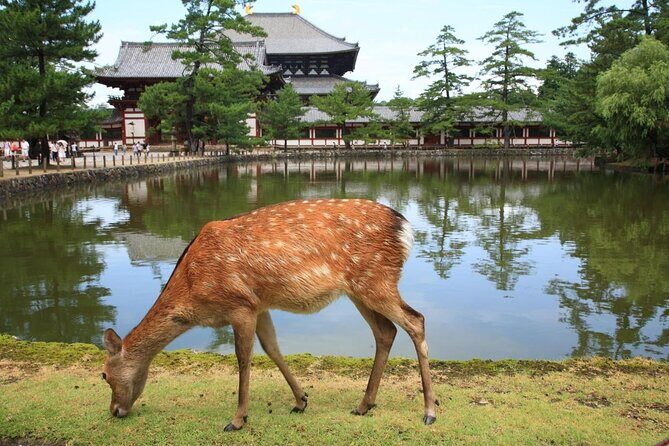
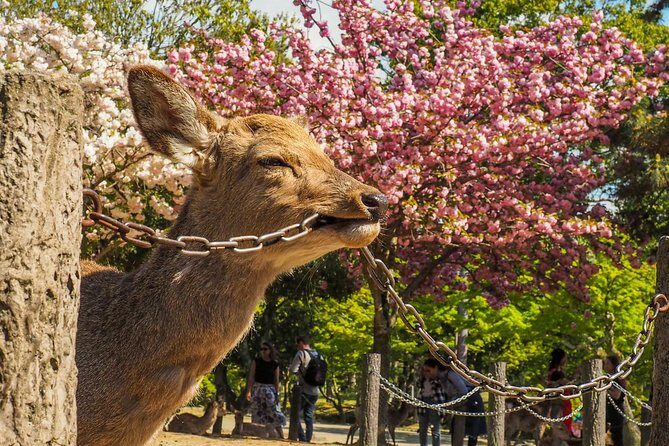
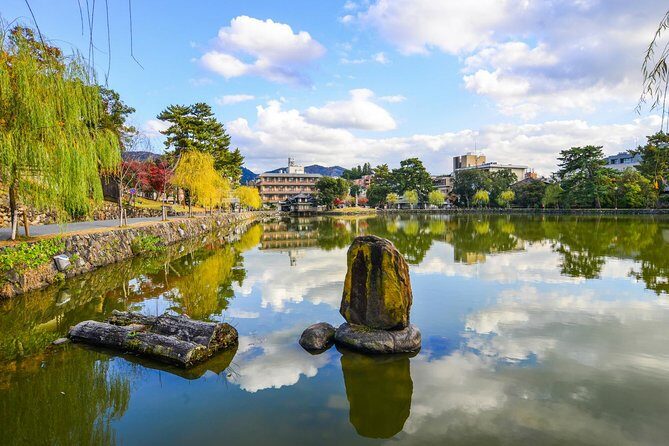
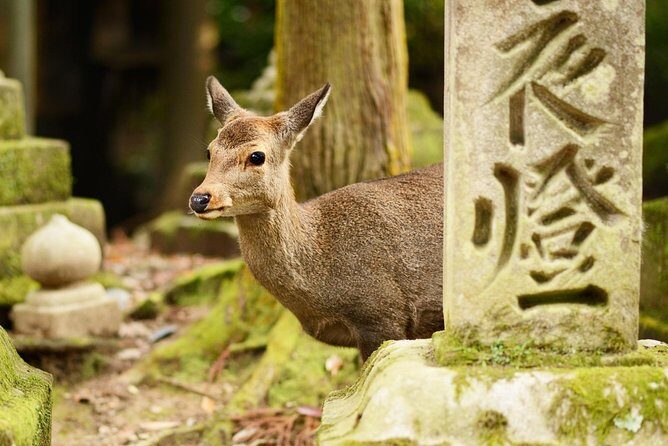
Nara Park is where most first-timers fall in love. It’s an expansive area established in 1880, and it’s famous for deer that roam freely. The day starts with a stroll through scenic paths and open lawns, which is a nice way to ease into the spiritual side of Nara instead of jumping straight into crowds at a temple gate.
This is also where a good guide earns their keep. Deer sightings are common, but you still want to keep things respectful and safe. I’d follow your guide’s cues on where to stand, how to move around groups, and what to avoid doing around the animals.
There’s a subtle benefit to starting here: the park gives you breathing room. If your route later includes dense shrine and temple interiors, the park walk acts like a reset. It also sets you up for the visual rhythm of the day—forest paths now, lantern-lined shrine walks later, and then big temple architecture after.
Todai-ji and Nigatsu-do: The Daibutsu’s Scale Hits in Person
Todai-ji is the anchor stop. You’ll visit the main hall, home to the Daibutsu, a bronze Buddha about 15 meters tall. That number is impressive on paper, but in real life it’s something else—you naturally slow down because your eyes need time to catch up.
What makes the experience more than sightseeing is the context your guide can provide on the temple’s role and what you’re seeing inside. Todai-ji is described as the head temple of provincial Buddhist temples, so you’re not just looking at a single monument; you’re stepping into a historical system.
Then you’ll also see historic halls within the Todai-ji complex, including Nigatsu-do. These added halls help break up the day. If you only focused on the Daibutsu, you’d miss how much meaning is packed into related structures and view lines across Nara.
Practical tip: budget time for a slow circuit. It’s easy to rush big interiors, especially when you’re trying to hit multiple stops. But the payoff is in taking a few minutes in each area, letting the scale and layout sink in.
Kasuga Taisha and Kofuku-ji: Lantern Paths and Buddhist Power
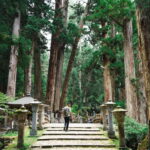
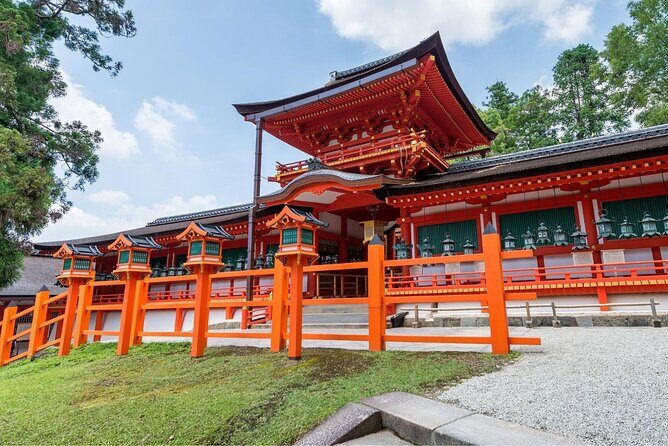
Next comes a shift from Buddha scale to shrine atmosphere. Kasuga Taisha is Nara’s celebrated Shinto shrine, once the tutelary shrine of the powerful Fujiwara clan. Expect a forest setting and paths that feel like they belong to another pace of life.
The signature feature here is the hundreds of stone and bronze lanterns donated by worshippers. It’s one of those details that can look like decoration from a distance, but up close it reads as devotion and history. Your guide’s job is to point out what to notice and when—so you don’t just snap photos and move on.
After that, you’ll include Kofuku-ji Temple, another key Buddhist site in Nara. This stop adds more variety to the day by balancing the Shinto shrine mood with Buddhist architecture and tradition. Even if you’re not a temple-history expert, the contrast helps you understand Nara as a living place where different belief traditions share the same streets and rhythms.
A good guide also helps you avoid “photo tunnel vision.” In Nara, it’s tempting to only photograph the most obvious points. But with a little direction, you start noticing lantern clusters, architectural edges, and the small sightlines that make the whole shrine area feel coherent.
You can also read our reviews of more tours and experiences in Osaka

Isuien Garden: The Quiet Reset After Big Buildings
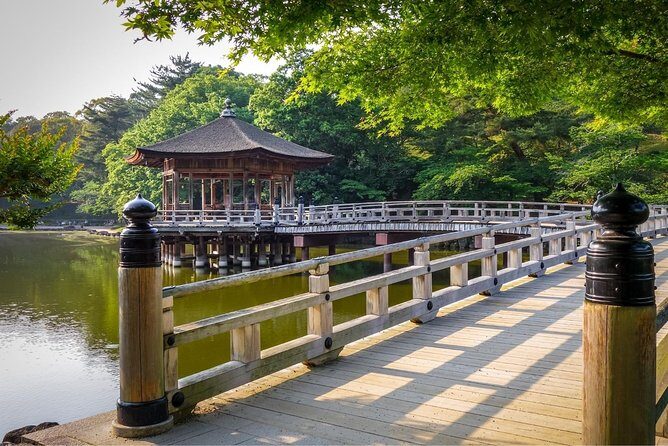
By the time you reach Isuien Garden, the day often shifts into a calmer register. This traditional garden is designed for quiet reflection, with layered views and a focus on aesthetic principles behind the landscaping.
Garden time is not just a break from crowds. It changes your tempo. Temple and shrine stops can be about grandeur and scale, but a garden asks you to slow down and look at how views are composed. With a guide, you’re more likely to understand why the arrangement matters—especially when you notice how layered perspectives work as you move through paths.
In terms of pacing, I love this stop late enough to feel like a reward, not a pause right in the middle. It balances the physical effort of earlier walks and gives you a chance to collect your photos and thoughts before the day winds down.
Food, Shopping, and Budget Reality in Kansai
Food isn’t included, so you’ll be choosing meals on your own expense. The tour description also frames the day as an opportunity to enjoy authentic Kansai cuisine with a local insider, but that still means you’re paying for what you eat.
This is where private touring can either save you money or cost you extra—depending on your choices. If you want budget-friendly comfort food, tell your guide up front what you’d like to spend. If you want one proper sit-down meal or a specific regional snack, you can usually build it into the route.
Shopping can also take time. One of the most consistent praises is for guides who are patient during souvenir browsing and perusing. That’s important because Nara can be a place where you suddenly want one more small thing—deer-themed items, shrine souvenirs, and local snacks. If shopping matters to you, make sure it’s included in your style preferences so the pacing doesn’t feel rushed.
Price and Value: What You’re Actually Paying For
At $384.40 per person for a roughly 9-hour day, this isn’t a budget add-on. You’re paying for the private guide time and for included entrance tickets to several top sites, plus transportation support like help with rail ticket organization.
So what’s the value? In practice, it comes down to three things:
- Time savings: navigating trains and moving between specific sites without guessing helps a lot.
- Included key admissions: you’re covering entry to Todai-ji, Nigatsu-do, Kasuga Taisha, Kofuku-ji, and Isuien Garden as part of the experience.
- Personal routing: the guide can tailor the day to your interests after you share preferences.
But here’s the caution I take seriously: one low rating criticized a guide for not teaching much about the sights. That doesn’t mean every guide is the same, but it is a reminder that private touring works best when you’re clear. Write down what you want to learn before you go, and ask early on how you’ll spend your time—temple details, cultural context, photo stops, or just an efficient route.
Who Should Book This Nara Day Trip
This is a great fit if you want:
- A structured day with a human plan: especially if you’re traveling in a way that needs guidance to connect the dots.
- Top Nara sights without guesswork: Todai-ji, Kasuga Taisha, Kofuku-ji, Nigatsu-do, and Isuien Garden are major stops.
- Flexibility: guides have been praised for adapting when plans change, including pickup adjustments.
It’s also a solid choice for first-timers who want Nara to feel meaningful, not just crowded. And it works well for people who enjoy a mix of big monuments, shrine atmosphere, and a calm garden reset.
If you’re the type who wants zero walking, you might find the mostly walking format challenging. If you hate public transport and taxis, you may feel boxed in too. And if you want the day to center heavily on meals rather than sites, you’ll need to steer the timing yourself.
Should You Book This Osaka-to-Nara Private Tour?
Yes, I think you should book it if you’re aiming for a smooth, high-impact Nara day with tickets handled and a guide who can shape the pace. The included admissions across multiple major landmarks are a strong base, and the private format is ideal for pairing cultural stops with the kind of time you personally enjoy—whether that’s lingering for photos or focusing on explanations.
I’d only hesitate if you dislike walking-heavy days or if you’re hoping for a purely self-guided experience. If you do book, send clear preferences and must-sees, and ask how your day will flow at the start. That’s how you get the best version of this private format—and avoid a day that feels like you only walked and looked.
FAQ
How long is the Osaka to Nara day trip?
The experience is about 9 hours, including travel time between Osaka and Nara.
Is this tour private?
Yes. It’s a private tour/activity with only your group participating.
What’s included in the ticket prices?
Entrance tickets are included for Isuien Garden, Todai-ji Temple, Kasuga Taisha Shrine, Kofuku-ji Temple, and Nigatsu-do.
Is the train transportation included?
Train transportation costs are not included. The guide organizes rail tickets for you, and Japan Rail Pass holders can travel free on JR lines.
Is food included?
No. Food and drinks are not included.
Does the tour include local transport in Nara?
It’s primarily a walking experience, and a private vehicle is not included. Public transportation or local taxis may be used between sites, and any exact costs can be discussed with your host.
What does the JR Nara bus pass cover?
A one-day free bus pass is included, starting from JR Nara.
Can I cancel for free?
Free cancellation is available. You can cancel up to 24 hours in advance for a full refund.