REVIEW · OSAKA
Experience Cooking Takoyaki in its Birthplace, Osaka
Book on Viator →Operated by タコヤキづくり体験 · Bookable on Viator
A takoyaki class is Osaka in bite-size form. This hands-on workshop at 369 Kitchen Studio teaches you how to cook Osaka takoyaki with a rotating takoyaki machine and then eat it hot with toothpicks, plus Ramune. What I like most is the coaching focus on technique and the freedom to personalize your fillings, not just the classic octopus. One thing to consider: it runs about 2 hours, so if you want a long sightseeing day, you will need to plan your timing.
You can also feel how much the class leans into real local habits: gathering, cooking, and eating together. In the instructor team, Zen and Lisa are mentioned by name in one set of experiences, and Masa and Risa show up in another, with a chef-and-assistant style of teaching that emphasizes patience. If you are coming with very small kids, the setup is described as safe for them, but you still should expect active cooking time and hot food.
In This Review
- Key things that make this Osaka takoyaki class worth your time
- Takoyaki belongs to Osaka kitchens, not just street stalls
- Where the class happens: 369 Kitchen Studio near Umeda
- The takoyaki lesson: batter, rotating heat, and that crisp-soft texture
- Customize your fillings: octopus is traditional, not required
- Eating the results: toothpicks, hot bites, and an Osaka-style snack party
- Price and value: $42.35 for a hands-on Osaka skill
- Timing, weather, and what to plan around
- Who should book this Osaka takoyaki class
- Should you book? My practical take
- FAQ
- How long is the takoyaki cooking experience in Osaka?
- How much does the experience cost?
- Where do I meet for the tour?
- Is the ticket mobile?
- Is octopus required for the filling?
- What drink do I get with the takoyaki?
- How many people are in the group?
- Do I get to eat what I cook?
- When should I book to have a good chance of getting in?
- What happens if weather is poor?
Key things that make this Osaka takoyaki class worth your time
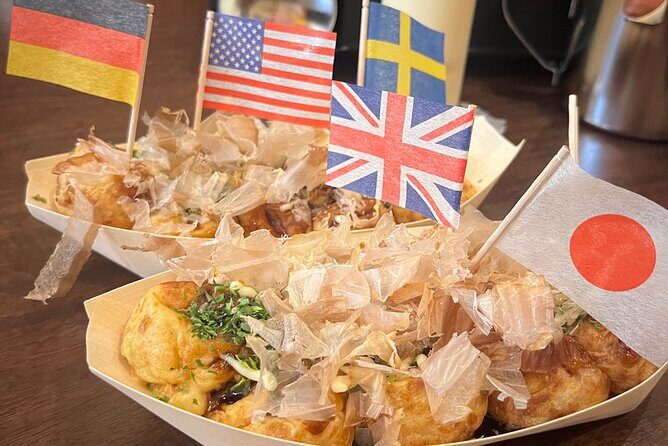
- A rotating takoyaki machine that helps you get that crispy outside and soft inside texture
- Octopus is optional, with cheese and crab sticks available for original combos
- Technique coaching in small groups (up to 12), so you are not just watching from the sidelines
- A fast cook time (about 20 minutes) before you eat freshly made takoyaki
- Ramune included, served with its signature marble inside the bottle
- Designed to feel like an at-home Osaka takoyaki gathering, not a food spectacle
Takoyaki belongs to Osaka kitchens, not just street stalls
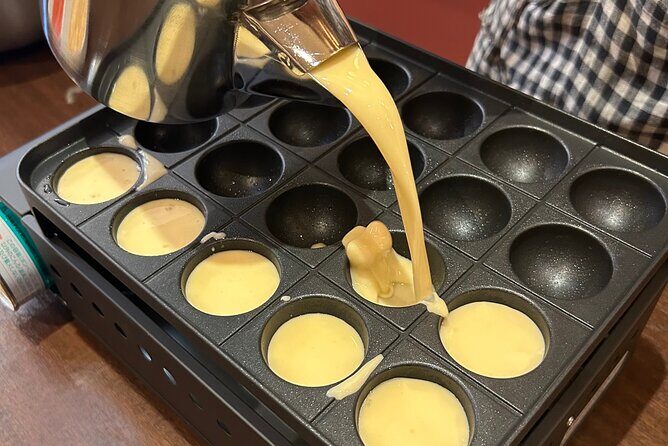
Takoyaki started in Osaka, and that origin matters. In many cities you buy street food and keep moving. Here, you slow down long enough to understand why takoyaki is so beloved: the batter, the pan shape, and the rotating cooking method all work together to produce that signature texture contrast.
You also get the Osaka habit of treating takoyaki like a small social event. The idea is not just eating; it is cooking together, swapping filling ideas, and turning it into a toothpick-in-hand snack party. The class even frames the filling choices as part of the fun, so you can build versions that match what you actually like to eat.
You can also read our reviews of more cooking classes in Osaka


Where the class happens: 369 Kitchen Studio near Umeda
You meet at a specific address in Kita Ward, Sonezakishinchi, at the 巽住宅 梅田ビル location:
Japan, 〒530-0002 Osaka, Kita Ward, Sonezakishinchi, 2-chōme−1−13 巽住宅 梅田ビル
The tour uses a mobile ticket, and the venue is described as near public transportation, which is handy in Osaka where trains can save you from slow surface travel. The experience ends back at the meeting point, so you do not have to figure out a second transfer to keep your day moving.
The small group size is a big deal here. With a maximum of 12 travelers, you are more likely to get individual help during the cooking steps, especially when flipping and shaping the batter in the takoyaki molds.
The takoyaki lesson: batter, rotating heat, and that crisp-soft texture
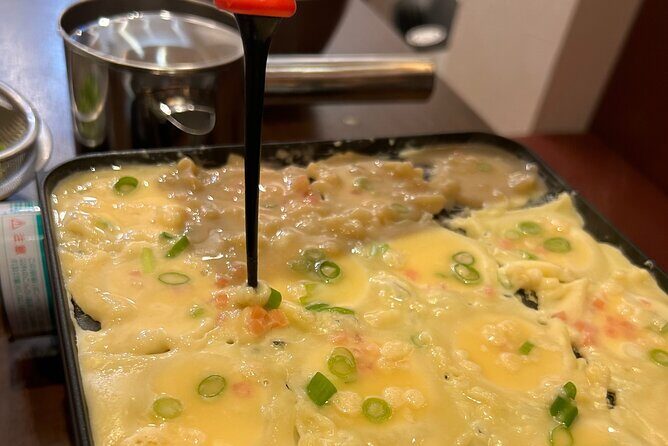
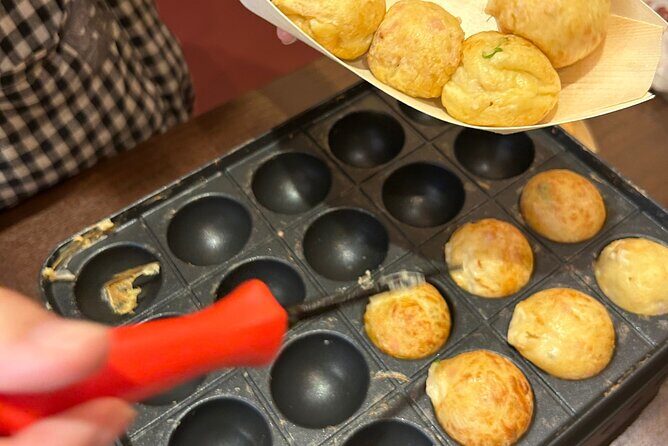
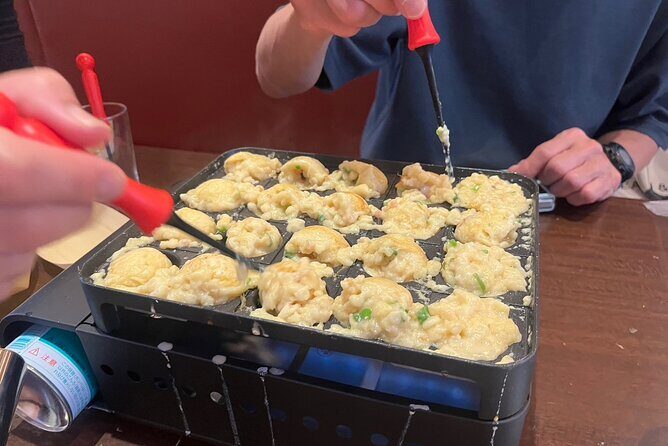
The core of the experience is learning how to use the special takoyaki machine. The machine rotates as it cooks, and that rotation is part of how you get the finished look: rounded balls with crisp edges and a tender interior.
You should expect an easy-to-follow flow:
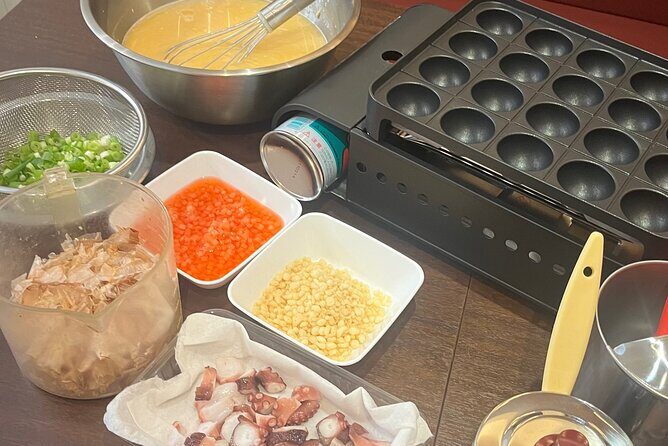
- You start by understanding how the batter works in the molded pan
- You then cook the takoyaki using the machine’s rotating method
- In about 20 minutes, you get freshly made takoyaki ready to eat
That time matters because it keeps the food experience fresh. Takoyaki is at its best hot, and the class is structured so you are eating what you just cooked rather than something sitting around.
Also, pay attention to the technique tips you receive. In multiple instances, instructors are described as patient and practical, with guidance that helps you refine your method. You can treat it like a crash course: once you understand the flipping and shaping rhythm, you are set up to make better takoyaki again later at home.
Customize your fillings: octopus is traditional, not required
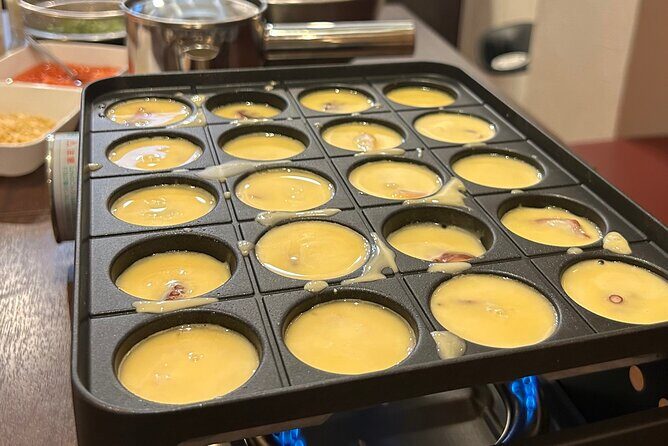
Traditional takoyaki often includes octopus, but this class makes a key point: the filling does not have to be octopus. That is great if you are avoiding seafood or if you just want variety.
They also provide options like:
- Cheese
- Crab sticks
So you can treat takoyaki like a blank canvas. Even if you go in thinking you want the classic style, it is worth making at least one extra version with a different filling so you can compare textures and flavor payoff. Cheese takoyaki, for example, tends to reward careful cooking because melted cheese can turn gooey quickly, while crab sticks can add a salty-sweet seafood vibe without the stronger octopus flavor.
One more practical win: the class is described as suitable for small children. That does not mean it is a passive meal. It means the setup and timing are handled in a way that families can participate without it turning into pure chaos.
Eating the results: toothpicks, hot bites, and an Osaka-style snack party
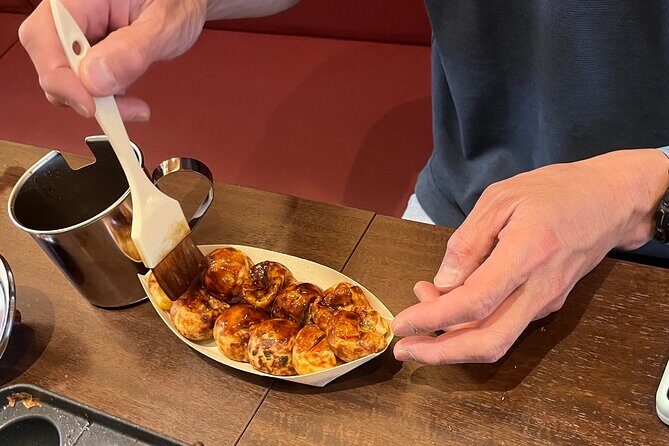
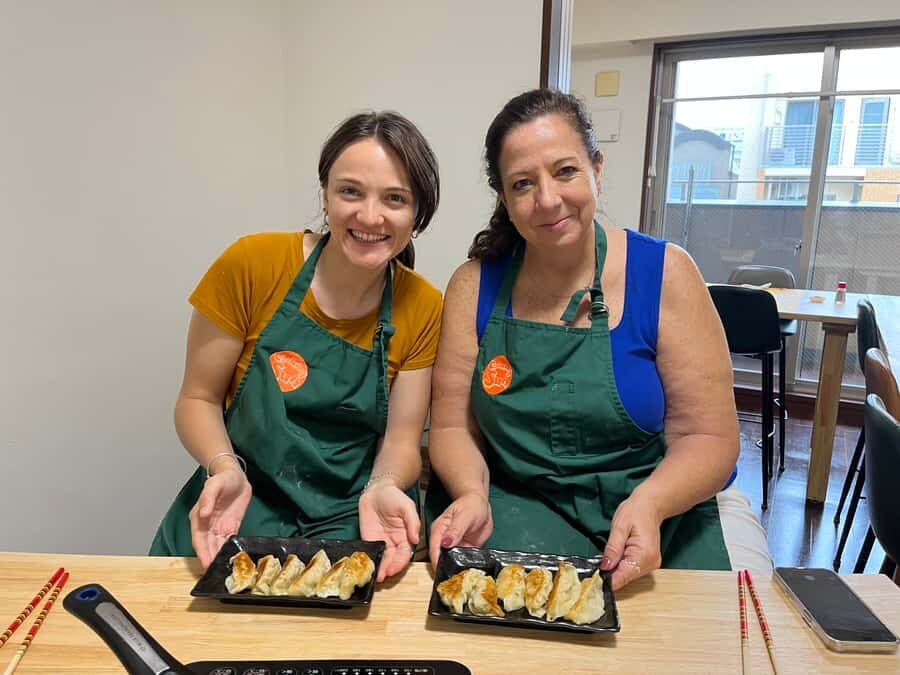
Right after cooking, you eat your takoyaki while it is hot. You use a toothpick, which is a very Osaka way of keeping it casual and snackable. The ball format is perfect for sharing too, because it is easy to pass around and sample different fillings.
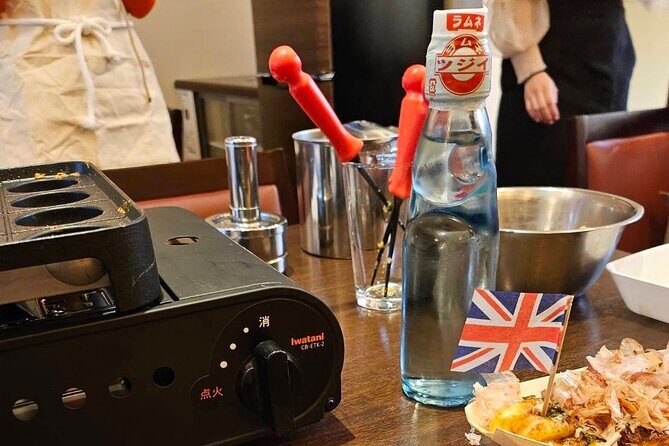
Alongside the takoyaki, you enjoy Ramune, a traditional Japanese carbonated drink. The defining detail is the glass ball inside the bottle. That simple little feature makes the drink feel like more than just soda, and it gives the whole experience a celebratory tone.
This is where the class format really pays off. The point is not only learning technique. It is enjoying the output together, like a mini at-home takoyaki party. If you like food experiences where you participate, not just observe, this is one of the better styles.



Price and value: $42.35 for a hands-on Osaka skill
The price is $42.35 per person, and the experience runs about 2 hours. On its face, that is not a bargain like a casual snack stop. But it is also not an expensive full-day tour. The value comes from what you actually do.
You are paying for:
- Hands-on instruction with a rotating takoyaki machine
- A short, structured cooking session that produces a meal you eat immediately
- Custom filling options like cheese and crab sticks
- A included drink, Ramune
You are also in a small group (up to 12), which improves your odds of getting help when something goes sideways with batter or timing. Based on how the teaching is described in feedback, the instructors focus on tips and tricks that help you correct technique and improve results.
One timing note: this kind of class is booked on average about 15 days in advance. If you are traveling during peak seasons or around major weekends, booking early is smart.
Timing, weather, and what to plan around
The session takes about 2 hours, and it is designed so you cook and then eat right away. That makes it easy to fit into a day, especially if you are already planning time around Umeda and Kita Ward.
There is one condition you should treat seriously: the experience requires good weather. The tour description states that if it is canceled due to poor weather, you will be offered a different date or a full refund. That means you should keep an eye on the forecast and avoid scheduling this as your only plan on a day with uncertain weather.
Also, wait for your confirmation. You should receive confirmation within 48 hours of booking, based on availability.
Who should book this Osaka takoyaki class
This experience is a strong match if you want:
- A real Osaka food lesson beyond buying takeout
- A hands-on cooking activity where you actually make the food
- A low-stress group activity that families can handle, including small children
- A taste of local culture through food rituals like Ramune and toothpick eating
It is also a good option if you are not trying to do a long agenda of multiple stops. In about two hours, you get a complete cycle: cook, eat, and learn how it is made.
If you hate cooking mess, this may not be your vibe. But if you are the type who likes to learn by doing, it is exactly that.
Should you book? My practical take
Yes, you should consider booking this class if your Osaka plan includes food and you like interactive experiences. The rotating machine, the short cook time, and the included Ramune make it feel like a full experience, not just a demonstration. The biggest reason to book is also the simplest: you leave with a repeatable skill. Once you understand the rhythm of cooking takoyaki in those molds, you can chase better results long after your trip.
Skip it if your schedule is too tight for a 2-hour session, or if your travel day is weather-dependent and you would hate to be rescheduled. Otherwise, it is an easy, practical way to taste Osaka at the hands-on level.
FAQ
How long is the takoyaki cooking experience in Osaka?
It lasts about 2 hours.
How much does the experience cost?
The price is $42.35 per person.
Where do I meet for the tour?
You meet at Japan, 〒530-0002 Osaka, Kita Ward, Sonezakishinchi, 2-chōme−1−13 巽住宅 梅田ビル.
Is the ticket mobile?
Yes. The tour uses a mobile ticket.
Is octopus required for the filling?
No. The filling does not have to be octopus. Cheese and crab sticks are also available.
What drink do I get with the takoyaki?
You get Ramune, a traditional Japanese carbonated drink.
How many people are in the group?
The experience has a maximum of 12 travelers.
Do I get to eat what I cook?
Yes. You cook takoyaki and then eat freshly made, hot takoyaki.
When should I book to have a good chance of getting in?
On average, it is booked about 15 days in advance.
What happens if weather is poor?
If the experience is canceled due to poor weather, you will be offered a different date or a full refund.