REVIEW · OSAKA
Kyoto Full Day Sightseeing Tour from Osaka or Kyoto
Book on Viator →Operated by F Trip · Bookable on Viator
Kyoto in one long day beats solo planning. I love the Tokugawa power you’ll see at Nijo Castle, and I really like how the day strings together Arashiyama bamboo with the city’s most famous temples. The main thing to consider: this is a long, packed day, and a few stops can feel more like a guided drop-and-go than a fully escorted walk.
Guides can make or break the experience, and you’ll find a big swing in style. On some departures, guides such as Jackson (who even coordinated by WhatsApp the day before) and Saki (with clear, thoughtful explanations) can turn waiting lines and crowded paths into something you actually enjoy.
Another consideration is time at each highlight. If it’s raining, and it often can be, you’ll still move between outdoor areas, so plan for wet shoes and less patience for detours.
In This Review
- Key Highlights You’ll Actually Feel
- A 9-Hour Kyoto Hit List: What the Day Really Feels Like
- Nijo Castle and the Tokugawa-Era Rooms You Can Picture Fast
- Arashiyama Bamboo, Nonomiya Shrine, Kimono Forest, and Togetsukyo
- Kinkaku-ji Golden Pavilion: Worth the Ticket Stop
- Fushimi Inari Taisha: Senbon Torii in a Limited Window
- Price and What You Pay for (Air-Conditioned Transport Isn’t the Whole Story)
- Guide Style Can Vary More Than You Think
- Timing, Weather, and Photo-First Strategies
- Who This Kyoto Tour Suits Best (And Who Might Feel Rushed)
- Should You Book This Kyoto Full Day Tour from Osaka or Kyoto?
- FAQ
- How long is the Kyoto Full Day Sightseeing Tour?
- Where does the tour depart from?
- What’s included in the tour price?
- Are admission fees included?
- Is lunch included?
- How many stops are there?
- Is the Arashiyama bamboo forest and shrine area ticketed?
- Is the tour group large?
- Can I cancel for a refund?
- What should I do if I’m traveling with stroller or large luggage?
Key Highlights You’ll Actually Feel
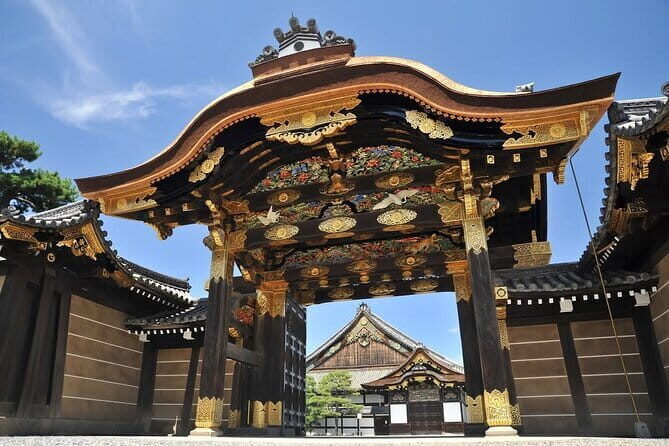
- Nijo Castle’s shogun-era interiors: built for Tokugawa Ieyasu, one of the best-preserved palace complexes of its kind.
- Arashiyama’s mix of nature + small shrines: bamboo forest, Nonomiya Shrine, Kimono Forest, and Togetsukyo Bridge in one tight block.
- Kinkaku-ji (Golden Pavilion): a UNESCO World Heritage temple with a ticketed entry stop that’s worth prioritizing.
- Fushimi Inari Taisha’s torii tunnel: thousands of vermilion gates, including a long, memorable walk even in a busy day.
- Packed schedule with mobile ticket convenience: easy entry tools, air-conditioned transport, but limited flexibility once you’re underway.
A 9-Hour Kyoto Hit List: What the Day Really Feels Like
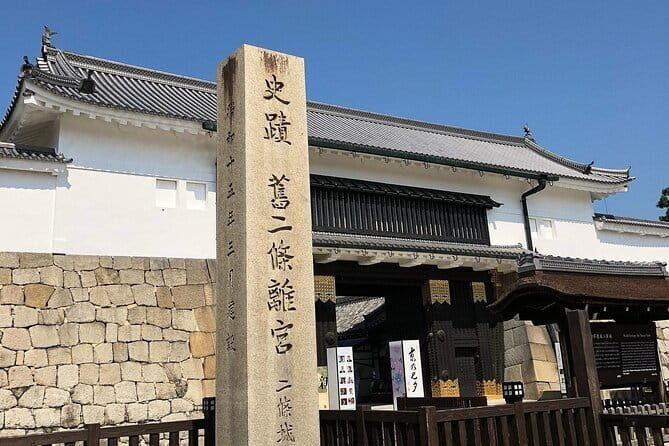
This is a full-day Kyoto tour that runs about 9 hours and starts either from Osaka or Kyoto. The structure is simple: ride between areas, then get time at each big name. You’ll cover four major sightseeing zones—Nijo Castle, Arashiyama, Kinkaku-ji, and Fushimi Inari Taisha—so it’s ideal if you only have one day and want the “greatest hits.”
The tradeoff is pacing. You get fixed time windows at each place, and you won’t have the luxury of lingering slowly. That works well for photo stops and quick sightseeing, but if you like long museum-style wandering, this may feel like a sprint.
The group size is capped at 45, which helps, but it doesn’t eliminate crowd pressure. Expect busy walkways at the most famous sights, especially around peak times or holidays. If you’re the type who gets stressed by crowds, build in a little patience and keep your day-plan simple.
You can also read our reviews of more tours and experiences in Osaka
Nijo Castle and the Tokugawa-Era Rooms You Can Picture Fast
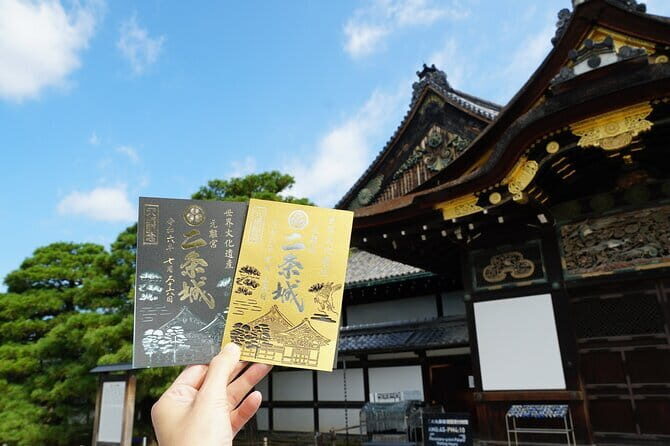
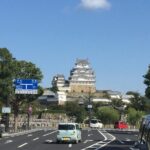
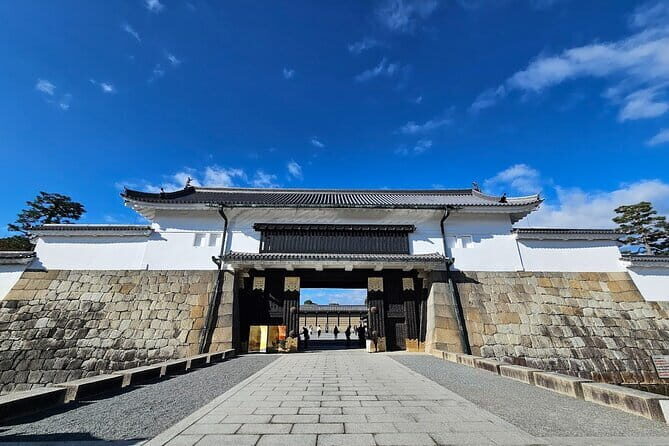
Nijo Castle (Nijo-jo) is the anchor stop, and it deserves it. The complex was built in 1603 as the Kyoto residence of Tokugawa Ieyasu, the first shogun of the Edo Period. In other words, this isn’t just a pretty castle. It’s a window into how power was presented through architecture and courtly spaces.
You’ll have about 1 hour here, and ticket costs are not included in the tour price. The admission is listed for Nijo Castle and the Ninomaru Goten Palace at ¥1,300 per person. If you arrive and want to see this quickly, one hour can work—especially if your guide gives you a few “look for this” cues before you walk in.
What makes Nijo Castle a standout for me is how it fits into a broader Kyoto story. You see the shogunate-era presence right in the city, then later you’ll get temple and shrine experiences that feel almost like a different world. This contrast—feudal palace authority to Zen garden calm to Shinto torii pilgrimage—hits hard on the same day.
Practical tip: wear shoes with grip. Castle floors can be slick, and you’ll be moving with a group through checkpoints and crowds.
Arashiyama Bamboo, Nonomiya Shrine, Kimono Forest, and Togetsukyo
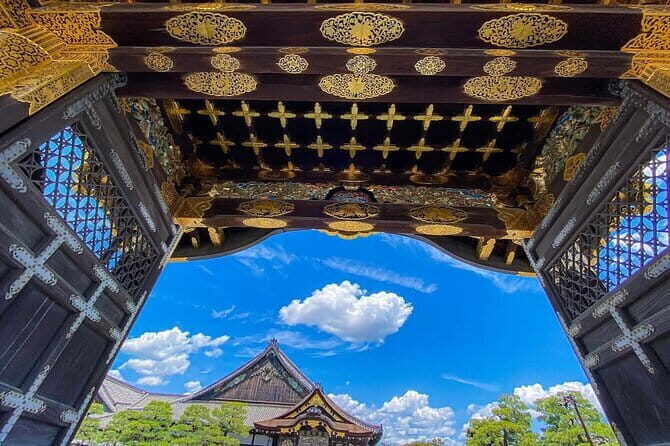
Arashiyama is the heart-of-the-day reset. It’s on the western side of Kyoto and brings a different texture: nature, scenery, and smaller spiritual stops mixed with a few Instagram-famous diversions.
You’ll spend time in several pieces:
- Arashiyama (20 minutes) as an orientation block.
- Arashiyama Bamboo Forest (40 minutes), free to enter.
- Nonomiya Shrine (20 minutes), also free.
- Arashiyama Kimono Forest (20 minutes), free.
- Togetsukyo Bridge (20 minutes), free.
A big plus here is variety. The bamboo forest is the “symbol” stop—towering stalks, a quieter mood than the streets around it, and the kind of scene where photos actually look good even if you’re not a pro. Then Nonomiya Shrine gives you a change of pace: it’s described as having a distinctive black torii gate, rather than the usual vermilion style you’ll see elsewhere in Kyoto.
Then comes Kimono Forest. It’s not a temple or shrine the way you’d expect—it’s a textile art installation made of 600 clear acrylic cylinders, each about 2 meters tall, covered with vibrant kimono fabric designs. It’s quick, but it’s also a fun “modern Kyoto” intermission, which is handy when you’ve already had a palace stop and are heading into more historic sacred sites.
Finally, Togetsukyo Bridge: this is the iconic photo spot in Arashiyama. It was originally built during the Heian Period and was reconstructed in the 1930s. Even with limited time, the bridge gives you a reference point for the wider area—how river views and temple-adjacent scenery work together here.
One caution: Arashiyama is outdoors-heavy. If it’s raining, you’ll be grateful for a waterproof layer and shoes you don’t mind getting wet.
Kinkaku-ji Golden Pavilion: Worth the Ticket Stop
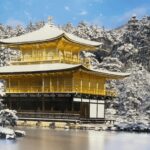
Kinkaku-ji, the Golden Pavilion, is a Zen Buddhist temple and a UNESCO World Heritage site. Its claim to fame is the dazzling golden exterior and the calm of its surrounding gardens.
You’ll have about 40 minutes here, and entry fees are listed separately at ¥500 per person. This is one of the few places in the day where you’re paying just to get in, so it pays to treat this stop like the priority it is.
Crowds can be intense. A good guide can help you avoid aimless wandering by pointing out where to look first, what angles work best, and how to pace your time so you still get a clean moment for photos. The tour style can vary, though. In some departures, you might get less in-the-gate guidance and more of a “go enjoy” handoff.
Still, even with less guidance, Kinkaku-ji is the kind of site where you can’t really do it wrong. The pavilion is the focal point, and the gardens reinforce that Zen mood fast.
Practical tip: if you want better photo odds, keep your expectations realistic. The best shot often comes from timing and patience, not gear.
Fushimi Inari Taisha: Senbon Torii in a Limited Window
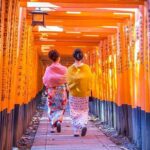
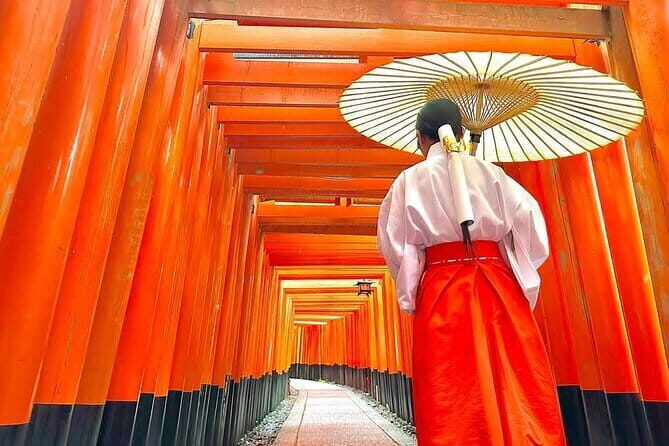
Fushimi Inari Taisha is pure Kyoto energy. It’s the head shrine for Inari, the Shinto god associated with rice, and it’s famous for Senbon Torii—thousands of vermilion torii gates.
You’ll have about 1 hour 10 minutes here, and admission is free. The time window is long enough to do a proper walk, but not long enough to go deep into every side path if you’re slow or stop often for photos.
Here’s the key: Inari is not just a single viewpoint. It’s a corridor of repetition—gate after gate. That makes it memorable, but it also means the experience depends on how you pace yourself. If the tour feels rushed that day, you might spend more time moving through crowds than letting the “tunnel” effect land.
Also, this is another outdoor-heavy stop. If it’s raining, the torii sequence becomes slippery and visibility drops. Pack a rain layer and keep an eye on footing. You’ll thank yourself halfway through.




Price and What You Pay for (Air-Conditioned Transport Isn’t the Whole Story)
The tour price is $67.00 per person, and you’ll get air-conditioned transportation plus a guide. That’s the core value: one ticket gets you organized movement across Kyoto without having to plan bus/train timing between far-flung zones.
But there are add-ons. You should budget for two ticketed attractions:
- Nijo Castle & Ninomaru Goten Palace: ¥1,300
- Kinkaku-ji: ¥500
Lunch is not included. That’s normal for Japan day tours, but it changes the math. If you want a sit-down lunch in a busy area, you’ll pay extra and you’ll lose time. If you’re fine with convenience food, you’ll spend less and stay on schedule.
So is $67 good value? For me, it’s solid if:
- you’re short on time in Kyoto,
- you’d rather pay for smooth logistics than plot route transfers,
- you’re happy with a fast “see the big sites” day.
It’s less compelling if you prefer slow travel, deep museum time, or lots of flexible wandering.
Guide Style Can Vary More Than You Think

This is where the tour’s reputation makes sense. The itinerary can look identical on paper, but the experience changes based on how much the guide actually escorts you inside each site.
Some guides are very hands-on. I saw plenty of praise for guides like Jackson and Allan for being organized, communicating clearly (including WhatsApp updates), and helping with timing so you don’t miss the rhythm of a crowded day. Theodore also earned strong marks for keeping things organized and sharing information while you’re moving.
Others, based on real feedback, were more like a bus facilitator than an active guide. In those cases, you might get fewer explanations at specific stops, or you may feel escorted only to entrances—then left to figure out the rest yourself. That’s not automatically a problem if you’re comfortable exploring on your own, but it can clash with what you’re expecting from a guided tour.
My practical advice: if you want a guide-led experience, assume you’ll need a bit of flexibility and confirm what “guided” means in the stops you care about most. If you’re hoping for constant commentary in every attraction, you should have a Plan B mindset.
Timing, Weather, and Photo-First Strategies
Because your day mixes castles, temples, and shrine walks, weather matters a lot. One bad rain day can turn “quick stops” into “wet, slow, and crowded.” Bring a compact umbrella or a light rain jacket and socks you’ll actually tolerate getting soaked.
Also, Kyoto can feel extremely crowded even when the itinerary is well designed. During peak periods, crowds don’t ruin the day, but they do change your speed. If you want the best experience, don’t try to do everything the hardest way.
A few tactics that help:
- Decide your must-have photo first at each stop.
- Stay calm about line movement; it usually flows better once you’re in it.
- Give yourself permission to skip the deepest side corridors if the group is moving faster than you like.
If you travel in summer heat, the advice from the best guide days is the same: drink water, wear breathable clothes, and choose footwear that won’t betray you after hours of walking.
Who This Kyoto Tour Suits Best (And Who Might Feel Rushed)
This tour fits best if you want a one-day Kyoto overview and you’re excited by variety: a shogun-era palace, bamboo nature, Zen temple gardens, and the torii gates walk.
You’ll probably like it if:
- you’re seeing Kyoto for the first time,
- you want someone else to handle transport timing,
- you’re comfortable moving at a moderate pace for hours.
You might not love it if:
- you dislike structured schedules,
- you want lots of free time at each site,
- you need a very accessible route with minimal walking between bus parking and entrances (there can be a short walk, and some locations require it).
In short: this is a great “sampler day.” It’s not a slow Kyoto day.
Should You Book This Kyoto Full Day Tour from Osaka or Kyoto?
Book it if you want a tightly planned day that covers the big Kyoto landmarks without you juggling buses and station transfers. The price is reasonable for the convenience, and the combination of Nijo Castle, Arashiyama’s bamboo area, Kinkaku-ji, and Fushimi Inari gives you a well-rounded taste of Kyoto in one go.
Skip it (or at least adjust expectations) if you’re expecting constant, stop-by-stop escorting with deep explanations at every entrance. The experience can lean more “transport + time windows” than full guiding depending on the guide that day.
If your top priority is to see these four highlights quickly and you’re okay with a full schedule, this is the kind of tour that makes sense.
FAQ
How long is the Kyoto Full Day Sightseeing Tour?
It runs for about 9 hours. The exact flow is built around several fixed stops, with time allocated at each main attraction.
Where does the tour depart from?
The tour operates from either Osaka or Kyoto, depending on where you choose to start.
What’s included in the tour price?
The tour includes air-conditioned transportation and a guide. It also uses a mobile ticket for the day.
Are admission fees included?
No. Admission fees are not included for Nijo Castle and Ninomaru Goten Palace (¥1,300 per person) and for Kinkaku-ji (¥500 per person).
Is lunch included?
No. Lunch is listed as not included.
How many stops are there?
There are 8 main stops: Nijo Castle, Arashiyama, Arashiyama Bamboo Forest, Nonomiya Shrine, Arashiyama Kimono Forest, Togetsukyo Bridge, Kinkaku-ji, and Fushimi Inari Taisha.
Is the Arashiyama bamboo forest and shrine area ticketed?
The Arashiyama segment stops (including the bamboo forest and the shrine area stops listed there) are marked as free, while Nijo Castle and Kinkaku-ji require separate admission fees.
Is the tour group large?
The maximum group size is 45 travelers.
Can I cancel for a refund?
Yes. There is free cancellation up to 24 hours before the start time for a full refund. Changes made less than 24 hours before the start time aren’t accepted.
What should I do if I’m traveling with stroller or large luggage?
You should indicate it when booking. The tour notes you should also inform them in advance if an order was placed separately from relatives or friends, to help avoid being assigned to different vehicles.