REVIEW · OSAKA
Nostalgic Osaka walk, totally different from Dotonbori
Book on Viator →Operated by Four Leaves · Bookable on Viator
Forget Dotonbori for a bit. This is old Osaka on foot. The Karahori neighborhood walk feels calm and real, not loud and neon, and I especially like the hands-on stops like tatami-making and the long-running craft shops. The one thing to plan for: it’s a lot of walking, including slight uphill/downhill, and some parts go through narrow paths where you need to be extra respectful of residents.
If Osaka feels overwhelming on your own, this tour is a smart shortcut. You get a local guide, a small group (up to 6), and a route that mixes daily-life shopping streets with quiet back lanes. It’s also built to fit your schedule with a morning or afternoon option, and the pace makes it easy to ask questions and get good restaurant and shop ideas for the rest of your trip.
In This Review
- Key highlights you’ll actually feel
- Why this Osaka walk is different from Dotonbori
- Meeting in Tanimachi and how the 2-hour pacing works
- Tatami in real life at Inoue Seijosho
- Karahori Shopping Street: old houses, daily errands, and machiya charm
- A renovated-house cafe break at クーデリーカフェ
- Bonito history at Maruyo-shoten (established 1765)
- Chocolate that feels tied to Karahori: Ek Chuah Kura
- Len – Karahori Residence: a traditional house turned into a shop complex
- The Osaka Castle original moat wall, seen from a hidden cafe side
- Price and value: what $36.13 gets you (and why it’s fair)
- Practical respect tips for the quiet lanes
- Who this tour is best for
- Should you book this nostalgic Osaka walk?
- FAQ
- How much does the nostalgic Osaka walk cost?
- How long is the tour?
- Is there a morning or afternoon option?
- What’s the group size?
- Where do we meet?
- Do I need a mobile ticket?
- What’s included in the price?
- Are meals included?
- Is coffee or tea included?
- Are there any rules for being late?
- Is good weather required?
- Are service animals allowed?
Key highlights you’ll actually feel
- Tatami workshop stop at Inoue Seijosho to see materials and the making machine up close (free admission)
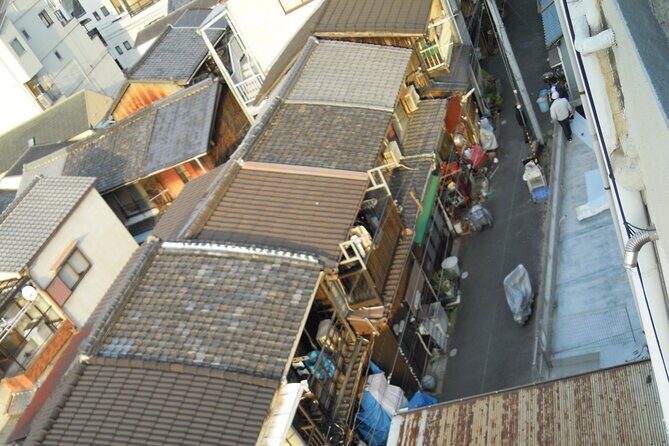
- Karahori Shopping Street + machiya lanes with old houses that date back over 100 years (free, and very strollable)
- Renovated-house cafes like クーデリーカフェ for a calmer break and souvenirs you won’t see at airport stores
- Maruyo-shoten bonito shop established in 1765, showing what authentic bonito looks and tastes like (free admission)
- Chocolatier Ek Chuah, Karahori Kura Main Shop for high-quality chocolate tied to the neighborhood
- A look at Osaka Castle’s original moat wall still remaining from the 15th century, seen from beside a hidden cafe
Why this Osaka walk is different from Dotonbori
Dotonbori is fun, fast, and very visual. It’s the Osaka most visitors aim for. But it can also make the city feel like one long, crowded corridor.
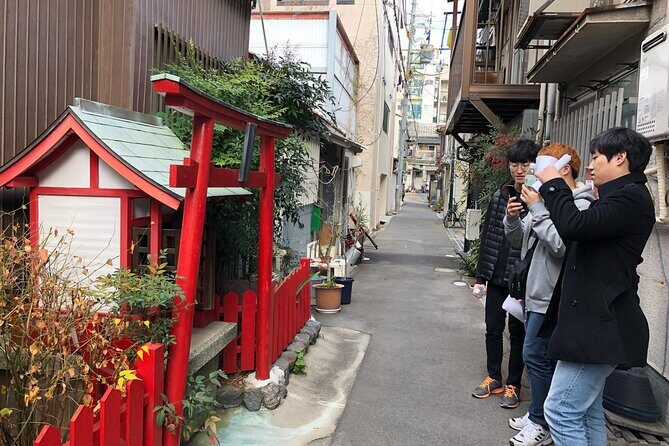
This walk is the opposite mood. Karahori is where you see how people live day to day: old shopfronts, quieter streets, and neighborhoods that still feel occupied rather than staged for tourists. You’re not rushing from photo spot to photo spot. Instead, you’re learning what makes this part of Osaka tick—through crafts, everyday shopping, and small local businesses.
I also like how the stops are connected. You don’t just bounce between random landmarks. Tatami, a nostalgic shopping street, cafes in renovated old houses, a centuries-old bonito shop, and chocolate from a well-known chocolatier all point to one theme: how older Osaka survives inside modern life.
The result is a “you get it” kind of visit. By the time you’re done, you can tell the difference between a city that performs for visitors and a city that carries its past into ordinary routines.
You can also read our reviews of more walking tours in Osaka
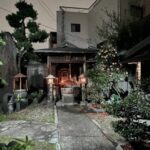

Meeting in Tanimachi and how the 2-hour pacing works
The tour starts at 6-chōme-2-24 Tanimachi, Chuo Ward, Osaka, 542-0012, and it ends back at the same meeting point. It runs about 2 hours, and it’s designed for a maximum of 6 travelers—small enough that your guide can slow down when someone has questions.
You’ll use a mobile ticket, and bottled water is included. Coffee and/or tea are not, and meals are also not included, so you’re free to buy what you want at the cafes or shops along the way.
One more practical note matters a lot here: parts of the route go through areas where older residents still live. The tour specifically asks you not to disturb inhabitants during the quiet, hidden-path walking. That means no blocking doors or gates, no loud chatter in tight lanes, and generally treating it like someone’s home neighborhood, because it is.
If you’re late by more than 15 minutes, you can’t join the tour. That’s not a “maybe.” It’s to keep things fair for the group and the schedule.
Tatami in real life at Inoue Seijosho
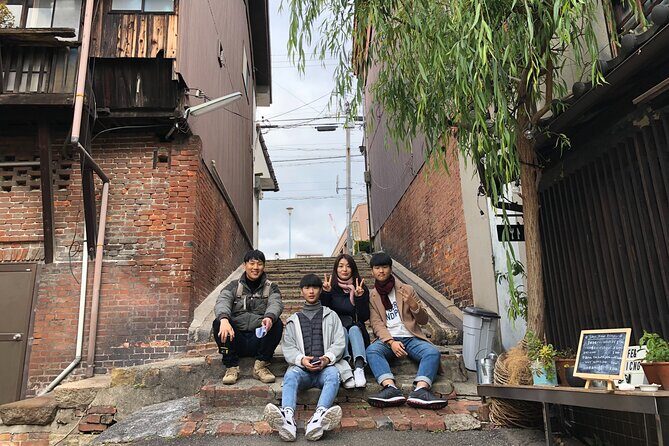
The walk opens with a stop at Inoue Seijosho, where you can see how tatami mats are made. You get to watch a master demonstrate the tatami material and also see a tatami-making machine in action. Admission is free for this stop.
Tatami sounds simple until you actually see the process. This is the kind of detail you’d miss if you only wander around markets or snap pictures of temples. The value here is practical understanding: tatami is not just a souvenir theme. It’s a craft with specific materials, tools, and know-how.
The timing is short—around 10 minutes—so it doesn’t turn the tour into a museum stop. It’s more like a quick, focused “here’s the real thing” introduction to traditional Osaka craftsmanship.
Also, if you like tactile crafts and making-related demonstrations, this tends to be one of those early moments that sets the tone for the rest of the walk.
Karahori Shopping Street: old houses, daily errands, and machiya charm
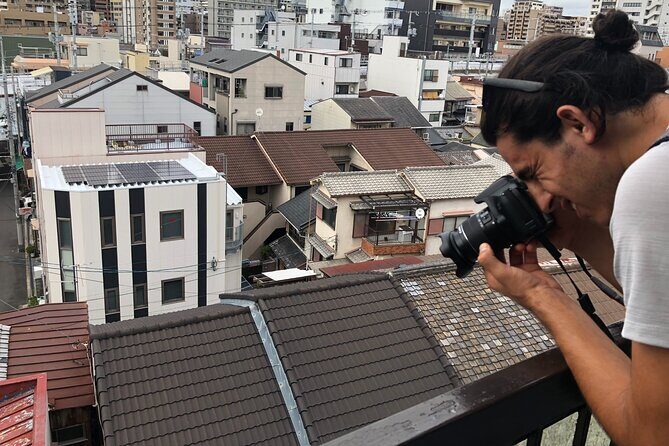
Next is Karahori Shopping Street, a local, day-to-day shopping street that also sits in a nostalgic, historical zone. This is where the tour starts to feel like real neighborhood life.
You’ll spend about 1 hour here, and the standout is the architecture: a lot of machiya (traditional townhouses), including homes that are over 100 years old. As you walk, you can feel the difference in scale and rhythm compared to Osaka’s bigger tourist areas.
Why this stop is so valuable is simple: you’re not only looking at old buildings, you’re walking through a living street where people still shop and move around. That’s what makes it feel different from a “heritage district” that looks preserved but quiet.
Drawback to consider: this part is walking-based, and the tour as a whole includes a fair amount of uphill/downhill. You don’t need to be an athlete, but comfortable shoes help, and you’ll want to keep your energy steady through the whole loop.
A renovated-house cafe break at クーデリーカフェ
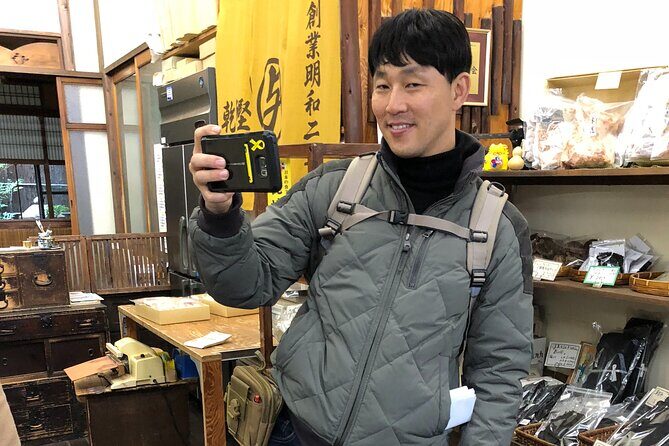
Then you shift to something softer: クーデリーカフェ (about 15 minutes). This is described as a hidden cafe in a renovated old house, which matters because it keeps the theme of older Osaka rather than turning the stop into a generic coffee stop.
Even if you don’t buy much, the value is in the setting. Renovation like this shows how older structures can stay useful. And since it’s part of the tour, the guide can point out what to look for and what kind of items are worth checking out.
This is also one of the stops where you can find shopping options that aren’t the same airport-souvenir circuit. The point is variety: small local goods that feel tied to the neighborhood instead of mass-produced gift racks.






Bonito history at Maruyo-shoten (established 1765)
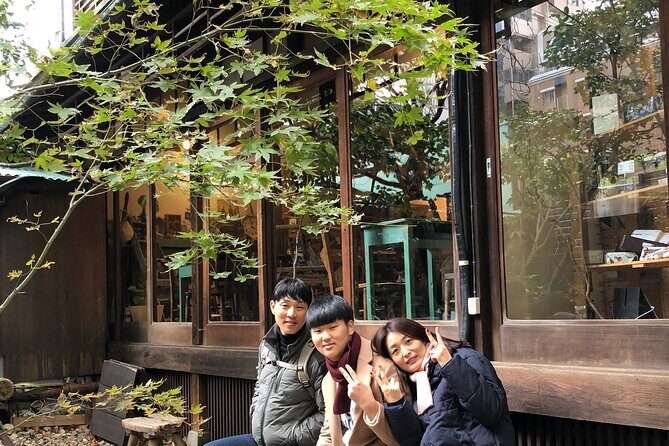
A quick, high-impact stop follows: Maruyo-shoten, a bonito shop established in 1765, meaning it has over 250 years of history. You’ll spend about 5 minutes here, and admission is free.
If you like food culture, this is one of the most memorable stops because it’s specific. Instead of talking in generalities about Japanese cuisine, you’re seeing a business focused on one product long enough to build real authenticity.
Even the short visit works because it’s not just “watch and go.” It’s framed as learning what is authentic bonito—so you leave with a better sense of what you’re actually tasting or buying later in a restaurant or market.
Chocolate that feels tied to Karahori: Ek Chuah Kura
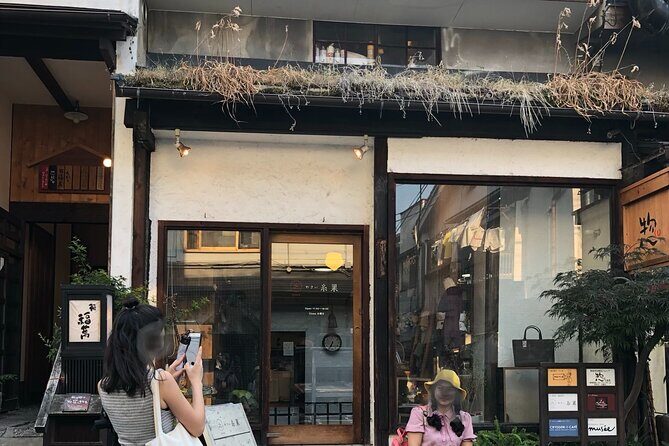
After bonito, you get a sweet stop at chocolatier Ek Chuah, Karahori Kura Main Shop. It’s a short stop (about 5 minutes), but it’s the kind of shop stop that can make your trip’s souvenirs make sense.
Chocolate is a common buy in Japan, so the question is always: what’s different here? This shop is positioned as a top choice for Osaka chocolate, and the Karahori connection makes it feel more “place-specific” than a generic brand counter.
If you’re the type who likes gifts for people back home, this is better than grabbing whatever’s closest to a station. It’s the kind of purchase that feels like a story you can tell.
Len – Karahori Residence: a traditional house turned into a shop complex
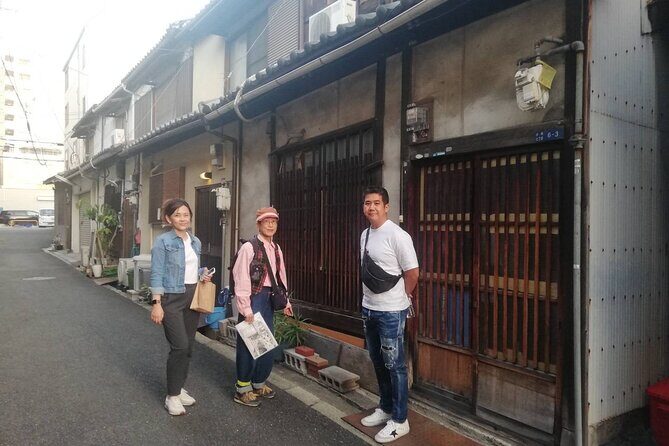
Then there’s Len – Karahori Residence, described as a traditional house refurbished into a commercial complex. You get about 10 minutes here.
This stop is all about browsing at a slow pace. You can pick up unique items—souvenirs that don’t feel like the same product assortment you see in bigger retail chains. It’s also a good reset point mid-walk, since you’re no longer focused on just sightseeing. You’re actually stepping into a place where the old structure has a new role.
One thing to keep in mind: if you’re not into shopping, you might treat this as a short look-and-learn stop. But if you like gifts, craftsmanship, or finding something unusual to bring home, this is time well used.
The Osaka Castle original moat wall, seen from a hidden cafe side
The tour ends with a quiet, intriguing combo: a hidden cafe in an alley, and right beside it, you can see the Osaka Castle original moat wall—with the note that it remains since the 15th century.
This kind of sight is hard to find on your own because it’s not an obvious “big monument from the street” moment. You only get it because the route takes you into the alleys and positions you where you can actually see remnants of that older landscape.
The best part is how it ties together everything you’ve seen: the tatami craft at the beginning, machiya houses and daily shopping in the middle, and finally a physical trace of older Osaka’s defenses and city planning. It’s like the neighborhood history clicks into place.
Price and value: what $36.13 gets you (and why it’s fair)
At $36.13 per person for about 2 hours, this is not a luxury splurge. It’s priced like a practical local-guiding experience.
Here’s why it feels like good value:
- You get a small-group route (up to 6), which improves conversation and makes it easier to ask questions.
- You visit multiple specialty shops and culturally tied stops, including tatami craft, a 1765 bonito shop, and a major Osaka chocolate shop.
- Bottled water is included, and the stops listed are free-admission points.
- You get guidance for navigation and context in an area that’s hard to interpret from just walking around.
One more value point: it’s bookable in both morning and afternoon. That flexibility helps you avoid wasting half a day trying to “figure it out” in a neighborhood you’re not sure how to read.
This tour is often booked about 24 days in advance on average, which usually means it fills up for weekends or peak travel times. If your schedule is fixed, it’s worth locking it in earlier rather than waiting.
Practical respect tips for the quiet lanes
This route is fun, but it comes with an etiquette side that really matters in places like Karahori. The tour includes a clear reminder: don’t disturb residents during the hidden paths walking, because older grandparents still live in the area.
So, keep your voice down in narrow sections. Don’t block entrances. And when you see a resident’s gate or doorway, treat it like you’re walking past someone’s home, not a photo background.
It’s also worth remembering the tour groups are capped at 6. That small size is part of what makes the experience work, so don’t arrive late, don’t drag your pace, and be ready to start on time.
Who this tour is best for
You’ll probably love this if you want Osaka without the nonstop crowds.
This is especially a good match if:
- You’re curious about everyday Japan, not only big-name sights
- You like crafts and food culture, especially when they’re tied to a long-running shop like Maruyo-shoten
- You want souvenirs that don’t feel like the same items you’ll see everywhere
- You enjoy slow walking and asking questions while you move
It’s also a good choice for couples or friends who don’t want a rigid checklist tour, but you still want a guide to connect the dots.
Should you book this nostalgic Osaka walk?
I’d book it if your goal is to understand Osaka as a lived-in city, not just a photo set. The mix of tatami craft, Karahori machiya streets, renovated-house cafes, and a centuries-old food shop gives you variety without chaos. The group size and guided context make the neighborhood easier to appreciate.
Skip it only if you strongly dislike walking or you know you’ll struggle with uneven pacing and slight slopes. Also, if you’re hoping for a major landmark-style tour with big exterior sights every few minutes, this is more about quiet streets and small, meaningful stops.
If you want something that genuinely feels like a different Osaka from Dotonbori, this one delivers.
FAQ
How much does the nostalgic Osaka walk cost?
It costs $36.13 per person.
How long is the tour?
The tour lasts about 2 hours.
Is there a morning or afternoon option?
Yes, you can choose either a morning or an afternoon tour to fit your schedule.
What’s the group size?
This tour has a maximum of 6 travelers.
Where do we meet?
You meet at 6-chōme-2-24 Tanimachi, Chuo Ward, Osaka, 542-0012, Japan.
Do I need a mobile ticket?
Yes, it uses a mobile ticket.
What’s included in the price?
Bottled water is included.
Are meals included?
No. Meals are not included, and you’ll need to buy your own food if you want to eat.
Is coffee or tea included?
No. Coffee and/or tea are not included.
Are there any rules for being late?
Yes. If you are late by over 15 minutes, you cannot join the trip.
Is good weather required?
Yes. The tour requires good weather, and if it’s canceled due to poor weather, you’ll be offered a different date or a full refund.
Are service animals allowed?
Yes, service animals are allowed.