REVIEW · OSAKA
Osaka: Cooking Class & Sake Tasting with Local Market Visit
Book on GetYourGuide →Operated by MagicalTrip · Bookable on GetYourGuide
Osaka’s food lesson starts before you cook. This 4-hour class pairs a local supermarket stop with hands-on cooking of Osaka favorites, and I especially like the step-by-step teaching and the chance to trade food talk with your English-speaking guide. One thing to plan around: there’s no gluten-free option, and the class involves cutting and heating.
What makes it work is the pacing. You shop for what you’ll cook, you cook in a relaxed studio (small group, up to 7), then you eat what you made alongside drinks like sake or beer. It’s a fun way to learn home-style methods you can repeat, not just a quick tasting.
In This Review
- 6 Key Things That Make This Osaka Cooking Class Worth It
- Meeting at Minami Morimachi: Getting Oriented Fast
- The Market Stop: Where Osaka Food Starts Making Sense
- Inside the MagicalTrip Cooking Studio: Calm, Friendly, Hands-On
- Cooking Osaka’s Three Favorites: Niku-sui, Okonomiyaki, Gyoza
- Niku-sui: A Comforting Beef Soup Method You Can Repeat
- Okonomiyaki: Osaka’s Savory Pancake with Personal Variations
- Gyoza: Folding Dumplings That Encourage a Little Creativity
- What You Eat: Lunch That Matches the Work
- Drinks While You Cook: Sake, Beer, and Easy Conversation
- English-Speaking Guides Who Actually Teach
- Recipes You Can Take Home (and Actually Use)
- Price and Value: What $90 Buys You in Osaka
- Dietary Notes You Should Not Skip
- Who This Osaka Cooking Class Fits Best (and Who Might Prefer Something Else)
- Should You Book This Osaka Cooking Class?
- FAQ
- What dishes do you cook in the Osaka class?
- How long is the experience?
- Where is the meeting point?
- Is the class suitable for vegetarians or vegans?
- What drinks are included?
- How big is the group?
6 Key Things That Make This Osaka Cooking Class Worth It
- You shop first at a local supermarket, so the ingredients actually match what you’ll cook
- Small group setting (max 7) keeps questions easy and the cooking flow calm
- Three Osaka staples in one session: niku-sui, okonomiyaki, and gyoza
- English-speaking local guide who also shares city and food context as you cook
- Drinks included (3 canned options, alcoholic or non-alcoholic) to make the meal feel social
- You get take-home support, including recipes after the tour and photos emailed afterward
Meeting at Minami Morimachi: Getting Oriented Fast
Your tour starts in a straightforward spot: in front of FamilyMart, just a 1-minute walk from the 4B Exit of Minami Morimachi Station. That kind of meeting point matters more than you’d think. In Osaka, things are close but not always obvious, and a clear starting landmark cuts down on stress.
From there, the flow is simple: you’ll head to the market first, then move to the MagicalTrip Original Cooking Studio. This order is smart. By the time you’re slicing, mixing, and frying, you already understand what you bought and why it matters.
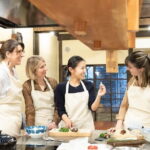
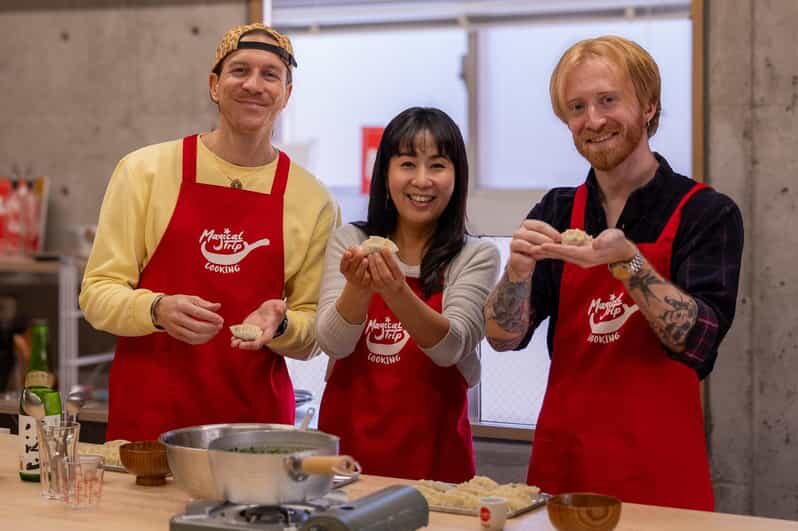
Also, you’ll be in a small group (limited to 7 participants). That size keeps the class interactive. You’re not watching from the sidelines while someone else holds the knife.
You can also read our reviews of more food & drink experiences in Osaka

The Market Stop: Where Osaka Food Starts Making Sense
The tour begins with a visit to a local supermarket to pick up fresh ingredients. This is more than a cute “look at Japan” detour. For home cooks, it’s the part that teaches you how Japanese ingredients fit into everyday meals.
You’ll get to see what’s available and what people actually buy for quick, satisfying dishes. And because you’re shopping with the guide, you can ask practical questions on the spot, like what substitutions work or which items affect flavor the most.
A couple things I like about this market approach:
- It helps you remember the dishes later. You can picture the ingredient stage, not just the final plate.
- It improves your odds of recreating the recipes back home. When you know what to look for, shopping at home becomes easier.
The only real “watch out” is energy. Market-and-cooking tours work best when you come hungry and ready to stand and walk for a bit.
Inside the MagicalTrip Cooking Studio: Calm, Friendly, Hands-On
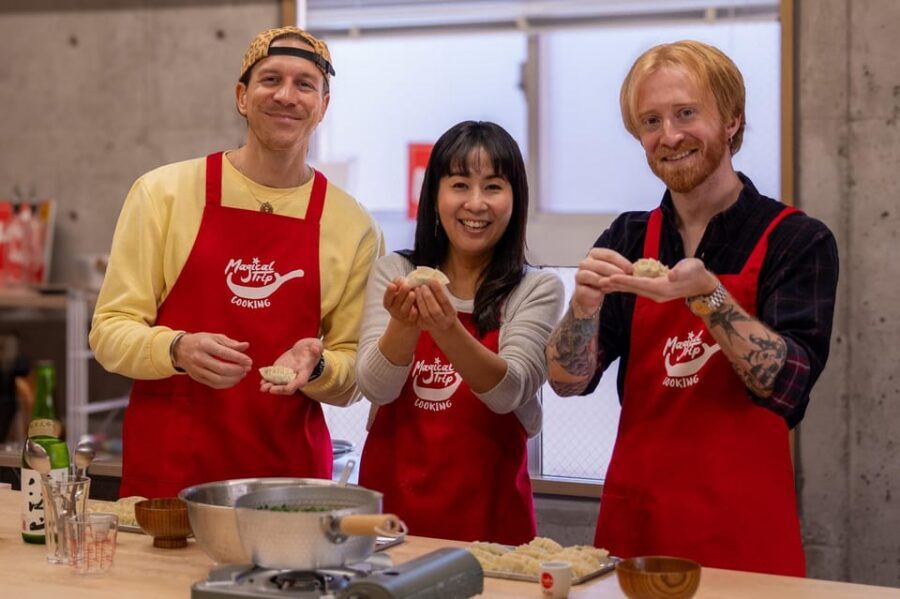
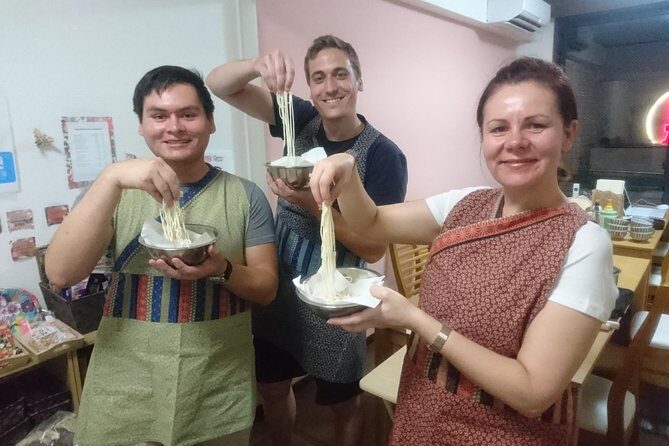
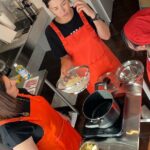
Back at the studio, you’ll cook in a welcoming setup where a local guide walks you through each recipe step-by-step. The studio portion is relaxed, but you’re not just observing. You’ll actively make the dishes, so the learning sticks.
Your guide is English-speaking, and the class is designed for beginners. That doesn’t mean it’s watered down. It means the steps are explained clearly, and you’re supported as you go.
One nice touch: guides have been known to make the experience feel personal, like setting up the room with Christmas decorations and being especially attentive to the group’s vibe. Another guide style that comes through: some hosts keep the class playful and social, with small touches like letting you choose background music while you cook.
Cooking Osaka’s Three Favorites: Niku-sui, Okonomiyaki, Gyoza
You’ll make three iconic dishes: niku-sui, okonomiyaki, and gyoza. The best part is that they teach different cooking techniques, not just “stir and done.”
Niku-sui: A Comforting Beef Soup Method You Can Repeat
Niku-sui is a flavorful beef soup loved locally, and it’s treated like a home-style staple. In class, you’ll learn how to build the flavor base and get the balance right, using ingredients that are described as authentic yet simple.
Why this matters for you: soups are the easiest dishes to replicate at home. Once you understand the method—what to simmer, what to combine, and how it should taste as it cooks—you’ll be able to adapt it with what’s easy to find where you live.
You can also read our reviews of more shopping tours in Osaka

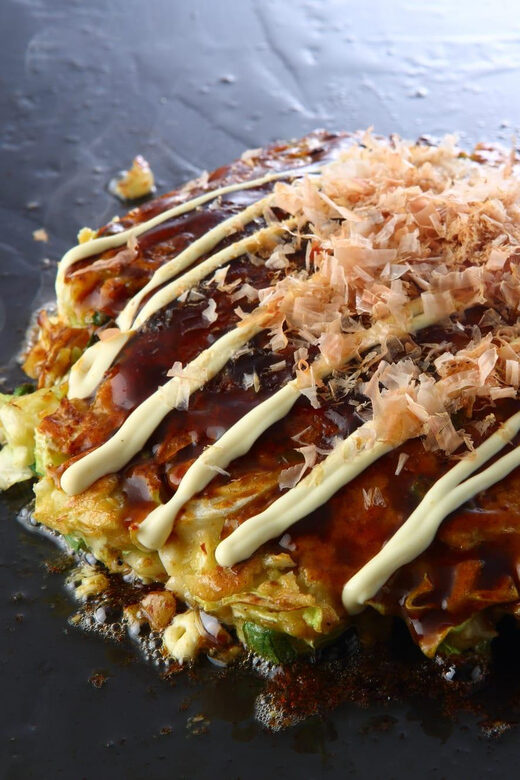
Okonomiyaki: Osaka’s Savory Pancake with Personal Variations
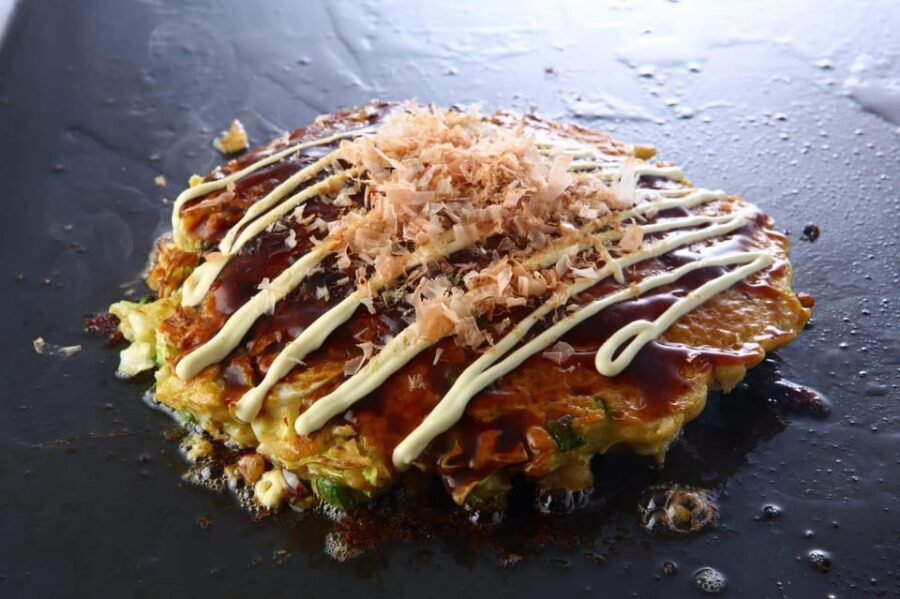
Okonomiyaki is Osaka-famous for a reason: people genuinely have their own versions. In the class, you’ll work through the recipe and learn the practical approach to assembling and cooking it.
What I like here is that okonomiyaki teaches “texture thinking.” You’ll learn how to cook it so it ends up savory and satisfying rather than floppy. And because locals have endless personal variations, this dish gives you a flexible skill for future dinners.
Gyoza: Folding Dumplings That Encourage a Little Creativity
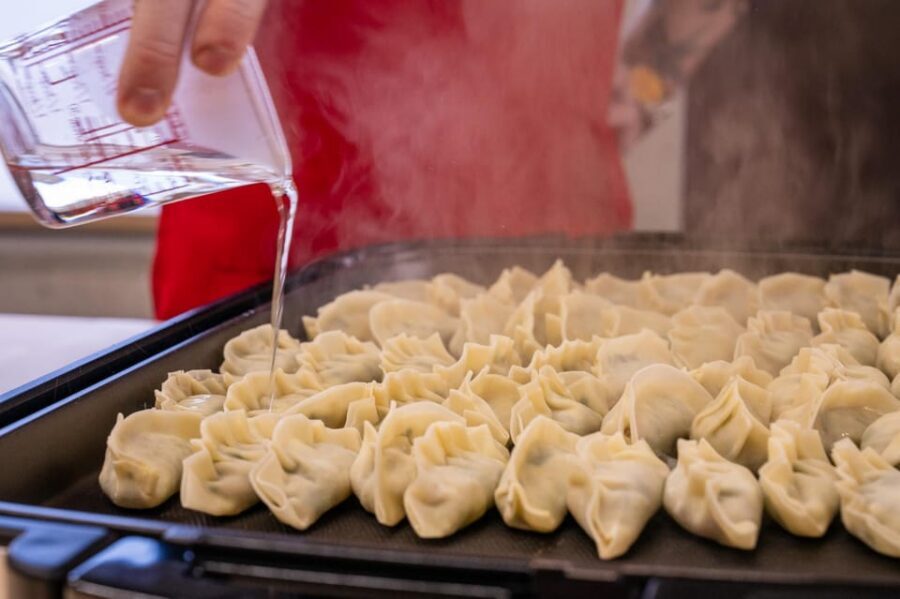
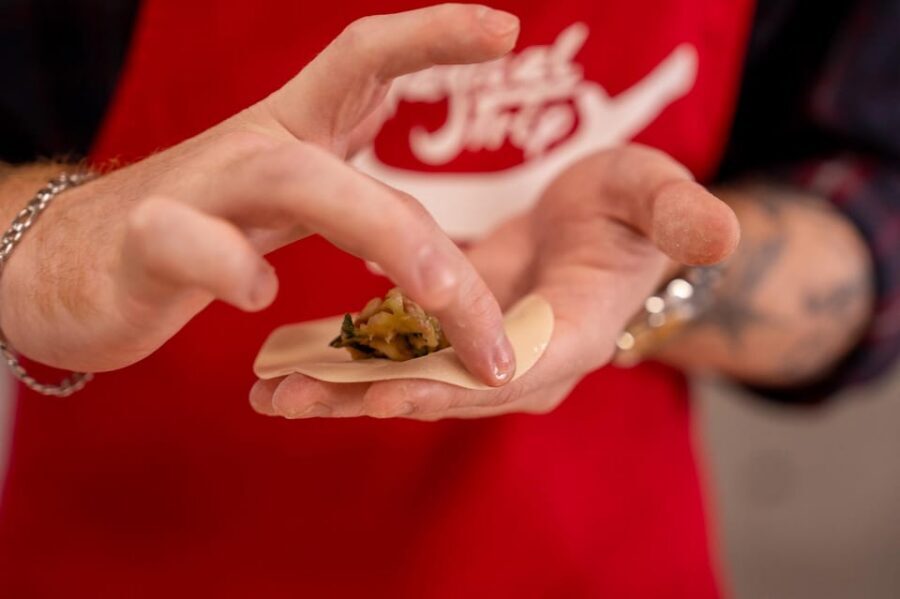
Gyoza is where the session gets extra fun. Folding the dumplings is interactive, and the process naturally creates laughter—there’s no way to make perfectly identical folds when everyone’s learning.
Gyoza also teaches a key home-cooking lesson: technique beats perfection. You’re aiming for crispy edges and juicy filling, and you’ll learn what to watch for as you cook.
What You Eat: Lunch That Matches the Work
Lunch is included, and it’s the food you made. That’s an underrated detail. Some classes let you taste while the hard work stays with the instructor. Here, you cook alongside the guide, then eat what you created as a group meal.
Because it’s a small group, you’ll likely have enough time to enjoy your lunch, not rush through it. And because the dishes are classic Osaka comfort foods, the meal doesn’t feel like a lesson you’re enduring. It feels like you got fed like a friend.
Drinks While You Cook: Sake, Beer, and Easy Conversation
You’ll have a chance to try local drinks during the experience. Included in the class are 3 canned drinks (alcoholic or non-alcoholic), plus tea served during the tour.
This “small drink package” does two things well:
- It makes the whole cooking process feel more social, which helps you relax into the steps.
- It gives you exposure to Japanese beverage culture without turning the tour into a heavy drinking event.
Some guides go the extra mile with sake-related choices. For example, one host (Linda) was praised for going out of her way to help the group buy sake too. Another guide (Eri) was noted for friendliness and helpfulness, and the beverage selection was described as enjoyable.
If you’re not drinking alcohol, don’t worry. The class includes non-alcoholic canned options too.
English-Speaking Guides Who Actually Teach
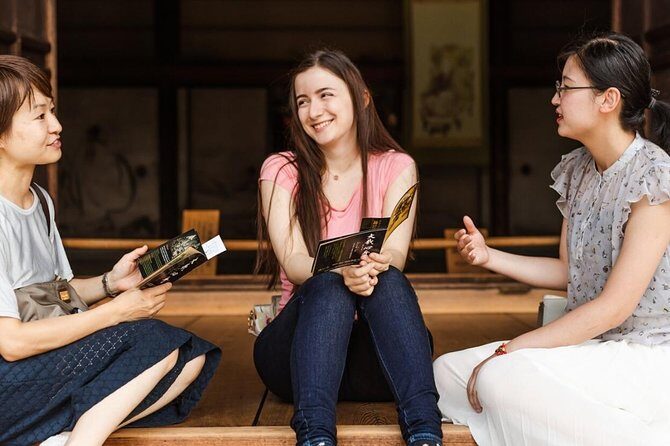
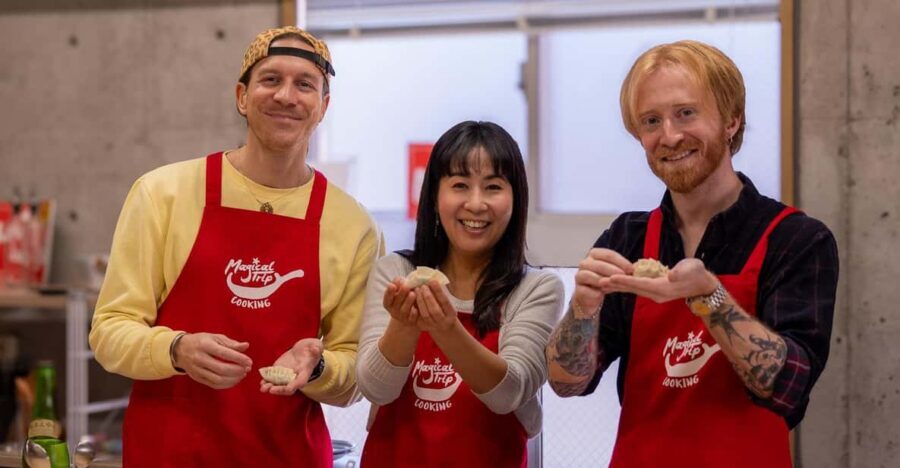
The guide is a huge part of the value here, and the quality shows through in the different instructor styles. You might be taught by Chie, Eri, Emi, Akko, Ayu, or Linda—each with their own flavor of teaching.
What consistently lands well:
- They explain the steps clearly, so even first-timers can keep up.
- They answer questions about food and city culture while you cook.
- They make the class feel friendly rather than stiff.
One of the strongest themes is how they connect cooking to context. Chie, for example, was described as knowledgeable about Japanese history and products, and her class also included city and regional storytelling. That turns the recipes into something you understand, not just something you copy.
Recipes You Can Take Home (and Actually Use)
One of your best souvenirs here isn’t a photo or a postcard. It’s the ability to reproduce the food at home.
The class highlights that you can download recipes after the tour. That’s exactly what you want from a cooking experience: a reference you’ll still use on a future weeknight.
Also, your guide takes tour photos during the experience and sends them to you later by email. So you get both sides—memory and method.
The sweet spot is that you’re learning dishes with simple, accessible ingredients. Even if you can’t find the exact same brands overseas, the methods and core ideas transfer well.
Price and Value: What $90 Buys You in Osaka
At $90 per person for 4 hours, the big question is value. Here’s what you’re getting for your money:
- All ingredients included
- Cooking experience and lunch included
- 3 canned drinks included
- Tea included
- English-speaking local guide for the full 4 hours
- Tour photos emailed afterward
- Recipes available after the tour
That package matters because it removes the normal costs that pile up on food experiences. You’re not paying extra for ingredients, you’re not paying extra for lunch, and you’re not paying extra for the guide time.
Is it the cheapest thing you can do in Osaka? No. But it’s also not a generic “eat here, watch a show” experience. You leave with hands-on skills for three specific Osaka dishes—something you can keep using.
For couples, it’s a great shared activity that still feels fun. For solo travelers, it’s a social table without being forced.
Dietary Notes You Should Not Skip
This tour welcomes vegetarians and vegans, but there’s an important limitation: gluten-free options are unavailable.
Also, the class involves cutting and heating, and the tour is open to anyone over 12. If you have any concerns about comfort with kitchen tasks, it’s worth considering private alternatives.
If you have allergies, plan ahead. You need to inform the team at least one day in advance. And even then, allergy-free meals can’t be guaranteed because food may be prepared in external kitchens. Substitutions may not always be possible, but the team will try to compensate at other stops.
Who This Osaka Cooking Class Fits Best (and Who Might Prefer Something Else)
This is a strong match if you want:
- hands-on learning for Osaka’s signature comfort foods
- a market-to-studio flow that makes ingredients feel real
- a small-group vibe with chatting and shared meal time
It’s also a good choice if you’re traveling with friends and want something that’s interactive but not overly formal.
Who might want to think twice:
- Anyone who needs gluten-free meals, since that isn’t available
- People with mobility needs, since some locations may be inaccessible by wheelchair or stroller
- Anyone who might arrive late, since late arrivals can’t join and can’t be refunded or rescheduled
If you fall into one of those categories, you’ll probably be happier with a more tailored setup.
Should You Book This Osaka Cooking Class?
Book it if you want a practical, repeatable skill set for three real Osaka dishes, plus a market visit and lunch that tie together. I’d especially recommend it if you like learning through doing and you want your time in Osaka to feel local, not just scenic.
Skip it (or look for a different option) if gluten-free is essential, if you can’t participate in cutting/heating tasks comfortably, or if mobility limits make walking and changing locations difficult.
If you’re trying to choose between a food tour and a cooking class, this one earns its place. You’re not just eating Osaka. You’re learning how to cook it. And in a city where food culture is a daily rhythm, that kind of lesson sticks longer than most souvenirs.
FAQ
What dishes do you cook in the Osaka class?
You’ll cook niku-sui, okonomiyaki, and gyoza.
How long is the experience?
The tour runs for 4 hours.
Where is the meeting point?
Meet in front of FamilyMart, about a 1-minute walk from the 4B Exit of Minami Morimachi Station.
Is the class suitable for vegetarians or vegans?
Yes, vegans and vegetarians are welcome. Gluten-free options are not available.
What drinks are included?
You get 3 canned drinks (alcoholic or non-alcoholic), plus tea during the experience.
How big is the group?
The class is a small group with a maximum of 7 participants.