REVIEW · OSAKA
Osaka Full Day Walking Tour with Local Expert Guide
Book on Viator →Operated by JewelTours.Japan · Bookable on Viator
Walking Osaka feels like reading its soul. This full-day route ties together Osaka Castle Park, Sumiyoshi Taisha, Dotonbori, Kuromon Market, and big viewpoint stops, with a local expert who can tailor the plan to what you like and keep your pace comfortable. I especially like how the guide is meant to steer you toward the best takoyaki, alleyways, and photo angles instead of you wandering blindly. One thing to plan for: several top sights are marked as not included for admission, so you’ll want extra cash or a card ready.
The tour is built for an easy day out: it runs about 8 hours, includes transfer time between stops, offers pickup, and uses a mobile ticket. You also get support from the staff before and after the tour, including help with public transportation and even restaurant reservations or theater ticket help if you ask.
In This Review
- Key highlights you’ll care about
- Osaka Castle Park to Dotonbori: how this day actually flows
- Price and logistics: what you’re really paying for
- Osaka Castle Park: the wide start and the best seasonal vibe
- Shitennoji Koshindo: temple details you’ll only notice with a guide
- Sumiyoshi Taisha Shrine: the red bridge moment that slows you down
- Umeda Sky Building: skyline views you’ll want to time well
- Dotonbori and Shinsaibashi-suji: food + signs + an Osaka reality check
- Kuromon Market: Osaka’s kitchen, planned eating time
- Tempozan Ferris Wheel: 360° city views as a reset
- Tsutenkaku: retro Osaka and the Billiken statue
- The local guide factor: tailor-to-you can be the difference
- Should you book this Osaka full-day walking tour?
- FAQ
- How long is the Osaka full day walking tour?
- Is pickup offered for this tour?
- Is the tour a private experience?
- Are entrance tickets included?
- What’s included besides the guide?
- What is the cancellation policy?
Key highlights you’ll care about
- A route that can bend to your preferences rather than a rigid checklist
- Local guidance for Osaka food and small backstreet finds (not just the postcard spots)
- A mix of free shrines plus paid viewpoints so you can budget realistically
- Private group format so you move at your speed and ask questions
- Built-in help with navigation and reservations during your trip
- One real caution: there’s at least one low rating tied to a guide no-show, so choose with eyes open
Osaka Castle Park to Dotonbori: how this day actually flows
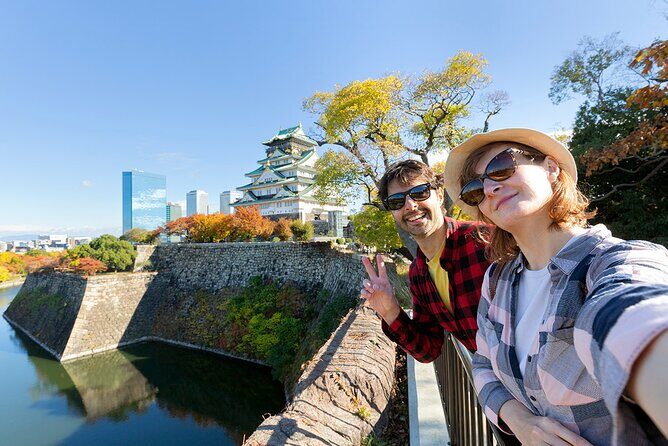
This is the kind of Osaka day where you stop thinking in neighborhoods and start thinking in moods. You’ll begin with the calm, wide-open feel around Osaka Castle, then shift to quieter spiritual sites, then rise up for skyline views, and end in the neon-and-food zone where Osaka earned its reputation.
The tour is listed as a private walking tour/activity, which is a big deal for comfort. In practice, it means you’re not stuck behind strangers deciding what pace you all move at. If you want photos, time for snacks, or fewer stops, you can ask. The pitch is that your guide will incorporate your wishes when possible, and they’re supposed to know what each customer needs.
You’ll also cover a lot of ground in one day, but the timing is handled. Transfer time between stops is included in the total duration, and the route is clearly designed around walking, transit connections near public transportation, and group movement. That matters because Osaka is best when you can hop efficiently between areas without turning your day into a subway math exercise.
You can also read our reviews of more walking tours in Osaka

Price and logistics: what you’re really paying for
At $118.91 per person for about 8 hours, this isn’t a budget-only stroll. You’re paying for two things:
1) Human guidance in a city that can be confusing when you’re trying to read signage and pick where to eat.
2) Time savings, since the day is structured with set stops, transit between them, and on-the-ground support.
What’s included is mostly the guide and travel assistance: support before and after the tour, pickup offered, and mobile ticket use. What’s not included is food and drink, private transportation, and most entrance tickets (with a note about entrance tickets for shrines/temples/museums). Practically, that means your final cost can move depending on which paid viewpoints you choose and how you handle meals.
A useful way to budget: plan a base for admission at the stops labeled not included—Osaka Castle Park (admission ticket not included), Umeda Sky Building, Tempozan Ferris Wheel, and Tsutenkaku. Even though the shrine temples in the itinerary are marked free, the tour information also mentions an entrance-ticket allowance around ¥700 per person for shrines/temples/museums. Treat that as a rough estimate and confirm with your guide on the day.
Osaka Castle Park: the wide start and the best seasonal vibe
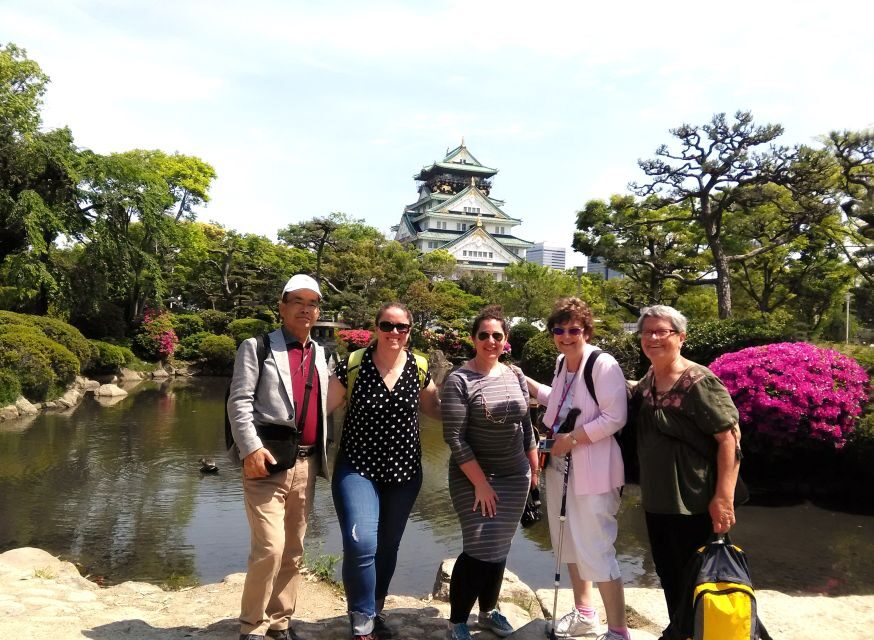
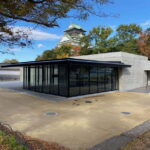
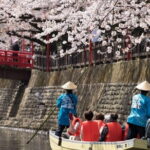
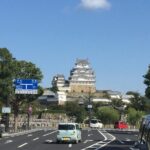
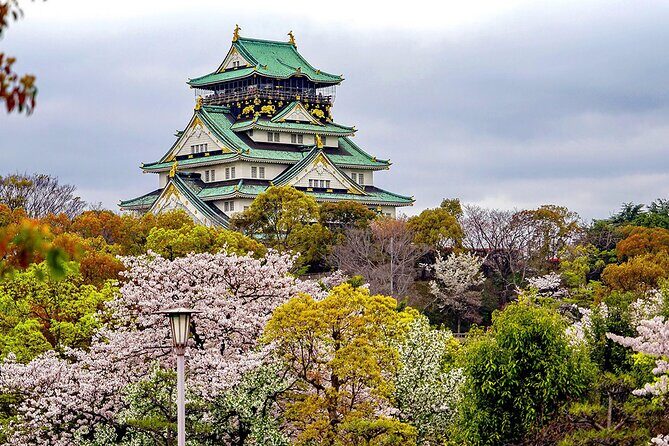
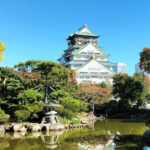
Your first stop is Osaka Castle Park for about 1 hour, with the castle complex as the iconic opener. If you’re visiting in cherry blossom season, this is one of the times the park can feel extra special, because you’re seeing the castle area at its most scenic.
What you’ll like here is the geometry: lots of open space, clear sightlines, and a strong sense of place. It’s also a good warm-up. Before you head into dense shopping and food districts, you get a breather, and you can reset your legs.
A practical drawback: Osaka Castle Park is a landmark, so it’s popular. That’s not bad, but it does mean you’ll want to move deliberately—take a few photos, then shift on so you don’t waste time stuck in crowd flow.
Admission is marked not included for this stop, so this is one of the early places you might pay if the group ticketing direction is to cover it here rather than later.
Shitennoji Koshindo: temple details you’ll only notice with a guide
Next comes Shitennoji Koshindo for about 45 minutes. This is a smaller stop compared with the big Osaka Castle energy, and that’s exactly why it works in the day’s pacing.
The highlight here is a colorful feature: hanging cloth monkeys called kukurizaru. They’re tied to themes around desires—basically, a ritual object people connect with wishes or self-control of wants. Even if you don’t go deep into the meaning, it’s one of those details you’d be likely to miss if you just walked past it.
Why your guide matters at this stop: hanging objects like this are easier to understand when someone explains what they symbolize and how locals typically relate to them. A guide can also help you keep your time efficient in a temple area—see the meaningful parts, avoid getting stuck in slow traffic, and move on.
Admission for this stop is marked free, so it’s a good place to get a “pay nothing” win while still feeling like you’re seeing something distinct.
Sumiyoshi Taisha Shrine: the red bridge moment that slows you down
You’ll spend about 45 minutes at Sumiyoshi Taisha Shrine, one of Japan’s oldest and most treasured Shinto sites. The main visual anchor is the striking red arched bridge and the surrounding grounds.
This stop feels different from the castle start. At Sumiyoshi Taisha, you’re surrounded by a long-established shrine layout and a sense of stillness. The itinerary also calls out purely Japanese architecture, which is the kind of clue that tells you to look for simple, structural forms rather than flashy decorations.
It’s also marked as free, so you can spend your budget on the viewpoint stops later if you prefer.
One consideration: shrines and temple grounds are usually calm, but they’re also active places. You’ll want to keep your voice low and follow any simple guidance you’re given—especially around shrine areas where visitors may be praying.
You can also read our reviews of more guided tours in Osaka



Umeda Sky Building: skyline views you’ll want to time well
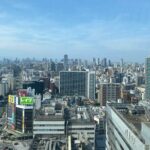
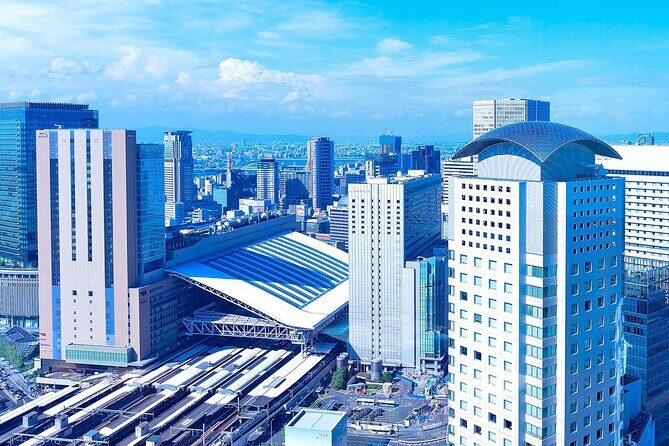
After the spiritual stops, you rise to the Umeda Sky Building for about 45 minutes. The big reason this is on the route is the Floating Garden Observatory, connecting two towers with a sky bridge feel.
This is where your Osaka day starts to look like a whole city instead of a set of neighborhoods. You get the sense of scale: you can spot the spread of districts below and understand why places like Dotonbori and Shinsekai feel like separate worlds.
Admission is marked not included here. That’s a clear clue that the tour is mixing free cultural time with paid perspective time.
If you’re hoping for the best photos, treat this as your light-management moment. The itinerary doesn’t specify timing for sunset, so you’ll need to follow your guide’s pacing and what time your day reaches Umeda. It’s still worth it even if the light isn’t perfect; the view is the point.
Dotonbori and Shinsaibashi-suji: food + signs + an Osaka reality check
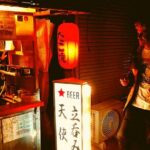
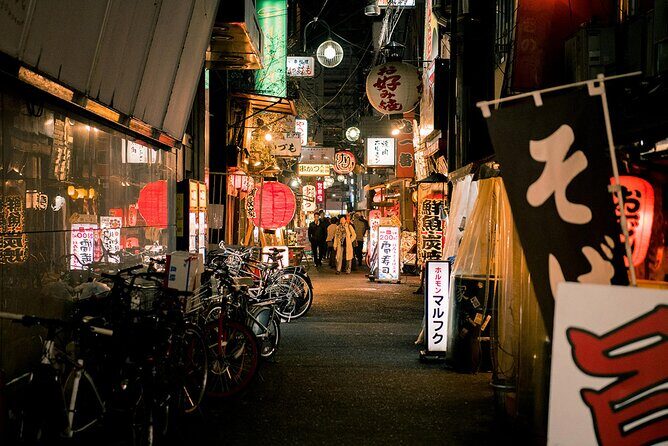
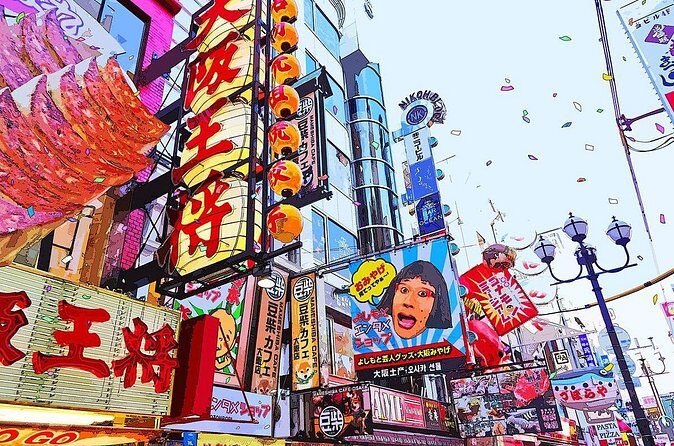
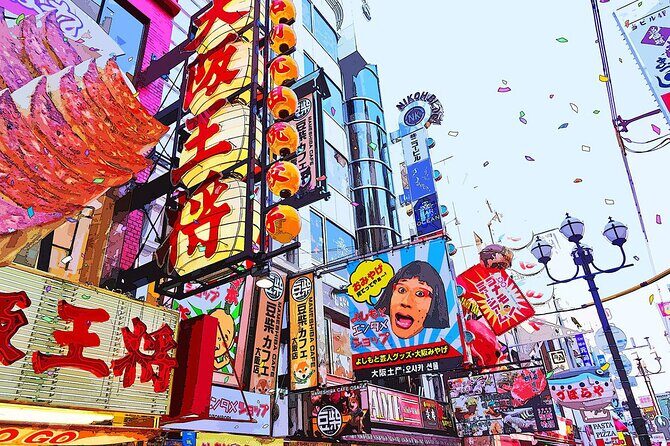
Now comes the fun part: you’ll hit Dotonbori for about 1 hour. Dotonbori is Osaka’s entertainment district, famous for neon signs and the canal-side energy. The itinerary specifically mentions big landmark signage like the Glico Running Man, and it points you toward the reason most people come here: street food.
You’ll likely think of takoyaki and okonomiyaki first, and the guide’s role becomes practical fast. Knowing where to line up, what to order, and how to avoid the most chaotic paths can save you time. Since the tour is sold as local-first for food and alleyways, this is one of the stops where you benefit most from having someone who knows the flow.
Then you’ll continue with Shinsaibashi-suji Shopping Street for about 1 hour. This is a covered arcade stretching over 600 meters, with everything from luxury brands to trendy boutiques and quirky local shops. The covered walkway matters on a rainy day, and the length matters because it keeps your day moving—less backtracking, more browsing.
A balanced note: shopping streets can feel repetitive if you’re not in a browsing mood. The trick is to use this time with a plan—buy one or two things you genuinely want (snacks, small souvenirs, casual clothing) and then move on before you burn out.
Both Dotonbori and Shinsaibashi-suji are marked as free stops, so you’re spending your energy more than your yen here.
Kuromon Market: Osaka’s kitchen, planned eating time
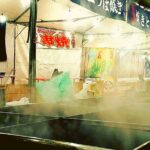
Next up is Kuromon Market for about 1 hour, often nicknamed Osaka’s kitchen. The itinerary describes it as a food lover’s paradise with over 150 stalls and a mix of fresh seafood, grilled items, fruits, and traditional snacks.
Here’s how I’d use this stop: treat it as your sampling hour. Don’t try to eat a full meal at every stall. Pick 2–4 things you can confidently recognize or point to easily, then stop before you’re too full to enjoy the next viewpoint.
The guide advantage is real at a market. Even if you can read menus, you still benefit from local recommendations—what’s worth waiting for, what to skip when a stall is slow, and what’s best eaten right there.
This stop is marked free, but your costs will come from food. That’s normal. The tour already removed food from the base price, so the market is basically your built-in meal bank.
Tempozan Ferris Wheel: 360° city views as a reset
After the market, you get to breathe and look up with about 45 minutes at the Tempozan Ferris Wheel. It sits in the bay area region, and the itinerary calls out 360° views of the city, ocean, and distant mountains.
This works well after a dense food-and-shopping stretch. Your eyes need a break. The Ferris wheel becomes a pause button—something fun and a little touristy, but done with a local pacing so you’re not wasting your evening stuck in a decision loop.
Admission for this stop is marked not included. So, it’s another place where you should budget.
A simple tip: if your day timing allows it, you’ll enjoy it most when the light changes—sunset or city lights. The listing hints at that timing, even if it doesn’t lock it in.
Tsutenkaku: retro Osaka and the Billiken statue
Your final major stop is Tsutenkaku for about 45 minutes. Tsutenkaku Tower is described as 103 meters tall in the Shinsekai district, and it’s known as a symbol of retro Osaka charm.
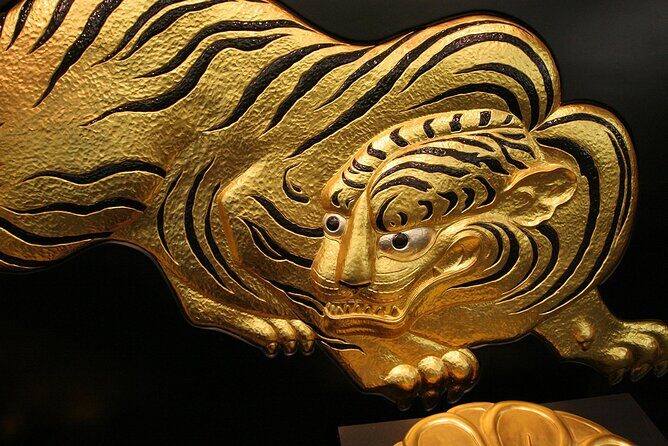
The itinerary calls out the golden Billiken statue—the God of Happiness—which is the kind of landmark detail you’d normally either photograph quickly or miss completely. With a guide, you’re more likely to understand what you’re looking at and why locals associate the area with good vibes.
Admission is marked not included, and the payoff is the observation deck views. This is a fitting finish: after neon streets, markets, and skyline time at Umeda, you end with a more classic, retro-feeling vantage point.
One consideration: this is a tower stop. If you’re not interested in observation decks, you might feel like it’s the least memorable part. But if you want Osaka from multiple angles in one day, it completes the set.
The local guide factor: tailor-to-you can be the difference
The tour’s whole promise is about the guide knowing what customers need and shaping the day around it. The info specifically frames the guide as someone who can point you to the best takoyaki and secrets viewpoints and alleyways—experiences that sound easy on paper but are hard to pull off on your own in a big city.
That promise isn’t just marketing fluff. In one strong report from the guide named Atif, the booking praised his friendliness and knowledge, and specifically highlighted his willingness to tailor the tour to their tastes and pace. That’s exactly what you’re hoping for: not just “show up and talk,” but adjust your day so you get what you came for.
There’s also a risk to mention. I saw a very low rating tied to a serious failure: a guide reportedly never showed up. The operator apologized in that account, but the problem was described as leaving the customer with no workable alternatives. I can’t sugarcoat it—this is why you should be mindful when you book a paid, full-day experience and why having clear contact and support options matters.
If you want the best outcome, treat this like a collaboration: share your priorities early (food focus vs. viewpoints, shopping yes/no, photo timing). Your guide can only tailor what you communicate.
Should you book this Osaka full-day walking tour?
You should strongly consider booking if you want a structured day that blends shrines, markets, neon streets, and viewpoints without having to plan each leg yourself. It’s also a good fit if you value a guide who can help with food decisions and navigation, and you like the idea of a private group pace instead of a big public tour rhythm.
Skip or rethink it if you’re trying to minimize extra costs, because multiple stops are marked not included for admission and the tour notes an entrance-ticket allowance. Also, if you need ultra-reliable logistics with no tolerance for last-minute surprises, take the low-rating caution seriously and make sure you have a good way to contact the operator the day of.
If you book, the best strategy is simple: decide your must-haves (for example, takoyaki + one viewpoint + one market), then let the guide shape the order and timing. Osaka rewards smart wandering, but it rewards it even more when someone local helps you waste less time and notice more.
FAQ
How long is the Osaka full day walking tour?
It’s listed as about 8 hours.
Is pickup offered for this tour?
Yes, pickup is offered.
Is the tour a private experience?
Yes. It’s described as a private tour/activity, and only your group will participate.
Are entrance tickets included?
No. Entrance tickets are not included for some stops, and the tour also notes entrance tickets for shrines/temples/museums (¥700.00 per person). Food and drink are also not included.
What’s included besides the guide?
Support during your time in Japan before and after the tour is included, and the tour includes assistance while traveling such as navigating public transportation and helping with restaurant reservations or theater ticket requests.
What is the cancellation policy?
You can cancel for a full refund if you cancel at least 24 hours in advance. If you cancel less than 24 hours before the start time, the amount you paid is not refunded.