REVIEW · OSAKA
Osaka: Sushi Making in Spacious Studio (SAME-DAY OK!)
Book on GetYourGuide →Operated by WILL Co.,Ltd. · Bookable on GetYourGuide
Sushi class in Namba, no cramped chaos. This experience is a hands-on sushi making lesson in English with instructors like Naho, Aki, and Tsuki, and you eat what you make right there. You also finish with a Sushi Master Certificate plus a small souvenir, which makes the whole thing feel like more than a quick snack stop.
The main thing to plan for is logistics: there’s no hotel pickup or drop-off, and the Google map pin can be a little off. You’ll want to use Google maps, aim for the orange narrow building, and be ready to call if you get stuck.
In This Review
- Key points to know before you go
- First Stop in Namba: Finding Sushi Master Namba the Easy Way
- 90 Minutes of Sushi School: Welcome, Rice Basics, and Your Final Certificate
- Mastering Sushi Rice: The Skill That Makes Everything Taste Better
- Building Nigiri and Gunkan (and Sometimes More) With Clear Guidance
- Fish, Vegetables, and Allergies: How to Plan Your Toppings
- Drinks, Portions, and What You Actually Get for $25
- Who This Class Fits Best (Solo, Couples, and Families)
- What You Take Home: Confidence, a Certificate, and a Small Gift
- The One Possible Drawback to Consider
- Should You Book This Namba Sushi Making Class?
- FAQ
- How long is the sushi making experience?
- Where is the meeting point in Osaka?
- What language is the instructor?
- What will I make during the class?
- Are drinks included in the price?
- Is there a vegetarian option?
- Will I eat the sushi I make?
- Is smoking allowed?
- Can I bring outside food or drinks?
- Is same-day booking possible?
Key points to know before you go
- English-led instruction with instructors praised for being patient and clear
- Spacious studio in Namba (easy to relax, not shoulder-to-shoulder)
- Sushi rice focus so your rolls and nigiri taste right, not just look cute
- You eat your own sushi as part of the 90-minute session
- Vegetarian swap possible if you message ahead
- Certificate + souvenir at the end to make it memorable
First Stop in Namba: Finding Sushi Master Namba the Easy Way
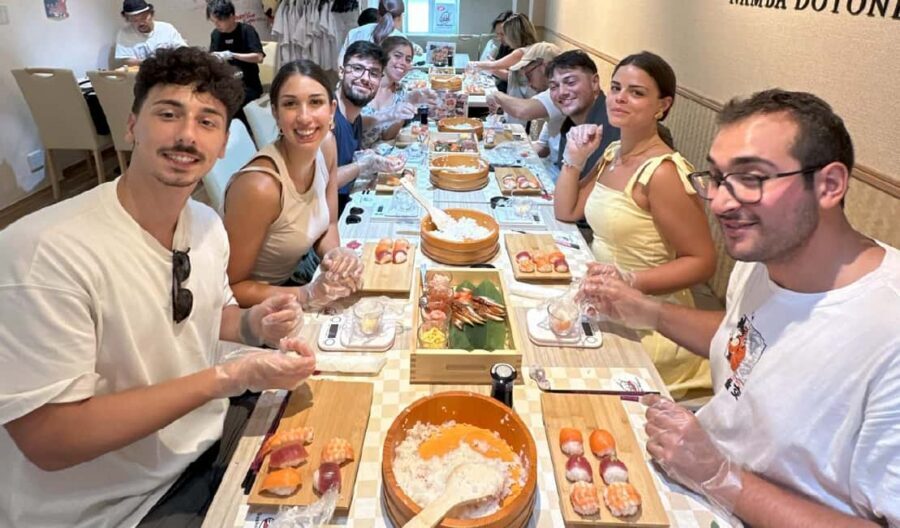
This class is in Namba, Osaka, about 3 minutes from Namba Station, so it works well even on a day packed with sightseeing. The meeting point is simple in theory: search Sushi Master Namba in Google Maps and go to the 2nd floor of the orange narrow building.
One caution: the map may be slightly misaligned. That’s normal in busy areas with tight storefronts. I’d treat this like a small scavenger hunt with a payoff. If you’re confused, call 0664848070—that number is provided for a reason.
Also note what they don’t want: no outside food or drinks. You’re there for their workflow, their ingredients, and their hands-on lesson. It’s easier on you, and it keeps the class on time.
You can also read our reviews of more tours and experiences in Osaka.



90 Minutes of Sushi School: Welcome, Rice Basics, and Your Final Certificate
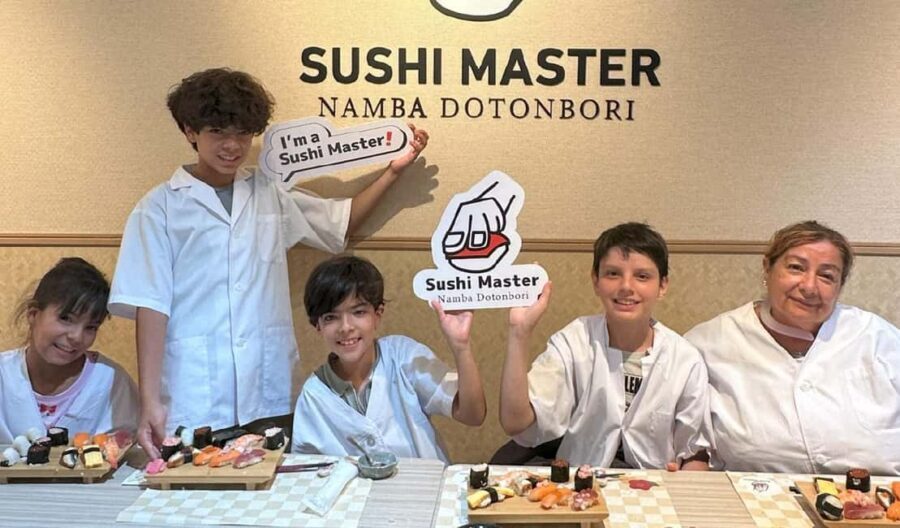
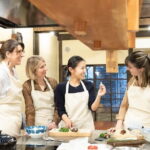
The whole experience runs about 90 minutes, and it’s built to keep you moving. You’re not just watching someone else work. You get structured guidance from the moment you arrive, then you assemble your own sushi.
Most sessions follow a similar flow:
- A warm welcome with an intro to Japanese food culture, in English
- A hands-on portion where you learn the key steps in sushi making
- Time to build and eat what you made
- A finish with a Sushi Master Certificate and a small souvenir
From the way the class is described, you’re also set up for success. In one session style, the team may have rice cooked already and ingredients prepped, so your job focuses on the parts that matter: getting the rice right and assembling neatly.
If you’re wondering about group vibe: multiple instructors (and names like Naho, Aki, Matsuri, Tsuki, and Seina) are mentioned for being friendly, patient, and fun. That matters, because sushi is part technique and part confidence. When you feel at ease, your hands actually learn faster.
Mastering Sushi Rice: The Skill That Makes Everything Taste Better
If there’s one reason sushi-making classes are worth it, it’s sushi rice. When rice is wrong, everything tastes off—too dry, too bland, or too sticky in the wrong way. This class explicitly teaches rice basics as part of the experience, and the results show.
Here’s what you should take from that:
- You learn how the rice should feel and behave for shaping
- You understand why sushi rice isn’t just cooked rice
- You practice steps you can repeat later at home
One review detail that sticks: the setup can include prepped components (fish, egg, seaweed), with you cooling the rice and then building. That’s a smart teaching approach. It keeps the class flowing without sacrificing the key skill you actually need to master.
And yes, you’ll eat your own sushi. When your rice works, the taste is instantly obvious. It’s also the fastest way to learn: you make it, you try it, and the lesson clicks.
Building Nigiri and Gunkan (and Sometimes More) With Clear Guidance
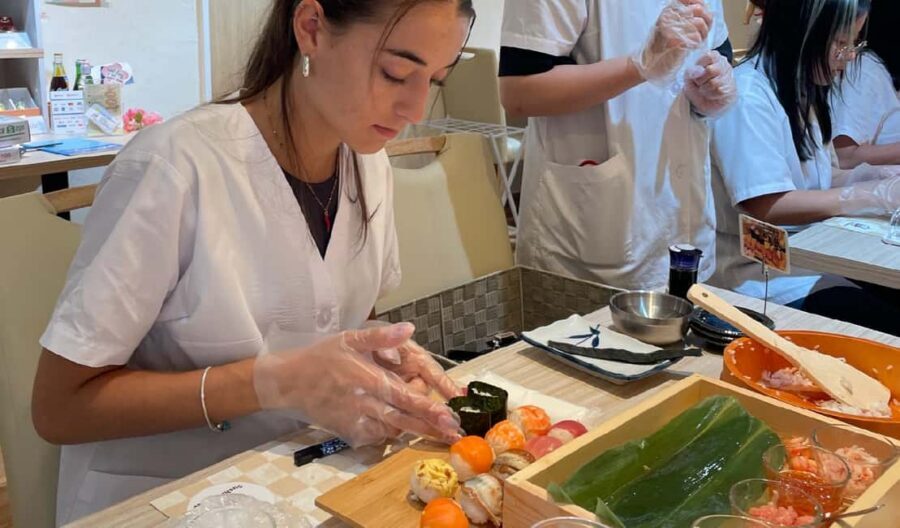
What you make depends on the course you book, but the experience is designed around real sushi technique—not just a tourist version.
The standard structure includes making a set number of pieces:
- Standard course: 8 pieces
- Premium course: 10 pieces
In practice, you might make nigiri and gunkan. Those are classic, teachable styles because they force you to shape rice and handle toppings correctly. One person also mentioned temari sushi, which suggests some sessions include additional styles or variations.
Either way, you’re learning more than assembly. You’re getting small, practical guidance on:
- portioning rice
- shaping without making a mess
- placing toppings with the right care
- understanding how pieces should be built and eaten
This is where the English instruction matters. If you get stuck, you need more than a demonstration—you need someone to explain what to do next and why. In the feedback, instructors like Naho and Aki are repeatedly praised for clear communication and patience. That’s exactly the kind of support you want when you’re holding something delicate with chopsticks later.
Fish, Vegetables, and Allergies: How to Plan Your Toppings
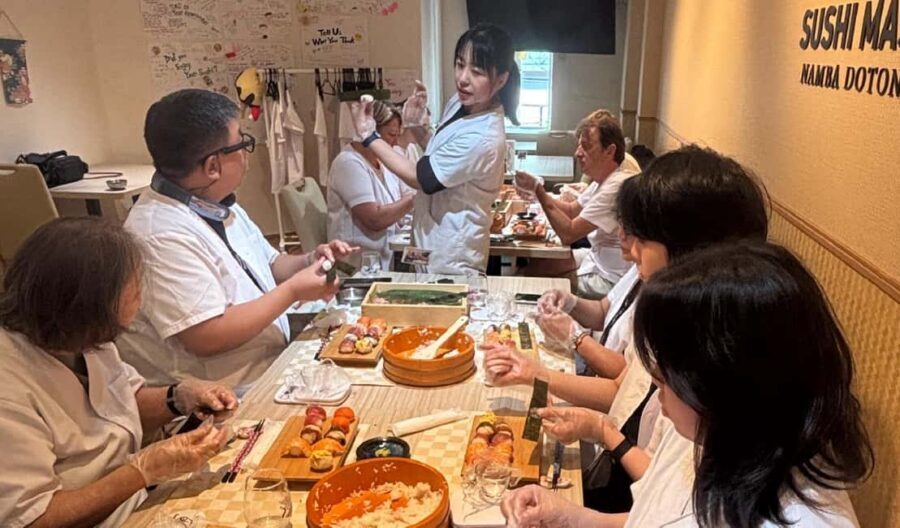
This class includes vegetarian support, as long as you plan ahead. If your group includes vegetarians, you can send a direct message, and they’ll replace fish toppings with vegetable-based ingredients.
That’s a big deal for mixed groups. It means you can all sit down together, learn the same process, and still end with sushi that matches your needs.
For allergies, the instruction is straightforward: let them know in advance. You’re also asked not to bring outside food, so don’t count on improvising if you have dietary restrictions. If you’re sensitive to anything, send a note ahead of time so the team can adjust ingredients appropriately.


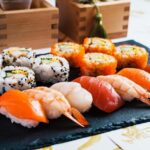
Drinks, Portions, and What You Actually Get for $25
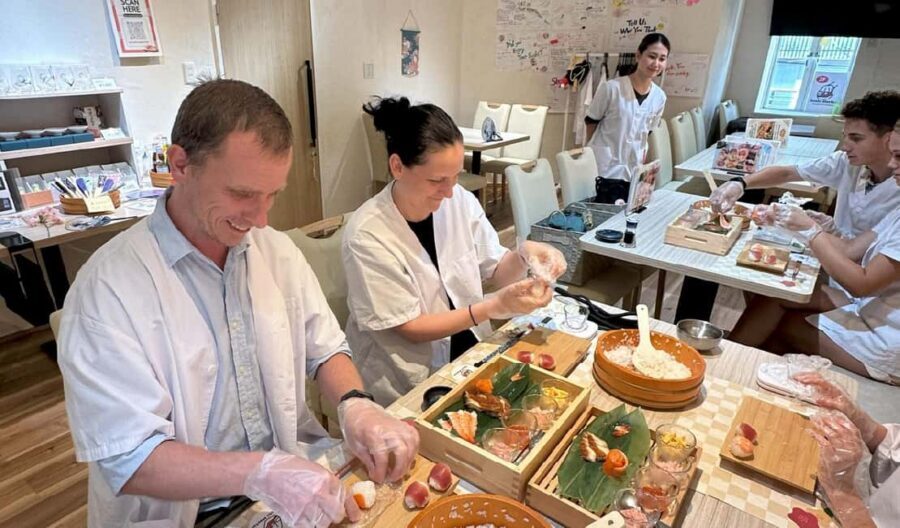
The price is $25 per person, and for Osaka, that’s in the sweet spot between “fun experience” and “not just paying for ingredients.” Here’s what you’re getting:
- sushi ingredients provided
- sushi meals (the food you make)
- Sushi Master Certificate
- a small Japanese souvenir
- optional drinks (you can order soft drinks and alcohol during class)
That combo is why it feels like value. You’re paying for instruction, materials, and the experience arc that ends with something you can keep. Most “food workshops” stop at tasting. This one includes eating what you made and wrapping it up with a certificate.
On portion size: feedback mentions you receive a decent amount of sushi to eat afterwards, not just a bite-sized sample. In a 90-minute format with 8 or 10 pieces, you should expect to leave satisfied, especially if you’re pairing it with a light meal earlier.
One practical note: drinks are not included, so if you want alcohol or soft drinks, plan a little extra budget. The class is designed so you don’t need to buy them to enjoy the food, but they’re available.
Who This Class Fits Best (Solo, Couples, and Families)
This is the kind of activity that works across ages and travel styles. The class is described as great for:
- solo travelers
- couples
- families
- first-timers who want a guided introduction
The studio being described as spacious matters more than it sounds. Sushi making can be a little hands-on and a bit sticky (rice has opinions). A comfortable room makes the difference between a fun craft and an annoying one.
If you’re a true beginner, this is a good pick because the class structure supports learning step-by-step. If you already love sushi, it still adds value because you learn the rice logic and assembly details you might not notice when you’re eating in a restaurant.
And if you’re choosing an Osaka activity when the weather isn’t ideal, this is a reliable indoor plan in the center of Namba.
What You Take Home: Confidence, a Certificate, and a Small Gift
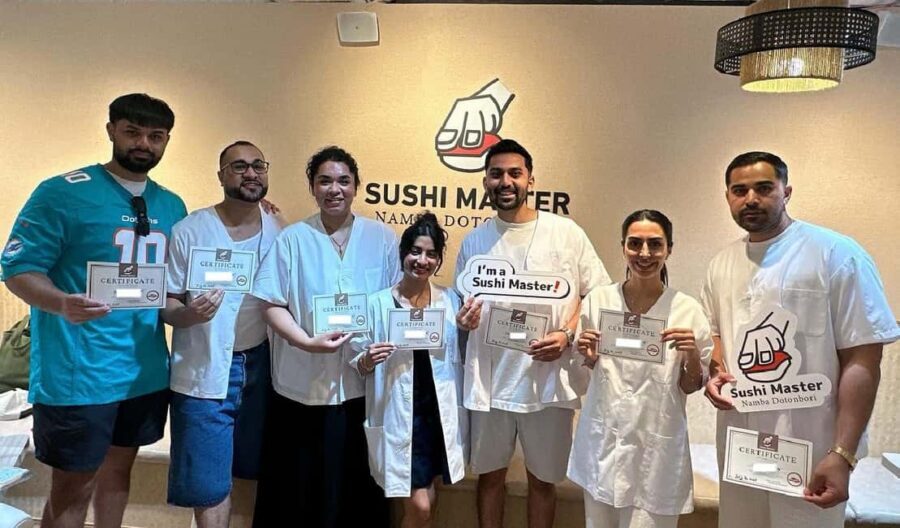
The end of class is where it becomes more “memory” and less “meal.” You leave with:
- a Sushi Master Certificate
- a small souvenir
- and a real skill: you know how the pieces come together, not just what they look like
The certificate isn’t just paper. It reinforces what you practiced. You can treat it like a bookmark in your trip: a reminder that you learned technique, not only ate food.
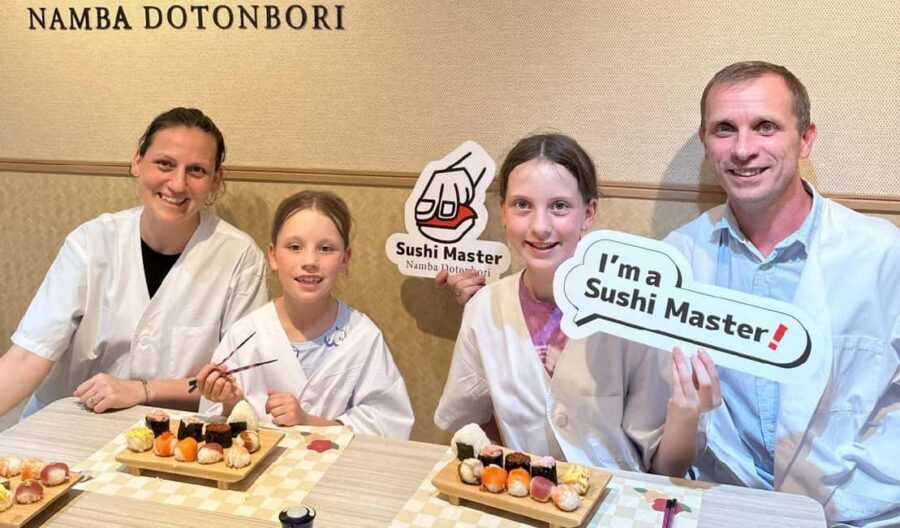
Several instructors are mentioned as being thoughtful, taking photos, and making the session feel personal. That’s a nice touch because sushi classes can otherwise feel stiff. Here, the overall vibe seems to encourage questions, with people feeling comfortable asking for help.
The One Possible Drawback to Consider
No hotel pickup or drop-off means you’ll need to get there on your own. For most people in Osaka, that’s not a deal-breaker because Namba is easy to reach, and it’s only a few minutes from the station.
The bigger issue is timing: if you arrive late, you’ll likely miss parts of the prep or instructions. Build in buffer time around Namba Station crowd flow, then follow the orange building cues once you’re close.
Should You Book This Namba Sushi Making Class?
I’d book it if you want an Osaka activity that is practical, hands-on, and centered on technique. For about 90 minutes and $25, you get instruction in English, sushi ingredients, a meal you make yourself, and a keepsake with a certificate.
Here’s my quick decision checklist:
- Choose it if you want to learn sushi rice and assembly, not just watch
- Choose it if you’re traveling with a mix of diets and can message ahead for vegetarian toppings
- Choose it if you like indoor, structured activities that still feel fun
- Think twice if you absolutely need hotel pickup or you don’t want to handle finding the location without map accuracy
If you’re in Namba anyway, this is a smart use of time. It turns sushi from something you order into something you can build.
FAQ
How long is the sushi making experience?
The class lasts about 90 minutes.
Where is the meeting point in Osaka?
Meet at Sushi Master Namba. The place is on the 2nd floor of the orange narrow building near Namba Station. The Google map pin may be slightly misaligned.
What language is the instructor?
The class is offered in English and Japanese, and it is led in English.
What will I make during the class?
You’ll make sushi with expert guidance. The course includes different quantities of pieces, and based on the course format you may learn styles such as nigiri and gunkan. Some sessions may include temari sushi.
Are drinks included in the price?
Drinks are not included, but you can order soft drinks and alcohol during the class.
Is there a vegetarian option?
Yes. If your group includes vegetarians, message in advance and they will replace fish toppings with vegetable-based ingredients.
Will I eat the sushi I make?
Yes. The experience includes sushi meals—you eat what you make.
Is smoking allowed?
No, smoking is not allowed.
Can I bring outside food or drinks?
No. You should not bring outside food or drinks.
Is same-day booking possible?
It says SAME-DAY OK, and you can check availability for starting times. You can also reserve now and pay later.
If you tell me your travel dates and whether anyone in your group is vegetarian or has allergies, I can help you judge which course size (8 vs 10 pieces) makes the most sense.