REVIEW · OSAKA
Osaka: Tea Ceremony, Calligraphy, and Kimono Experience
Book on Viator →Operated by Japan Culture Experience · Bookable on Viator
Three traditions, one calm afternoon. You get kimono, tea ceremony, and calligraphy in a single private setting in central Osaka, with an English-speaking guide to keep everything beginner-friendly. It’s a straightforward way to experience three iconic Japanese cultural arts without the usual trial-and-error.
I especially like the chance to wear your kimono confidently (including dressing and accessories) and still keep it relaxed. I also like that you can take photos in your outfit and bring home your calligraphy as a real souvenir. One consideration: support is specifically in English, and transportation to the store isn’t included, so you’ll want to plan how you’ll get to Sazanka.
In This Review
- Key things I’d zoom in on
- A calmer Osaka base: why this Sazanka setting matters
- The 3-hour rhythm: kimono dressing, photos, calligraphy practice
- Step 1: choosing and being dressed in a full kimono
- Step 2: Japanese calligraphy with tools and paper
- What calligraphy teaches you (beyond the finished page)
- Tea ceremony: matcha, sweets, and the meaning behind the ritual
- A practical note on what to expect during tea
- Price and value: $97.73 for kimono, tea, calligraphy, and private help
- How to get the most from your kimono, tea, and calligraphy day
- Dress and comfort tips (so you don’t spend the day adjusting)
- Photo time: plan your expectations
- Calligraphy mindset: aim for calm, not perfection
- Tea ceremony mindset: ask when you’re not sure
- Who this Osaka experience fits best (and who might hesitate)
- The bottom line: should you book it?
- FAQ
- How long is the Osaka tea ceremony, calligraphy, and kimono experience?
- Is this a private tour or activity?
- What is included in the experience?
- Does the experience include English support?
- Are matcha and sweets included?
- Can I take photos while wearing the kimono?
- Can I take my calligraphy home?
- Where is the meeting point?
- Is transportation to the store included?
- What if I need to cancel?
Key things I’d zoom in on
- Central Osaka at Sazanka in the Tennoji/Uehonmachi area, with an easy-to-find meeting point
- Private format: only your group, so you can ask questions without feeling rushed
- Beginner-ready guidance in English through kimono, tea ceremony, and calligraphy
- Matcha and sweets included, so you’re not just watching—you’re tasting
- Photo time in kimono plus calligraphy you take home
A calmer Osaka base: why this Sazanka setting matters
Osaka can be intense: heat, crowds, and the constant feeling you should be moving. This workshop makes a different promise. It’s described as a peaceful, private experience in a climate-controlled indoor space, so you’re not fighting weather while you learn something precise and detail-oriented.
The location is at 山茶花 Sazanka Osaka in Uehonmachi (Tennoji Ward). That matters for value because you’re spending your time doing the cultural activities, not traveling across the city. The meeting point is also clear—5-chōme721 早川ビル 2階—so you can arrive and settle in without turning it into a map workout.
You’ll also feel the “private” part quickly. With only your group participating, the dressing and teaching pace can stay comfortable. That’s a big deal for first-timers, especially when kimono fitting and tea etiquette both involve small steps.
You can also read our reviews of more tours and experiences in Osaka.



The 3-hour rhythm: kimono dressing, photos, calligraphy practice
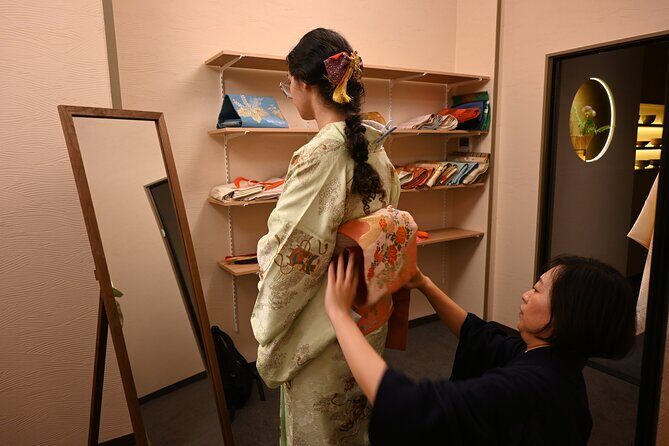
This experience runs about 3 hours, and it’s built like a guided sequence rather than three disconnected activities. You start with the kimono setup, move into calligraphy, and finish with the tea ceremony. Even if your Japanese is basic, the English-speaking support is there to walk you through what to do next.
Step 1: choosing and being dressed in a full kimono
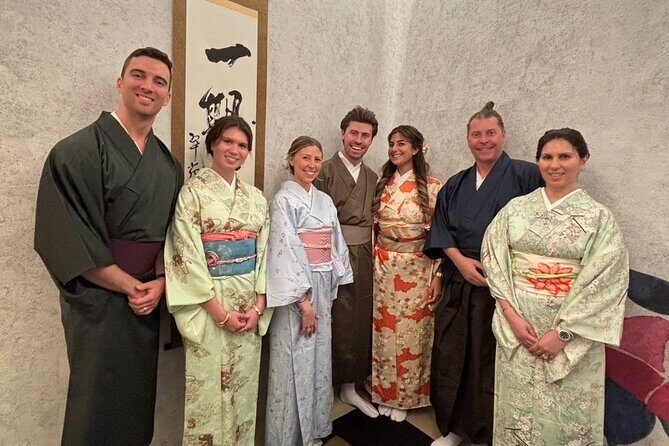
You’re provided a full kimono rental, including the obi and accessories. That’s one of the most practical inclusions because it removes the guesswork of matching pieces, finding sizes, or figuring out how the knot should sit. You also get a private kimono dressing service, which usually means someone takes care of the real work while you focus on relaxing and getting comfortable.
Several details stand out from what people describe: you not only get fitted, but you also get help with hair styling as part of the overall kimono look. That’s important because a kimono outfit reads differently when the hair and finishing touches match the style. You’re also choosing a kimono you genuinely like, not just getting assigned one.
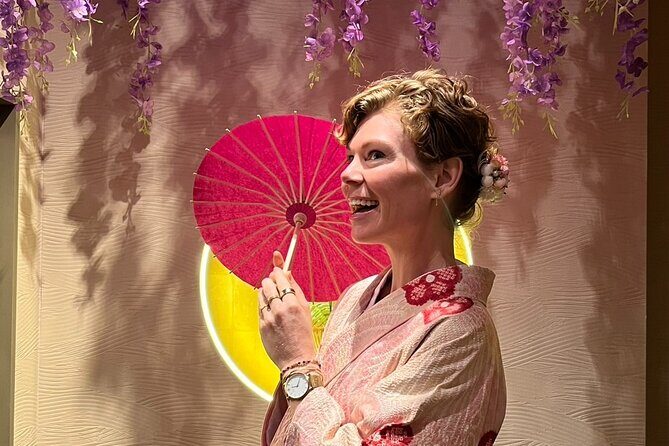
And yes, you’ll have a moment for it: photos in your kimono. If you’ve ever rented clothing during a trip, you know how often the “photo chance” is too short. Here, kimono time isn’t just functional—it’s part of the experience.
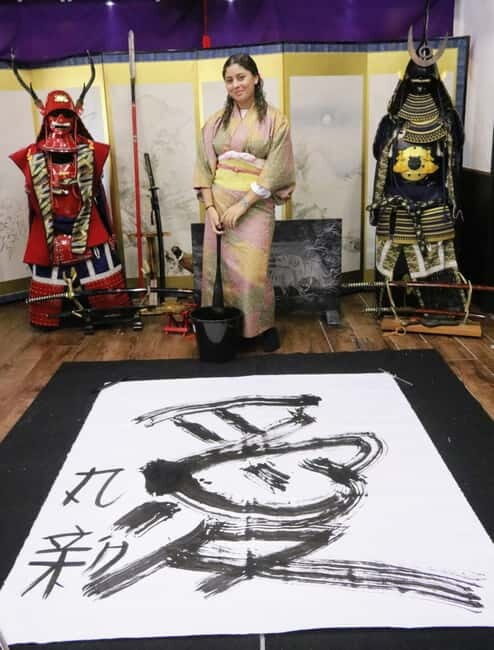
Step 2: Japanese calligraphy with tools and paper
After the kimono portion, you shift into calligraphy. The experience includes the calligraphy tools and papers, which is another value point: you’re not paying extra for materials or trying to buy supplies afterward.
What you create matters. You’re expected to produce a calligraphy piece you can take home, and one description specifically mentions creating a fan as a finished item. Even if your result looks different, that take-home format is the reason this part feels more memorable than a short demo.
For first-timers, calligraphy can look intimidating because brushwork seems so controlled. But the format is positioned as beginner-friendly, with guidance through the basics of holding the brush and executing your strokes calmly.
What calligraphy teaches you (beyond the finished page)
Calligraphy is one of those “slow arts.” It forces you to slow down enough to notice details—pressure, pause, direction. That’s why it pairs well with kimono. The outfit sets the mood, and the brushwork gives you something tangible to do with your hands, not just watch.

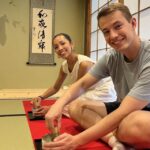



Tea ceremony: matcha, sweets, and the meaning behind the ritual
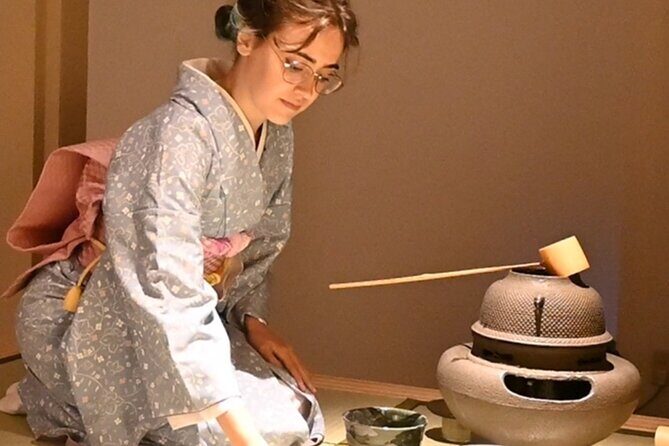
The tea ceremony is included and includes matcha and sweets. That means you’ll experience it as it’s meant to be experienced: with taste, not just explanation.
You’ll also get some context around the ceremony’s history and significance. That’s key for value. A tea ceremony is easy to treat like a photo moment if the guidance only covers the steps. Here, you’re guided to understand why the ritual looks the way it does—what the pauses mean, and how the etiquette supports calm, respectful interaction.
The setting is described as indoor and climate-controlled, which helps because tea rituals are often about steadiness. When you aren’t sweating through your kimono, it’s easier to focus on the flow: receiving, preparing, and enjoying.
A practical note on what to expect during tea
If you’re sensitive to routines, you’ll still likely be comfortable. The experience is designed for beginners with English-speaking support and thoughtful guidance, so you’re not left to guess where to sit or when to move. Since it’s private, you can ask questions without the pressure of a larger group schedule.
And because sweets are included, you don’t need to plan an extra snack stop afterward. That’s a small thing, but it changes the whole feeling of the experience—you can finish without rushing.
Price and value: $97.73 for kimono, tea, calligraphy, and private help
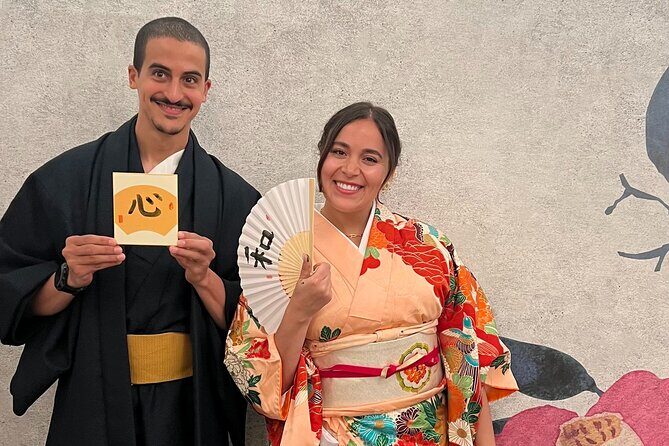
At $97.73 per person, this lands in the “do it once, do it right” category. The price looks reasonable when you break it down by what’s actually included.
You’re getting:
- Full kimono rental with obi and accessories
- Private dressing service
- Tea ceremony with matcha and sweets
- Calligraphy materials
- English-speaking guidance
- A photo-friendly setup plus a take-home calligraphy souvenir
The hidden value here is labor. Kimono rental alone can take time, and dressing isn’t something most people can do quickly or neatly without help. Add teaching time for tea ceremony and calligraphy, plus translation support, and $97.73 starts to make sense as a bundled cultural workshop instead of three separate add-ons.
Also, the private format matters. If you’re traveling with a friend or family group, private attention usually improves the experience more than you’d think. It’s not just comfort—it’s clarity. You’re more likely to understand what you’re doing when you can ask questions in real time.
How to get the most from your kimono, tea, and calligraphy day
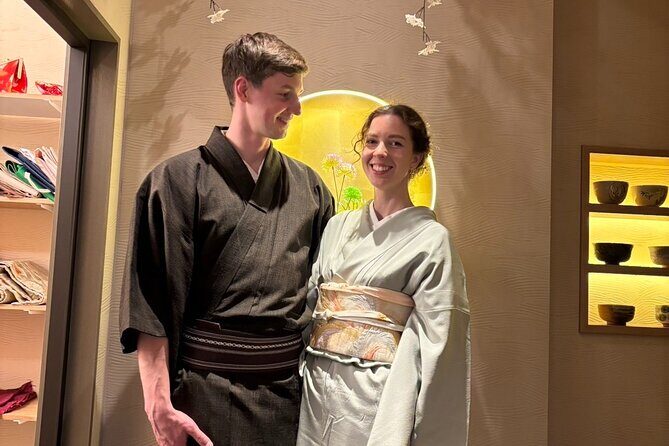
This is built for beginners, but you’ll still get better results if you prep a little. Here are the practical tips that help your day feel smooth.
Dress and comfort tips (so you don’t spend the day adjusting)
You’ll be wearing a full kimono, so prioritize comfort in what you wear underneath. Plan for a bit of dressing time at the start and keep your schedule clean so you don’t feel rushed. Because the experience is indoors and climate-controlled, you can also avoid some of the heat stress that comes with Osaka summer days.
Photo time: plan your expectations
Since photos are allowed in kimono, you’ll want to take a minute to decide what you want: full outfit shots, close-ups, or both. If you’re unsure, ask for guidance on timing and where to stand. A good kimono photo is less about pose tricks and more about posture and how the outfit falls.
Calligraphy mindset: aim for calm, not perfection
Calligraphy outcomes vary based on everyone’s natural hand control and familiarity with brush strokes. Your goal should be a finished piece you can take home with pride. If you get a warning about going slowly, listen. The style is controlled, but the workshop is positioned as beginner-friendly, and that means you’ll be guided while you practice.
Tea ceremony mindset: ask when you’re not sure
Even with English support, etiquette details can be unfamiliar. When something feels unclear—what to do next, when to lift, how to hold—ask. That’s exactly what you’re paying for: a guided experience that makes the ritual feel understandable.
Who this Osaka experience fits best (and who might hesitate)
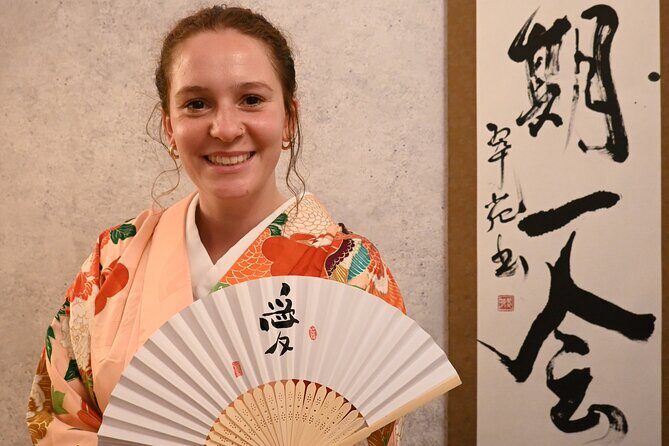
This workshop is ideal if you want a compact cultural day with clear outcomes: you’ll wear a kimono, drink matcha, and make a calligraphy souvenir.
It’s a great match for:
- Beginner travelers who want structure and English guidance
- Friend groups or families of all ages looking for a calm activity
- People who care about photos and take-home crafts
- Visitors who prefer an indoor option to beat Osaka heat
It may be less ideal if:
- You need interpretation in languages other than English (support is English)
- You don’t want to travel to the store location yourself (transportation isn’t included)
- You want a very long cultural immersion (this is about 3 hours, not a full-day class)
The bottom line: should you book it?
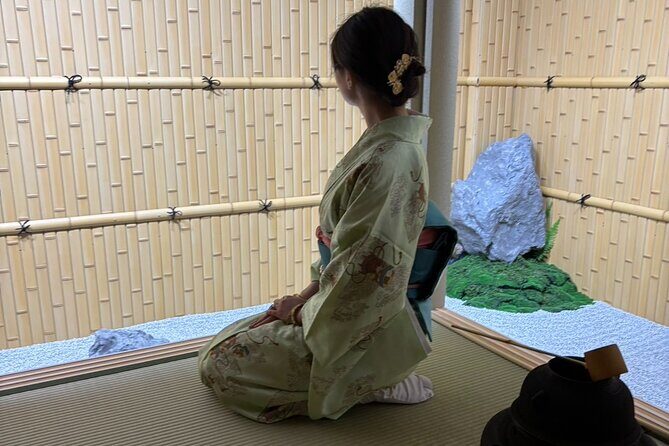
I think this is a strong buy if you want a high-satisfaction cultural experience in central Osaka. You get the full package—kimono, matcha tea, and calligraphy—with the practical support that prevents first-timer awkwardness. The take-home calligraphy and the ability to take photos in your kimono make it feel like more than a show.
If you’re comfortable getting yourself to the meeting point and you’re fine with English support, this is exactly the kind of “short, meaningful, guided” activity that works well in a travel schedule.
FAQ
How long is the Osaka tea ceremony, calligraphy, and kimono experience?
It lasts about 3 hours.
Is this a private tour or activity?
Yes. Only your group participates.
What is included in the experience?
You’ll get a full kimono rental (including obi and accessories), private kimono dressing service, a tea ceremony (matcha and sweets included), calligraphy experience (tools and papers), and English-speaking support and guidance.
Does the experience include English support?
Yes. English-speaking support and guidance are included.
Are matcha and sweets included?
Yes. The tea ceremony includes matcha and sweets.
Can I take photos while wearing the kimono?
Yes, photos are included as part of the experience.
Can I take my calligraphy home?
Yes. You can bring home your calligraphy.
Where is the meeting point?
The meeting point is at 山茶花 Sazanka Osaka, Osaka, Tennoji Ward, Uehonmachi, 5-chōme721 早川ビル 2階 (543-0001 Osaka, Japan).
Is transportation to the store included?
No. Transportation to the store is not included.
What if I need to cancel?
Free cancellation is available up to 24 hours in advance for a full refund. Cancellation within 24 hours of the start time is not refunded.