REVIEW · OSAKA
Osaka Walking Tour to Local Gems, Food & Culture
Book on Viator →Operated by Localized Walking & Food Tours · Bookable on Viator
Neon Osaka, explained on foot. This 2.5-hour walk turns a first-time visit into a real feel for how the city works, with a licensed guide and stops that go past the usual snapshots, from Shinsaibashi to Dotonbori and Kuromon Market. I like the small group size (up to 12), which keeps questions easy, and I love that the route mixes “famous” streets with quirky culture like Amemura and the chef supply shopping area. One drawback: there are no included snacks, so you’ll want a little plan (and cash/card) if you’re hungry at the markets.
I also like the timing flexibility, with morning or afternoon departures, so you can pick the slot that avoids your hardest travel day. You’ll start at Apple 心斎橋 and finish in Namba near Namba Grand Kagetsu, and you’ll use a mobile ticket, which makes day-of logistics simpler if your schedule is packed.
In This Review
- Key highlights worth marking in your Osaka plan
- Start in Shinsaibashi: the easiest place to begin Osaka right
- Horie Park to America-mura: greener streets and youth culture in one morning-walk rhythm
- Namba Hatch: how Osaka’s entertainment scene fits into the walk
- Dotonbori Canal: neon energy, iconic street life, and quick context from your guide
- Hozen-ji Temple near Dotonbori: the quiet counterweight you’ll appreciate
- Kuromon Ichiba Market: your 30-minute “what should I eat” reality check
- Nipponbashi: electronics and anime culture in a short, focused burst
- Dōguya-suji (Kitchenware Street): the chef-gear shopping street with real purpose
- What you actually learn from this route (beyond the “where to go” list)
- Price and value: $25 makes sense if you want guidance and efficiency
- How to be comfortable: shoes, timing, and a simple on-the-go strategy
- Should you book this Osaka walking tour?
- FAQ
- How long is the Osaka walking tour?
- What is the price per person?
- Where do I meet for the tour?
- Where does the tour end?
- What’s included in the tour price?
- Are snacks included?
- How large is the group?
- Is free cancellation available?
Key highlights worth marking in your Osaka plan
- Up to 12 people means you’re not lost in a big crowd
- Licensed guides bring context at each stop, not just directions
- Dotonbori + Hozen-ji near each other gives you instant contrast between noise and calm
- Kuromon Market time built in for seafood-and-snack scouting on your own
- Amemura and Nipponbashi add youth culture, fashion, and pop-culture energy
- Dōguya-suji knife-and-kitchenware street connects to how Osaka chefs shop
Start in Shinsaibashi: the easiest place to begin Osaka right
Shinsaibashi is a smart meeting point because it’s connected to Osaka’s transit lines, and it’s easy to find your bearings before you start walking. The tour starts at Apple 心斎橋 (Urban BLD Shinsaibashi, Nishishinsaibashi area), and the end point is in Namba near Namba Grand Kagetsu. That matters because you’re not doing a pointless backtrack. You finish in the same neighborhood where you’ll likely want to keep going for dinner.
The other practical win is the group size. With a max of 12, your guide can actually talk with everyone, not just herd people from one photo spot to the next. In past groups, guides like Jay, Calvin, Matt, and EJ have stood out for being punctual, organized, and good at answering questions while still keeping momentum.
If it’s your first day in Osaka, this kind of start helps you figure out which areas you’ll revisit later. You’re not committing to a whole day; you’re getting a concentrated map of how the city is laid out.
You can also read our reviews of more walking tours in Osaka

Horie Park to America-mura: greener streets and youth culture in one morning-walk rhythm
Stop 1 is Horie Park, a small urban oasis that gives your legs and your head a break from the dense shopping streets. You’ll get about 20 minutes here, which is long enough to slow down, stretch your stride, and notice how Osaka mixes “city” with pockets of calm. It’s a good reset before you move into districts where it’s all signage, storefronts, and people.
Then you’re off to Stop 2: America-mura (often called Amemura, the American Village area). You’ll spend around 20 minutes here, and the point isn’t just to look at shops. It’s to understand the subculture vibe—locals and visitors browsing a mix of fashion and casual hangouts in a district that has a reputation for being trend-forward. This stop works well if you like shopping streets, street style, or you simply want to see the parts of Osaka that feel more “now” than “old.”
A quick consideration: these stops can mean a lot of storefront time. If you’re the type who wants history over shopping, you may still appreciate Amemura because it shows a side of Osaka that sits next to the temple-and-canal postcard image.
Namba Hatch: how Osaka’s entertainment scene fits into the walk
Stop 3 is Namba Hatch, a live event venue in the Namba area with a capacity around 1,200. You’ll have about 20 minutes here. Even though it’s not a museum stop, it adds context for Osaka as an event city, not just a sightseeing city.
Why this works: it places you in the local rhythm. After you’ve seen shopping and youth culture, you’re seeing how people show up for performances and concerts. It’s also a nice change of pace from markets, since you’re not standing over food or scanning product shelves.
Dotonbori Canal: neon energy, iconic street life, and quick context from your guide
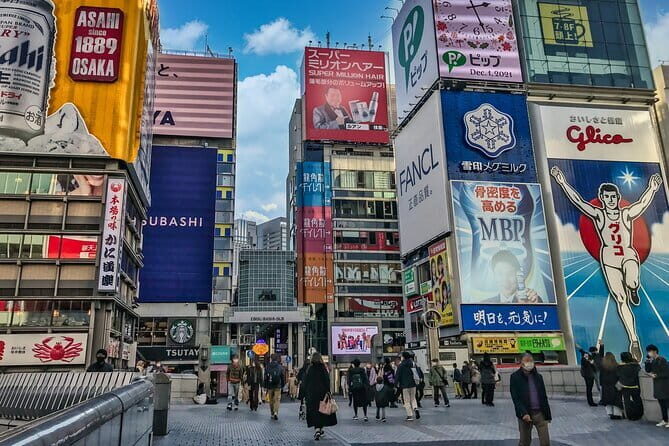
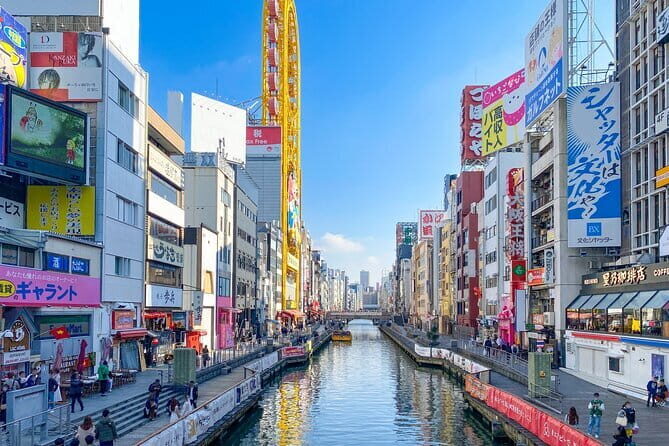
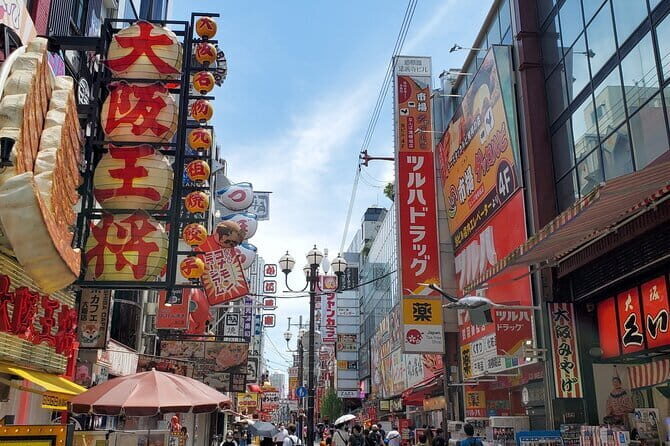
Stop 4 is Dotonbori District, along the canal, with about 10 minutes set aside. This is the Osaka everyone recognizes: neon lights, loud atmosphere, and lots of food choices spilling onto the street.
The best way to use this brief time is to treat it like a “street orientation” stop. You’re not meant to win the day in one quick visit. You’re meant to learn what makes Dotonbori itself tick so you know where to return later for photos, snacks, or dinner.
What I like about placing it after Namba Hatch: by then you’re already in the entertainment zone mindset. Your guide can point out what to notice—what’s iconic, what’s just noise, and what you should remember when you’re choosing where to eat tonight. That’s a small thing, but it can save you time and decision fatigue.
Hozen-ji Temple near Dotonbori: the quiet counterweight you’ll appreciate
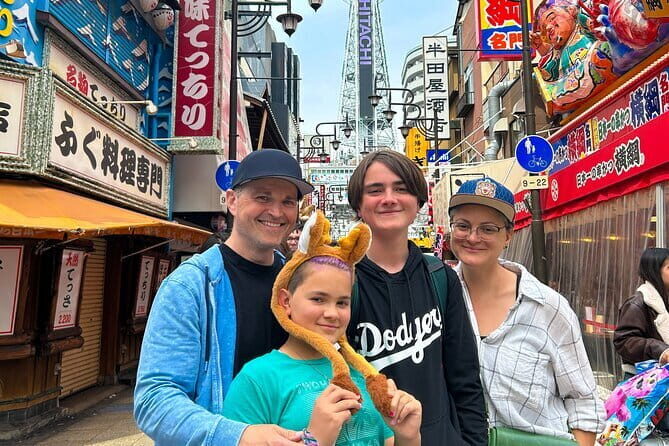
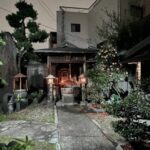
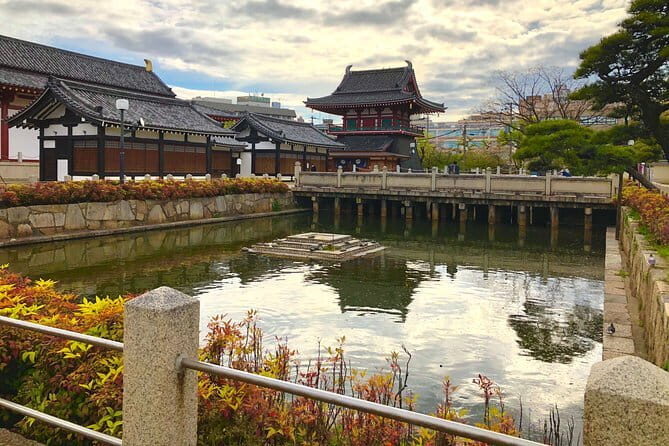
Stop 5 is Hozen-ji Temple, close to Dotonbori, with about 20 minutes. Founded in 1637, it’s known for a moss-covered statue of Fudō Myōō, a fierce deity in Buddhist belief.
This is one of those Osaka moments that surprises people: you step out of neon street energy and into a more still, grounded atmosphere without having to leave the neighborhood. It’s also a great chance to learn a story behind a place instead of just reading a signboard. The guide’s role here is key because the temple’s symbolism lands better when it’s explained in plain language.
Drawback to consider: it’s a walking tour, so you’re not going to have the time you’d get with a dedicated temple visit. If you’re deeply religious or want a slow, detailed visit, you’ll likely still enjoy the introduction and then come back later with extra time.
You can also read our reviews of more food & drink experiences in Osaka



Kuromon Ichiba Market: your 30-minute “what should I eat” reality check
Stop 6 is Kuromon Market (Kuromon Ichiba Market), with about 30 minutes. This is a major food stop for seafood, produce, and local delicacies. You’ll get enough time to understand the market rhythm, scan what’s available, and decide if you want to buy something right then.
Important practical point: snacks are not included. That’s not a deal-breaker, but it changes how you should approach the market. Come ready to spend a bit if you want to taste. If you’re dieting or trying to keep your budget tight, use the time to compare options and ask your guide what makes sense first.
What makes this stop valuable even without included snacks is decision support. A good guide helps you avoid the classic “stand in front of everything and panic” problem. You learn how to choose, what to look for, and how the market is organized so you can move without getting tangled.
Nipponbashi: electronics and anime culture in a short, focused burst
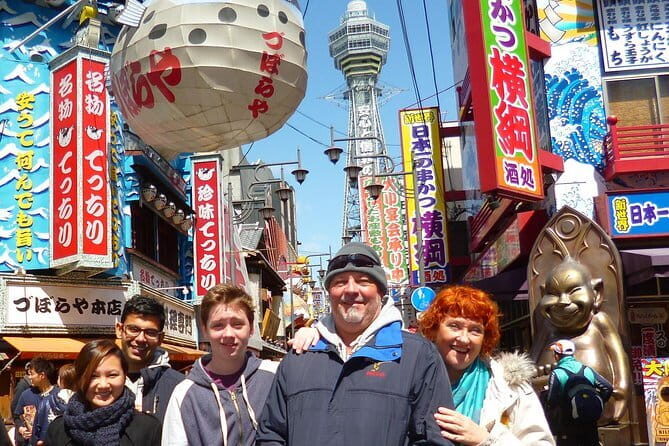
Stop 7 is Nipponbashi, with around 10 minutes. This is where Osaka gets pop-culture heavy: electronics, anime, and otaku culture. It’s short on purpose. The goal isn’t to shop for hours. It’s to get oriented in the area so you know what direction to go later if you want more.
If you’re into gaming, electronics, or anime merchandise, you’ll probably want to extend your exploration after the tour. If you’re not, this stop still helps because it shows how different Osaka “sub-neighborhoods” are—shopping and culture aren’t all in one place.
Dōguya-suji (Kitchenware Street): the chef-gear shopping street with real purpose

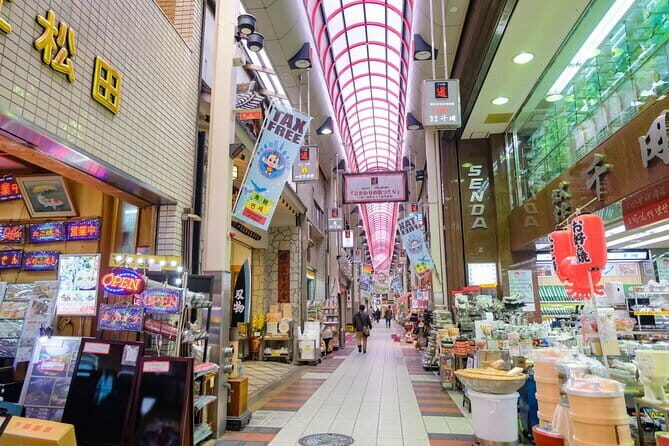
Stop 8 is Dōguya-suji (道具屋筋), also called kitchenware street, where you’ll spend about 20 minutes. You’ll see shops packed with tools, kitchenware, and home goods.
This stop is a standout because it connects to a specific local behavior: it’s the kind of street where many chefs in Osaka go to buy their knives. That’s the difference between random shopping and a district with a real function. Even if you don’t buy anything, you’ll get a sense of how Osaka’s food culture is built on craft and gear, not just restaurants.
One consideration: this is shopping-heavy. If you’re not interested in kitchen tools, you might want to use the time to observe what kinds of products dominate the street. Your guide’s comments can help you notice which items are everyday staples versus specialty tools.
What you actually learn from this route (beyond the “where to go” list)
This tour is built like a fast city course. You don’t just get famous stops; you get a guided understanding of how neighborhoods feel different from block to block. That shows up in the variety:
- Parks and calm streets early on, so you’re not exhausted by the time you hit the big sights
- Youth culture districts like Amemura, so you see Osaka’s modern identity
- Entertainment and performance context in Namba
- Dotonbori’s neon power, followed immediately by the quieter contrast of Hozen-ji
- Food-market structure at Kuromon, plus pop-culture orientation at Nipponbashi
- Chef-supply shopping at Dōguya-suji, which explains why Osaka food culture has depth
In the reviews, multiple guides with names like Jay and Matt are praised for humor and for mixing history with practical street insight. That matters because Osaka can feel like a maze if you don’t know what to pay attention to. A guide who can explain the why behind each stop helps you remember the city later, not just the photos you took.
Price and value: $25 makes sense if you want guidance and efficiency
At $25 per person, this is priced for people who want structure without spending a fortune. Here’s where the value comes from:
- You’re getting a licensed guide for about 2.5 hours
- Admission tickets for the listed stops are free or covered where applicable, so you’re not hit with surprise add-ons for standard entrances
- All fees and taxes are included, which makes it easier to plan your budget
- The small group limit (up to 12) keeps the experience from turning into a long line
The main tradeoff is snacks are not included. That’s easy to handle: plan to buy what you want at Kuromon Market and maybe grab a drink along the way. If you arrive with a “we’ll choose food on the spot” mindset, the cost works.
This is also a good first-day or second-day tour because it helps you decide what to return for. Osaka is so neighborhood-driven that a guided orientation often saves you time later.
How to be comfortable: shoes, timing, and a simple on-the-go strategy
This is a walking tour, so comfortable shoes are not optional. One review specifically calls out wearing comfortable shoes, which is good advice for any Osaka day. Also, Osaka weather can shift quickly, and at least one guide kept groups moving and allowed stops to beat heat when needed. So keep a small buffer in your day for short breaks.
Bring what you’d bring for any market-and-streets day:
- A charged phone for maps and the mobile ticket
- Water, especially if you’re going in warmer months
- A little cash/card for snacks and shopping, since nothing is included at the food market
If you get motion sick in crowded areas, you might want to take it slow at Dotonbori where the street is busy. But overall, most people can participate, and the tour is close to public transportation for getting on and off easily.
Should you book this Osaka walking tour?
Yes, if you want an efficient introduction that mixes big-name Osaka with the parts that make the city feel like itself. It’s especially worth booking if:
- You’re only in Osaka for a short time and want smart coverage in about 2.5 hours
- You like learning how neighborhoods differ, not just ticking off landmarks
- You’re curious about food culture, including chef-supply shopping on Dōguya-suji
- You prefer small groups with a licensed guide who can answer questions
I’d skip or reconsider if you hate walking, hate markets, or want a long sit-down temple visit. This tour is designed for movement and orientation, not slow, deep stays at one single site.
FAQ
How long is the Osaka walking tour?
It’s about 2 hours 30 minutes.
What is the price per person?
The price is $25.00 per person.
Where do I meet for the tour?
The start point is Apple 心斎橋 (Urban BLD心斎橋), 1-chōme55 Nishishinsaibashi, 542-0086, Osaka.
Where does the tour end?
The tour ends at Namba Grand Kagetsu, 11-6 Nanbasennichimae, Chuo Ward, Osaka, 542-0075.
What’s included in the tour price?
All fees and taxes are included, and a licensed guide is included.
Are snacks included?
No. Snacks are not included.
How large is the group?
The tour has a maximum of 12 travelers.
Is free cancellation available?
Yes. Free cancellation is available up to 24 hours in advance for a full refund.