REVIEW · OSAKA
Real Kimono experience and Tsumami Kanzashi Workshop
Book on Viator →Operated by Kimono and Japanese culture Experience · Bookable on Viator
Kimono in Osaka, plus a handmade hair clip. This real-life combo pairs a hands-on Tsumami-zaiku craft with a proper kimono fitting, then you use your finished accessory right away during a Shinsekai walk.
I especially like two things: the workshop is structured and step-by-step, so you can actually finish a beautiful Kanzashi, and the photo time feels earned because you made the accessory first. One thing to keep in mind is the kimono timing: you’ll need to return the kimono within 1 hour, so don’t plan on lingering past the window.
In This Review
- Key highlights you’ll care about
- Why this Osaka workshop feels like more than a class
- Price and logistics: what $52 buys you in real terms
- The 2-hour flow: from instruction to Tsutenkaku photos
- Step 1: Quick introduction and technique basics
- Step 2: Choose your accessory colors and flower design
- Step 3: Make your Tsumami-zaiku hair clip or brooch (with help)
- Step 4: Pick your kimono and obi, then get dressed
- Step 5: Photo shooting with your accessory
- Step 6: Walk Shinsekai near Tsutenkaku in kimono
- Return rule you must plan around
- Making your Kanzashi: fun crafting with Chirimen cloth
- Choosing flowers and colors (so your piece feels like yours)
- Tea or coffee: a small break with big mood impact
- When you finish, you immediately see it in action
- The kimono and obi fitting: choose your look and keep moving
- How the dressing part helps your day
- The main consideration: timing and comfort
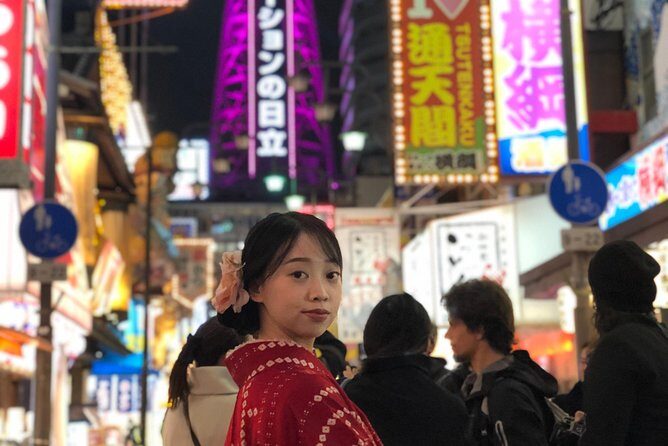
- Walking Shinsekai near Tsutenkaku: photos with atmosphere
- Why the Tsutenkaku area works for photos
- How to get good photos without stressing
- Who this experience is best for (and who should think twice)
- Booking tips to make the day smoother
- Should you book this Real Kimono experience and Tsumami Kanzashi workshop?
- FAQ
- What do I make during the workshop?
- How long does the experience take?
- Will I be dressed in a kimono and obi?
- Where do we walk after the workshop?
- Do I get to keep what I make?
- Can I cancel for a full refund?
Key highlights you’ll care about
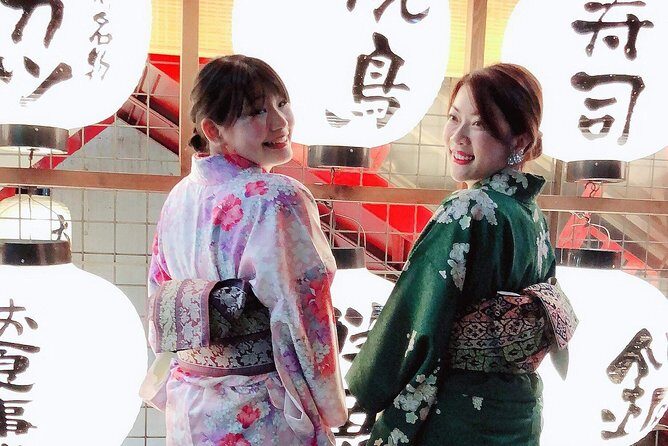
- Tsumami-zaiku Kanzashi you make yourself, using Japanese Chirimen cloth
- Pick your colors and flower design, with help while you work
- Kimono and obi dressing included, plus lots of styles to choose from
- Tea or coffee during the workshop, so it feels like a real break, not a rush
- Shinsekai walk near Tsutenkaku Tower in your kimono, with photos built in
Why this Osaka workshop feels like more than a class
This experience works because it links three parts that usually get separated: making, dressing, and then showing it off in the neighborhood. You’re not just learning a craft at a table and going home empty-handed. You leave with a finished hair clip or brooch, plus photos from the style you chose.
I also like the cultural rhythm. You learn the basic idea behind Tsumami-zaiku, then you do the fun part—choosing colors and building the flower shape. After that, you get dressed in kimono and step into Shinsekai, so the whole thing stays practical and memorable.
The setting also helps. You start at a meeting point in Nipponbashihigashi (Naniwa Ward), and the walk takes you toward Tsutenkaku Tower, one of Osaka’s easiest places to aim your camera.
You can also read our reviews of more tours and experiences in Osaka



Price and logistics: what $52 buys you in real terms
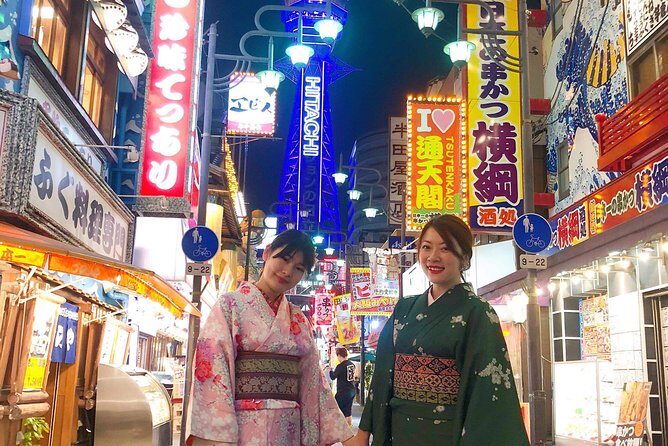
At about $52.03 per person for roughly 2 hours, this isn’t just paying for a craft. You’re covering instruction, materials for your Chirimen-cloth accessory, kimono/obi dressing, and time to wear everything while you take photos and stroll.
For value, I think it hits three smart targets:
- You get both the object and the outfit. Many experiences only cover one or the other.
- You’re guided all the way through your accessory making, so you’re not left guessing.
- The kimono window is short and focused—that keeps the experience moving at a comfortable pace.
Two small extras matter too. You’ll get tea or coffee during the workshop, and you’ll use a mobile ticket. If you’re traveling with a small group, the private setup helps, because it keeps the experience from feeling like a long assembly line.
The 2-hour flow: from instruction to Tsutenkaku photos
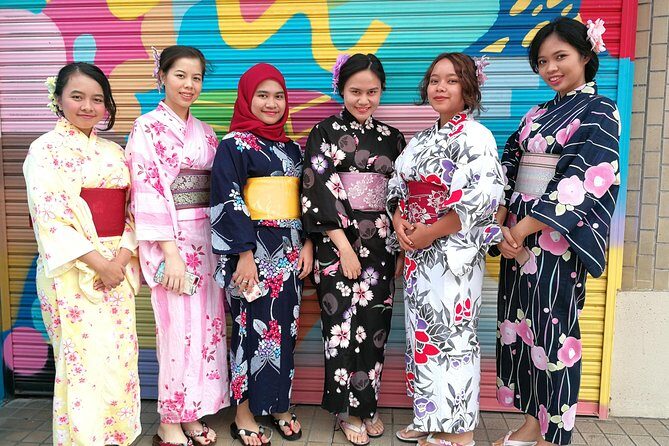
The schedule is built like a loop: learn → make → dress → photos → neighborhood walk → take your craft home. That structure is one of the reasons it works for first-timers.
Step 1: Quick introduction and technique basics
You start with an explanation paper and a brief talk on Tsumami-zaiku. The goal here is simple: you learn the basic technique early enough that you don’t feel lost once the hands-on portion begins.
Step 2: Choose your accessory colors and flower design
Next, you choose the colors and the flower look for your Kanzashi. This is where you can steer the final result. Even if you’re not sure what will look good, the setup is meant to guide you through making a clear, finished accessory.





Step 3: Make your Tsumami-zaiku hair clip or brooch (with help)
Then comes the main making time. You’ll work on your accessory using Japanese Chirimen cloth, and you won’t be left to figure it out alone. The instructions are step-by-step, and during the work tea or coffee is served.
Step 4: Pick your kimono and obi, then get dressed
After your accessory is done, you choose a kimono and obi from various options. The dressing part is handled for you, so you can focus on enjoying it rather than wrestling fabric like a DIY project.
Step 5: Photo shooting with your accessory
Once you’re dressed, you do photos while wearing the accessory you made. This order is clever: you get to see your design in context, and your photos won’t feel like you only added the accessory after the fact.
Step 6: Walk Shinsekai near Tsutenkaku in kimono
Then you stroll around the Shinsekai area, including the Tsutenkaku Tower vicinity. It’s a short neighborhood walk, timed so you can enjoy the vibe without turning it into a half-day commitment.
Return rule you must plan around
One important detail: you’ll need to return the kimonos within 1 hour. That doesn’t mean the walk is “bad.” It means you should treat it like a focused photo and strolling window.
Making your Kanzashi: fun crafting with Chirimen cloth
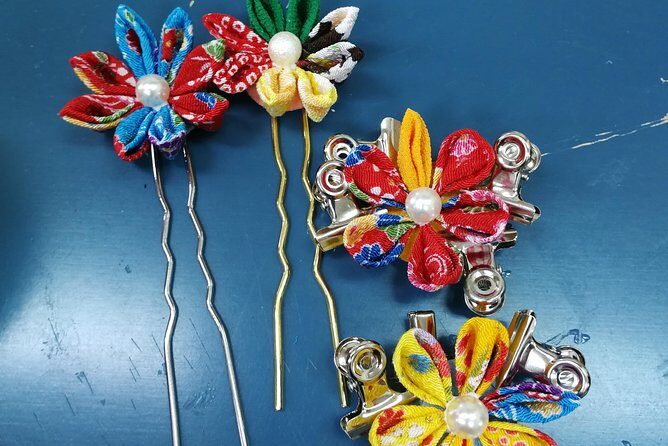
Tsumami-zaiku is the heart of this experience. The idea is that you create small folded pieces from Chirimen cloth and build them into a flower shape. It’s tactile work, and it’s also the part that most people worry they can’t do.
Here’s why it still feels doable. You start with a short explanation and an instruction paper, then you work step by step with guidance during your making time. If you’ve never done anything like paper-folding crafts, this still works because the pace is slow and you get help while you’re building.
Choosing flowers and colors (so your piece feels like yours)
Picking your colors matters more than you’d think. The accessory is small, and color choices become the main way your Kanzashi reads as unique. If you want a safe look, choose shades that match your kimono or your own style. If you want contrast, go bolder and let the accessory act like a focal point in photos.
Tea or coffee: a small break with big mood impact
This is a craft workshop, but it’s not cold or clinical. You’ll be served tea or coffee while you work, which makes the session feel more like a cultural visit than a rushed activity. It’s also a nice reset if your hands start to feel cramped.
When you finish, you immediately see it in action
The best part is that your accessory doesn’t stay in a bag. You wear it right away, get photos, and walk around in the kimono. That makes the whole effort feel “complete,” not like you built something and then waited to show it later.
The kimono and obi fitting: choose your look and keep moving
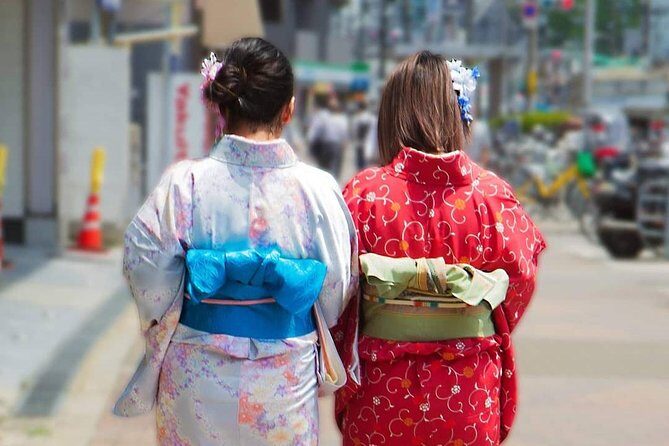
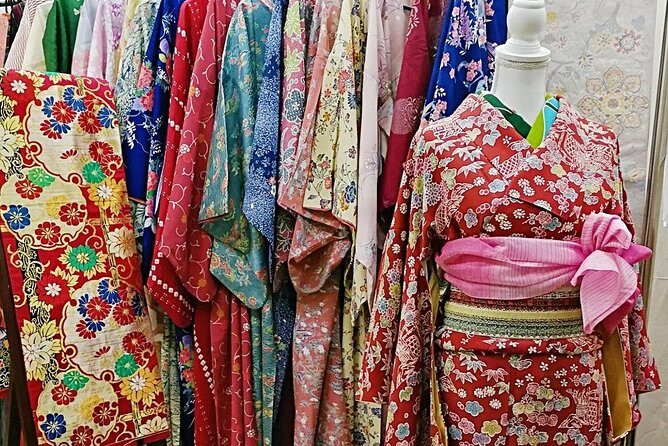
Kimono dressing is included, and you’ll have a selection of kimono and obi to choose from. In addition to kimono options, the experience includes styles that can include yukata in the selection set, so you’re not stuck with only one look.
How the dressing part helps your day
Getting dressed by the staff means you avoid the classic problem: you spend time fighting fabric and you don’t enjoy the experience. Here, you can spend your energy making the accessory and then enjoying the transformation.
Also, the photo session comes after you’re dressed, so you’re not trying to take pictures while still figuring out the fit. You’re already set, and your accessory is visible in a way that looks intentional.
The main consideration: timing and comfort
The biggest practical consideration is the 1-hour return window for the kimono. Plan to use your time for photos, a few stops for pictures, and then the walk. You don’t want to save everything for the last 10 minutes.
Comfort-wise, I’d treat this like a walking activity even though you’re in a traditional outfit. Wear shoes that make walking easy, and expect you might move a bit more slowly than usual.
Walking Shinsekai near Tsutenkaku: photos with atmosphere
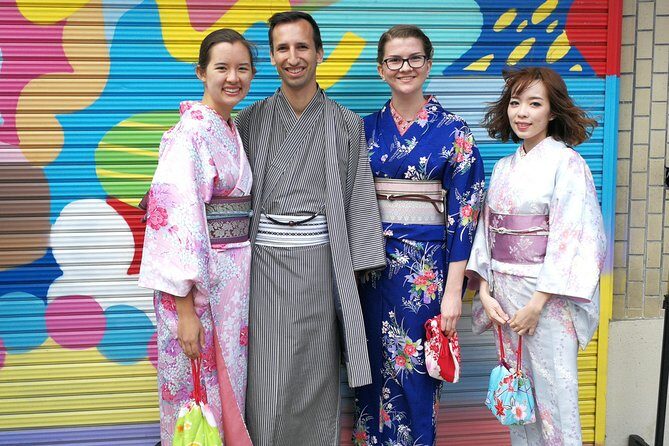
Shinsekai has that instantly recognizable vibe—Osaka’s character in a compact area. The walk is designed so you get to enjoy the neighborhood in kimono without needing extra planning.
Why the Tsutenkaku area works for photos
Tsutenkaku Tower is a visual anchor. It gives your photos a strong “I’m really here” background. Even if you don’t know the neighborhood well, you’ll have a clear direction for where to point your camera.
How to get good photos without stressing
You’ll have photo time after dressing and then again while strolling. To get more good shots, do a quick sweep: one round for full outfit shots, another round for close-ups of your Kanzashi, then a third for Tsutenkaku-area angles.
Also, keep your accessory in mind during the walk. That hair clip or brooch is the product of the workshop, and it deserves attention in your pictures.
Who this experience is best for (and who should think twice)
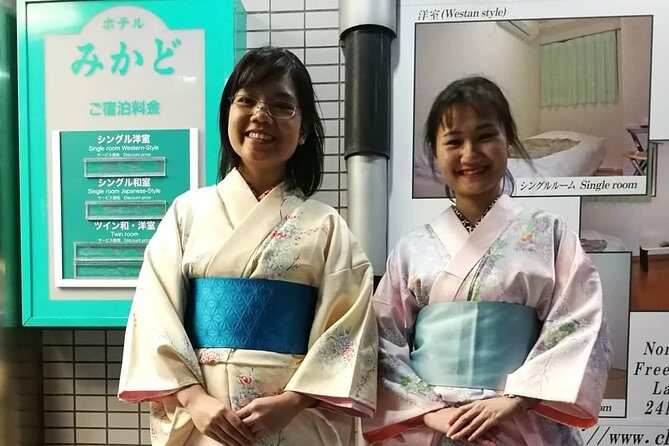
This is best for you if:
- You want a hands-on craft experience that actually ends with a finished item.
- You like photos, but you also want the photos to connect to something you made.
- You want a compact Osaka activity that includes both traditional clothing and local neighborhood time.
It may not be the best fit if:
- You want a longer kimono experience with more time than a 1-hour return window allows.
- You dislike step-by-step instruction or hands-on crafts, because the making portion is central to the experience.
For groups, the private setup makes it feel calmer. For solo travelers, it’s still friendly because you’re working with staff and other members during the craft time, then moving through a fixed walking area.
Booking tips to make the day smoother
A few practical choices can make a big difference:
- Choose colors and a flower style that you’ll still like in photos. Small accessories look best when color contrasts with your kimono.
- Wear comfortable shoes. You’re doing a short neighborhood stroll in traditional attire.
- Plan your energy for a focused 2-hour slot. The experience moves in clear stages, and the kimono return rule keeps it tight.
One more value tip: since this is near public transportation and uses a mobile ticket, build it into your day without overcomplicating your route. It’s the kind of activity that fits naturally between sightseeing stops.
Should you book this Real Kimono experience and Tsumami Kanzashi workshop?
Yes—if you want a craft you can take home and a kimono photo moment that’s tied to the craft. The pricing feels fair because you’re not just paying to try on clothing or watch a demo. You’re guided through making a Kanzashi and then wearing it immediately in Shinsekai near Tsutenkaku.
If you’re on the fence, book it when you have enough energy for both crafting and a short walk. Just remember the kimono return timing: the experience is built for a tight, fun window, not a slow, all-day wander.
FAQ
What do I make during the workshop?
You’ll make a Tsumami-zaiku Kanzashi, like a hair clip (brooch). You’ll use Japanese Chirimen cloth to create a flower-based accessory, and you’ll be guided step by step while you work.
How long does the experience take?
It’s about 2 hours (approximately).
Will I be dressed in a kimono and obi?
Yes. After making your accessory, you’ll choose a kimono and obi from a selection, and staff will dress you in them.
Where do we walk after the workshop?
After photos, you’ll stroll around Shinsekai, including the area around Tsutenkaku Tower, while wearing the kimono.
Do I get to keep what I make?
Yes. You’ll take your Tsumami accessory home as a souvenir after you return the kimonos.
Can I cancel for a full refund?
Yes. You can cancel up to 24 hours in advance for a full refund. If you cancel less than 24 hours before the start time, the amount paid is not refunded.