Cutting straw with a samurai sword sounds wild. In Osaka, Samurai Honor turns that into a focused lesson on real katana technique and Bushido etiquette. I like how they walk you through the movements step by step, and I also like that you end up doing an actual trial cut, not just watching from the sidelines. One thing to consider: the sword is truly sharp, so you’ll need to listen carefully and stay within the safety rules.
This is a good choice if you want something hands-on right near Osaka Castle. The vibe is serious-but-friendly, with clear instruction, bowing, and a strong respect for discipline. You’ll leave with photos emailed to you and a small samurai-language souvenir that ties the lesson back to mindset, not just motion.
In This Review
- Quick take: what’s special here
- Samurai Honor outside Osaka Castle: a short walk to something real
- Getting dressed as a samurai: costume + mindset
- The lesson starts with bowing: respect, focus, and safety
- Iai basics that actually matter: stance, battou, chiburui, nottou
- The trial slashing highlight: cut rolled straw with a real katana
- Photos and a samurai-language keepsake: taking the discipline home
- Price and value in Osaka: what $78.83 buys you
- Logistics that matter: where to go and how to plan your hour
- Who should book this (and who should rethink it)
- Should you book Samurai Honor’s trial slashing?
- FAQ
- How long is the Samurai Honor trial slashing lesson?
- Where exactly do I meet for the experience?
- Do I practice with a real sword or a prop first?
- What do you cut during the trial slashing?
- Is there a photography service?
- What’s included in the price?
- What languages are available?
- How many people are in the group?
- What’s the cancellation policy?
Quick take: what’s special here
- One-minute walk from Osaka-jo Koen Station on the JR Osaka Loop Line, by Osaka Castle Park
- Trial slashing with a real Japanese sword, not a soft prop
- You start with iai basics using a practice sword before moving to cutting
- Battou, Chiburui, and Nottou taught as part of control and manners
- Rolled straw is the target for your first cutting experience
- Photo data by email within two days, plus a teacher souvenir tied to samurai language
Samurai Honor outside Osaka Castle: a short walk to something real
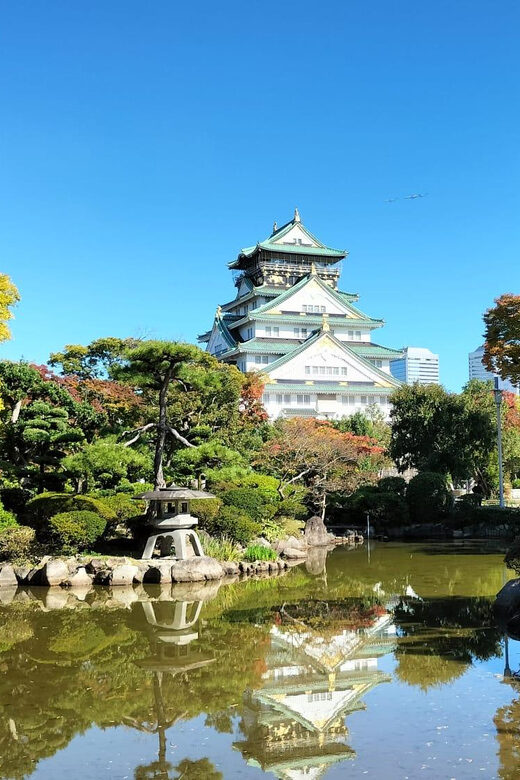
You’ll meet at Samurai Honor, a very short walk from Osaka-jo Koen Station (JR Osaka Loop Line). That location matters. You can pair this with a morning or afternoon visit to Osaka Castle Park, then still keep your day efficient instead of burning time on far transfers.
The session itself runs about 1 hour, and the class stays small, with a maximum of 5 travelers. That small size changes the feel. You’re not getting tossed into a crowd and hoping the instructor notices your grip. You get enough attention to correct posture and timing as you go.
Price is $78.83 per person, which sounds like a lot until you see what’s included. You’re paying for a certified instructor, a full costume change, real technique time, and a photography add-on that saves you from worrying about whether your pics came out. You still handle your own transportation to the meeting point, since station/hotel transfers are not included, but the lesson content is the main value.
You can also read our reviews of more tours and experiences in Osaka.



Getting dressed as a samurai: costume + mindset
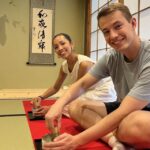
The first move is practical: you change into a samurai outfit—dogi and hakama—and step into the role for the lesson. It’s not just costume theater. Wearing the right clothing changes how you move and sit, and it reinforces that this is a disciplined practice.
Once you’re dressed, the instructor frames what you’re about to do. They connect the sword techniques to Bushido, including the idea that samurai behavior was strict about etiquette and self-control. That matters because sword practice without the “why” becomes just a stunt. Here, you’re being taught that manners and restraint are part of the skill.
You’ll also hear explanations about swords and proper samurai manners before you start hands-on work. Even if you’ve never held a katana, you’ll understand the vocabulary they’re using, which makes the later steps much easier to follow.
The lesson starts with bowing: respect, focus, and safety
The session begins with a bow, then moves into setup and instruction. That moment may seem small, but it sets the tone. In sword arts, that kind of ritual isn’t decoration—it’s a reset. It tells your body to slow down and pay attention.
They also cover the safety reality upfront. Drawing swords is dangerous, and you shouldn’t do it without permission. In a lesson like this, that’s not just legal wording. It’s the baseline for how the instructor will control timing, distance, and what you do with your hands.
The takeaway for you: don’t rush. If you’re the type who likes to get ahead of instructions, this class will gently but firmly correct that habit. The good news is you still move quickly through the learning steps, just with the right sequence.
Iai basics that actually matter: stance, battou, chiburui, nottou
You’ll start practicing with an iai practice sword. That’s a smart approach for your first session because it lets you learn the body mechanics without the extra fear factor of a sharp blade.
Here’s the core flow they teach, and why it’s useful:
- Swinging the sword from the stance: this helps you coordinate arm, wrist, and posture before you add pulling motion.
- Battou: the sword pull out of the scabbard leading into the cut. This step trains your timing and reduces the common beginner mistake of yanking the sword too fast or too early.
- Chiburui: a symbolic blood-removal action after cutting. In real practice, this is about controlled follow-through and not letting the blade flail around.
- Nottou: returning the sword to the sheath after the symbolic action. This is your final discipline step—how you finish is as important as how you begin.
What I like about this structure is that it’s teachable in an hour. You’re not trying to master a lifetime craft. You’re learning the key transitions that make the technique work and make it look like “real practice,” not random slashing.
You then practice basic kata and stances, plus sword swings, guided by the instructor. This is where you begin to feel the rhythm: stance, pull, cut, controlled finish, then sheath. It’s the difference between trying to imitate movement and actually learning form.
The trial slashing highlight: cut rolled straw with a real katana
Now for the moment most people come for: trial slashing with a real Japanese sword. The target is a rolled straw bundle, which is an important detail. Straw gives you a clear, safe-ish target for learning impact without turning the lesson into a chaotic guessing game.
When you do your trial cut, focus on what they trained you for. If your timing is early or late, you’ll feel it. If your stance is off, the cut won’t track cleanly. But that’s also why this is such a good beginner-friendly “first real cut.” The straw shows the result fast, so you can understand corrections immediately.
This is the part where you should trust the instructor’s direction. You’re working with a blade that is described as real sharpness, and that changes your mindset instantly. The goal isn’t bravado. It’s control, clean technique, and respect for the tool.
If you’re thinking, I’m not sure how confident I’ll feel—good. Nervous is normal. You’re not expected to become a samurai hero in one session. You’re expected to follow the sequence and learn the basics in a way that stays safe and respectful.




Photos and a samurai-language keepsake: taking the discipline home
One of the nicest “extra” touches here is photography. They take photos during the activity—described as capturing serious figures while you practice. Then they send the photo data to your designated email address within two days.
This is practical. After you’ve been concentrating on form, you won’t want to keep stopping to pose. Getting the photos later means you can actually enjoy Osaka Castle or food afterward without worrying whether you missed your moment.
You also receive souvenirs connected to your teacher’s samurai-language lesson. The “samurai language” refers to how the samurai class communicated during the Warring States period, with themes tied to loyalty, discipline, and the spirit of Bushido. That connection is more than trivia. It turns sword practice into a cultural lesson about how power and responsibility were treated.
One of the phrases you may encounter here is arigataki shiawase, described as an expression meaning extremely fortunate or a rare coincidence. Another idea that shows up in the way the teacher explains the role of the sword is that the sword is the soul of a samurai and isn’t something meant to be sold even in hardship. You’ll get the gist quickly: this art is about values, not just cutting.
Price and value in Osaka: what $78.83 buys you
Let’s talk value in plain terms.
$78.83 per person covers:
- the samurai outfit (dogi and hakama)
- a certified professional instructor
- photography data sent by email
- gratuities
- English instruction by default (with other languages available by inquiry)
What it does not cover:
- public transportation or hotel transfers
- bottled water
- personal add-ons (there’s a paid option for movie shooting mentioned)
For many activities near big sights, you pay for the setting, the location, and a photo moment. Here, you’re paying mostly for instruction + real technique time + real cutting. That’s the difference.
Also, the group max of 5 travelers helps. Even if you’re traveling solo, you’re unlikely to feel lost in a crowd. The instructor can correct basics quickly, which is what you want for something like this.
Logistics that matter: where to go and how to plan your hour
You’ll start and end back at the meeting point, so you can plug this into your Osaka day without a long shuttle. The lesson lasts about 1 hour, and you’ll want to give yourself a few minutes to find the door and settle in after arrival.
The meeting point address is:
Samurai Honor, 536-0014 Osaka, Joto Ward, Shiginonishi, 2-chōme319 エクセレンス高山
And you’ll be close to Osaka-jo Koen Station on the JR Osaka Loop Line.
Two practical notes:
- Your physical fitness level should be moderate. You’ll be standing, moving through stances, and handling the movements repeatedly.
- The class warns that drawing swords is dangerous, so don’t try to “help” by doing things early. The instructor is running the timing.
If you’re visiting Osaka Castle Park that day, you’ll probably like pairing this with an early stroll around the grounds. You’ll come from the calm focus of practice back into the city, which feels good.
Who should book this (and who should rethink it)
This experience is a great fit if you want:
- a hands-on katana lesson with a clear structure
- an introduction to Bushido through movement and manners
- a short, efficient activity near Osaka Castle
- small-group attention and a photo result afterward
You might rethink it if:
- you’re uncomfortable with the idea of a sharp blade and strict safety rules
- you’d prefer something purely observational or low-physical effort
If you’re traveling with a teen or adult who’s curious about Japanese culture and wants more than a museum label, this can click fast—especially because you actually do the motions.
Should you book Samurai Honor’s trial slashing?
If you’re on the fence, here’s my simple advice: book it if you want a focused, respectful introduction that ends with real cutting and real photos.
Choose something else only if you hate instruction, don’t like structured safety, or you’d rather spend your hour walking than learning technique. This class asks you to pay attention, follow the sequence, and treat the sword with seriousness.
For most people who want an authentic Osaka Castle area experience that isn’t just sightseeing, this one is a strong yes. It’s one hour of discipline you can feel, plus a souvenir and photo set that turns the memory into something you can actually keep.
FAQ
How long is the Samurai Honor trial slashing lesson?
It lasts about 1 hour.
Where exactly do I meet for the experience?
You meet at Samurai Honor near Osaka-jo Koen Station on the JR Osaka Loop Line, about a one-minute walk from the station and by the entrance to Osaka Castle.
Do I practice with a real sword or a prop first?
You start by practicing the basics with an iai practice sword, then move to techniques taught with a real Japanese sword for the trial slashing.
What do you cut during the trial slashing?
You cut a rolled straw.
Is there a photography service?
Yes. They provide a photography service and send the photo data to your designated email address within two days.
What’s included in the price?
Included are the samurai outfit, a certified professional instructor, photography data, and gratuities. Bottled water and transport are not included.
What languages are available?
The default language is English. Other languages may be available if you inquire (Italian, Spanish, French, Chinese, Thai, and Indonesian are listed).
How many people are in the group?
The experience has a maximum of 5 travelers.
What’s the cancellation policy?
You can cancel for a full refund up to 24 hours in advance of the experience start time. If you cancel less than 24 hours before, the amount paid is not refunded.