REVIEW · OSAKA
Tsumami Zaiku (Kanzashi) making Workshop in Abeno Osaka
Book on Viator →Operated by Moirai Arts · Bookable on Viator
A small paper-and-fabric craft can feel surprisingly personal. In this Abeno Osaka workshop, I like the hands-on step-by-step guidance and the chance to choose between Traditional and Sakura (Cherry blossom) styles. The setting helps too: it’s in a 100-year-old Japanese house, so the experience feels lived-in, not like a factory class. One thing to plan for: there’s a steep staircase, so people with mobility issues may find it difficult.
You’ll start with a short intro to Tsumami-zaiku, then pick your style. The materials come ready to go—cloths, pin sets, and accessories—so you’re not hunting for supplies mid-class. The only slow part is intentional: the glue needs time to dry, which gives you a break with matcha and Japanese sweets.
In This Review
- Key things I think you’ll care about
- Abeno Osaka in a 100-year-old house (and what that means for your time)
- Choosing your kanzashi: Traditional is simpler, Sakura takes more time
- The workshop flow: history, choosing cloth patterns, then true step-by-step making
- The part that changes everything: glue drying, matcha time, and a chance to browse
- What you take home: your kanzashi in a box
- Price and value: why this workshop feels fair for what you get
- Who should book this workshop (and who should reconsider)
- Logistics that actually matter: meeting point, pickup, and timing
- Should you book Tsumami Zaiku in Abeno Osaka?
- FAQ
- What is the duration of the workshop?
- What styles can I choose from?
- Are materials included?
- Is there a break during the workshop?
- Do I need to print a ticket?
- Is pickup available?
- What is the age requirement for children?
Key things I think you’ll care about
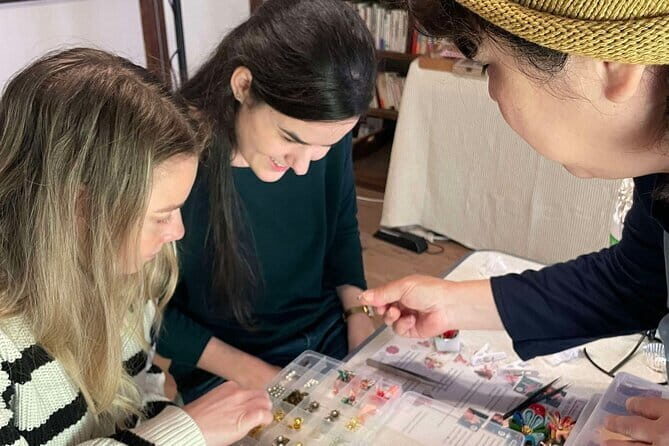
- Small group size (max 6) means you can actually ask questions and get help without waiting.
- Traditional vs Sakura choice: Sakura takes longer, but the instructor guides you through it.
- Materials are mostly pre-cut and pre-made, so your focus is the petals and assembly.
- Glue-dry break includes matcha and Japanese sweets, plus time to browse finished kanzashi for purchase.
- You take it home in a box, ready to keep or gift.
- Hosted in a 100-year-old house with a mixed eastern-style interior—charming, but plan around the stairs.
Abeno Osaka in a 100-year-old house (and what that means for your time)
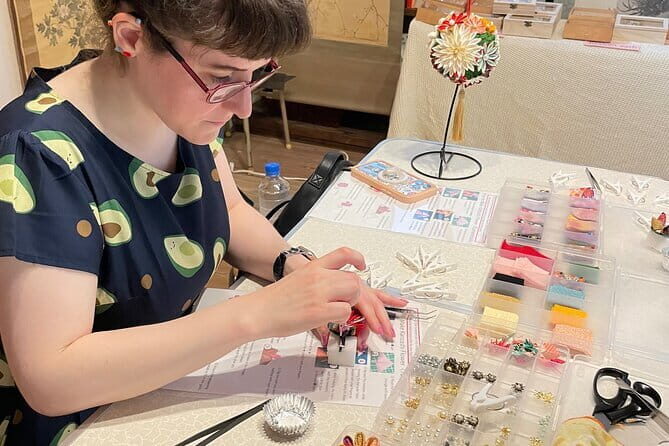
The workshop takes place in a traditional-style Japanese house in Abeno Ward, Osaka. The interior mixes in an eastern look and feel, which makes the class feel like you’re visiting a home workshop rather than sitting in a modern studio.
That old-house vibe comes with one practical detail. The stairs are steep, so if mobility is an issue for you (or for someone in your group), you’ll want to consider whether you can comfortably get up and down. The good news: the class is only about 1 hour 30 minutes, so you’re not committing to a long sit-and-stand exercise.
The location also ties into how easy it is to fit this into your day. You meet near Nishitanabe Station, and the activity is described as being near public transportation. That matters in Osaka, where moving between neighborhoods can eat time if you pick something hard to reach.
You can also read our reviews of more tours and experiences in Osaka


Choosing your kanzashi: Traditional is simpler, Sakura takes more time
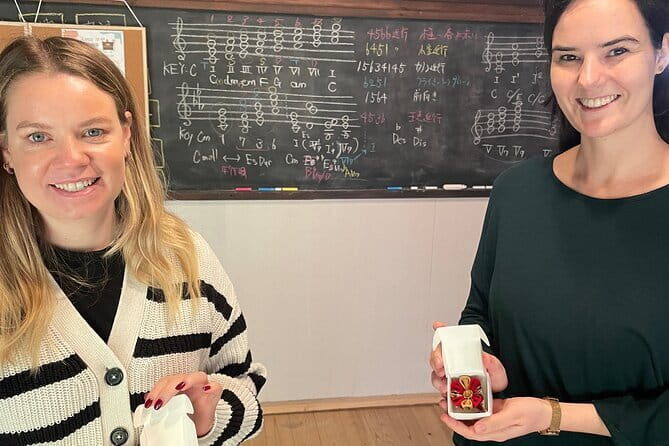
You get two crafting options: a Traditional kanzashi and a Sakura (Cherry blossom) kanzashi. The difference isn’t just theme—it affects how much time you’ll spend making petals and assembling them.
Traditional is presented as the easier option. If you want a relaxed class where you can follow along without rushing, this is the safer bet.
Sakura is a step up. It’s described as a little more difficult than the Traditional style, and it may take longer to make. The key point is that you’re not left to figure it out on your own. The instructor guides you throughout, so even if Sakura sounds ambitious, you still get support.
From a planning perspective, I’d treat your choice like you would choose a difficulty level in a cooking class. If you’re traveling and want the experience more than the challenge, go Traditional. If you enjoy a longer, more detailed handcraft, Sakura is where you’ll likely feel the satisfaction.
The workshop flow: history, choosing cloth patterns, then true step-by-step making
The session starts with a brief introduction to Tsumami-zaiku. That short background helps the craft feel less random. Instead of making a decoration you don’t understand, you get a bit of the context behind what you’re building.
Then you move to the design decisions. You’ll see a variety of patterned cloths and accessories, and you choose what goes into your kanzashi. This is a nice touch because your final result won’t just be one generic version of the project.
Now comes the parts that make the class feel friendly, not stressful:
- The cloths, pin sets, and accessories are provided for you.
- Most prep work is already handled: materials are precutted and pre-made, except for the Kanzashi petals.
- The instructor teaches the assembly step by step and encourages questions.
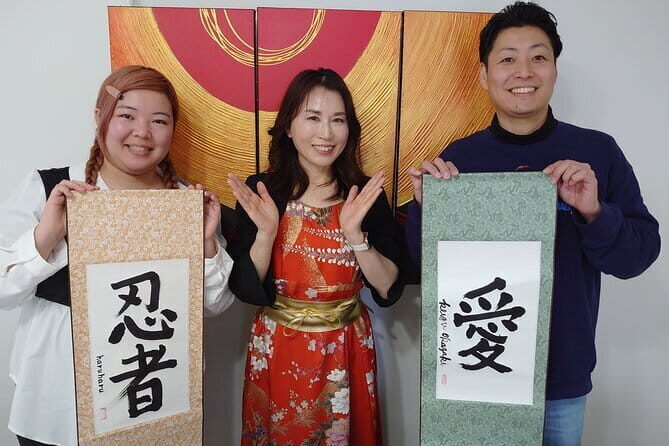
This is where the instructor team really earns points. In the class, you may be working with Misa-sensei, along with Jun and Ami. People highlighted their friendly, accommodating, and professional approach, and that matches what you want in a workshop: clear directions plus the freedom to ask dumb questions (because there are no dumb ones when glue and tiny petals are involved).
And here’s a practical mental trick for these kinds of crafts: don’t judge your work halfway through. The glue needs time to set later, so your first few stages look less finished than the final piece.
The part that changes everything: glue drying, matcha time, and a chance to browse

Once you assemble your kanzashi, the glue stage starts. The workshop notes that the glue takes some time to dry. This isn’t just a pause; it becomes part of the experience.
During that drying window, you get break time with matcha and Japanese sweets. This is genuinely useful. It gives your hands a rest and lets you reset your attention before the final wrap-up.
You also get time to look around at kanzashi made by the instructor, available for purchase. Even if you don’t plan to buy anything, it’s worth using that time to study how others finish their petals and how different patterns look under the same basic method.
This is one of those small details that makes a workshop feel like an art visit. You’re not only making your own piece; you’re also seeing what finished, expert-level work looks like.
What you take home: your kanzashi in a box
By the end, you’ll receive your finished kanzashi wrapped and packed to take home. The workshop includes a box, so you’re not scrambling for packaging after your session.
That box matters more than you might think. Kanzashi are usually delicate, and storage helps keep petals neat. If you’re giving the piece as a gift, a proper box also makes it feel complete, not like a craft you rushed into a bag.
The timing is tight but straightforward: after your break and drying time, you’ll get your finished kanzashi handed out and ready to go.





Price and value: why this workshop feels fair for what you get
This workshop costs $35.83 per person, and it’s a small group (maximum of 6). For that price, you’re not just paying for instruction. You’re also getting:
- a guided choice between two styles
- patterned cloths, pin sets, and accessories
- a box to take your kanzashi home
- matcha and Japanese sweets
- materials that are already mostly pre-cut and pre-made
The value question comes down to one thing: how much of your effort is spent crafting versus coordinating. Here, prep is handled for you, so your time is actually used to build the petals and shape the final piece.
If you compare this kind of experience to other craft classes that require more supplies on top of the tuition, this one feels easier to say yes to—especially since the class is only about 90 minutes.
One more value angle: the instructors are described as super friendly and professional, with good guidance. In crafts, that kind of support directly affects your result. You’re more likely to leave with a piece that looks how you pictured it.
Who should book this workshop (and who should reconsider)
This workshop is a good match if you like hands-on activities and want something you can’t really buy the same way off a shelf. It’s also ideal if you want a calmer activity in Osaka that still feels cultural and meaningful.
It’s also described as suitable for most travelers, and children are welcome starting at age 8+. If you bring kids, you’ll be responsible for watching them during the workshop.
Consider skipping (or at least thinking carefully) if:
- you have mobility limitations due to the steep staircase
- you’re currently dealing with an infectious illness such as flu or COVID
- you’re looking for something super high-energy or fast-paced (this is craft time, not a sightseeing sprint)
If you’re traveling solo, this is still workable. A group of up to six keeps the class personal, and the step-by-step approach helps you stay on track.
Logistics that actually matter: meeting point, pickup, and timing
The meeting point is Nishitanabe Station (1-chōme-1-25 Nishitanabechō, Abeno Ward, Osaka 545-0011, Japan). The activity ends back at the meeting point, so you’re not stuck planning a separate return.
There’s also mention of pickup offered, and the tour uses a mobile ticket. That’s helpful if you prefer not to print anything and want the day to run with minimal fuss.
The session lasts about 1 hour 30 minutes (approx.). Since it’s not a huge time block, it’s an easy fit between sightseeing plans or before dinner.
One more planning note: it’s often booked around 50 days in advance on average. If you’re traveling during a busy season or your schedule is tight, it’s smart to reserve early.
Should you book Tsumami Zaiku in Abeno Osaka?
Book it if you want a small-group craft where the guidance is part of the value, not an afterthought. You’ll leave with a real handmade kanzashi, plus the experience of choosing patterns and learning the steps behind the craft.
I’d especially recommend it if:
- you like hands-on cultural activities
- you enjoy detailed work and don’t mind glue-drying time
- you want something more personal than a typical souvenir
I’d think twice if stairs are an issue for you, or if you’re hoping for a long walking tour of sights. This is about making, not roaming.
If that sounds like your kind of travel day, this workshop is one of those practical, feel-good experiences that turns a small block of time into a keepsake you can actually use.
FAQ
What is the duration of the workshop?
The workshop lasts about 1 hour 30 minutes.
What styles can I choose from?
You can choose between two options: a Traditional kanzashi or a Sakura (Cherry blossom) kanzashi.
Are materials included?
Yes. The workshop includes cloths, pin sets, accessories, and a box. Materials are provided, with petals being the part you make.
Is there a break during the workshop?
Yes. Glue needs time to dry, and during that time there is a break with matcha and Japanese sweets.
Do I need to print a ticket?
No. The activity uses a mobile ticket.
Is pickup available?
Pickup is offered.
What is the age requirement for children?
Children from ages 8 and above are allowed to participate.