REVIEW · OSAKA
Learn Zen in a class of making Matcha tea near Osaka Castle
Book on GetYourGuide →Operated by 株式会社武士の誉れ · Bookable on GetYourGuide
Put on a kimono, sip zen matcha. In a 1-hour class at Samurai Honor near Osaka Castle, you’ll learn matcha etiquette the Japanese way, plus the meaning behind the sweets. What I like most is the moment you enter the tea room through the nijiriguchi, where everyone is treated the same—no status, no VIP vibe.
I also really appreciate how the instruction ties the ritual to real Japanese aesthetics: you’ll learn about wagashi and the ideas of wabi-sabi and the four seasons, with clear, step-by-step guidance from the host (Kaori is one name you’ll hear in recent sessions). One practical consideration: there’s no pickup, and you need to arrive 30 minutes early to change and get instructions.
In This Review
- Key things to know before you go
- Finding Samurai Honor and getting into costume fast
- The tea room entrance (nijiriguchi) and the idea of equality
- What you learn in the ceremony: matcha etiquette in practice
- Wagashi, wabi-sabi, and why the sweets matter more than you’d expect
- Kimono styling, hair (wagami), and photo shooting that actually works
- Price and value for $40: what you get, and what to plan
- Who should book this matcha-and-kimono class in Osaka?
- Should you book this near-Osaka Castle matcha class?
- FAQ
- How long is the tea ceremony class?
- What time should I arrive?
- Is English available?
- What’s included in the price?
- Can I bring kids?
- What should I bring?
- Is there a cancellation window for a full refund?
Key things to know before you go
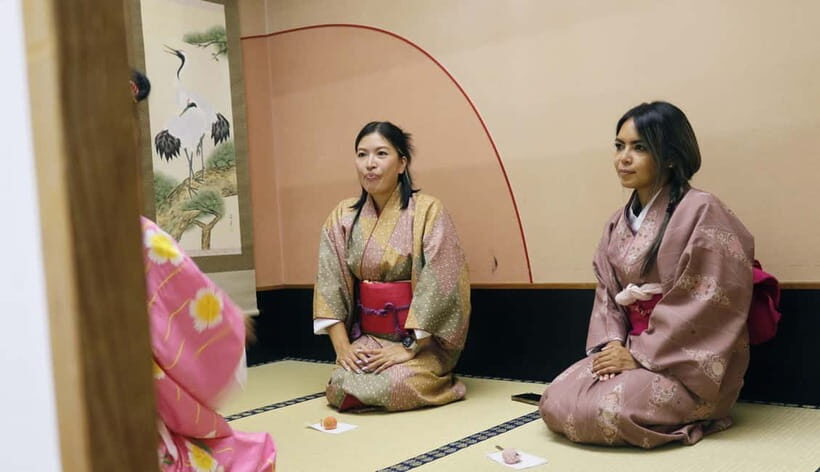
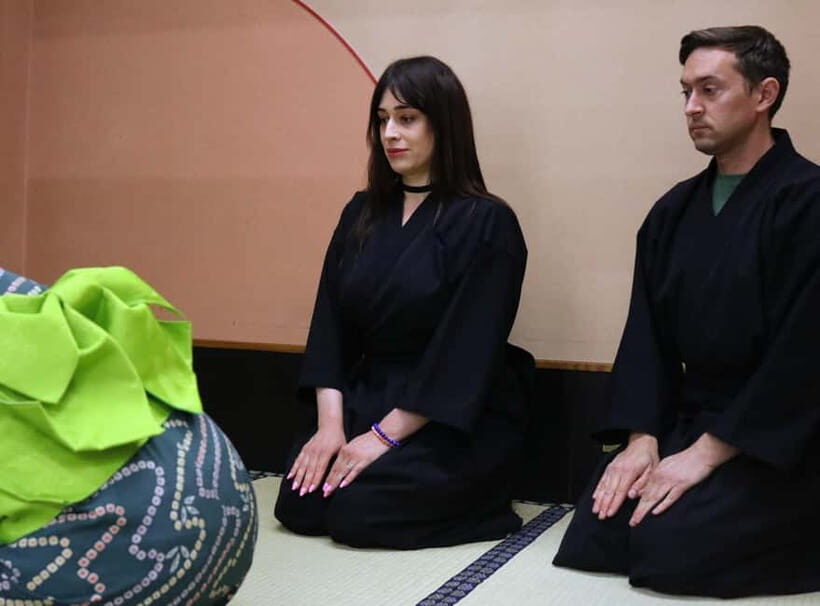
- Costume first (samurai-style or kimono): men wear hakama and a traditional robe; women wear a kimono.
- Nijiriguchi equality moment: once you pass through the entrance to the tea room, rank fades away.
- Wagashi = culture lesson: the sweets connect directly to wabi-sabi beauty and seasonal themes.
- Real etiquette practice: you’ll learn how to sit, bow, stand, walk, and serve—through doing, not just watching.
- Photos are part of the deal: photo shooting is included, and files are sent to your email address.
- Small group (up to 6): you get more turns and individual attention.
Finding Samurai Honor and getting into costume fast
This experience happens at a dedicated space called Bushi no Homare (Samurai Honor) inside Excellence Takayama (1F). The provided address is Excellence Takayama 1F, 2-3-19 Shiginonishi, Joto-ku, Osaka-shi, Osaka 536-0014.
Do yourself a favor and use the Google Maps link (Apple Maps is noted as incorrect). The easiest meeting landmark is a wooden sign reading Honor of the Samurai on a rack with activity pamphlets in front of the store. You may also spot kimonos and hakama hanging to dry nearby, which is a nice visual cue.
You’ll want to arrive 30 minutes before your reserved time. That half hour matters because you’re changing into traditional clothing and getting instructions before the tea room part. Also bring a T-shirt—that’s specifically what’s listed as helpful for the changeover.
And yes, plan on walking in Japanese-style outfit. Comfort comes from following the session flow, not from showing up in sandals and hoping for the best.
You can also read our reviews of more tours and experiences in Osaka


The tea room entrance (nijiriguchi) and the idea of equality
Here’s one reason I think this class feels different from a typical “tour activity.” The teaching isn’t just about how to whisk matcha. It’s about the mindset behind the ceremony.
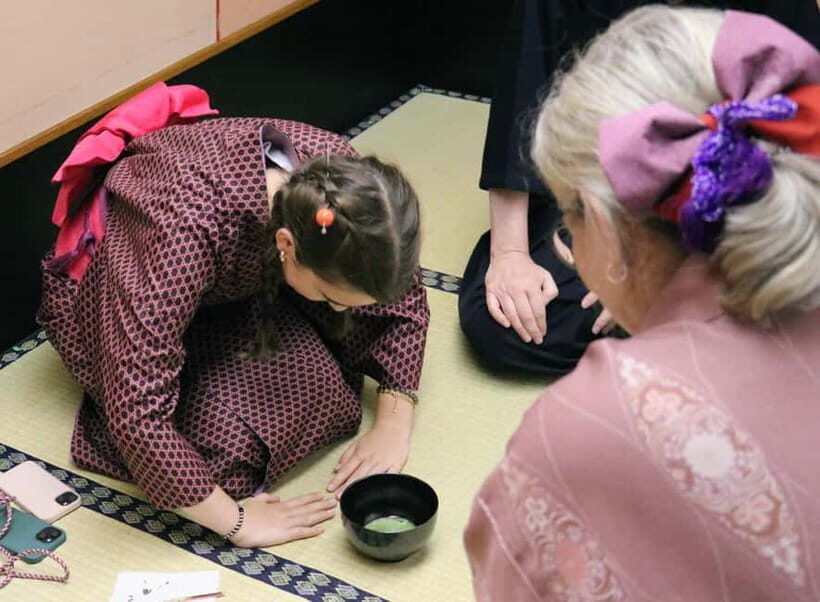
Before you begin, you’ll practice the manners that make the room work—bows, posture, and the gentle choreography of movement. Then comes the key symbolism: once you pass through the nijiriguchi, everyone is treated equally, regardless of nationality, age, gender, or status. That’s not marketing fluff; it’s built into how the space is entered and how guests are received.
If you like experiences that quietly reset your perspective, this is one. You stop thinking about who’s doing what “better,” and you start focusing on doing the next step correctly—and respectfully. The ceremony is structured so the host entertains, and you also respond, creating a shared rhythm.
That “shared rhythm” theme is repeated in the class philosophy: the atmosphere forms when both sides meet each other in the right spirit, not when one person performs and the rest watch.
What you learn in the ceremony: matcha etiquette in practice
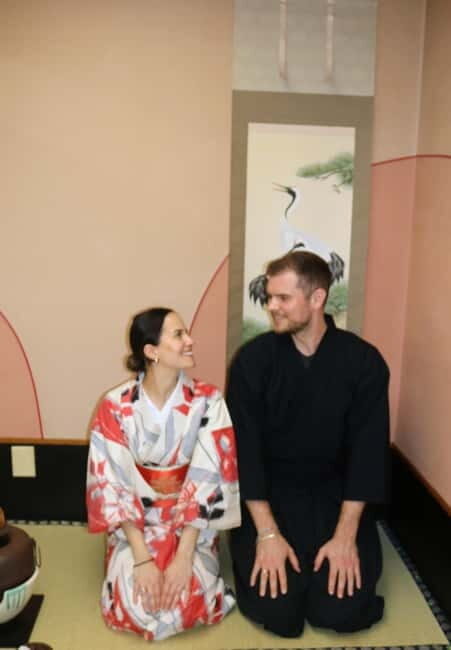
The session starts with the host welcoming you using traditional manners, then you’ll learn matcha making and etiquette through direct instruction. You’ll be served matcha as part of the flow, and you’ll also get hands-on practice so you understand what your hands are doing—not just what your eyes are seeing.
You can expect learning how to:
- Prepare and handle matcha in a way that fits the ceremony
- Serve tea properly, including how the serving and receiving gestures work
- Move with control while staying aware of the room and other participants
- Follow the order of actions that creates calm rather than chaos
The class is described as rooted in hospitality. One of the most practical parts of that idea is that your guide doesn’t just correct your technique; they also guide your awareness—when to slow down, when to pause, and how to keep your posture steady while you participate.
In recent sessions, participants specifically called out instructors explaining the process step by step, which is exactly what you want when you’re learning something hands-on and unfamiliar. If you’re worried you’ll feel awkward, you probably won’t, because the activity is structured for your turn.
Wagashi, wabi-sabi, and why the sweets matter more than you’d expect
Wagashi isn’t treated like a side snack. In this class, the sweets are part of the lesson.
You’ll learn what wagashi represents and how it connects to Japanese aesthetics like wabi-sabi—the beauty found in simplicity and imperfection—and to the idea of the four seasons. The sweets are described as reflecting seasonal feeling through color, design, and seasonal themes, so the dessert becomes a small visual poem.
Wagashi is also positioned as a uniquely Japanese food tradition that developed alongside the tea ceremony. The key takeaway you’ll leave with: these sweets are made to be appreciated, not inhaled. People even remark how beautiful they look, the way handmade craftsmanship shows up in delicate details.
There’s also a helpful way the class frames it: you’re learning through exposure to Japanese history and culture, then through making and understanding the sweets. Even if you never become a wagashi maker at home, you’ll start recognizing why the ceremony is so careful about what you eat and how you experience it.
Kimono styling, hair (wagami), and photo shooting that actually works
This is a costume-forward experience, and it’s built to be memorable on camera.
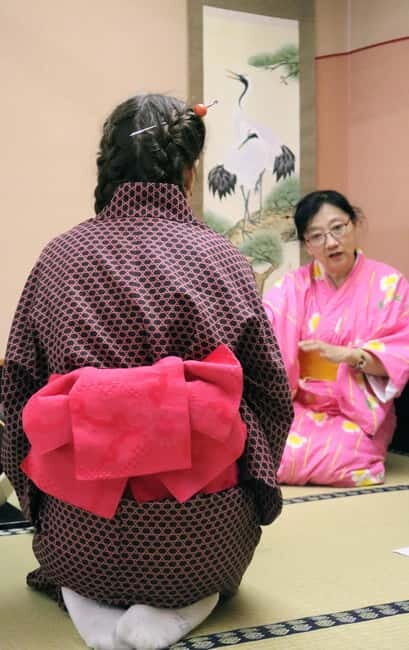
The included clothing covers kimono for women, and for men it’s hakama plus a traditional robe. You’ll be dressed before the ceremony and guided through traditional presentation. One review specifically mentions that the kimono colors could be chosen, and that the styling included an elegant finish.
Hair details can get a bit nuanced. The activity listing notes wagami (collected hair + kanzashi) as a paid option. In practice, one recent participant reported getting high-set hair with flower decoration without extra cost. So here’s the smart approach: ask what is included in your session when you arrive, especially if you want the full kanzashi look.
Photo shooting is included, and the files are sent to your designated email address. In one recent case, photos arrived the same day. Even if your timing differs, the bigger value is that someone handles the photo part during the ceremony. That means you can focus on the etiquette and matcha steps instead of stopping every five minutes to find a good angle.
If you care about getting your kimono shots without turning the class into a photoshoot marathon, this setup is ideal.




Price and value for $40: what you get, and what to plan
At $40 per person for a 1-hour class, the pricing feels reasonable for what’s bundled in. You’re not just paying for tea knowledge—you’re paying for a full guided experience with real cultural elements.
Included items:
- Kimono clothing (and the samurai-style dressing for men)
- English interpreter guide staff (default language is English)
- Matcha and wagashi
- Certified professional instructor
- Tax and tips
- Photo shooting with files emailed to you
Not included items (so you aren’t surprised):
- Transportation and no pickup or drop-off at train station or hotel
- Wagami (collected hair + kanzashi) is a paid option
- Outdoor photo shoot is listed as a paid option
- Extra things like movie shooting are also paid options
- No mention of included footwear or extras beyond the listed costume clothing, so confirm what’s provided for your exact gendered outfit setup
Since transport isn’t included, you’ll want to plan your own route to the Samurai Honor address. Also remember: arriving early is part of the experience because the costume and instruction time happen before the tea room.
For value, the real win is that you get the whole cultural package—clothing, etiquette, matcha prep, wagashi meaning, and photos—in just one hour.
Who should book this matcha-and-kimono class in Osaka?
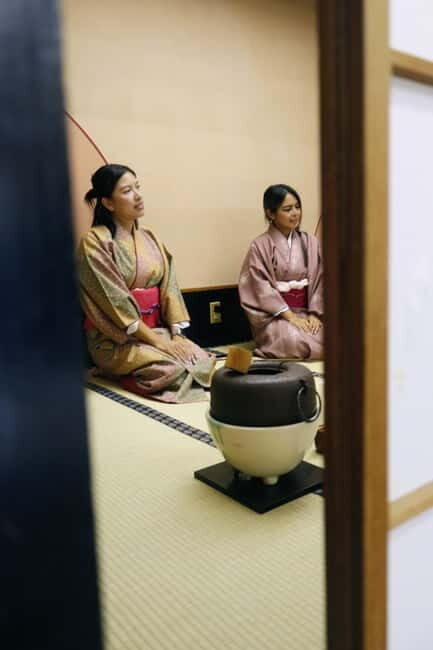
This experience fits best if you:
- Want a short, well-guided cultural activity near Osaka Castle
- Like learning etiquette through doing, not only listening
- Care about kimono styling and want photos taken during the moment, not after the fact
- Prefer a small group setting (limited to 6 participants)
It’s not listed as suitable for:
- Children under 10
- People with altitude sickness
- People over 95
If you’re traveling with kids, note that sharing this kind of ritual with your children is actually highlighted as something families can do. Just keep the minimum age in mind.
Language-wise, the class supports English and Japanese. If you need a language other than English, you’ll need to inquire first, since staff availability for other languages is limited.
Should you book this near-Osaka Castle matcha class?
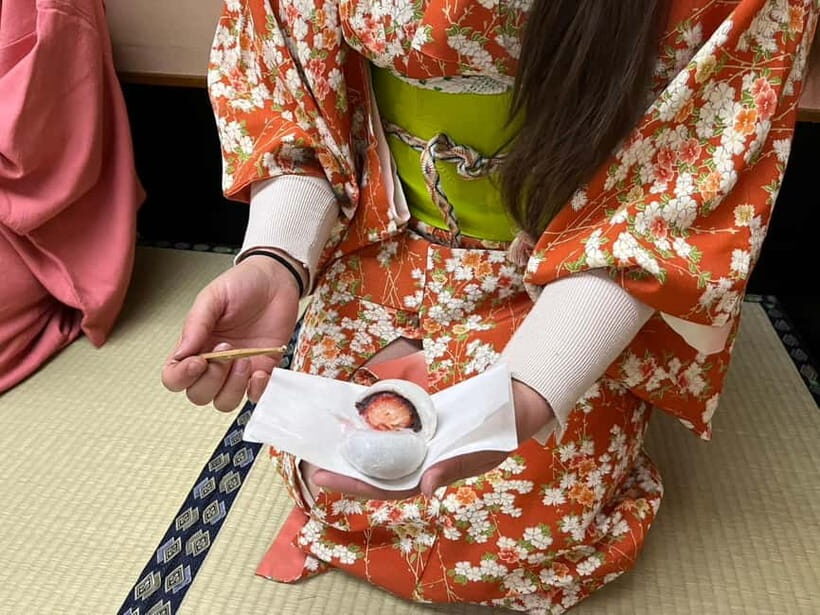
I’d book it if you want a highly structured tea ceremony experience where you’re dressed appropriately, taught etiquette step by step, and leave with photos plus an understanding of what wagashi and wabi-sabi mean in this context. The small group size helps, and the included photo shooting means you can relax and participate instead of managing your camera.
Skip it if you’re looking for a long, slow tea master deep-learning session. This is 1 hour, so it’s designed for an efficient, guided introduction and a memorable cultural moment, not a multi-session mastery course.
If that sounds like your style—short, respectful, photo-ready, and actually educational—then this matcha class is a solid call.
FAQ
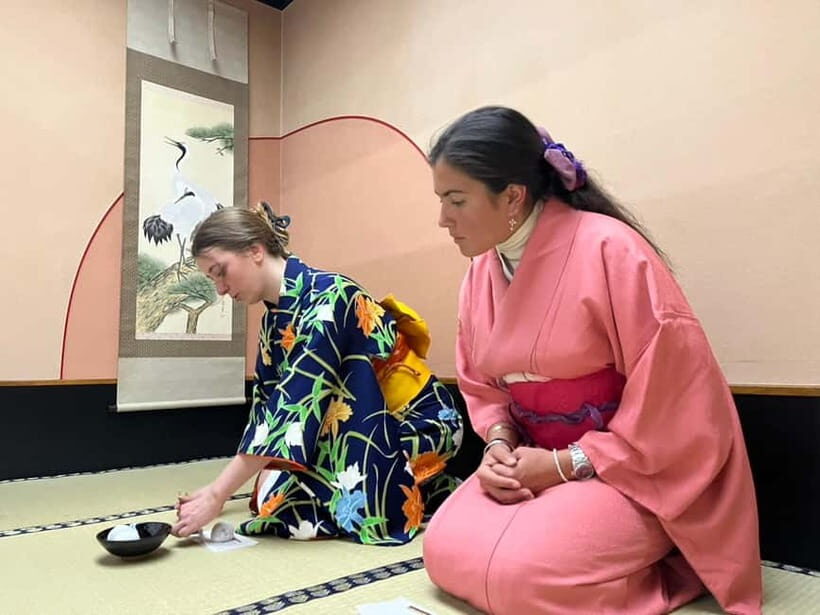
How long is the tea ceremony class?
The class lasts 1 hour.
What time should I arrive?
Arrive 30 minutes before your reserved start time so you have time for instructions and changing clothes.
Is English available?
Yes. English interpreter guide staff are included by default. Japanese is also available.
What’s included in the price?
Kimono clothing, matcha, wagashi, an English interpreter guide staff, a certified professional instructor, tax and tips, and photo shooting with files sent to your email are included.
Can I bring kids?
The activity is not suitable for children under 10.
What should I bring?
Bring a T-shirt.
Is there a cancellation window for a full refund?
Yes. You can cancel up to 24 hours in advance for a full refund.