REVIEW · OSAKA
Osaka Highlights: 4-Hour Walking Tour with Castle
Book on Viator →Operated by Pinpoint Traveler, Inc · Bookable on Viator
Osaka can feel like a lot at once. This 4-hour walking route ties together Osaka-jo grounds and the neon maze of Dotonbori, with time in neighborhoods most first-timers only pass through.
I love that it’s set up as a true private, guide-led stroll, not a bus-and-bolt-on tour. I also like the balance: big icons plus street-level Osaka stops like Shinsekai and Tsuruhashi’s everyday market energy.
The main thing to plan for is the effort. Expect a lot of walking and some subway stairs, and you’ll need your own budget for transit (about ¥800 per person) and food.
In This Review
- Key Highlights You’ll Feel From Step One
- Getting Your Bearings: Tempozan Ferris Wheel to Namba/Dotonbori
- Osaka Castle Stop: Great Exterior Views, No Interior Detour
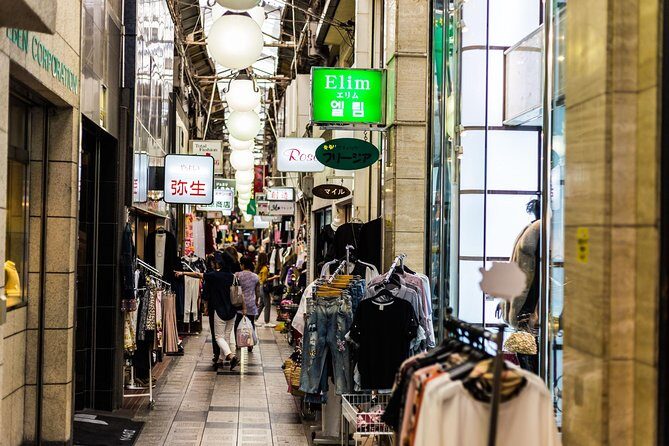
- Tsuruhashi Ichiba: A Market Where Food and Fashion Collide
- Abeno Harukas Area: Panoramic Views Without Paying for the Top
- Shinsekai: Old-School Entertainment Streets, Both Shiny and Worn
- Dotonbori District Finish: Neon, Running Man, and Backstreet Snacks
- Why the Private Guide Changes Everything (Especially in Osaka)
- Price and Value: How $80 Actually Plays Out
- Getting the Most Out of the Walking Route
- Who This Tour Is Best For
- Should You Book This Osaka Highlights Walking Tour?
- FAQ
- How long is the Osaka highlights walking tour?
- What stops are included on the route?
- Is the tour private?
- Are tickets or admission included?
- What is not included in the price?
- Where do I meet the guide and where does the tour end?
- Can I cancel for a full refund?
Key Highlights You’ll Feel From Step One
- Private guide, flexible pacing so you can linger and still hit every stop
- Icon spots plus local streets across Osaka’s east-to-west arc
- Osaka Castle grounds without the letdown of an interior detour
- Tsuruhashi Ichiba as a time-warp market where food and fashion collide
- Abeno Harukas area views built for photos without wasting hours
- Dotonbori end-point that naturally lands you near Namba nightlife and snacks
Getting Your Bearings: Tempozan Ferris Wheel to Namba/Dotonbori
This tour runs about 4 hours and ends right where you’ll want to keep exploring anyway: the Namba/Dotonbori area. The start point is Tempozan Ferris Wheel (Minato Ward), and the finish is Namba Station.
If you’re arriving from outside Osaka, this layout helps. You start on the edge of the action near Tempozan, then work your way toward central Osaka, ending in the neon zone. It’s the kind of route that helps you understand how neighborhoods connect, not just what landmarks look like.
Logistically, plan to use public transit to reach the meeting point. The tour suggests a subway day pass, which is smart if you’re making multiple rides that day. I’d also bring some cash for subway machines, since that comes up in real-world planning, even if you can often pay with cards or IC transit media.
You can also read our reviews of more walking tours in Osaka

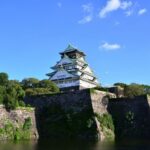
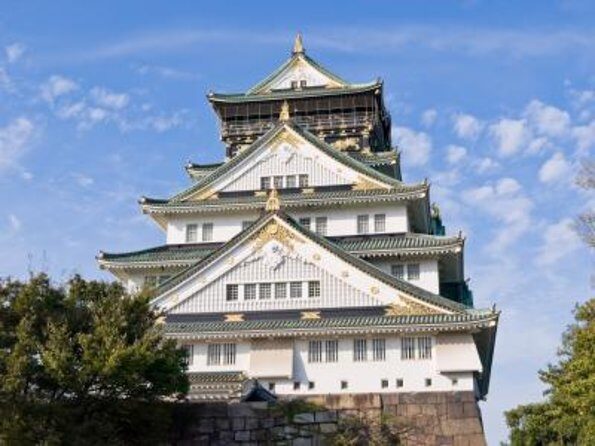
Osaka Castle Stop: Great Exterior Views, No Interior Detour
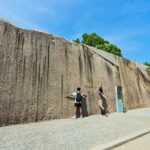
You’ll spend about an hour at Osaka Castle, with a focus on what’s worth your time: the castle park setting and the exterior. The approach here is refreshingly practical. The interior isn’t the point, and the tour does not push you into an interior visit that many people won’t enjoy.
What you should expect:
- A proper introduction to the castle grounds and overall site vibe
- Exterior photo opportunities in a park setting
- Guide-led context that frames why Osaka-jo matters in the city story
Why this works for most people: the castle interior can feel like a separate attraction with a different mood than the outdoors. By spending your time on the grounds, you keep the energy outdoors and set up the rest of the walk with a relaxed start instead of getting stuck indoors.
One small consideration: you are still on your feet. Bring comfortable shoes and treat this hour as part scenery, part walking, not a sit-and-stare museum break.
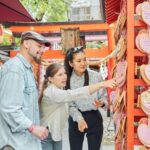
Tsuruhashi Ichiba: A Market Where Food and Fashion Collide
Next is Osaka Tsuruhashi Ichiba, about 30 minutes. This stop has the feel of a local time capsule. It’s not all staged for tourists; it’s a place where daily life runs through the aisles, and that’s the payoff.
What makes Tsuruhashi special in practice:
- You’ll see a market environment where food, culture, and clothing energy overlap
- It’s short enough to keep momentum, long enough to feel like a real place
- The guide helps connect what you see to how Osaka shops and eats
The drawback is also simple: markets move fast. If you hate crowds or dislike close-quarters browsing, this stop can feel intense during busy hours. The best move is to focus on a few items you can spot easily and ask your guide what’s worth trying or noticing.
Abeno Harukas Area: Panoramic Views Without Paying for the Top
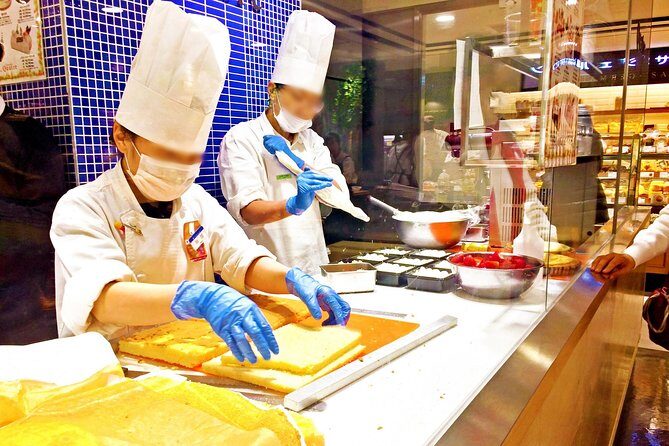
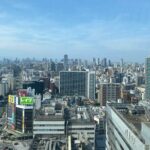
Then you head toward Abeno Harukas for about 30 minutes. The tour’s philosophy here is “get most of the view, avoid the hassle.” The plan is to skip the expensive top ticket and still see an almost-equivalent viewpoint area, without waiting in a long line.
What you get from this stop:
- A high-up view moment that helps you understand Osaka’s layout
- A photo break built into the route
- A smarter approach to pricing and time
This stop also gives your legs a breather if you pace it right. Even when you’re moving through stairs and paths, the goal is a viewpoint that makes the effort feel worth it.
The consideration: Harukas area views depend on timing and weather, like any city view. If it’s cloudy, your guide can still point you to the best angle for photos, but the “wow” factor is naturally reduced.
Shinsekai: Old-School Entertainment Streets, Both Shiny and Worn
After the view, you move to Shinsekai for about 30 minutes. Think classic Osaka entertainment district energy, roughly a century in spirit, with a mix of polished spots and areas with a worn patina.
Here’s what this neighborhood adds to the tour:
- A different Osaka mood from the castle and market stops
- Street-level energy where the city feels older than its branding
- Easy photo opportunities because the street scenes do the work for you
The best part is that Shinsekai isn’t only about one attraction. It’s about walking through atmosphere. The guide’s job is to point out what you’re seeing and why it matters, while still leaving you time to look around.
If you’re sensitive to noise or want a quieter moment, you’ll want to pace yourself here. Shinsekai can feel like it never fully slows down.


Dotonbori District Finish: Neon, Running Man, and Backstreet Snacks
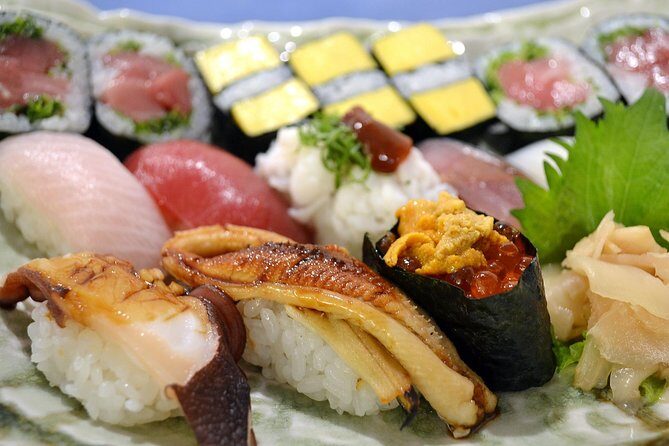
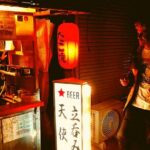
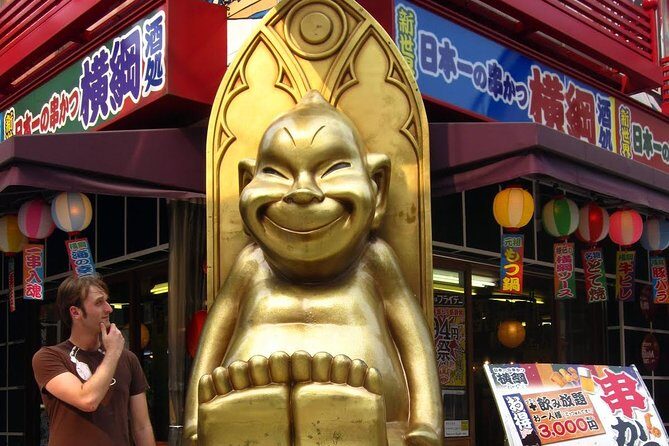
The tour ends in Dotonbori for about 30 minutes, where neon signs and street-food energy take over. The route does include the famous highlights, including the iconic Running Man, but it also tries to take you into smaller backstreets rather than treating Dotonbori like a single photo spot.
What to expect at the end:
- A “you’re here, now keep exploring” finale near Namba Station
- A mix of main sights and less-touristed lanes
- Time that works for snacks if you’re hungry
This is the part of Osaka that many people come for first. The advantage of doing it on a tour is that you don’t arrive with zero context. You understand what you’re looking at, and you know what nearby streets might be worth a quick detour.
One practical note: Dotonbori is packed at peak times. If you want easier shopping and eating, consider using the first part of your Dotonbori time to get your bearings, then return for food on your own after the crowds thin a bit.
Why the Private Guide Changes Everything (Especially in Osaka)

This is a private tour/activity, meaning your group gets the guide and the pacing. That matters in Osaka, where subway navigation, alley spacing, and neighborhood-to-neighborhood vibe can turn a simple walk into a confusing scramble.
In the guide lineup for this experience, names like Hugo, Kevin, Oisin, Ferdinand, Vince, Alex, Thomas, Lito, Ethan, and Jamie show up in past tours. The common thread across their styles is practical explanation plus route know-how—like knowing the shortcuts and how to move through alleys without wasting time.
You’ll also get flexibility. Several guides have been praised for adapting to interests, crowds, and even letting families keep a child engaged. Translation: if your group wants a few extra minutes in a food area or wants to regroup for photos, the tour is set up to handle that.
If you like asking questions, this is the kind of tour where your questions get answered. One recurring theme in feedback is that guides help with real trip topics like using transport and handling money-related decisions.
Price and Value: How $80 Actually Plays Out

At $80 per person for a roughly 4-hour private walking tour, value comes from what’s included versus what you still need to cover.
Included:
- A private guide with fluent English (or a selected language option)
- A route with stop tickets listed as free at the attractions on the itinerary
- Personalized itinerary flexibility
Not included:
- Transportation during the tour (about ¥800 per person)
- Food and drinks
Here’s how that adds up for you:
- If you’d otherwise pay for a guide to connect multiple neighborhoods, $80 can be reasonable because it buys time, direction, and context.
- The unpriced part is food and transit, which is normal for an all-day walking experience. If you plan to eat anyway, you’re not paying extra for a meal package. You can choose exactly what you want at Dotonbori and market areas.
If you’re traveling in a group, there are also group discounts available, which can improve the per-person value. That matters if you’re splitting the cost across friends or family.
Getting the Most Out of the Walking Route
A few simple choices will make or break your comfort.
1) Wear walking shoes
This tour is built on walking plus subway movement. The advice to wear comfortable shoes isn’t generic. You’ll feel it more if your shoes are fine for sightseeing but not for long, repeated steps.
2) Plan for stairs
Some subway stations mean stairs and tight passages. If you’re dealing with knee issues or you hate stairs, you’ll want to manage expectations for the route.
3) Choose morning or afternoon for your energy
You can pick either a morning or afternoon departure. Picking the time that matches your walking stamina and your appetite for crowds can make the whole tour feel easier.
4) Bring yen and be ready to pay for transit
The tour suggests a day pass for subway rides, and real-world planning often includes having some cash on hand. If you can use IC transit options or card payments, that can simplify it, but it’s smart to be ready either way.
Who This Tour Is Best For
This experience fits best if you:
- Want a fast way to learn Osaka’s layout and vibe
- Like walking and don’t mind a busy, city-centered day
- Prefer local neighborhoods like Shinsekai over only museum-style stops
- Want a guide to explain what you’re seeing, not just point and move
It’s also a good first-day option. It gives you a mental map you can use later when you wander on your own.
If you’re the type who needs long rest breaks, or you hate walking more than a few blocks at a time, this may feel like too much.
Should You Book This Osaka Highlights Walking Tour?
Book it if you want an efficient, well-paced introduction to Osaka that ends in the right place to keep your evening going. I’d especially recommend it if you’re excited by street life and want more than a checklist of big-name sites.
Skip it or choose a different format if you’re very limited on walking or you need a tour with lots of seated time. Also, if you hate markets and crowded neon areas, Shinsekai and Dotonbori might not be your favorite moments.
If you do book, go in with two goals: get your bearings fast, and let your guide steer you toward what to look for in each neighborhood. That’s where the value shows.
FAQ
How long is the Osaka highlights walking tour?
It’s about 4 hours.
What stops are included on the route?
The tour includes Osaka Castle, Osaka Tsuruhashi Ichiba, Abeno Harukas, Shinsekai, and the Dotonbori District, ending in the Namba/Dotonbori area.
Is the tour private?
Yes. It’s a private tour/activity with only your group participating.
Are tickets or admission included?
The tour lists admission tickets as free for the included stops.
What is not included in the price?
Food and drinks are not included. Transportation during the tour is also not included (about ¥800 per person). Hotel pickup/drop-off is optional and has an extra fee.
Where do I meet the guide and where does the tour end?
The start meeting point is near the Tempozan Ferris Wheel. The tour ends in the Namba/Dotonbori area near Namba Station.
Can I cancel for a full refund?
Yes. You can cancel up to 24 hours in advance for a full refund.
If you want, tell me your travel dates and whether you prefer morning or afternoon, and I’ll suggest a smart way to pair this with the rest of your Osaka day.