REVIEW · OSAKA
Osaka: Temple Tour and Traditional Calligraphy Lesson
Book on GetYourGuide →Operated by R株式会社 · Bookable on GetYourGuide
One hour, one quiet temple, and a brush in hand. At Saishoji Temple near Yotsubashi Station, this is a calm mix of mindful breathing and hands-on kanji calligraphy—plus a short Osaka language and culture lesson that helps you connect what you see with what you say. I like that it’s built for beginners (you still get a meaningful result), and the included extras like a name card and small ceramic gift make it feel like you brought home more than souvenirs. The main drawback to consider: you only write one favorite kanji, so it’s not a long, skills-building class.
You’ll get an English-led experience in a peaceful Zen-temple setting, with a structure that goes from history and practical phrases to Zazen-style meditation, then calligraphy copying. Expect a traditional matcha tea moment and small keepsakes that turn the session into a full cultural “pause,” not just a quick activity.
In This Review
- Key highlights to look forward to
- Saishoji Temple: a quiet address with easy Osaka access
- The Osaka language warm-up: history + phrases you can use
- Zazen meditation: why breathing comes before calligraphy
- Writing kanji on a mini shikishi (and actually finishing)
- Matcha tea: the calm closes with a proper pause
- Interaction with monks and English-led instruction
- What makes the hour feel like more than an hour
- Price and value: is $20 a good deal?
- Who should book this Saishoji temple calligraphy lesson
- Quick tips so your session goes smoothly
- Should you book Saishoji Temple’s calligraphy and meditation?
- FAQ
- How much does the Osaka Temple Tour and Traditional Calligraphy Lesson cost?
- How long is the experience?
- Where is the meeting point?
- How do I get there from Yotsubashi Station?
- Is the tour offered in English?
- What activities are included besides calligraphy?
- What do I get to take home?
- Are there materials provided for the calligraphy?
- Can I cancel for a full refund?
- Is there a way to book without paying immediately?
Key highlights to look forward to
- Saishoji Temple setting: Zen calm right by Yotsubashi Station, not out in the countryside
- Guided breathing and focus: a meditation step designed to clear your mind before you write
- Write one kanji on mini shikishi: simple goal, satisfying finish
- Your name card in kanji: you leave with a card that includes the character and meaning
- Matcha tea and temple-style materials: a full cultural flow, not just brush practice
Saishoji Temple: a quiet address with easy Osaka access
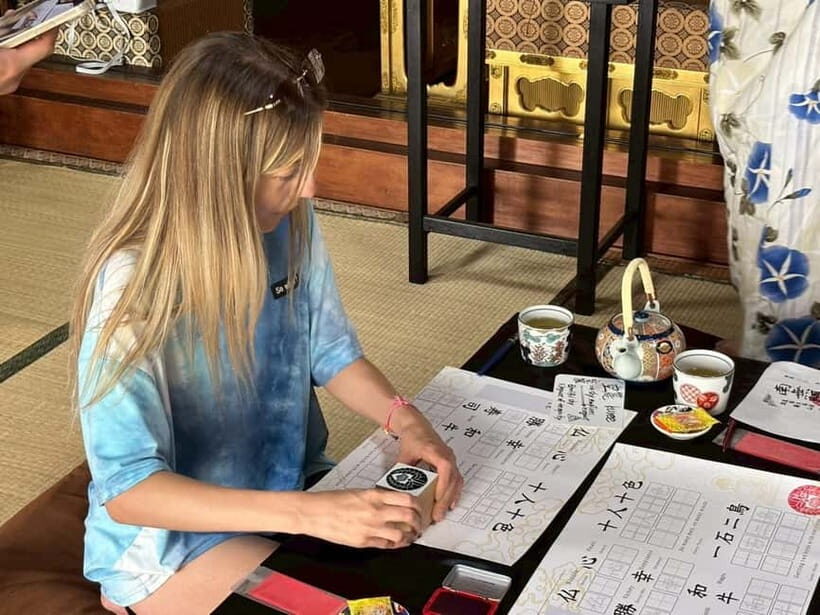
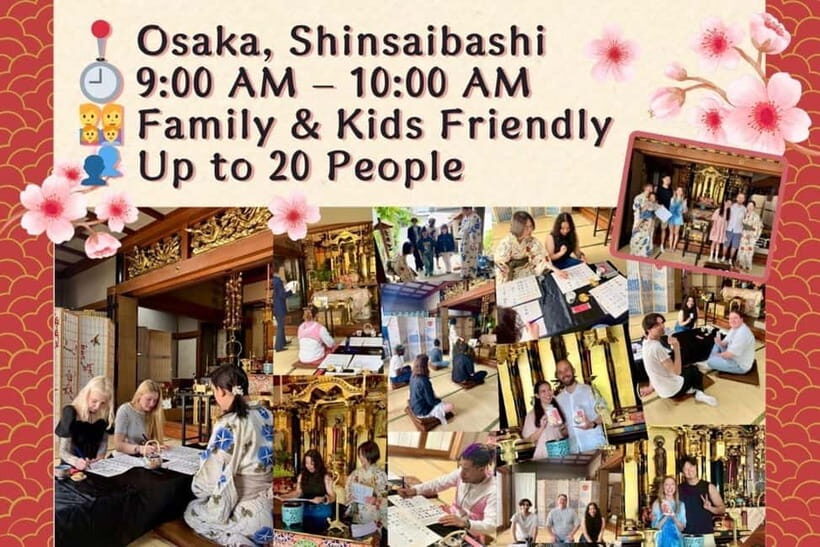
This experience meets at Saishoji Temple in Nishi-ku (1-6-18 Kitahorie). The location is one of the best parts for practical travelers: you’re only a 3-minute walk from Yotsubashi Station (Osaka Metro Yotsubashi Line, Exit 4). Shinsaibashi is about a 10-minute walk, and Namba sits around 15 minutes on foot.
Why that matters: you can fit this into a day that already includes shopping streets and city sights. You don’t have to plan an extra long commute. And because the meeting point is so close to major neighborhoods, the temple experience feels like a real break from city noise instead of “more sightseeing.”
The temple setting is the point. You’ll be in a peaceful, historic Zen space where the tone is slow and respectful. From the way people describe it, that atmosphere does something useful: it helps first-timers feel comfortable holding a brush and taking their time.
You can also read our reviews of more tours and experiences in Osaka


The Osaka language warm-up: history + phrases you can use
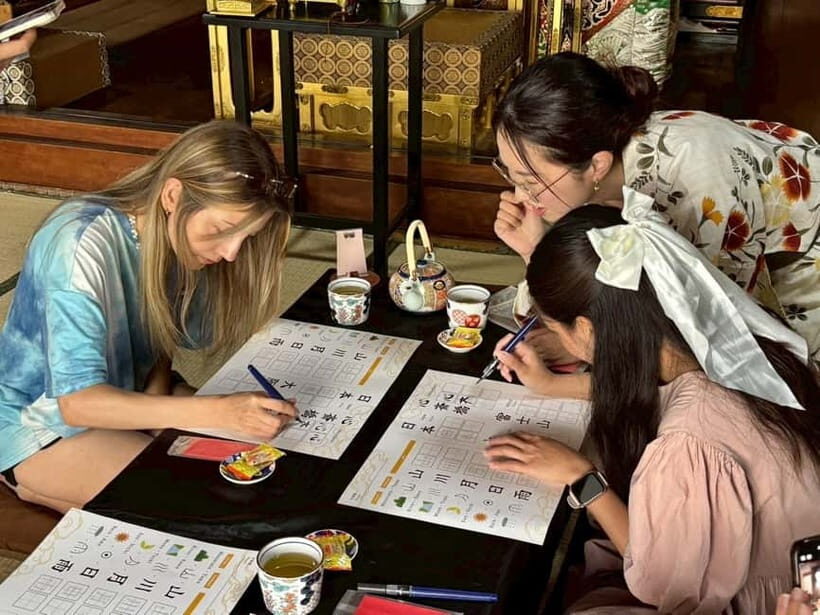
Before your meditation and writing start, you’ll get a brief guided lesson that ties the area together: Shinsaibashi, Yotsubashi, and Osaka Castle, plus the basics of how temples and shrines differ in Japan.
This part is short, so don’t expect a textbook lecture. What you’ll get is more like a “get your bearings fast” primer. And the value is practical: when you later notice how people behave at religious sites (how they approach, how they speak, what looks formal), you’ll have a bit of context rather than just taking photos.
The language piece also helps with mindset. You’ll practice conversational phrases and idiomatic expressions tied to cultural communication—so you’re not only learning vocabulary, you’re learning how people talk when they’re being polite and mindful. That matters in Japan, where tone can be as important as wording.
A small-group feel is part of the design, too. You’ll have enough attention to understand instructions, which is important if you’re nervous about trying calligraphy for the first time. The whole point is that you can relax and focus once you step into the calm.
Zazen meditation: why breathing comes before calligraphy
The most praised moment in this kind of session is the mental shift. Here, it’s built in with a meditation step—clearing your mind and focusing on breathing before you start writing.
You can think of it like warming up, but for attention. Calligraphy is slow by nature: you control pressure, angle, and timing. If your mind is racing, the brush work will feel harder than it needs to be. The meditation is basically there to help you settle your body and quiet the chatter, so your first lines come out steadier.
From the descriptions people give, this feels like a rare pocket of quiet in Osaka. Even if you’re traveling solo, you’re not thrown into a performative class. The temple atmosphere plus guided focus creates a reflective mood—people describe it as getting close to a state of nothingness, the good kind.
Writing kanji on a mini shikishi (and actually finishing)
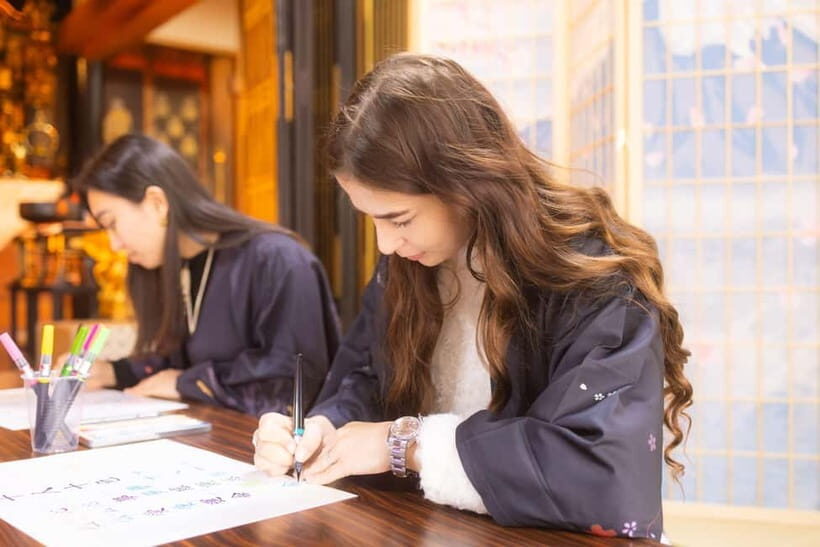
Now for the hands-on part. You’ll practice basic calligraphy, then write one favorite kanji on a mini shikishi (a small writing board used in Japanese calligraphy). The goal is simple and satisfying: you end with a piece you can keep, not just a few practice strokes.
This is where the beginner-friendliness really shows. You’re not expected to already know how to hold a brush, how to plan spacing, or how to control pressure. The instructions are structured, and the setting makes it easier to slow down and do the basics correctly.
What you’ll receive as part of the process:
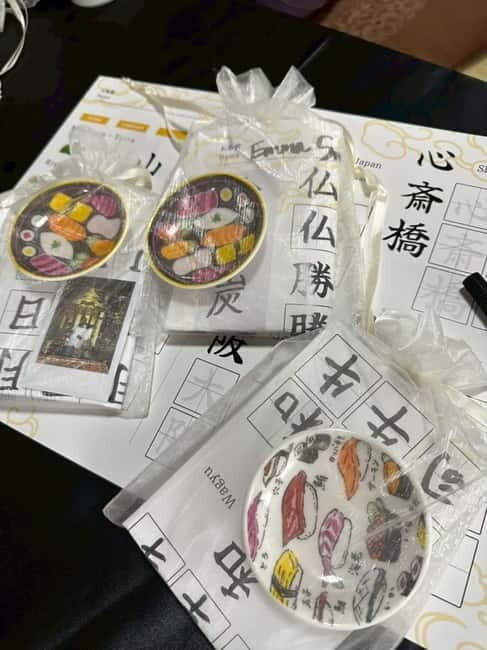
- a name card with Japanese kanji and its meaning
- a small ceramic plate gift, about 8 cm in diameter
- materials needed for the activities
That ceramic plate gift might sound small, but it’s the kind of item that makes a one-hour experience feel complete. You’re not leaving empty-handed, and you have something that ties to the finished kanji moment. If you like taking home thoughtful crafts rather than magnets, you’ll appreciate that.
One extra note from the experience details: there’s mention of stamp-style elements in at least one account, described as intricate. You might see stamp impressions as part of the keepsake or material set, so don’t be surprised if your session includes more than just brush and paper.
Matcha tea: the calm closes with a proper pause
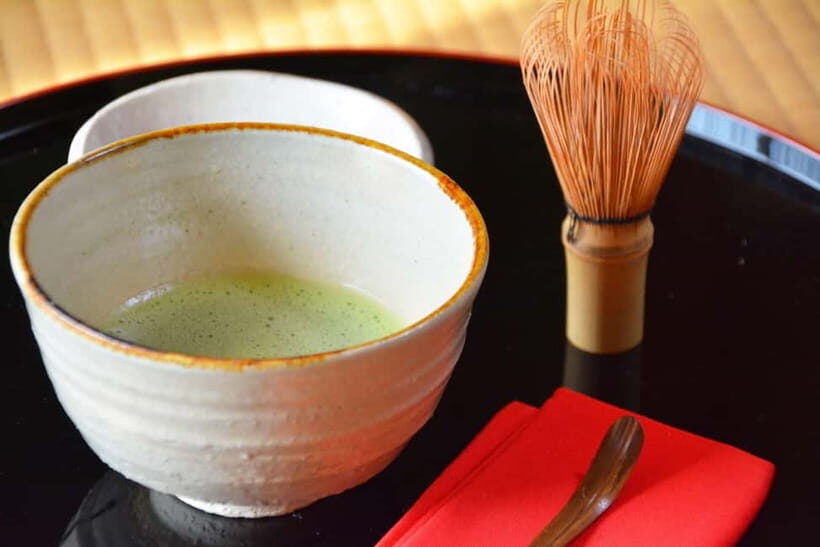
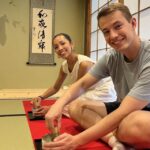
After meditation and calligraphy practice, the experience includes a traditional matcha tea ceremony. It’s not an afterthought. It functions like the final exhale—your senses slow down again after the concentration of writing.
If you’re a matcha fan, you’ll likely enjoy that you get the tea in the same calm context as the calligraphy. If you’re not sure about matcha yet, this setup is a low-pressure way to try it. It also fits the overall theme: mindful communication and mindful action. You’re learning how Japanese tradition often treats everyday moments—like tea—as a form of attention.



Interaction with monks and English-led instruction
Even though the setting feels spiritual, the experience is designed to be approachable. Instruction is led by English-speaking instructors, and you’ll have interaction with resident monks.
That combo—English explanations plus respectful temple guidance—can be a big deal if you’re traveling with limited Japanese. You’re not left guessing about what to do with the brush. You’re guided step by step, which helps your confidence.
From the way people talk about the staff, a consistent theme is kindness and patience. Many note that even when they participated alone, they still felt at ease. That’s a good sign for solo travelers who worry they’ll feel awkward in group activities.
What makes the hour feel like more than an hour
A one-hour format can sound too short. Here, it works because the session has a focused arc:
1) a short guided language/history introduction
2) meditation to slow your mind
3) calligraphy copying and writing your chosen kanji
4) matcha tea as a final calm moment
5) keepsakes like a name card and a ceramic gift
The value isn’t just that you do several activities. It’s that they share the same theme: attention. The language warm-up sets cultural context. The meditation trains focus. The brush work gives you a tangible result. The tea ceremony seals the mood.
If you’ve ever tried to learn “from books only,” this style can feel refreshing. You get practice with your body and senses, not just your vocabulary.
Price and value: is $20 a good deal?
At $20 per person and about 1 hour, this is priced like a budget-friendly cultural class. The real value is what’s included for that money:
- a guided Japanese history/language lesson
- meditation and calligraphy instruction
- interaction with resident monks
- all materials needed
- a name card and a ceramic plate gift
So you’re not paying only for a chair, a brush, and a worksheet. You’re paying for instruction, guidance in a temple setting, and physical items that connect to the lesson.
Is it worth it if you want long-term calligraphy skill? Maybe not. It’s still a beginner-friendly, short-form experience where the takeaway is a meaningful first piece and a calm cultural memory. But if you want an authentic Osaka temple moment plus an output you can keep, $20 is a strong match.
Who should book this Saishoji temple calligraphy lesson
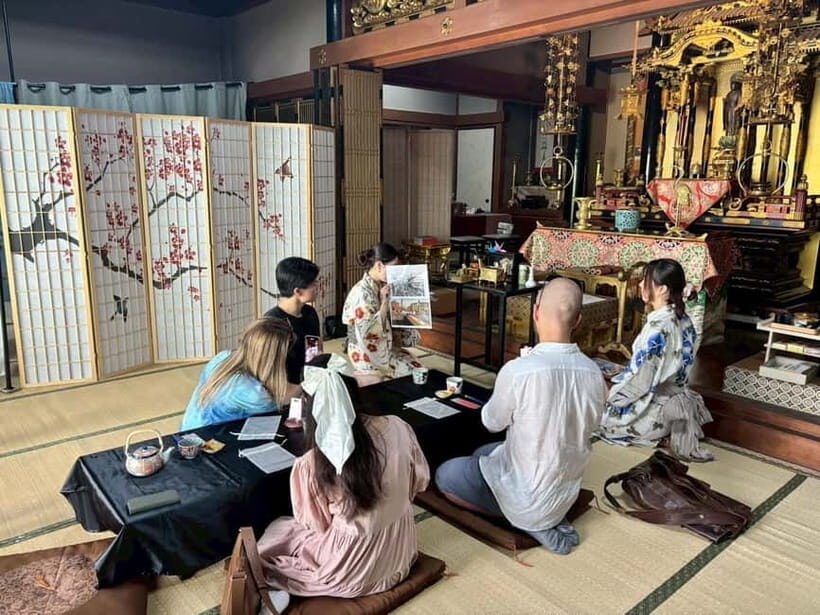
This tour is a great fit if you:
- want a peaceful break from city pace while still staying near major Osaka stations
- are a first-time calligraphy learner
- like cultural activities that include mindfulness, not just crafts
- travel solo and want a structured experience where staff help you feel comfortable
- want something small-scale and respectful rather than a big group “show”
It’s not the best choice if you’re hunting for a long calligraphy course or a deep, multi-hour language program. This is a focused sampler, and it’s meant to leave you calm and satisfied, not to train you into a professional skill level.
Quick tips so your session goes smoothly
A few practical ideas that help you get the best out of the hour:
- Arrive a few minutes early and let the temple calm set in before the lesson starts.
- Go in with one kanji in mind if you can, because the session’s goal is writing your favorite character.
- Wear comfortable clothing. You’ll be seated and using your hands for careful brush work.
- Slow down on purpose. The meditation step is there for a reason—use it.
Also, since the instruction is in English, you don’t need high-level Japanese to enjoy it. Still, even one or two practiced phrases can make you feel more connected to what’s happening.
Should you book Saishoji Temple’s calligraphy and meditation?
If you want an Osaka experience that feels calm, cultural, and hands-on—in one hour—this is an easy yes. The temple location near Yotsubashi makes it practical. The guided breathing and Zazen-style focus make it memorable for the right reasons. And the calligraphy payoff is real: you write one kanji on a mini shikishi, then leave with a name card and a small ceramic gift.
The only real “consideration” is the time limit. You’ll get a meaningful first piece, not a full course. If that’s what you’re after, book it and plan to treat it like a reset day, not just an activity.
FAQ
How much does the Osaka Temple Tour and Traditional Calligraphy Lesson cost?
It costs $20 per person.
How long is the experience?
The experience lasts about 1 hour.
Where is the meeting point?
You’ll meet at Saishoji Temple, 1-6-18 Kitahorie, Nishi-ku, Osaka, 550-0014, Japan.
How do I get there from Yotsubashi Station?
It’s about a 3-minute walk from Yotsubashi Station (Osaka Metro Yotsubashi Line, Exit 4).
Is the tour offered in English?
Yes. The instructor is listed as English.
What activities are included besides calligraphy?
The experience includes a guided Japanese history and language lesson, cultural immersion activities, Zazen meditation, and a traditional matcha tea ceremony.
What do I get to take home?
You receive a name card with Japanese kanji and its meaning, and you also receive a small ceramic plate gift (about 8 cm in diameter).
Are there materials provided for the calligraphy?
Yes. All materials needed for the activities are included.
Can I cancel for a full refund?
You can cancel up to 24 hours in advance for a full refund.
Is there a way to book without paying immediately?
Yes. The experience offers a Reserve now & pay later option, where you can book your spot and pay nothing today.