REVIEW · OSAKA
Sushi Class in Osaka Dotonbori
Book on Viator →Operated by Cooking Sun · Bookable on Viator
You press sushi into a box. That hands-on twist is just one reason this Osaka class feels special, with a small group and step-by-step help that makes it work even if you are a beginner. I also love that ingredients are prepared for you and an apron is provided, so you spend your time learning instead of hunting. One practical catch: the meeting building is a little tricky to find, so plan to arrive a few minutes early.
This is a focused 3-hour experience starting at 9:30am in the Dotonbori/Namba area, capped at 8 people. You’ll assemble three styles—salad roll, nigiri, and Kansai-style oshizushi—and you can request vegetarian (with eggs or without eggs) and gluten-free options when you book.
In This Review
- Key highlights to know before you go
- Sushi Class in Dotonbori: what you’re really paying for
- Finding Cooking Sun at Masters Residence Dotonbori I (Room 807)
- The class flow: apron on, instructions in English, then you cook
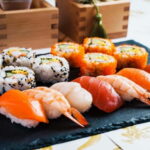
- Three sushi types in one session: what you’ll make
- Salad roll: nori roll with a tamagoyaki core
- Nigiri: vinegar rice, toppings, and bite-sized balance
- Oshizushi (pressed sushi): Kansai box sushi
- Vegetarian and gluten-free options: how to set yourself up
- What happens after you finish: eating your sushi with miso soup
- Why the small group matters in a sushi class
- Pricing and value: is $71.16 worth it?
- Timing in Namba/Dotonbori: how this fits your day
- Who should book this sushi class
- Should you book the Sushi Class in Dotonbori?
- FAQ
- What is the duration of the sushi class?
- What types of sushi will I learn to make?
- Do you offer vegetarian or gluten-free options?
- Where exactly is the meeting point?
- How big is the class?
- Is there free cancellation?
Key highlights to know before you go

- Three sushi styles in one sitting: salad roll, nigiri, and oshizushi (pressed box sushi)
- Hands-on time, not just watching: ingredients are set up so you can build your own rolls and cuts
- Small group size (max 8): easier questions, slower pace, more personal coaching
- Dietary options are available: vegetarian (eggs or no eggs) and gluten-free, requested at booking
- You eat what you make: your sushi plus miso soup at the end
- Teachers work with your pace: I like that the class is designed for real practice, not rushing
Sushi Class in Dotonbori: what you’re really paying for
Osaka does food classes well because the best ones feel practical. This sushi class is not about memorizing theory. It’s about hands-on technique, with guidance that helps you get to a finished plate you’re proud to eat.
The price is $71.16 per person for about 3 hours. For me, the value comes from two things: you learn multiple sushi styles in one session, and the meal is included as part of the activity. You are also not stuck in a crowd—max 8 travelers means you can actually ask questions while you’re working.
You can also read our reviews of more tours and experiences in Osaka
Finding Cooking Sun at Masters Residence Dotonbori I (Room 807)
The start point is Cooking Sun, located in a building called Masters Residence Dotonbori I. You’ll need to go to Room 807—press 807 and the 呼出 (call) button to get the door opened.
This is one of those locations where Google Maps might send you to a building across the street. If you can, arrive early and use the placard on the correct building to get your bearings fast. If you show up right on time, you’ll feel rushed in a place that is intentionally a bit tucked away.
Once you’re inside, the setup is straightforward: you’ll get brought into the work area, then get ready for sushi prep with your instructor guiding each step.
The class flow: apron on, instructions in English, then you cook
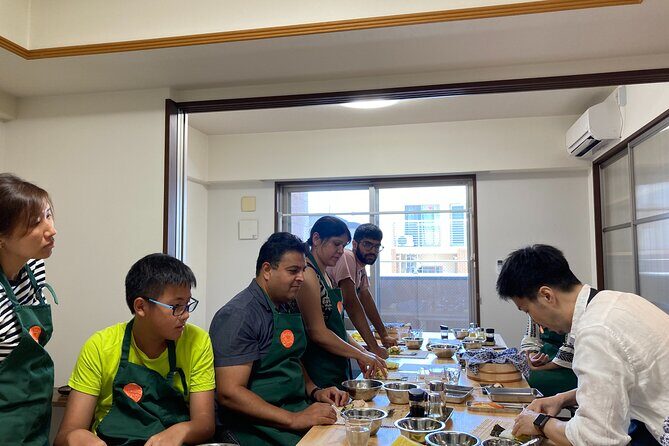
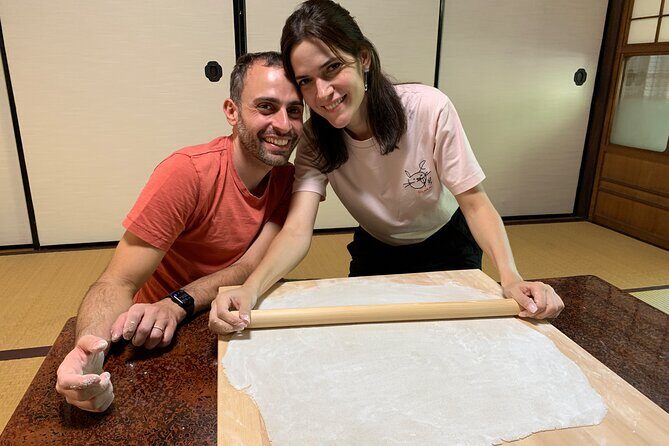
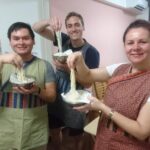
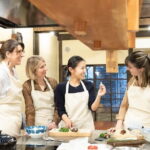
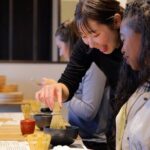
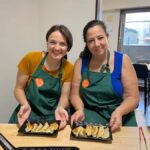
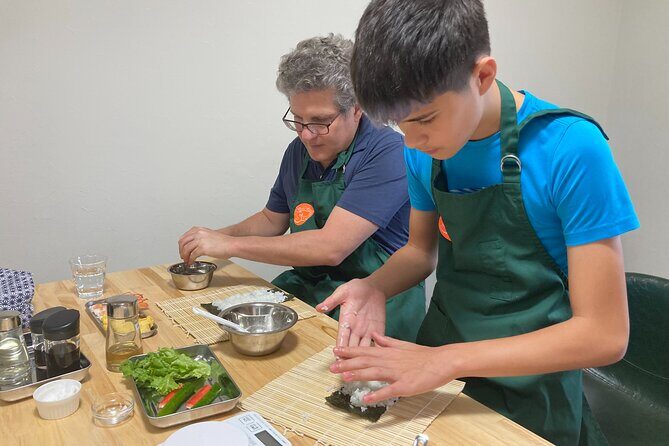
The experience is designed as a guided workshop with demonstrations and then practice. Ingredients are prepared for you, and you’ll be given an apron, so you can focus on technique and not on organizing your own mise en place.
Instructors are hands-on with pace control. From the way the lessons are described, they speak slowly, never rush anyone, and they make room for questions. You’ll also hear food context along the way—some sessions include history and fun regional facts about sushi technique, which helps you understand why you do each step instead of treating it like a script.
If you learn better by doing, you will like this format. If you learn better by watching from a distance, you might still enjoy it, but your best moments come when you pick up the tools and start building.
Three sushi types in one session: what you’ll make
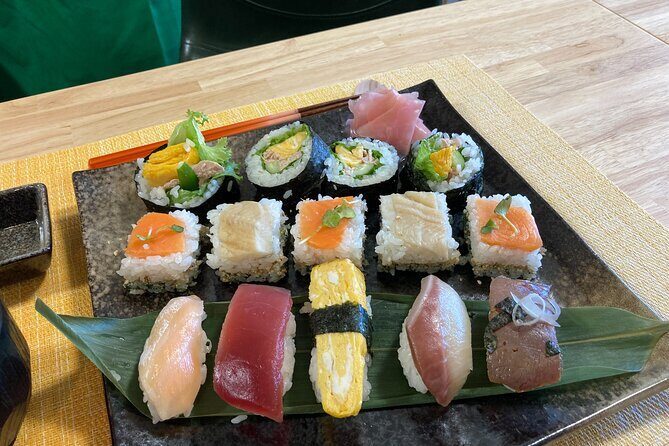
This class keeps things interesting by teaching three styles that use different techniques and shapes. You’ll end up with a plate that looks like you toured multiple sushi worlds—without leaving the room.
Salad roll: nori roll with a tamagoyaki core
Your salad roll is a recognizable kind of maki-style sushi, but with a Japanese flair. Expect crab-flavored kamaboko, lettuce, cucumber, avocado, and tuna mixed with mayonnaise. You’ll wrap it with nori, and there’s a core of tamagoyaki (egg roll).
The practical skill here is learning how the filling layers behave inside a roll. Some ingredients are crisp and some are creamy, and getting the balance right helps the roll cut cleanly later. It’s also a great choice for first-timers because it has familiar flavors, even if the assembly technique is new.



Nigiri: vinegar rice, toppings, and bite-sized balance
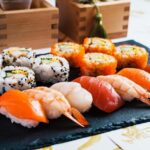
Nigiri-zushi is one of Japan’s signature sushi formats: a mound of vinegared rice with seafood or other toppings placed on top. In your class, you learn the basic build—small rice, then topping on top—so it becomes a bite-sized unit instead of a pile.
Even though you may think nigiri is just “put topping on rice,” technique matters. Vinegared rice consistency and handling influence how well it holds, and the topping placement changes how it eats. This is where the class coaching really earns its keep.
If you want a sushi skill you can use again at home, nigiri is one of the most useful. Once you understand the rice-and-topping relationship, it’s easier to adapt toppings to what you like.
Oshizushi (pressed sushi): Kansai box sushi
This is the star of Kansai-style sushi. Oshizushi is made using a square wooden frame: fill the frame with sushi rice and toppings, then press so the rice sticks firmly to the ingredients.
In Osaka, you may hear it called box sushi. The finished product is square, and you cut it into pieces just before eating. That last detail matters because the structure is meant to be cleanly portioned.
You’ll learn that pressing is not just force—it’s timing and even pressure. If you go too light, it won’t set well. Too hard, and things can get messy. The class structure helps you feel the difference so you understand the technique, not just the result.
Vegetarian and gluten-free options: how to set yourself up
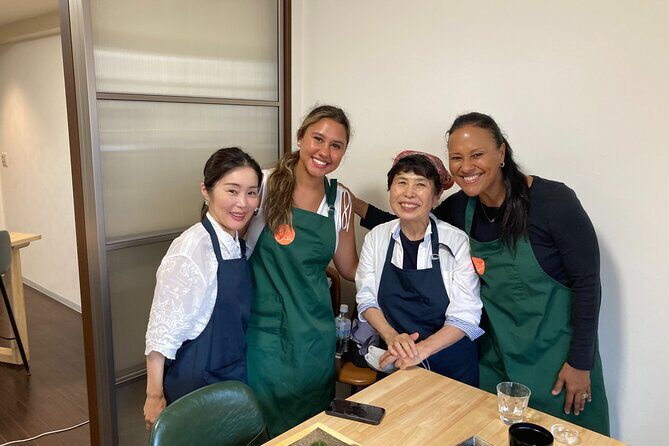
Good classes make dietary changes feel normal, not like an afterthought. This one offers vegetarian options with eggs or with no eggs, and gluten-free is available too. You need to request these options when you book.
The most helpful part is knowing the class is set up to accommodate the change, rather than telling you to bring your own backup food. If you are vegetarian, you’ll want to choose the version at booking time so the instructors can prepare accordingly. If you are gluten-free, request it early for the same reason.
When you arrive, ask any last-minute questions about what your portion will include. You’ll be building three sushi types, so it helps to know what substitutes will be used ahead of time.
What happens after you finish: eating your sushi with miso soup
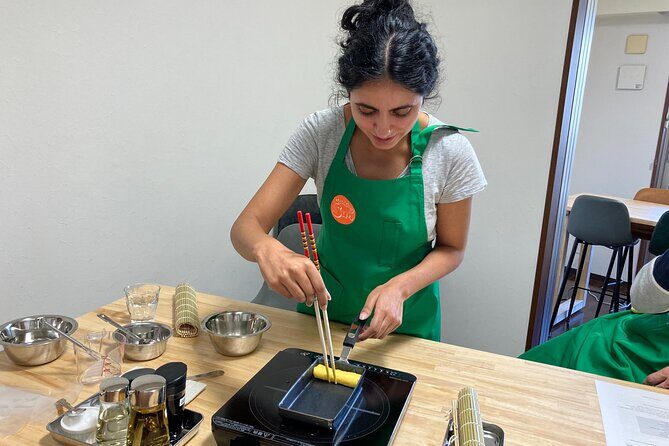
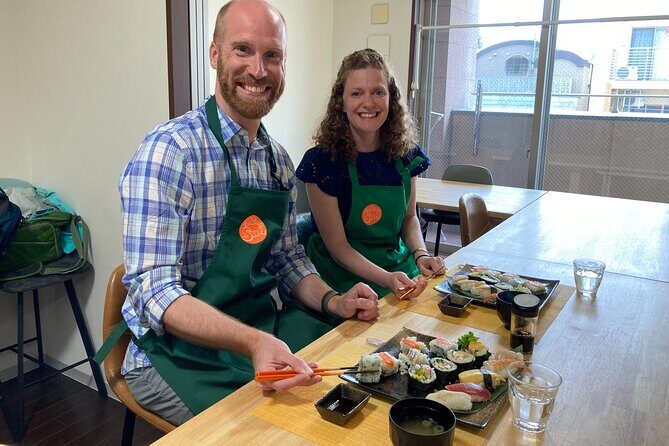
The payoff is simple: you eat what you made. After assembling salad roll, nigiri, and oshizushi, you’ll enjoy your freshly made food along with miso soup.
That moment is more than a meal—it’s your quality check. You see whether your rice handling worked, whether your roll holds together, and whether your oshizushi presses cleanly enough to slice neatly. It’s also a fast way to learn without having to guess.
And because you made it, you’re not just consuming. You’re tasting with context, which makes the skills stick for later.
Why the small group matters in a sushi class
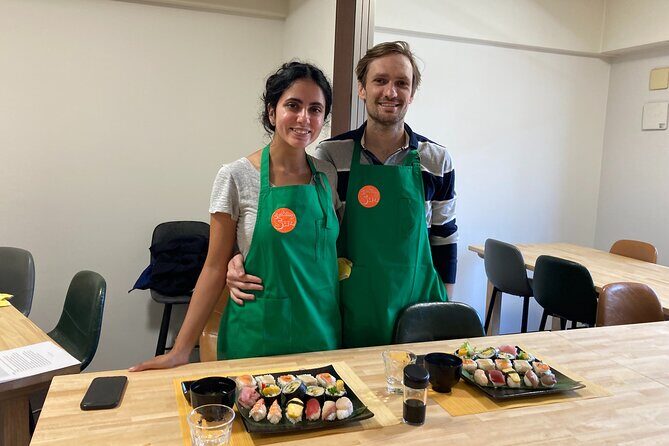
Sushi technique is hands-on and detail-heavy. Without a small group, it’s easy to get stuck watching while someone else gets the attention.
Here, the cap is 8 people, which changes the entire feel. You can slow down when you need to, ask questions mid-step, and get feedback while your sushi is still “in progress.” In at least some sessions, instructors are described as patient with questions and careful with how they explain basics, which makes a difference if you are nervous about technique.
If you’re traveling solo, this format can feel less intimidating than a large class. If you’re traveling with kids, it also helps because the instructor has room to work at the group’s pace.
Pricing and value: is $71.16 worth it?
Let’s talk value in real terms. You’re paying for:
- 3 hours of guided practice
- ingredients prepared for you (so you can focus on technique)
- an apron and a structured lesson
- three sushi types, then a included meal of your own sushi plus miso soup
If you’ve ever bought sushi and wished you could replicate it, this is one of the few meal experiences that turns food into a skill. Even if you only remember a couple of techniques—like how to handle rice for nigiri or how pressing works for oshizushi—you still come away with something you can use again.
Also, because the class includes the meal at the end, you’re not paying extra for lunch on top of the lesson. That matters on a busy Osaka itinerary where meals add up fast.
Timing in Namba/Dotonbori: how this fits your day
The class starts at 9:30am and runs for about 3 hours. That makes it a solid morning plan before you sprint into Dotonbori nightlife and street-food stops.
It’s also a good choice if you want a break from constant walking. You still move, but you’re seated for most of the practice. By the time you finish, you’ve eaten a real lunch-style portion and you can switch from learning mode to exploring mode.
If you hate rushed mornings, aim to arrive a little early so you can settle in and find Room 807 without stress.
Who should book this sushi class
Book this if you want:
- real hands-on technique, not a demo-only experience
- a chance to make sushi styles beyond basic rolls
- a small group with time for questions
- dietary flexibility (vegetarian with eggs/no eggs; gluten-free by request)
It’s also a strong fit if you like learning the “why” behind technique. Some sessions include explanations about sushi history and regional differences, which helps you understand what you’re making and where it belongs in Japanese food culture.
You might think twice if you prefer purely observational experiences. Since you’ll be doing the work—rolling, placing, pressing, and cutting—you’ll get the most enjoyment when you like getting your hands involved.
Should you book the Sushi Class in Dotonbori?
I think you should book it if you want a memorable Osaka food moment that teaches you something you can repeat. The big wins are the small group, the structured practice across three sushi types, and the included meal of what you make.
If you’re short on time, check whether a morning start works with your plans, since the 9:30am start is the anchor. And if you don’t love searching for tucked-away spots, give yourself extra minutes—Room 807 is in a building that can be easy to miss.
If your goal is a fun, skills-based sushi workshop with a real ending (you eat your sushi), this is a smart use of your time in Osaka.
FAQ
What is the duration of the sushi class?
The class runs for about 3 hours.
What types of sushi will I learn to make?
You’ll assemble three types of sushi: a salad roll, nigiri, and oshizushi (pressed box sushi).
Do you offer vegetarian or gluten-free options?
Yes. Vegetarian options are available with eggs or with no eggs, and a gluten-free option is available. You need to request these when booking.
Where exactly is the meeting point?
You meet at Cooking Sun in Osaka at Masters Residence Dotonbori I, Room 807. You press 807 and the 呼出 call button to open the door.
How big is the class?
The activity has a maximum of 8 travelers.
Is there free cancellation?
Yes. You can cancel for a full refund up to 24 hours before the experience’s start time (local time). If you cancel less than 24 hours before, the amount paid is not refunded.